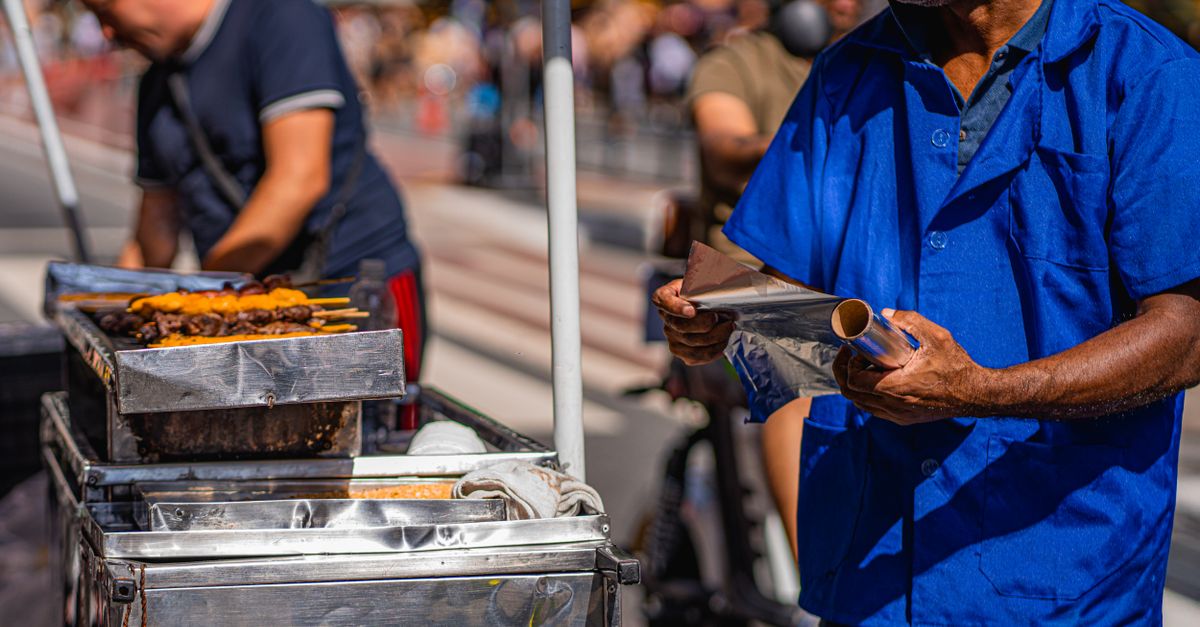
Monaco's food scene is a study in extremes — the world's most expensive restaurants per square metre alongside the most democratic and ancient street food traditions of the Ligurian and Niçois coastline that physically surrounds the principality. This is a city-state where socca (a chickpea flour pancake cooked in a wood-fired oven that has not changed in recipe for 700 years) is sold from a paper cone for €3 at the Condamine market, and where Joel Robuchon's ghost restaurants and Louis XV under Alain Ducasse serve meals at €400 per person. Monaco navigates this contradiction with the specific elegance of a place that has been very wealthy for a very long time.
The food culture of Monaco is technically distinct from French Riviera food despite the geographic overlap — there is an authentic Monégasque cuisine, small in scale but genuinely original, rooted in the same Genoese maritime trading culture that produced Niçois cuisine but with distinct preparations that reflect Monaco's specific history. Barbagiuan (fried pastry parcels filled with Swiss chard and ricotta), stocafi (stockfish braised in the Niçois style), and fougasse sucrée de Monaco (the sweet orange flower pastry eaten at Carnival) are dishes that exist in this specific form only within the principality's 2 square kilometres.
The strategy for eating in Monaco requires accepting the geography and the economics simultaneously: use the Condamine market and the neighbourhood below the palace for affordable, authentic food; reserve the big-budget meal for one exceptional fine dining experience at Louis XV or Le Louis XV-Alain Ducasse à l'Hôtel de Paris — because nowhere else in the world does French cuisine of this technical level inhabit a setting quite this extraordinary.
10 Must-Try Dishes in Monaco
1. Socca (Niçois Chickpea Flour Pancake)
Socca is the great leveller of the French Riviera — a thick, golden-brown pancake made from chickpea flour, water, olive oil, and salt, cooked in a wood-fired oven in enormous copper pans until the surface is slightly charred and the interior is dense, moist, and fragrant. It is the street food of Nice and the entire Ligurian coast including Monaco, sold from vendors who carry the hot pans directly from the oven, slice them with a spatula, and distribute portions on paper with a shake of black pepper. It costs almost nothing and tastes wonderful.
The flavour of socca is surprisingly complex for such simple ingredients — the chickpea flour develops a nutty, slightly bitter character during the high-heat cooking; the olive oil provides richness; the char from the wood oven adds a smoky edge; and the black pepper (always applied generously, always after cooking) provides heat. The texture is paradoxical: firm enough to hold in your hands but soft and yielding inside, with a satisfying outer crust. It is best eaten hot, immediately from the vendor, standing at the market.
The Condamine Market (Marché de la Condamine) on Place d'Armes at the base of Monaco-Ville is the best place for socca in Monaco — a traditional market that operates every morning and has vendors selling socca alongside other Niçois and Monégasque specialities. The market is in the lower town, a 10-minute walk from Monte Carlo's casino area or a short bus ride. Arrive between 9am and noon for the freshest socca before the pans are depleted.
A portion of socca at a market stall costs €2–€4. This is one of Monaco's most democratising food experiences — the same socca eaten by market workers is available to anyone willing to stand at the Condamine market with a paper cone. Pair with a glass of vin rosé from Provence (€4–€6) at the market wine stall for one of the French Riviera's most authentic and affordable food experiences in one of the world's wealthiest territories.
2. Barbagiuan (Fried Ricotta and Swiss Chard Pastry)
Barbagiuan is Monaco's most distinctive culinary contribution to the world — a small, half-moon shaped fried pastry (similar in concept to a calzone or empanada but specifically Monégasque in execution) filled with a mixture of Swiss chard, ricotta cheese, Parmesan, eggs, and aromatic herbs. The name translates roughly as "Uncle John" in Monégasque dialect, though the etymology is debated. Barbagiuan is Monaco's official national food — served at civic events, the national holiday feast on November 19th, and at virtually every traditional Monégasque restaurant.
The pastry is thin and short, fried until golden without becoming greasy — the technique of frying at the right oil temperature is critical to the result. The filling is mild, creamy, and slightly bitter from the chard, with the Parmesan providing umami depth and the ricotta providing lightness. The best barbagiuan have a very thin pastry layer that shatters at the first bite, releasing steam and the scent of chard and cheese into the air. They are eaten as a starter or snack rather than a main course.
The Condamine Market has barbagiuan vendors operating from the early morning. Restaurant Castelroc adjacent to the Place du Palais serves them as a traditional starter in a setting with views of the Grimaldi Palace. Bar restaurant Maison de Pêcheur at the port is another traditional venue. The Place du Palais (Prince's Palace square) is at the top of Monaco-Ville, the old rock above the harbour.
Barbagiuan at a market stall cost €2–€4 each. At a sit-down restaurant, a serving of three or four as a starter runs €12–€18. During Monaco's National Day (November 19th) celebrations, barbagiuan are distributed at civic events and available from street vendors throughout the principality at their cheapest. This is Monaco's most authentic food experience and the dish most worth seeking out specifically, as it exists in this form only within the principality.
3. Stocafi (Monaco-Style Stockfish)
Stocafi is Monaco's unique version of the Mediterranean stockfish tradition — air-dried cod (morue séchée) that is reconstituted by soaking for several days, then slow-braised in a rich Provençal sauce of tomatoes, olives, capers, onion, garlic, herbes de Provence, and Niçois olive oil. The preparation shares lineage with the Niçois Estocaficada, the Ligurian Stoccafisso, and the Portuguese bacalhau — all expressions of the same medieval trade route that carried Norwegian dried cod to Mediterranean kitchens. Monaco's version has its own proportions and spicing that distinguish it from its neighbours' preparations.
The reconstituted cod in stocafi has a yielding, layered texture quite different from fresh fish — the drying and rehydration process transforms the protein structure, producing flakes of distinctly flavoured fish that absorb the tomato-olive-caper sauce without losing their identity. The sauce reduces to a thick, intensely flavoured coating. Traditional stocafi also includes potatoes, which absorb the sauce and provide the starchy component that balances the savoury, olive-rich preparation.
Restaurant Castelroc and U Cavagnetu restaurant in Monaco-Ville both serve stocafi as a Monégasque traditional dish, typically on a weekly rotating menu rather than daily. The dish requires advance preparation time — the reconstitution takes 48 hours and the braising another two hours minimum — which makes it unsuitable for daily à la carte service. Call ahead to confirm availability. U Cavagnetu is a small, traditional Monégasque restaurant with a limited menu focused on the principality's traditional preparations.
A portion of stocafi at a traditional restaurant costs €22–€35. The richness of the dish means a single main course serving is sufficient without a starter. Pair with a glass of white Bandol wine from the nearby Var département — a Rolle or Clairette-based wine with the mineral freshness to balance the richness of the braised cod. This is a winter and autumn dish; availability peaks October through March when the Provençal winter settles and hearty braised preparations come into their own.
4. Louis XV and Fine Dining (Alain Ducasse at Hôtel de Paris)
Le Louis XV-Alain Ducasse à l'Hôtel de Paris is one of the world's most extraordinary restaurant experiences — three Michelin stars, operated by Alain Ducasse since 1987 in the gilded dining room of the Belle Époque Hôtel de Paris on Place du Casino, serving Mediterranean cuisine of sublime technical refinement with an almost religious attention to Provençal and Ligurian seasonal produce. The truffles come from the Var, the olive oil from Ducasse's own Moulin de l'Engalin, the fish from the Mediterranean just below, the herbs from the hotel's kitchen garden. Nothing arrives on a Louis XV plate without provocation.
The cuisine style is emphatically Mediterranean rather than French classical — it celebrates vegetables, fish, and olive oil rather than butter and cream. The signature "garden of Provence" vegetable composition (the most expensive vegetable dish in the world by most calculations) showcases the seasonal produce from the restaurant's farm suppliers in a technically demanding preparation that treats vegetables with the respect normally reserved for foie gras and truffle. The wine list is comprehensive to the point of requiring a sommelier guide to navigate.
Le Louis XV is on Place du Casino in Monte Carlo, in the grandest hotel in Monaco. Reservations are essential weeks in advance, particularly for dinner, and the dress code (jacket required for men, smart attire required for all) is enforced. The lunch menu represents the best value entry point — two courses with wine pairing can be achieved for €180–€250 per person, compared to the full dinner experience at €400–€600. Pre-booking via the hotel website directly is recommended.
Lunch at Louis XV costs €180–€350 per person without wine (add €80–€150 for the sommelier-selected wine pairing). Dinner tasting menus run €280–€450 per person before wine. This is not a daily eating experience but a once-in-a-decade occasion. Those with the budget should eat here not merely for the food (which is extraordinary) but for the experience of understanding what French Mediterranean cuisine can become at its highest expression. The room itself, with its gilded ceiling and Monaco sunset visible through the tall windows, is one of the world's most beautiful dining spaces.
5. Pan Bagnat (Niçois-Style Tuna Sandwich)
Pan bagnat — "bathed bread" — is the definitive Niçois and Monégasque street sandwich: a round whole-wheat roll split and soaked (bathed) in olive oil and vinegar, then filled with the components of a traditional salade Niçoise — olive oil-packed tuna, hard-boiled egg, anchovy fillets, tomatoes, Niçois olives, artichoke hearts, radishes, spring onion, fresh basil, and sometimes green pepper. The soaking transforms the bread into something between a sandwich and a salad — the oil and vegetable juices permeate the crumb, creating a rich, savoury, intensely flavoured construction that improves as it sits.
The pan bagnat is specifically the French Riviera's working person's food — historically carried by fishermen and market workers wrapped in paper for their midday meal. The olive oil-drenched bread is filling, flavourful, and nutritionally complete. The tuna must be olive oil-packed (never water-packed) for the correct flavour contribution; the anchovies must be present; and the Niçois olive is small, dark, and bitter in a way that the larger canned olives cannot replicate. Made correctly, pan bagnat is one of the Mediterranean's great sandwiches.
The Condamine Market vendors and the small boulangeries in the lower Monaco town (Fontvieille area) make pan bagnat daily. For a sit-down version, most of the brasseries along the port of Monaco serve it at lunch. The portside brasseries on Quai Albert I are casual, reasonably priced for Monaco, and serve pan bagnat and other Niçois dishes with harbour views of the superyacht fleet — an only-in-Monaco combination of the democratic and the obscene.
A pan bagnat at a market stall or boulangerie costs €5–€9. At a portside brasserie, €12–€18. The best pan bagnat is made several hours in advance and allowed to sit wrapped — the soaking time is not laziness but intent, transforming the bread's texture into the damp, oil-permeated character that defines the proper version. A freshly made pan bagnat is actually inferior to one made 2–3 hours before eating. Take it as a picnic lunch to eat above the Rocher (Monaco-Ville rock) with a view of the Mediterranean.
6. Rosé Wine (Provençal and Bandol Rosé)
The Provençal rosé wine tradition is the perfect expression of the Mediterranean food culture that Monaco inhabits — pale, dry, aromatic rosé wines made from Grenache, Cinsault, and Mourvèdre grapes grown in the sun-baked Var and Bouches-du-Rhône départements. These are wines designed for Mediterranean food and Mediterranean sun: light enough to drink at midday in summer, with enough structure to pair with the bold flavours of socca, pan bagnat, grilled fish, and the aïoli tradition. They are among the most immediately pleasurable wines in the world.
Bandol rosé, from the hillside appellations west of Toulon, is the prestige expression of Provençal rosé — dominated by Mourvèdre in the Bandol AOC, producing wines with more structure, complexity, and ageing potential than the pale, commercial Provence rosés. Domaine Tempier Bandol Rosé is considered by many wine writers the finest rosé wine made anywhere. A glass of it beside the Monaco harbour with pan bagnat is a genuinely extraordinary pairing of geography, tradition, and flavour.
Rosé wine is available at every café and restaurant in Monaco. The wine shops in La Condamine area stock Provençal and Bandol rosés at realistic prices. For a serious exploration of the style, Cave du Grand Jardin on Avenue Prince Pierre sells an excellent selection of prestige Provençal producers at cellar door prices. The Michelin-starred restaurants along the port and in Monte Carlo offer by-the-glass service from exceptional producers at appropriately elevated prices.
A glass of quality Provençal rosé at a Monaco café costs €8–€14. A bottle at a mid-range restaurant runs €35–€65 for a Bandol rosé of merit. A bottle of Domaine Tempier Bandol Rosé at a wine shop costs €25–€35 — excellent value for what is genuinely among the world's finest rosé wines. Take two or three bottles home as a wine souvenir; they will hold for three to five years and give you another opportunity to explain why Monaco was worth the flight cost.
7. Fougasse de Monaco (Sweet Orange Flower Pastry)
Fougasse sucrée de Monaco is the principality's traditional Carnival pastry — a sweet, enriched bread flavoured with orange flower water and topped with anise seeds, glazed sugar, and olive oil, traditionally made during the pre-Lent Carnival season but now available year-round at Monaco's boulangeries. The Monégasque fougasse is distinct from the Provençal savoury fougasse (which is more like a flatbread) — it is a sweet, aromatic pastry of considerable charm, fragrant with orange blossom and anise in a combination that is uniquely Riviera.
The orange flower water (eau de fleur d'oranger) gives the fougasse an intensely floral fragrance that is characteristic of traditional Niçois and Monégasque pastry culture. The anise seeds add a herbal note that balances the sweetness. The texture is between a brioche and a bread — enriched but not as buttery as a French brioche, with a slightly chewy crumb and a caramelised sugar glaze on the surface. It is best eaten the day it is made, warm from the oven, with a small café au lait or a glass of Muscat de Beaumes-de-Venise as dessert wine.
Boulangerie-pâtisserie Maison Clémentine on Avenue de Grande Bretagne in Monte Carlo makes excellent fougasse sucrée year-round. Several boulangeries in the Fontvieille area (Monaco's western industrial quarter that has been converted into a pleasant residential and shopping district) also produce the pastry. Avenue de Grande Bretagne is in the residential Monaco-Moulins quarter above Monte Carlo, a 15-minute uphill walk from the casino area.
A fougasse sucrée de Monaco costs €3–€6 depending on size. Sold by weight at some boulangeries — expect to pay €8–€15 for a whole piece sufficient for two to share. This pastry makes an excellent breakfast item before a morning walking tour of Monaco-Ville rock, eaten at a café table with a view of the Mediterranean and a strong coffee. Few morning-food-and-setting combinations in Europe are superior.
8. Ratatouille and Provençal Vegetables
Ratatouille — the slow-cooked summer vegetable stew of aubergine, courgette, tomato, pepper, onion, and Provençal herbs — is the defining vegetable dish of the entire French Riviera including Monaco. The real ratatouille, made properly with each vegetable cooked separately before being combined and reduced together, is very different from the combined slop of mediocre restaurant versions. Alain Ducasse and the Monaco fine dining community have collectively pushed the interpretation of Provençal vegetables to an extremely high technical level that has filtered down into the broader restaurant culture of the principality.
The quality of ratatouille depends entirely on the quality of the summer vegetables — courgette, aubergine, and tomatoes at peak ripeness in July and August, when Provençal summer heat concentrates their flavours, produce a ratatouille of completely different character from the same dish made with supermarket winter vegetables. Monaco's proximity to the extraordinary markets of Nice and the vegetable producers of the Var means that in-season ratatouille here is as good as it gets anywhere on earth.
Ratatouille is available at virtually every café and bistro in Monaco during summer months. The finest versions are at the Michelin-starred establishments, but the version served at the portside brasseries on Quai Albert I during the summer market season is consistently good and priced accessibly. For the home-cook experience, the Friday market at Condamine sells the season's best ratatouille vegetables directly from Provençal producers from 7am.
A ratatouille side dish or starter at a Monaco brasserie costs €8–€14. At a fine dining establishment, a standalone vegetable composition might run €35–€55 as a course. The summer season (June–September) is when ratatouille reaches its maximum quality — eating it with a glass of Provençal rosé and a view of the Mediterranean on a warm Monaco evening is a combination of flavour and setting that requires no further justification.
9. Truffe (Périgord Black Truffle) Preparations
Black Périgord truffle and white Alba truffle appear on Monaco's fine dining restaurant menus with a frequency and generosity that reflects the principality's extraordinary wealth — restaurants here treat truffle as a standard ingredient rather than a luxury special, and the winter truffle menus at Louis XV, Joël Robuchon Monte Carlo, and other three-Michelin-star establishments rival anything available in Paris or Lyon for technical ambition and ingredient quality. The proximity to the truffle-producing regions of the Var and Alpes-de-Haute-Provence means winter truffle quality in Monaco is matched only by access to the raw ingredient itself.
The classic truffle preparations on Monaco's fine dining menus include truffle shaved over buttered pasta (a Piemontese tradition adapted for the Riviera), truffle in scrambled eggs (oeufs brouillés à la truffe — the ultimate test of a kitchen's self-restraint), truffle-based sauces for the locally sourced sea bass and turbot, and the theatrical winter truffle menu at Louis XV where Ducasse's team serve multiple courses built around the season's finest Périgord blacks in combinations of French culinary mastery.
For truffle eating outside the Michelin-starred context, the Condamine market has a truffle vendor operating during the winter season (December–March) who sells fresh Périgord blacks and summer truffles (Tuber aestivum) at competitive prices. La Truffière restaurant in the Fontvieille quarter does an excellent truffle-focused menu at mid-range prices. The Fontvieille commercial area is accessible by bus or a 20-minute walk west from Monte Carlo.
A truffle-focused menu at a Michelin-starred Monaco restaurant costs €180–€350 per person. Fresh black truffle at the Condamine winter market costs €800–€1,200 per kilogram (even 15–20 grams — a generous restaurant shaving — represents meaningful cost). For the most affordable truffle experience in Monaco, a truffle omelette or truffle pasta at a mid-range restaurant costs €30–€60 — less spectacularly priced than the tasting menu, and often sufficient to experience what a quality truffle brings to a dish.
10. Monaco National Day Feast (Fêtes Nationales)
Monaco's National Day on November 19th is the principality's most important civic occasion and, from a food perspective, the day when traditional Monégasque cuisine is most visibly celebrated. The traditional foods of the national celebration — barbagiuan, stocafi, fougasse, salade de barba-frema (a traditional Monégasque salad of boiled cardoon with anchovies, olive oil, and capers) — appear at market stalls, civic events, and restaurant special menus throughout the day. This is the moment when Monaco's micro-cuisine tradition is most concentrated and most accessible.
The Condamine Market and the stalls around the Place du Palais feature the full range of traditional Monégasque dishes during the national holiday period. The princely family traditionally appears on the palace balcony for the civic ceremony, and the crowd below typically eats barbagiuan and drinks Provençal wine while waiting. This combination of political theatre, civic ritual, and traditional food is uniquely Monaco — a tiny sovereign state maintaining its food culture traditions with the same determination it maintains its sovereignty.
If visiting Monaco on or near November 19th, time a visit to the Condamine Market from mid-morning — the traditional food vendors expand their offering significantly for the national holiday, and the atmosphere of a working Monaco market on its most important day is quite different from the tourist-oriented experience of other times of year. Barbagiuan are available free from some civic organisations and at vendor prices from the market stalls.
The national holiday food experience is effectively free — civic food distribution, affordable market stalls, and the festive atmosphere that comes with Monaco at its most distinctly itself. Budget €15–€30 for a day of grazing through the traditional dishes if purchasing from vendors. A traditional Monégasque lunch at Restaurant Castelroc on November 19th is worth booking in advance (especially for the barbagiuan and stocafi) and costs €40–€70 per person — exceptional value for a traditional full meal on Monaco's most important cultural day.

Monaco's Essential Food Neighborhoods
La Condamine, the lower town between the port and the Monaco-Ville rock, is where Monaco's most accessible and most authentic food exists. The Place d'Armes market (Marché de la Condamine) is the principality's best food shopping — fresh fish from the Mediterranean, Provençal vegetables, charcuterie from the mountain farms of the Var, local cheeses, and traditional Monégasque preparations from market vendors who have operated here for generations. Surrounding streets have neighbourhood boulangeries, butchers, and small cafés where working Monaco eats rather than where visitors typically venture. The entire Condamine area is flat and walkable, accessed from the Port Hercule harbour or by bus from Monte Carlo.
Monaco-Ville (The Rock), the medieval old city atop the promontory above the harbour, contains the palace, the cathedral, the Oceanographic Museum, and a small number of traditional restaurants in an otherwise tourist-boutique landscape. Restaurant Castelroc adjacent to the palace is the most authentic dining option on the rock, serving traditional Monégasque preparations at appropriate prices for a tourist destination. U Cavagnetu on Rue Comte Félix Gastaldi is smaller, more local, and serves the most authentic Monégasque menu available in the principality. The rock is most easily reached by the winding road from Condamine or by the rock-side lift.
Monte Carlo, the glamorous casino quarter, is home to Monaco's concentration of Michelin-starred restaurants — Le Louis XV, Joël Robuchon Monte Carlo (posthumously maintained to his recipes), Blue Bay at the Monte Carlo Bay Hotel, and several others — alongside the port area brasseries and the casino's own restaurant complex. This is the Monaco of international food journalism and expense-account dining. A single extraordinary meal at Louis XV justifies the entire neighbourhood's existence from a gastronomic perspective. Everything else is scenery and price inflation. Budget €400+ per couple for a full fine dining experience in this zone; considerably less for a brasserie lunch with harbour views.
Practical Eating Tips for Monaco
Monaco is one of the world's most expensive places to eat — even basic café food costs significantly more than in the surrounding French towns of Nice and Menton. A simple café lunch with a sandwich and coffee runs €15–€25. A brasserie dinner costs €40–€80 per person. The Condamine market and its surrounding neighbourhood provide the only genuinely budget-accessible food in the principality. Visitors staying in Monaco for multiple nights should shop at the market and self-cater where accommodation allows. The train from Monaco-Monte Carlo station to Nice takes 25 minutes and costs €4 — eating lunch in Nice and returning to Monaco for an evening walk significantly reduces food costs without sacrificing the Monaco experience.
French dining customs apply in Monaco — though the principality is independent, its food culture is entirely aligned with the French côte. Lunch is the serious meal (noon to 2:30pm), dinner from 7:30pm to 10pm. Service charge is included in prices at French-standard restaurants; tipping 5–10% for exceptional service is appreciated but not mandatory. Monaco has no language barrier — French is the official language, English is universally spoken in the tourist areas. Dress standards at fine dining restaurants are enforced; Monaco takes these standards more seriously than most French cities. The casino dress code (jacket required from 8pm) has no bearing on restaurant dining next door, but the overall dress culture of Monte Carlo trends formal in the evening.