
Mendoza is South America's greatest wine capital and one of the world's genuinely exceptional food-and-drink destinations — a city at the foot of the Andes where the combination of altitude, sunshine, snowmelt irrigation water, and volcanic soil produces Malbec wines of world-class quality, Angus cattle of extraordinary flavour from high-altitude ranches, and an asado culture that takes the art of grilling beef over wood fire with the same seriousness that the French apply to classical sauce-making.
The food culture in Mendoza is inseparable from its wine culture — the two developed together across the 19th and 20th centuries as Italian and Spanish immigrant families built the wine industry and brought their culinary traditions with them. The result is a food scene that is genuinely Argentine (asado, empanadas, dulce de leche) while retaining distinct European inflections from the Malbec estates where Italian, French, and Spanish wine-making families still produce wines bearing their surnames. Eating in Mendoza means eating wine country food — rich, flavourful, and calibrated for serious drinking alongside.
The order of operations is clear: arrive, drink a glass of Malbec from a winery in Luján de Cuyo, eat a full asado, drink another glass, sleep, wake up, eat empanadas, and repeat. This is not simplistic advice — it is the schedule that the city itself imposes on anyone who arrives and pays attention to what it is genuinely offering.
10 Must-Try Dishes in Mendoza
1. Asado (Argentine Wood-Fire Grilled Beef)
Asado in Argentina is not merely a cooking method — it is the central social institution of the culture, a weekend ritual of family, friendship, and collective patience that can run from early afternoon through midnight. The asador (grill master) builds a wood fire of quebracho (a dense Argentine hardwood) or vine wood from the Mendoza vineyards, waits for the fire to produce the right coals, and then slowly cooks whole racks of costillas (short ribs), vacío (flank), tira de asado (beef ribs), and offal cuts over indirect and direct heat for two to four hours. Nothing about asado is rushed.
The flavour of a properly executed Mendoza asado has a characteristic complexity that comes from the local Angus and Hereford cattle raised at altitude, the vine wood smoke that perfumes the meat without overpowering it, and the minimum of intervention — Argentine asado uses only salt and the slow heat. No marinades, no sauces applied before or during cooking. The chimichurri (parsley, garlic, olive oil, red wine vinegar, red chilli) and salsa criolla (onion, tomato, pepper, vinegar) are served alongside but never on the meat during cooking — they are at the table for the diner's discretion.
Asado La Florencia on Calle Arístides Villanueva in the Mendoza city centre is one of the most celebrated traditional parrillas (grill restaurants). For the most spectacular wine country setting, La Bourgogne at Achaval Ferrer winery in Luján de Cuyo prepares asado at winery lunches with house Malbec pairing. The Luján de Cuyo winery district is 20km south of Mendoza city — reachable by Mendoza city bus or taxi.
A full parrillada (mixed grill) for two at a mid-range parrilla costs ARS$18,000–$30,000 (€25–€42 at current rates — note Argentine peso rates fluctuate significantly). A full winery asado experience with wine pairing runs USD$70–$120 per person at estate restaurants. A glass of house Malbec at a parrilla costs ARS$1,500–$3,000 (€2–€4). The calculation is simple: at any quality level, Mendoza asado represents extraordinary value for the quality of meat and the experience delivered.
2. Malbec Wine (Luján de Cuyo and Valle de Uco)
Malbec is the grape that transformed Mendoza from a regional wine footnote to a global wine capital — a French variety that failed to thrive in Bordeaux's wet soils but found its ideal home in Mendoza's high-altitude, dry, sunny terroir where the diurnal temperature variation (warm days, cold nights) preserves acidity while maximising fruit concentration. Mendoza Malbec is defined by its deep purple colour, its rich blackberry and plum fruit, its velvety tannins, and its characteristic violets-and-dark-chocolate aromatic complexity.
The two major sub-regions produce distinctly different Malbecs. Luján de Cuyo, closest to Mendoza city, produces fuller-bodied, more opulently fruited wines from its established old-vine vineyards. Valle de Uco, further south and at higher elevation (up to 1,500 metres), produces wines of greater elegance, higher acidity, and more mineral precision. The best Mendoza Malbecs — Catena Zapata's Adrianna Vineyard, Achaval Ferrer's Quimera, Clos de los Siete — are among the most decorated red wines produced anywhere on earth.
Catena Zapata winery in Agrelo (Luján de Cuyo) offers tours of its magnificent Mayan pyramid-styled cellar building and tastings of the full range including the legendary Adrianna Vineyard wines. Zuccardi Valle de Uco is widely considered Argentina's most exciting winery for contemporary viticulture and architecture — a concrete-and-stone gravity-flow cellar in the Valle de Uco, with a restaurant serving Mendoza cuisine alongside the wines. Both require pre-booking for tours and tastings.
A winery tour and tasting at Catena Zapata costs USD$25–$50 per person depending on the tasting tier selected. A glass of Catena Malbec at the tasting room runs USD$8–$15. At local Mendoza restaurants, quality Mendoza Malbec bottles start at USD$12–$20 and rise to USD$80+ for the reserve and single-vineyard offerings. Buy wine directly from the winery cellar door for the best prices — export market pricing in Europe and the US adds significant markup to wines available here at source for a fraction of the cost.
3. Empanadas (Mendoza-Style Stuffed Pastry)
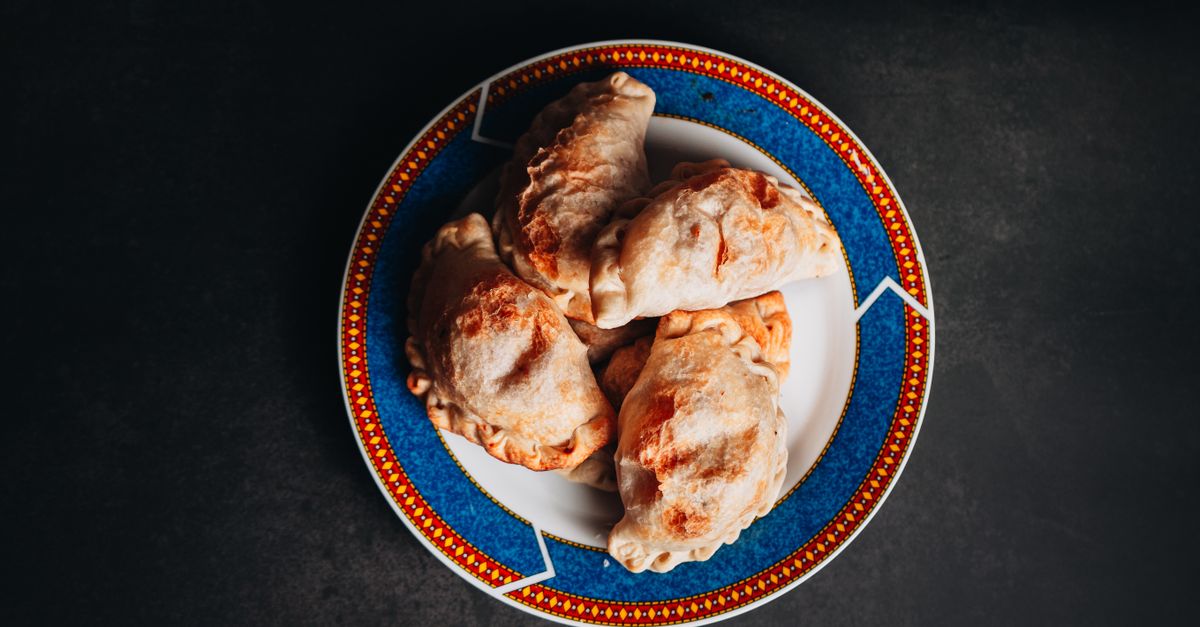
Mendoza empanadas are distinguished from the rest of Argentina's empanada canon by their specific fillings and the crimping technique that identifies their origin: carne cortada a cuchillo (hand-chopped beef — never ground — with onion, spiced with cumin, paprika, and oregano, sometimes with a slice of hard-boiled egg and an olive), or humita (corn and cheese filling with a sweetness from the fresh corn that is characteristic of the Cuyo region). The pasty is short, barely sweet, and designed to be slightly flaky rather than bready.
The hand-chopping of the beef in Mendoza empanadas is the critical quality marker — the knife-cut pieces retain a texture and juice that ground beef cannot achieve, and the spice profile (heavier on cumin and paprika than Buenos Aires empanadas) gives Mendoza empanadas a distinctly regional flavour character. Baked empanadas (al horno) are the preference over fried for these fillings — the dry heat of the oven caramelises the pasty exterior and concentrates the filling without the oiliness of deep-frying.
La Marchigiana on Avenida Patricio Mendoza (Calle Patricias Mendocinas) is a family-run Italian-Argentine restaurant and one of the most beloved empanada institutions in the city — a multi-generational establishment that has barely changed its recipe in decades. Azafrán on Sarmiento Street in the city centre also produces excellent baked empanadas alongside its broader Mendocino cuisine menu. Avenida Patricias Mendocinas runs along the eastern edge of central Mendoza, parallel to Avenida San Martín.
A dozen baked empanadas at a traditional restaurant costs ARS$6,000–$10,000 (€8.50–€14). Individual empanadas are sometimes sold by the piece from market stalls at ARS$500–$800 each. Empanadas are served as a starter before the main asado course in traditional parrilla culture — order four or five to share while the grill is prepared. The humita (corn) empanada is the most distinctly Cuyo preparation and should not be missed alongside the more universal carne version.
4. Chivito / Cabrito (Roasted Kid Goat)
Roasted kid goat (cabrito in Spanish) is one of Mendoza's great under-the-radar food traditions — less celebrated than asado but eaten with equal devotion in the wine country restaurants and the mountain communities of the Andean foothills. Young goats, raised on the mountain scrub and high-altitude pastures of Mendoza Province, have lean, tender meat with a mild, slightly sweet flavour quite different from the stronger taste of mature goat. The whole animal is cooked slowly — either on a spit over vine wood embers or in a wood-fired oven — until the skin crisps and the meat becomes falling-tender.
The flavour of Mendoza cabrito is delicate and clean — the mountain diet of aromatic herbs and grasses translates into the meat with a natural seasoning that requires only salt and the smoke of the cooking fire to complete. The ribs are the most prized cut: thin, slightly fatty, with the skin crisped to crackling and the meat inside barely cooked and yielding. Served with chimichurri and a salad of local tomatoes and onion, this is one of Argentina's finest regional dishes.
El Asador Criollo restaurant in Maipú (30 minutes south of Mendoza in the heart of the olive and wine country) is a rural parrilla that specialises in whole-roasted cabrito and other regional preparations. The countryside setting, with Andean views and vine wood grills, makes this a destination meal. Maipú is the olive oil and wine production zone south of Mendoza city, easily reached by local bus, rental bicycle (the town has a bike rental culture for winery touring), or taxi.
A serving of roasted cabrito at a rural parrilla costs ARS$8,000–$15,000 (€11–€21). The whole-animal preparation at a country restaurant for a group runs significantly higher but represents excellent per-person value. This is a Sunday lunch dish in Argentine rural culture — serve multiple people, take hours, and pair with estate red wine from the surrounding vineyards. The combination of kid goat and a glass of Bonarda or Criolla Chica (lesser-known Mendoza red varieties) is one of the most regionally authentic wine and food pairings in Argentina.
5. Mendoza Olive Oil
Mendoza's olive oil production is internationally recognised and dramatically undervalued outside Argentina — the province's semi-arid climate, volcanic soil, and strong Andean sunshine produce olive oils of exceptional quality from Arbequina, Picual, and Frantoio varieties planted by Spanish and Italian immigrant families in the late 19th century. The best Mendoza olive oils are fresh, peppery, and intensely aromatic — characteristic of high-altitude production where the slower ripening of the olives concentrates polyphenols and aromatic compounds.
The olive oil culture in Mendoza is tied to the wine culture — many wineries in Maipú and Luján de Cuyo also produce olive oil, and the combination of a wine tour with an olive oil tasting (followed by both used in an asado) is one of Mendoza's most satisfying full-day experiences. Premium Mendoza extra-virgin olive oils are available at food markets, winery cellar doors, and the city's speciality food shops at prices considerably lower than equivalent European artisan oils.
Chacras Park area in Chacras de Coria (20km south of Mendoza city near Luján de Cuyo) has several olive oil producers who offer tastings alongside winery visits. Familia Zuccardi (also known for wines) produces an excellent olive oil from their Maipú estate available at their cellar door and at Mendoza's upscale food market at Mercado Central. The Mercado Central on Avenida Las Heras in central Mendoza has a good selection of regional food products including local olive oils.
A 500ml bottle of quality extra-virgin Mendoza olive oil costs ARS$3,000–$6,000 (€4.20–€8.40) at a local market — outstanding value for oils of this quality. The premium estate oils available at winery cellar doors cost ARS$5,000–$10,000. Olive oil from Mendoza's certified organic producers (available at Mercado Central) represents the highest quality tier. These oils travel well and are among the best food souvenirs available in Argentina.
6. Pastas (Italian-Argentine Mendoza Style)
Mendoza's Italian immigrant heritage — Italians comprised the largest single immigrant group in the province from the 1880s onwards — produced a pasta culture of genuine depth. The pasta made by Mendoza's traditional Italian-Argentine families uses semolina flour and farm eggs in proportions that produce a firm, yellowish dough with a texture that holds sauce differently from softer fresh pasta. Handmade fettuccine, maltagliati (irregularly cut pasta), and ricotta-filled ravioli are the staples of the traditional trattoria menu.
The sauces are calibrated for wine pairing — the tomato sugo is cooked long and reduced to a concentrated sweetness that works with Malbec rather than against it; the meat ragu uses local beef braised in Malbec and the flavour of the wine permeates the sauce during the long cooking. The butter-and-sage preparations for stuffed pastas showcase the quality of local Mendocino dairy rather than relying on imported cheese. These are honest, generous, wine-country Italian dishes rather than delicate restaurant constructions.
La Marchigiana is the landmark Italian-Argentine restaurant in Mendoza — open since the 1950s, serving handmade pasta and the city's most beloved empanadas in a room decorated with Italian immigrant photographs and wine bottles. Trattoria Que Rico on Calle Patricias Mendocinas is a newer but highly regarded Italian-influenced establishment. Both restaurants are in central Mendoza, walkable from the main Plaza San Martín.
A main course of handmade pasta at a traditional restaurant costs ARS$3,000–$7,000 (€4.20–€9.80). Paired with a glass of house Malbec at ARS$1,500–$2,500, a full Italian lunch in Mendoza costs approximately ARS$6,000–$12,000 — extraordinary value for the quality. Pasta portions in Mendoza are Argentine-scaled (enormous) — a single main course is sufficient for most international visitors and could serve two in Europe.
7. Dulce de Leche (Milk Caramel in All Forms)
Dulce de leche is Argentina's national sweet obsession — milk slowly heated with sugar until the Maillard reaction and caramelisation transform it into a thick, amber-brown paste of extraordinary richness and complexity. Mendoza has its own artisan dulce de leche producers who use the region's excellent dairy milk and traditional open-pan cooking methods, producing dulce de leche with a depth and complexity that the mass-produced commercial versions cannot approach. The flavour spectrum runs from pale, milky-fresh to deeply caramelised, almost bitter.
In Mendoza, dulce de leche appears in a dozen contexts: spread on medialunas (Argentine croissants) at breakfast, filling alfajores (cornstarch biscuit sandwiches), swirled into ice cream, layered in cakes (torta de dulce de leche is a regional speciality), and eaten directly from the jar with a spoon by everyone who insists they are only "trying it." The best Mendoza dulce de leche is made from the milk of high-altitude Andean cows with a distinct caramel complexity not found in the lowland varieties.
Helados Lucania on Avenida San Martín in central Mendoza makes what many locals consider the best dulce de leche ice cream in the city — served in traditional Italian-style gelato format with a creamy richness appropriate for the Mendoza afternoon heat. The Mercado Central has artisan dulce de leche producers selling directly. For the most indulgent alfajor experience, La Flor de Córdoba alfajores shop has a Mendoza branch near the central plaza.
A scoop of dulce de leche ice cream at Lucania costs ARS$800–$1,500 (€1.12–€2.10). A jar of artisan dulce de leche costs ARS$2,000–$4,000. A premium alfajor de maicena (cornstarch alfajor) filled with dulce de leche costs ARS$600–$1,200. Take home multiple jars of artisan dulce de leche — the real thing cannot be replicated from a supermarket jar, and the Mendoza artisan versions are among the best dulce de leche available anywhere.
8. Torrontés Wine (White Wine from Salta and La Rioja)
While Mendoza is synonymous with Malbec, the wine country of northwest Argentina — particularly Salta and La Rioja — produces the white grape Torrontés in a style that is entirely distinct and entirely delicious. Torrontés grown at altitudes of 1,500–2,400 metres in Salta's Cafayate Valley produces wine of explosive aromatic intensity: rose petals, white peach, grapefruit zest, and jasmine in abundance, with a refreshing acidity that makes it one of the most food-friendly white wines in the world. It appears on every Mendoza wine list as the white counterpoint to Malbec.
Mendoza's own white wine production — largely Chardonnay, Semillon, and Viognier — is less celebrated than Torrontés from the north but produces quality examples, particularly from the cooler Valle de Uco. A full Mendoza wine meal might begin with a glass of Torrontés alongside empanadas and ceviche, move through a medium-bodied Malbec with the main asado, and finish with a glass of late-harvest Torrontés or a fortified wine alongside dulce de leche desserts.
Every wine bar and restaurant in central Mendoza serves Torrontés by the glass — it is the standard starter white before the Malbec-focused main event. Vines of Mendoza Wine Bar on Espejo Street in central Mendoza has an exceptional by-the-glass selection of Torrontés from across northwest Argentina. Espejo Street runs in the city's pedestrian area between Avenida San Martín and the main plaza.
A glass of quality Torrontés at a Mendoza wine bar costs ARS$2,000–$4,000 (€2.80–€5.60). A bottle of premium Clos de Torrontés from Salta at a restaurant runs ARS$10,000–$18,000. The wine bar format at Vines of Mendoza allows exploration of multiple producers by the glass — budget ARS$15,000–$25,000 for an afternoon tasting session that covers the full spectrum of Argentine white and red wines in knowledgeable, English-speaking company.
9. Locro (Andean Stew)
Locro is one of the oldest and most significant dishes in Argentine food culture — a thick, slow-cooked stew made from dried white beans or hominy corn (mote), squash, potato, chorizo, and various cuts of pork and beef (including typically dried meat, pork ribs, and pig's ear) that has been eaten across the Andean and northwestern Argentine regions for centuries before the Spanish conquest. In Mendoza, locro appears primarily during the cooler months (May through August) as a warming, substantial meal that restores and sustains against Andean winter cold.
The flavour profile of locro is deeply earthy and complex — the dried beans and corn develop a starchy, slightly smoky character from the long cooking; the mixed meats provide multiple fat-and-protein textures; and the squash sweetens and thickens the broth. The condimento (seasoning sauce applied at the table) is a mix of paprika, chilli, fat, and vinegar that cuts through the stew's richness. A bowl of locro is a meal, a comfort, and a cultural history lesson in one steaming serving.
Locro is a special-occasion and seasonal dish in Mendoza — found primarily at traditional criollo restaurants during winter months. La Tasca de Alvar Fáñez on Avenida Las Heras is a traditional Argentine restaurant that prepares locro regularly through the cooler months. The May 25 and July 9 national holidays (Argentine independence days) are the two days when locro is eaten across the country as a patriotic meal — every restaurant and many homes prepare it on these specific dates.
A bowl of locro at a traditional restaurant costs ARS$3,000–$6,000 (€4.20–€8.40). The national holiday versions at restaurants and food stalls are sometimes available free or at reduced price as a civic gesture. This is a dish to order on a cold Mendoza winter evening when the temperature has dropped and the wine country needs its most warming food.
10. Choripán (Street Food Chorizo Sandwich)
Choripán — chorizo sandwich — is Argentina's great democratic street food: a grilled or charcoal-cooked chorizo (spiced pork sausage) split lengthwise, placed in a crusty marraqueta bread roll, and dressed with chimichurri. That is the entire dish. In its simplicity, the choripán reveals the quality of its components most directly — a good chorizo is freshly made, well-spiced with paprika and garlic, with a natural pork fat content that sizzles and renders on the grill. A bad chorizo is a flavourless tube of mystery. In Mendoza's wine country, at asado events and sporting matches, the choripán is invariably excellent.
The bread matters enormously — the marraqueta, a crusty French-influenced roll common across Argentina and Chile, should have a slight chew and a crust that holds up under the fat of the sausage without becoming soggy immediately. The chimichurri must be house-made: olive oil, garlic, dried oregano, fresh parsley, red wine vinegar, salt, and red pepper flakes at minimum. Jar chimichurri is a compromise; fresh chimichurri is a revelation.
Choripán is most atmospherically eaten at the outdoor grill stands that set up outside major sporting events — football matches at Estadio Malvinas Argentinas in Mendoza and cycling races through the wine country have choripán vendors outside the stadium gates. For a quality restaurant version, virtually every parrilla in Mendoza offers choripán as a starter or standalone snack. The stands near Parque San Martín (Mendoza's main city park) operate on weekends.
A choripán at a street stand costs ARS$1,500–$3,000 (€2.10–€4.20). At a restaurant parrilla, ARS$2,500–$4,500. This is Mendoza's most immediate and most honest food — inexpensive, casual, and completely revealing of the quality of Argentine pork and bread culture. The correct accompaniment is a cold Quilmes lager or a glass of Malbec, and the correct setting is outdoors, standing, immediately after the sausage leaves the grill.

Mendoza's Essential Food Neighborhoods
Avenida Arístides Villanueva (Central Mendoza) is the city's most concentrated restaurant and bar corridor — a tree-lined boulevard in the residential Quinta Sección neighbourhood west of the city centre that runs for 10 blocks and has Mendoza's best density of excellent restaurants, wine bars, and traditional parrillas. The outdoor dining culture on this avenue, particularly in the mild Mendoza spring and autumn evenings (October–November and March–April), is outstanding. Walk the full length from Avenida Emilio Civit south and assess options before choosing — the variety spans traditional parrillas to modern Argentine cuisine to Italian-Argentine restaurants at varying price points.
Luján de Cuyo and Maipú Wine Country, the two main wine sub-regions closest to Mendoza city, have developed their own restaurant culture within the winery estates — the most spectacular and most memorable dining in the Mendoza region. Estate restaurants at wineries including Achaval Ferrer, Zuccardi, Norton, and Domaine Chandon serve multi-course lunches with paired wines in cellar or vineyard settings. These are reservation-essential experiences that typically operate for lunch only (noon to 3:30pm) and cost USD$60–$150 per person all-inclusive. The wine and food quality at this price level is world-class, and the Andean backdrop is irreplaceable.
Chacras de Coria, a leafy, affluent residential suburb 15km south of Mendoza city on the road to Luján de Cuyo, has developed an excellent restaurant district around its main square — a quieter, more local alternative to the city centre dining scene with excellent wine-focused restaurants, artisan food shops, and the weekly feria (market) on Saturdays. Francis Mallmann's restaurant Siete Fuegos (when operating) is based nearby — the Argentine chef considered by many the world's greatest asador has his primary operation in this wine country. Check the current status of Siete Fuegos before visiting as operations vary seasonally.
Practical Eating Tips for Mendoza
Mendoza operates at a dramatically different pace from most South American cities — the wine culture enforces long, leisurely lunches and late dinners, and the combination of Andean altitude (at 760 metres, noticeably higher than Buenos Aires at sea level) and dry heat means eating lighter than you might at sea level while drinking the same amount of wine. Hydration is essential — the Mendoza air is dramatically drier than coastal Argentina and the combination of wine, heat, and dryness can produce dehydration headaches if water intake is not maintained. Drink a glass of water between every glass of wine as the local winemakers recommend.
Vegetarian and vegan visitors face challenges in Mendoza's meat-centric culture but are not without options — the city's Italian-influenced pasta culture, the excellent local produce (particularly the extraordinary market tomatoes, peppers, and stone fruits from the Cuyo region in season), and the increasing number of modern Argentine restaurants with vegetable-forward menus make eating plant-based in Mendoza considerably more manageable than a generation ago. The wine, olive oil, and artisan cheese culture is entirely accessible to non-meat-eaters. For the most omnivorous visitor, the combination of asado, Malbec, empanadas, dulce de leche, and fresh Andean produce makes Mendoza one of the world's great eating and drinking destinations, full stop.


