
Manali's food culture is shaped entirely by altitude, season, and the extraordinary confluence of cultures that meet in this Himalayan valley town in Himachal Pradesh. At 2,050 metres above sea level, with snow-capped peaks visible from virtually every eating establishment in town, the cuisine here is built around sustenance as much as flavour — food that insulates against mountain cold, provides energy for altitude trekking, and celebrates the agricultural bounty of the Kullu Valley: apples, apricots, trout from the Beas River, and grain crops that have fed mountain communities for millennia.
The food culture in Manali is layered with unlikely influences. The indigenous Kullu and Lahuli people have their own ancient grain-based traditions — siddu (fermented wheat bread) and dham (the elaborate ceremonial feast) speak to pre-tourism mountain food culture. The Tibetan Buddhist communities in Old Manali have brought thukpa noodle soups and momos that are now embedded in the town's daily food vocabulary. And a significant hippie-era tourism legacy has left behind a strangely excellent cafe culture serving Israeli food, Tibetan staples, and wood-fired pizza to the trekking crowd in the same mall (pedestrian market street) as traditional Himachali dhabas.
Start with a bowl of trout curry or grilled Beas River trout at a dhaba in the early morning when the fish is freshest, then spend the afternoon working through the apple products — cider, jam, fresh juice, and the raw Manali apple straight from an orchard. End with a bowl of siddu and curd beside a wood fire when the mountain cold sets in. Manali's food rewards those who eat by season and altitude.

10 Must-Try Dishes in Manali
1. Trout Fish (Pahadi Maachh / Beas River Trout)
Brown trout and rainbow trout from the Beas River and its tributaries are Manali's most prized local ingredient and one of the Kullu Valley's best-kept food secrets. The cold, oxygen-rich Himalayan streams produce fish of exceptional quality — the flesh is pale pink, firm, and delicately flavoured in ways that reflect the mineral-rich mountain water. Manali's trout has been cultivated in river hatcheries since the colonial period and is now available year-round, though wild-caught river trout from local fishermen appears at markets during the fishing season (February through August).
The preferred Manali preparation is simple pan-frying or grilling with minimal intervention — the quality of the fish makes elaborate preparation unnecessary. At local dhabas, trout is typically marinated briefly in a paste of garlic, ginger, and Himalayan spices (ajwain, red chilli, turmeric) before being cooked in mustard oil on a flat tawa. At more tourist-oriented restaurants, it is grilled whole over charcoal with lemon and butter. The skin crisps beautifully in mustard oil; the flesh inside stays moist and slightly sweet from the cold-water environment.
Manali Trout Farm on the road toward Old Manali offers the most direct-from-source trout experience — you can see the fish in the rearing ponds, select your fish, and have it prepared for you at the adjacent café in under 30 minutes. For a more atmospheric setting, the dhabas along the Old Manali road serve fresh trout curry and pan-fried trout from early morning. Old Manali is a 2km walk uphill from the main Mall Road, or a short auto-rickshaw ride.
A whole grilled trout at a tourist restaurant costs ₹300–₹600 (€3.30–€6.60). At a traditional dhaba, trout curry costs ₹200–₹400. The trout farm experience including a fresh trout meal costs ₹350–₹550. This is Manali's best value luxury food experience — the quality of freshwater trout available for this price is genuinely difficult to find anywhere else in India. Order it pan-fried in mustard oil with Himachali spice for the most local preparation.
2. Siddu (Himachali Fermented Wheat Bread)
Siddu is the most distinctly Himachali food you will encounter in Manali — a yeasted, fermented wheat bread steamed in a domed shape that is the traditional staple of mountain communities throughout Kullu and Lahul districts. The bread is made from whole wheat flour fermented with a natural starter for several hours, then often filled with a paste of hemp seeds, walnuts, or sweetened poppy seeds before being sealed and steamed. The result is a bread with a slight sourdough tang from the fermentation, a dense, chewy crumb, and a flavour that is earthy and nourishing in exactly the way high-altitude food needs to be.
The texture of siddu is quite unlike any other Indian bread — the steaming technique (rather than baking or frying) produces a moist, slightly sticky exterior and a compact interior. The fermentation adds complexity to the wheat flavour that plain rotis and parathas lack. Hemp seed filling is the traditional and most flavourful variety — the seeds add a nutty, slightly bitter richness that makes the filled siddu almost a complete meal in itself when paired with curd or ghee.
Siddu is not universally available at every Manali restaurant — it requires advance preparation time and is most commonly found at traditional Himachali food spots and home-style establishments. Sharma Dhaba on Manu Temple Road in Old Manali serves siddu with ghee and curd as a daily breakfast and lunch item. During Himachali festivals (particularly Dussehra in Kullu, 50km down the valley), siddu is prepared en masse by local families and is freely shared — the most communal way to experience this bread.
A siddu with ghee and curd costs ₹80–₹150 (€0.88–€1.65) at a traditional establishment. At tourist restaurants on Mall Road that feature Himachali cuisine, the price rises to ₹150–₹250. The bread must be eaten warm — it hardens and loses its texture when cold. Order one per person as a substantial snack or light meal. The hemp-seed filled version is the most interesting and the most traditional choice.
3. Dham (Himachali Ceremonial Feast)
Dham is Himachal Pradesh's traditional multi-course ceremonial feast — a complete meal served on a leaf plate (pattal) in a specific sequence: first rice and dal, then madra (chickpeas or kidney beans in a yoghurt and spice sauce), then khatta (sour-sweet tamarind and jaggery preparation), then mitha bhat (sweet saffron rice), finishing with mittha (semolina pudding with ghee and dry fruits). Dham is prepared by hereditary cooks called botis who are the custodians of the traditional recipes and techniques, and it is served at weddings, festivals, and community celebrations.
The flavour logic of dham is sequenced and deliberate — the meal moves from savoury to sour to sweet in a progression that seems designed to satisfy every register of the palate in order. The madra (chickpeas in yoghurt sauce) is the centrepiece: thick, tangy, deeply aromatic with Kashmiri red chilli and warming spices, slow-cooked in the yoghurt until the proteins stabilise and the sauce becomes creamy. The khatta that follows provides acidic relief; the sweet rice at the end provides closure.
Experiencing an authentic dham requires either attending a local wedding (hotel staff in Manali can sometimes arrange for respectful tourist participation in public celebration dham events during festival seasons) or finding a restaurant that recreates the meal. Café 1947 near Hadimba Temple in Manali sometimes features a simplified dham lunch experience during peak tourist season. For the real thing, visit during the Kullu Dussehra festival in October when dham is served publicly at the festival grounds in Kullu town, 42km south of Manali.
A dham-inspired meal at a tourist restaurant costs ₹300–₹500. At a communal festival event, dham is typically free or by donation. Attending a Himachali wedding where dham is served is an extraordinarily generous cultural experience — Himachalis are famously hospitable and welcoming of respectful guests at communal celebrations. The cooking is always vegetarian at traditional dham — the boti cooks do not prepare meat, which is consistent with the Hindu religious context of many celebrations.
4. Momos (Tibetan Dumplings)
Momos arrived in Manali with the Tibetan refugee community that settled in Himachal Pradesh following the 1959 Tibetan uprising, and they have become so thoroughly embedded in the local food culture that most Manali residents eat them as frequently as traditional Himachali food. Tibetan dumplings filled with mixed vegetables, cheese (paneer), or minced meat (typically chicken in the hill stations' modified halal-influenced version), steamed or fried, served with a fiery tomato-chilli dipping sauce and thin, sour soup. The momo culture here is as authentic as anywhere outside Tibet itself.
The momo tradition in Himachal Pradesh differs slightly from the more widely known Nepalese momo — the wrappers are slightly thicker and more chewy, the fillings often feature local ingredients like spinach, Himachali mountain cheese, and sometimes apple in fusion preparations. The dipping sauce (achar) is made from roasted tomatoes, garlic, and dried red chillies with a pungency that matches the cold mountain air. Fried momos (kothey or pan-fried) have a golden crust on one side that adds a textural dimension the steamed version lacks.
Johnson's Café near the Mall Road in Old Manali has been a momo institution for decades — their mixed vegetable momos are consistently good and the Tibetan thukpa soup served alongside is excellent. The Tibetan market near Manu Temple in Old Manali has small family-run stalls serving momos at market prices. For the most authentic Tibetan atmosphere, Café Tibetan Kitchen in Old Manali is operated by members of the local Tibetan community with proceeds supporting the settlement.
A plate of 8–10 steamed momos costs ₹80–₹150 (€0.88–€1.65) at a Tibetan café. Tourist restaurant versions run ₹120–₹200. The dipping sauce should be ordered separately if not included — it makes a critical difference to the flavour. Eat momos hot from the steamer; cold momos are unpleasant. The steaming process typically takes 12–15 minutes after ordering — this is not a fast-food experience. Order, drink tea, and wait with patience.
5. Thukpa (Tibetan Noodle Soup)
Thukpa is the Tibetan noodle soup that has become Manali's most warming and universal comfort food — a clear, aromatic broth with hand-pulled or dried noodles, vegetables, and optionally chicken or mutton, served in generous bowls with chilli oil on the side. At altitude in cold weather, thukpa is the single most practical thing a body can eat: warming from the inside, substantial enough to sustain energy for trekking, and light enough not to weigh you down. The broth is made from bones, ginger, garlic, and a small amount of soy sauce for a clean, restorative depth.
The hand-pulled noodles of traditional thukpa are irregular and chewy — each one a slightly different thickness from the manual stretching process, creating textural variation that dried-noodle versions cannot replicate. The vegetables typically include cabbage, spring onion, and whatever seasonal produce is available; the broth absorbs their sweetness during the brief simmering period. The chilli oil adds heat that the body needs at this altitude. A bowl of good thukpa at 2,000 metres elevation feels medicinal as much as pleasurable.
Snow Lion Restaurant in Old Manali (a long-standing favourite among trekkers and Tibetan community members alike) serves excellent thukpa alongside other Tibetan preparations. Tashi's Café on the opposite side of Old Manali's main street is another reliable option. Both establishments are in the heart of Old Manali's pedestrian village area, reachable from the main Mall Road by walking uphill for about 2km or taking an auto-rickshaw.
A large bowl of thukpa costs ₹100–₹180 (€1.10–€2). The vegetable version is invariably good; chicken thukpa requires verification that the chicken is fresh. This is pre-trek breakfast food and post-hike recovery food in equal measure. A double portion with extra chilli oil and a side of siddu is one of Manali's most satisfying meals and costs under ₹350 total.
6. Apple Products (Manali Apples, Cider, Apple Jam)
The Kullu Valley's apple orchards are one of India's most significant fruit-growing regions and the source of Manali's most distinctive culinary identity. Hundreds of apple varieties are cultivated on the valley's terraced hillsides — Royal Delicious, Golden Delicious, Gala, Fuji, and numerous indigenous Himachali varieties that never leave the local market. The apple harvest from August through October transforms the valley: roadside stalls appear laden with fresh fruit, orchards sell directly to visitors, and the air carries the cidery sweetness of apple pressing.
Manali apple products span fresh fruit eaten with Himalayan salt (the local way), apple jam and preserve with an intensity that reflects the altitude-concentrated flavour, apple cider (ranging from sweet, fresh-pressed juice to lightly fermented versions), apple wine (legally sold at shops in Manali, locally produced and improving year by year), and apple-based chutneys served with dham and traditional meals. The altitude-grown apples have a distinctive tartness and density of flavour absent from lowland-grown apples — the cold nights and warm days of mountain agriculture produce measurably different fruit.
The orchards along the road between Manali and Naggar (15km south) allow direct purchase from farmers during harvest season — look for the signs advertising "orchard sales" from August onwards. In town, the Himachal Pradesh State Cooperative Market near Mall Road sells approved local products including apple jam and preserved fruit at fixed prices. The apple wine from Manali Winery (available at licensed liquor shops in town) has improved significantly in quality over the past decade.
Fresh apples from an orchard stall cost ₹40–₹80 per kilogram. Apple jam in glass jars costs ₹120–₹250 depending on producer and quality. A bottle of Manali apple wine costs ₹200–₹450 at a licensed shop. Fresh apple juice pressed to order at market stalls costs ₹30–₹60. Take apple jam home as a souvenir — it is one of the most genuinely regional food products in India and keeps well for months without refrigeration.
7. Babru (Black Lentil Stuffed Flatbread)
Babru is a Kullu Valley bread speciality that deserves more recognition than it receives — a flatbread stuffed with a paste of black lentils (urad dal) soaked, ground, and seasoned with ginger, black pepper, and cumin, then deep-fried or cooked on a hot tawa until the exterior is golden and the filling is cooked through. The result is a substantial, protein-rich bread with a slightly crispy exterior and a savoury, slightly bitter lentil filling that is flavoured enough to eat without accompaniment, though curd and a simple pickle alongside improve it considerably.
The black lentil filling in babru is mildly spiced by most Indian standards — the pepper and ginger provide warmth rather than heat, and the dominant flavour is the nuttiness of the urad dal itself. The bread is filling and sustaining — it was traditionally eaten as a pre-work meal by Kullu Valley farmers and is ideal pre-trek fuel in Manali's adventure tourism context. The fried version develops a satisfying crunch; the griddle version has more of the lentil flavour coming through.
Babru is a breakfast and morning snack item at traditional Himachali establishments in Manali. Dhabas on the Mall Road occasionally offer it; more reliable sources are the small home-style food stalls in the Old Manali area that cater primarily to the local Himachali population rather than tourists. Ask specifically for it — "babru milega?" (can I get babru?) at any Himachali dhaba will get an honest answer about availability.
A babru costs ₹40–₹80 at a traditional stall. At a restaurant, it may appear as part of a Himachali breakfast set for ₹150–₹250. This is a morning food — arriving after 10am reduces the likelihood of finding freshly made babru. The combination of babru, a soft-boiled egg (in tourist-area cafés), and a glass of fresh apple juice makes one of Manali's most satisfying and regionally authentic breakfasts for under ₹200 total.
8. Pahadi Paneer (Mountain Cheese Preparations)
The paneer produced in Himalayan regions has a character noticeably different from lowland factory-produced Indian cheese — made from the full-fat milk of cows and goats raised on mountain pasture, pressed and set in traditional cloth molds, it is denser, more flavourful, and slightly more acidic than standard commercial paneer. In Manali, local dairy farms produce this high-quality fresh cheese that appears in numerous traditional preparations: grilled on a tawa with spices, incorporated into curries, or eaten simply with honey and apple as a cheese-fruit plate that rivals any European cheesemaker's output.
Pahadi paneer tikka — grilled marinated cubes of the local cheese — is one of Manali's most satisfying dishes for vegetarian visitors. The marinade uses Himalayan spices (including the local chilli varieties grown in Kullu Valley) and the cheese is cooked on a tawa or in a tandoor until the exterior develops char marks and a thin crust while the interior remains creamy. The difference in quality between pahadi paneer and lowland paneer in this preparation is immediately apparent.
Johnson's Café in Old Manali is one of the better restaurants for pahadi paneer preparations in a sit-down setting. For the freshest cheese to eat immediately, visit the small dairy cooperative stalls near the Hadimba Devi Temple in the early morning when fresh paneer is made daily. The temple area is in the forest above Old Manali, a 15-minute walk from the main bridge.
A pahadi paneer tikka plate costs ₹200–₹350 at a restaurant. Fresh paneer from a dairy stall costs ₹200–₹300 per 500g. The cheese served at upmarket Manali restaurants with apple-chutney accompaniments can cost ₹400–₹600 per plate but is worth the splurge if the quality is genuinely local and fresh. Ask the restaurant whether their paneer is locally sourced (locally ka paneer hai?) — the honest answers will guide you toward the better establishments.
9. Rajma Chawal (Kidney Bean Curry and Rice)
Rajma chawal — red kidney beans in a spiced tomato-onion curry served with steamed rice — is the quintessential hill station meal in Himachal Pradesh and one of the most satisfying dishes on any Manali menu regardless of how sophisticated or simple the establishment. The rajma grown in Kullu Valley are a specific variety — smaller and more intensely flavoured than commercial kidney beans — and the altitude cooking affects the texture: the slow simmer needed at high elevation (due to lower water boiling point) actually improves the bean's texture, making them supremely creamy while holding their shape.
The gravy in a good Manali rajma is thick, slightly sweet from slow-cooked onion, and carries the deep red colour of Kashmiri chilli powder. Tempered with ghee and cumin at the end, it develops a rich, aromatic quality that the same dish made at sea level struggles to achieve. Served with long-grain Himalayan rice and accompanied by a small mound of pickled salted chillies, rajma chawal is Himachal Pradesh's most honest and most frequently eaten comfort meal.
Every dhaba on Mall Road and in Old Manali serves rajma chawal — this is not a dish for which you need to find a specialist establishment. The best versions are at small, family-run dhabas that cook the beans fresh each morning rather than preparing a large batch and reheating. Look for simple establishments with a single gas burner and a focused menu of three to five dishes — these are invariably better than multi-page menu establishments in Indian hill station cooking culture.
A rajma chawal at a traditional dhaba costs ₹80–₹150 (€0.88–€1.65). At a tourist restaurant, ₹150–₹250. This is Manali's best budget meal — filling, nutritious, and genuinely good when made with Kullu Valley beans and Himalayan rice. A generous serving of ghee (clarified butter) on top of the rice is the local modifier — add it if the dhaba offers it, as it transforms a good dish into a great one.
10. Manali Apple Cider and Local Beverages
Beyond the apple wine mentioned above, Manali has an artisanal apple cider culture that has grown significantly in recent years as craft beverage producers have established small operations in the orchards above the town. The ciders range from fresh-pressed, naturally fermented versions available directly from orchards during harvest season to more refined, carbonated craft ciders sold at tourist-area restaurants and cafés. The best examples have an authentic farm character — tart, slightly yeasty, with the concentrated apple flavour that only altitude-grown fruit can provide.
Alongside cider, Manali's café culture has developed an impressive coffee scene driven by the trekking and adventure tourism crowd — beans sourced from the Monsoon Malabar estates in Karnataka appear at several Old Manali cafés, brewed with genuine skill on manual pour-over and AeroPress equipment. Butter tea (po cha), the traditional Tibetan preparation of tea churned with yak butter and salt, is available at Tibetan community establishments and is an acquired taste worth acquiring — warming, sustaining, and unlike anything else you will drink in your life.
Fresh apple cider from an orchard (August–October) costs ₹30–₹60 per glass or ₹150–₹250 per litre bottle. Craft cider at a restaurant costs ₹200–₹400 per 330ml. Apple wine at a licensed shop costs ₹200–₹450 per bottle. Coffee at an Old Manali specialty café costs ₹120–₹200. Butter tea at a Tibetan establishment costs ₹40–₹80 per cup — order a small cup for your first experience, as the buttery-salty character is genuinely polarising and the full cup can be a difficult commitment without prior familiarity.
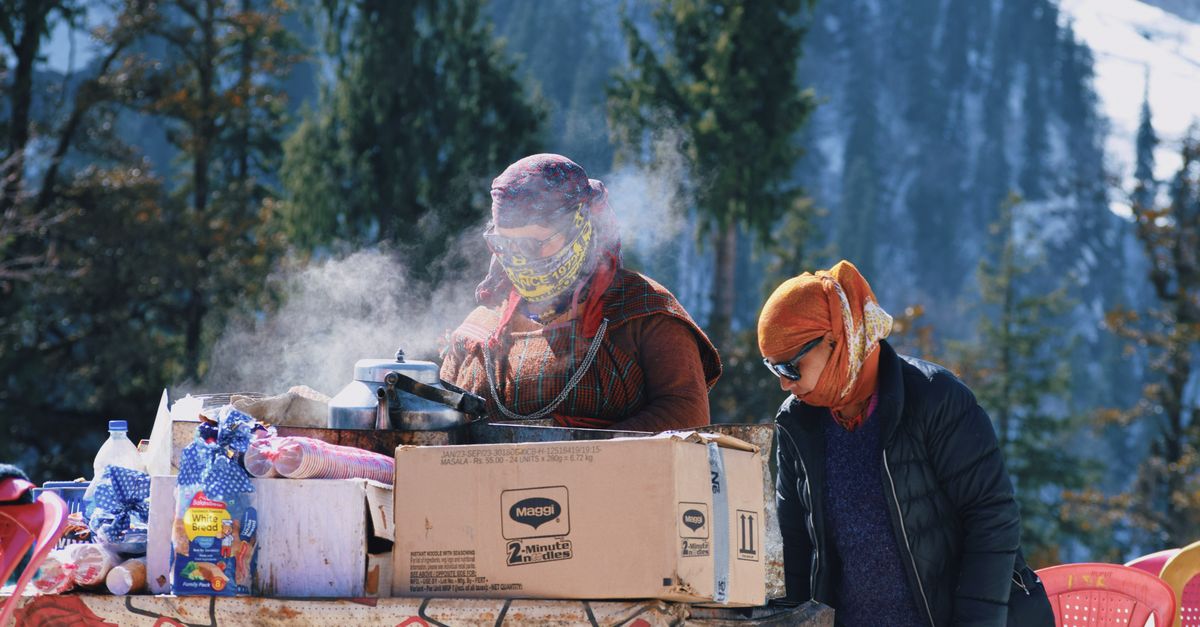
Manali's Essential Food Neighborhoods
Old Manali (Manu Nagar), 2km uphill from the main Mall Road across the Manalsu Nullah bridge, is the most atmospheric and most interesting food zone in Manali — a pedestrian village of old stone and wood buildings where the original Manali settlement coexists with decades of hippie-era café culture and Tibetan community restaurants. The cafés here (Johnson's Café, Dylan's Toasted and Roasted, Moondance Café) attract the trekking and adventure travel crowd with eclectic menus that span Israeli shakshuka, Tibetan momos, and occasionally Himachali specialities. The Tibetan community stalls near Manu Temple serve the cheapest and most authentic momo and thukpa in town. Walk or take an auto-rickshaw from Mall Road.
Mall Road and the Main Market, the commercial heart of modern Manali, has the most varied food offering despite being the most tourist-oriented zone. The Himachal Pradesh State Cooperative shops sell regional food products at fixed prices; the Vashisht village restaurant strip (3km north of Mall Road near the Vashisht hot springs) has excellent Himachali dhabas serving trout curry and dham-style meals at local prices. The hot spring area of Vashisht is a 10-minute walk or short auto-rickshaw ride from the main town — the combination of a natural hot spring dip and a traditional Himachali meal afterward is one of Manali's best experiences.
Hadimba Temple Area, in the forest above Old Manali, combines Manali's most important Hindu pilgrimage site with a cluster of small roadside food stalls and orchards that sell apples, local honey, and simple Himachali snacks to pilgrims and tourists. The stalls near the temple gate serve corn on the cob roasted over coal (a Himalayan favourite), fresh apple juice, local pickle-and-bread snacks, and sweet chai. The forest setting and mountain views make this one of Manali's most pleasant spots for a slow morning snack before the temperature peaks. Hadimba Temple is walkable from Old Manali in 15–20 minutes through the cedar forest.
Practical Eating Tips for Manali
Manali is genuinely affordable by any standard — budget travellers eating at local dhabas and market stalls can manage on ₹300–₹500 per day. Mid-range eating at cafés and restaurants with some variety costs ₹600–₹1200 per day. The only time costs escalate is at the handful of resort hotel restaurants that charge Delhi prices for food that is no better than the dhaba across the road. Avoid eating at your accommodation unless the hotel restaurant is specifically recommended by current reviews. The town's food scene is concentrated, walkable, and entirely accessible to independent navigation.
Vegetarian eating in Manali is exceptionally easy — the Hindu and Tibetan Buddhist influences have produced a rich vegetarian tradition, and the majority of traditional Himachali dham food is vegetarian by religious prescription. Meat-eaters should note that beef is not available in Hindu-majority Himachal Pradesh; chicken and mutton are the standard non-vegetarian options. Hygiene at local dhabas is generally good — the cold temperatures limit pathogen activity, and mountain water sources are cleaner than urban Indian equivalents. Still, stick to boiled or bottled water throughout the region and avoid raw salads at roadside stalls below 2,500 metres elevation.


