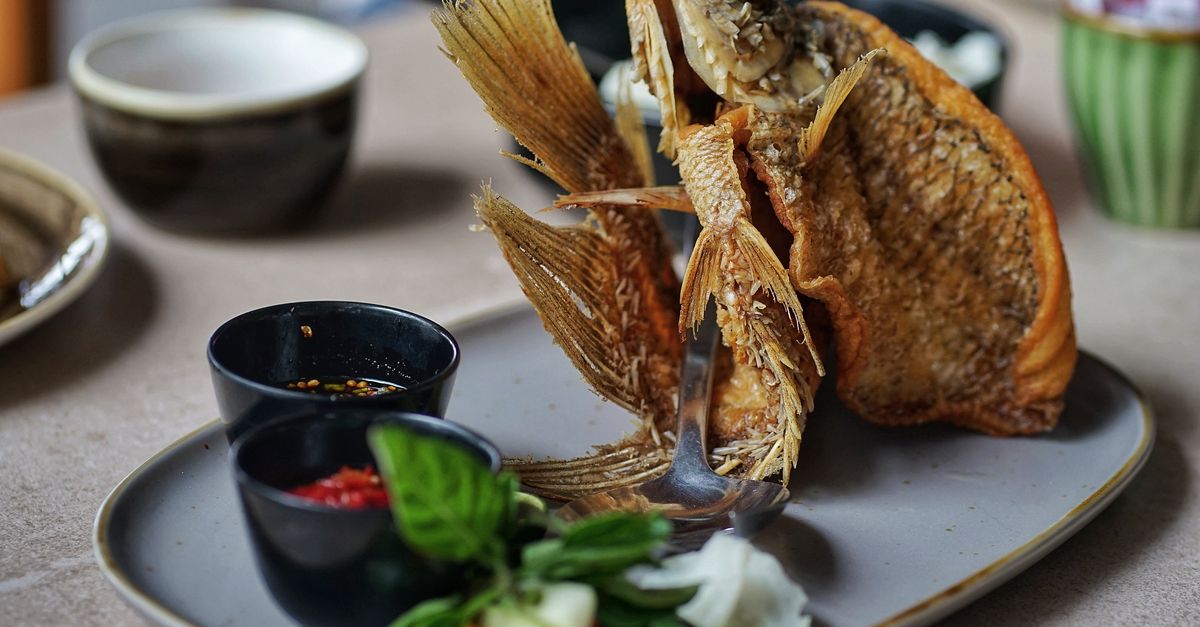
Eating in Lofoten is one of the most elemental food experiences in Europe — and elemental in the most literal sense. The archipelago that juts into the Norwegian Sea above the Arctic Circle has shaped its cuisine entirely around the sea, the sky, and the wind. Stockfish hung on wooden racks to dry in the Arctic air, king crab pulled live from fjords that are improbably turquoise, and reindeer herded by Sámi communities across the plateau above the fishing villages — this is food as geography made edible.
Lofoten's food culture is simultaneously ancient and boutique. The cod fishery here is one of the world's oldest, dating back a thousand years to when Vikings salted and dried their catch for trade across Europe. The stockfish that left these shores fed medieval Europe, stiffened the sails of Venetian traders who couldn't get enough of it, and built the original economy of the Norwegian north. Today, the same fish dries on the same racks, and a handful of smart chefs in Svolvær, Henningsvær, and Å (the village literally at the end of the road) have built world-class restaurants around this extraordinary local pantry.
Don't overthink it — eat what came out of the water that morning. Ask where the king crab came from (the answer will be "the fjord, three hours ago") and order it immediately. Lofoten's food is defined by the radical freshness of ingredients available nowhere else on earth at this latitude.
10 Must-Try Dishes in Lofoten
1. Tørrfisk (Stockfish / Klippfisk)
Stockfish — tørrfisk in Norwegian — is Lofoten's foundational food product and the reason these islands became economically significant a thousand years ago. Arctic cod (skrei) caught during its annual winter migration to the Lofoten waters is gutted, tied in pairs, and hung on outdoor wooden racks (hjell) to air-dry in the cold, dry Arctic wind for two to three months. The result is a fish reduced to about 20% of its original weight but concentrated to five times its flavour intensity.
The taste of properly reconstituted stockfish is intense, deeply savoury, and marine without being fishy — the drying process transforms the cod into something altogether more complex. Reconstitution requires soaking in cold water for several days, but in Lofoten's restaurants you don't have to wait — it arrives prepared in a dozen ways: baked with olive oil and tomatoes in the Portuguese bacalhau style, flaked into fish cakes, or simply pan-fried in butter with a side of boiled potatoes and pork belly.
Anita's Sjømat (Anita's Seafood) in the village of Sakrisøy is one of the most iconic stops in all of Lofoten — a red fishing hut perched on stilts over the water in the middle of the most photographed fjord view in the archipelago. It serves stockfish in traditional preparations alongside fresh-caught fish and excellent fish soup. Sakrisøy is between Reine and Hamnøy on the E10, the main road through Lofoten.
A main course of stockfish at Anita's costs NOK 180–280 (€16–€25). The best time to eat fresh stockfish is April–May when this season's catch is just dry. If you want to buy some to take home, the stockfish shops in Svolvær and at the fishing museums in Å sell it by weight — expect to pay NOK 500–800 per kilogram, which reduces dramatically when the fish rehydrates.
2. King Crab (Kongekrabbe)
The king crab that now thrives in Lofoten's fjords arrived here accidentally — introduced to the Barents Sea by Soviet scientists in the 1960s as a food source, it spread along the Norwegian coast and established itself as both an ecological concern and a culinary blessing. Lofoten's king crabs grow in water so cold and pristine that the flesh is of exceptional quality — dense, sweet, and rich in a way that makes even the finest Alaskan king crab seem slightly inferior by comparison.
Live king crab is pulled from the fjords by local fishermen and taken directly to harbourside restaurants where they are cooked to order — typically split lengthwise, brushed with lemon butter and garlic, and grilled briefly, or simply boiled in seawater. The claw meat is the prize: fat, lobster-dense chunks of sweet white flesh that require no sauce beyond their own briny juices and a slice of good bread. This is the most premium eating experience available in the archipelago.
Børsen Spiseri in Svolvær harbour is Lofoten's best king crab restaurant, with tanks of live crabs visible from the dining room and a waterfront terrace that makes the setting as extraordinary as the food. The restaurant sits directly on Svolvær harbour — walk from the town centre in five minutes. Safari-style king crab fishing experiences in the fjord, followed by an on-board meal, are also available from several operators in Svolvær.
A half king crab at Børsen Spiseri costs NOK 550–750 (€48–€66). A full crab is available for two to share at NOK 900–1200. The crab safari experience typically costs NOK 695–895 per person and includes catching, cooking, and eating in the fjord. This is Lofoten's most expensive meal — but the freshness and setting make it one of Norway's best eating experiences.
3. Skrei (Arctic Migrating Cod)
Skrei is not just cod — it is a specific population of Northeast Arctic cod that migrates thousands of kilometres from the Barents Sea to spawn in the waters around Lofoten each winter, arriving between January and April in one of the world's most dramatic wildlife events. The effort of this migration develops firm, lean muscle with exceptional texture and a clean, sweet flavour that bears little resemblance to year-round farmed or Atlantic cod.
Skrei season is a genuine seasonal event in Norwegian food culture. Restaurants in Oslo compete for the freshest Lofoten skrei, and the fish carries premium status across Scandinavia. In Lofoten itself, it is simply what cod is — fresh, affordable, and available at every harbourside fish shop during the winter months. The classic local preparation is baked with brown butter, capers, and boiled potatoes — a masterpiece of Nordic simplicity.
Fiskekrogen in Henningsvær — a small fishing village connected to the main island by narrow bridges — is considered one of Lofoten's best restaurants and has been serving skrei in exemplary preparations for years. Henningsvær is about 20 minutes' drive from Svolvær along a spectacularly scenic route. Book well in advance in January through March when the skrei season peaks.
A skrei main course costs NOK 250–380 (€22–€34). The head of the skrei — stewed slowly into a rich broth and served with flatbread — is a traditional delicacy often available as a starter for NOK 80–120. The cheeks (kinn) are the choicest cut: ask specifically for skrei kinn if the menu offers them, as they are often sold out quickly.
4. Reindeer (Reinsdyr)
Reindeer herding is central to Sámi culture across northern Norway, and while Lofoten itself is not traditional Sámi territory, reindeer meat from the Finnmark plateau appears on menus throughout northern Norwegian restaurants. Reinsdyr is lean, deeply flavoured, and utterly unlike any farmed beef — the meat is dark burgundy-red, with a gamey richness that comes from a diet of lichen, berries, and Arctic vegetation. It is Norway's version of venison but wilder in character.
The most common preparations are slow-braised reinsdyr steak with lingonberry sauce and root vegetable purée, or reinsdyr carpaccio with cloudberries and pickled vegetables as a starter. The lean muscle fibres mean it should never be cooked past medium-rare when served as a steak — the meat tightens and loses its nuance if overcooked. Smoked reindeer is another form: thinly sliced and served cold as a charcuterie starter.
Klatrekafeen in Svolvær serves excellent reindeer in modern Nordic preparations and is one of the more affordable options in town for traditional northern Norwegian food. For smoked reindeer products to take home, the Lofoten Tørrfiskmuseum shop in Å at the southern tip of Lofoten stocks an excellent range of artisan smoked and dried meat products. Å is the southernmost village on the E10 road — the end of the road in the most literal sense.
A reindeer steak at a sit-down restaurant costs NOK 280–400 (€25–€36). Smoked reindeer to take home costs NOK 180–350 per package. Pair reindeer with a Norwegian aquavit — Linie Aquavit, aged in sherry barrels crossed on the equator, is the classic accompaniment. The flavour pairing of the gamey meat with the dill-caraway spirit is one of Nordic cuisine's great combinations.
5. Klippfisk (Salt Cod / Bacalao Style)
While tørrfisk is air-dried without salt, klippfisk is the salted and dried variant — cod split, salted, and dried flat on rocks (klippe means cliff or rock). Lofoten's klippfisk was the commodity that built the trade routes to Portugal and Brazil, and the Portuguese bacalhau tradition owes its existence entirely to these Norwegian rocks. In Lofoten itself, klippfisk is eaten in a Portuguese-influenced preparation called bacalao — a slow-simmered stew with tomatoes, olives, capers, potatoes, and chilli.
The bacalao style in Lofoten is a fascinating culinary circle — the fish left Norway centuries ago, became a Portuguese national dish, and returned to northern Norway in a Mediterranean preparation that locals have now adopted as traditional. The stew is rich, slightly acidic from the tomatoes, and deeply umami from the reconstituted klippfisk. It is warming, substantial, and slightly incongruous on a cold Lofoten evening — until you remember the trade history that created it.
Bacalao is served at most traditional restaurants in Svolvær. Sjøhus-kafeen (The Boathouse Café) in Svolvær does an excellent, traditional version that costs NOK 195–250. The Svolvær fish market along the harbour also sells klippfisk to take home — bring vacuum bags and customs declaration forms if travelling internationally, as dried fish is a premium product worth exporting.
A bacalao main course costs NOK 195–280 (€17–€25). This is among Lofoten's most affordable restaurant options and represents excellent value for the quality of the main ingredient. The rehydrated klippfisk, cooked in tomato stew, develops a yielding, layered texture quite different from fresh fish — it rewards slow eating and a glass of robust white wine.
6. Fiskesuppe (Norwegian Fish Soup)
Fiskesuppe — Norwegian cream-based fish soup — is one of the great Nordic comfort foods and in Lofoten, where the raw ingredients are of exceptional quality, it reaches its highest expression. The soup is pale gold, creamy without being heavy, scented with dill and leek, and filled with whatever fresh fish and shellfish came in that morning: cod, haddock, salmon, shrimp, sometimes king crab. The broth is made from fish bones and heads, giving it a depth that store-bought versions can never approach.
The texture is velvety — thickened lightly with cream and a touch of flour — with chunks of tender fish that hold their structure and prawns that pop with sweetness. Good fiskesuppe always has slightly too much dill, a generous amount of cream, and a thick slice of crusty bread on the side for mopping the bowl. It is the first thing to order if you arrive in Lofoten cold, wet, and dazzled by the drive through the mountains.
Anita's Sjømat in Sakrisøy makes what many visitors consider the best fish soup in Lofoten — it is the dish that made her restaurant famous, and the queues on summer days confirm the reputation. The Café Å in the village of Å at the southern tip of Lofoten also does an excellent version made from the morning's catch. Both are on the E10 road.
A bowl of fiskesuppe with bread costs NOK 145–195 (€13–€17). It is always the right choice for lunch in any weather. The soup at Anita's sells out — arrive by noon to guarantee a bowl. On cold autumn and winter days, the restaurant serves it from opening until stock runs out, typically by 2pm. This is Lofoten's best value eating experience.
7. Lofoten Lamb (Lofotlam)
Lofoten lamb might be the most terroir-specific meat in Norway — sheep that graze freely on the islands' hillsides, coastal meadows, and mountain plateaus, eating a diet of seaweed, wild herbs, and coastal grasses that gives the meat a distinctive mineral salinity and depth. Like the pré-salé lamb of Mont Saint Michel across the North Sea, Lofoten's coastal sheep produce meat with a faint, natural seasoning from their seaweed-rich diet — something no inland lamb can replicate.
The classic preparation is slow-braised shoulder of lamb (fårikål) with cabbage and black pepper — Norway's national dish — though Lofoten chefs elevate it with proper seasoning and slow cooking times that turn the shoulder into something silky and yielding. Grilled Lofoten lamb chops with herb butter are simpler and equally excellent. The meat is at its best in late summer and autumn when the lambs have had the full grazing season.
Borsen Spiseri in Svolvær offers Lofoten lamb on its autumn menu. For the most traditional fårikål experience, look for home-cooking situations — the village guesthouses (rorbu — traditional fishermen's cabins converted to accommodation) sometimes serve traditional meals to guests, and a home-cooked Lofoten lamb dinner is an extraordinary experience. Ask your accommodation about local dining options beyond the restaurants.
A Lofoten lamb main course at a restaurant costs NOK 280–380 (€25–€34). Traditional fårikål is a family dish — portions are enormous. This is best enjoyed in September and October when new-season lamb is available and the autumn colours on the Lofoten hillsides make the landscape as spectacular as the food.
8. Multekrem (Cloudberry Cream)
Cloudberries — multer in Norwegian — are the Arctic's most prized wild berry: golden-orange, resembling raspberries in shape, and growing only in boggy Arctic and subarctic terrain where they are painstakingly hand-picked during a brief summer window. They have an intensely complex flavour: tart, floral, slightly honey-like, and with a tropical fruity note that seems improbable at this latitude. They cannot be cultivated commercially, making them rare, expensive, and deeply seasonal.
Multekrem is the traditional dessert preparation — cloudberries folded into sweetened whipped cream, sometimes with a splash of cloudberry liqueur, and served as a simple dessert with a crisp wafer or shortbread. It is the flavour that defines Norwegian fine dining at its most local. In Lofoten, fresh cloudberries appear in August and are available in this form until stock runs out — typically by September.
Most Lofoten restaurants serve multekrem in August and September when berries are available. Fiskekrogen in Henningsvær and Børsen Spiseri in Svolvær both feature it on their seasonal menus. Cloudberry jam is available year-round at grocery stores and tourist shops — a jar of Lerum cloudberry jam from a petrol station makes one of Norway's best and most genuine souvenirs.
Multekrem at a restaurant costs NOK 95–145 (€8–€13) as a dessert. A jar of cloudberry jam costs NOK 60–90. Fresh cloudberries by the punnet at a farmers' market cost NOK 150–250 per 250g — expensive but worth every krone. Cloudberry aquavit liqueur (Moltebær Akevitt) is a superb digestif and available at Vinmonopolet, Norway's state alcohol retailer.
9. Norwegian Brown Cheese (Brunost / Geitost)
Brunost — brown cheese — is one of Norway's most distinctive food products and entirely unlike anything in European cheese culture. It is not technically a cheese but a whey product: the residual whey from cheese-making is boiled until the milk sugars caramelise, transforming the liquid into a dense, fudge-like block with a deep caramel-brown colour. The flavour is sweet-savoury-tangy, somewhere between cheese, caramel, and condensed milk, and utterly addictive on good Norwegian crispbread.
Geitost (goat's milk brunost) is sharper and more intense than the cow's milk version; the blend (Gudbrandsdalsost) is the national standard. In Lofoten, the local version from nearby farm dairies is sold at markets and farmstands. It is the obligatory breakfast accompaniment in every Norwegian guesthouse, rorbu cabin, and mountain hut — thinly sliced on crispbread with a strong cup of coffee.
Every grocery store (Rema 1000, Spar, Kiwi) in the Lofoten villages stocks brunost in multiple varieties. The Lofoten experience is buying it at the local grocery store in Reine or Svolvær and eating it for breakfast in your rorbu cabin while watching the sun hit the granite peaks. For artisan versions, the farmers' markets at Svolvær harbour sell small-batch farm-produced brunost in summer.
A 500g block of Gudbrandsdalsost costs NOK 45–65 at supermarkets. Artisan farm versions cost NOK 80–120. The special brunost cheese slicer (ostehøvel) is a Norwegian invention — one of the most practical kitchen tools ever created and available in every hardware and kitchen shop for NOK 80–150. Buy one; use it forever; remember Lofoten every time.
10. Aquavit (Akevitt)
Norwegian aquavit is the spirit of the north — distilled from potatoes or grain, flavoured primarily with caraway or dill, then aged in oak barrels. Linie Aquavit, the most famous Norwegian brand, undergoes its bizarre and brilliant ageing process by travelling aboard ships that cross the equator twice, the rolling motion and temperature changes accelerating the maturation in ways that landlocked barrel-ageing cannot replicate. The result is a spirit of remarkable smoothness and depth.
The flavour profile of a good Norwegian aquavit combines the herbaceous dill and caraway with a warm oak note, a slight sweetness from the potato base, and a clean, warming finish. It is drunk ice-cold as a shot alongside food, particularly fish, shellfish, and meat dishes. The tradition of singing aquavit songs before shots — one of Norway's most charming social rituals — is still observed in traditional restaurants and homes.
Aquavit is available at Vinmonopolet (the state alcohol monopoly, found in larger Lofoten villages including Svolvær) and at the duty-free on Bodø airport. Local craft producers from the wider northern Norway region also appear at Lofoten food festivals. The pairing of aquavit with king crab — a shot of ice-cold Linie beside a claw of fresh Lofoten crab — is one of the north's finest food and drink experiences.
A shot of Linie Aquavit at a restaurant costs NOK 85–120 (€7.50–€11). A bottle at Vinmonopolet costs NOK 300–450. Norway's alcohol regulations mean spirits are only available at state monopoly shops — plan ahead if you want to stock up. Craft aquavit from micro-distilleries, when available at Vinmonopolet, represents some of the most exciting spirits production happening in northern Europe right now.

Lofoten's Essential Food Neighborhoods
Svolvær is Lofoten's main town and the archipelago's food hub — the place with the most year-round restaurant options, the ferry connections, and the widest range from traditional to modern Nordic. The harbour waterfront has Børsen Spiseri for king crab and serious fish dishes, Sjøhus-kafeen for traditional preparations, and a morning fish market that runs from the harbour when local boats bring in the daily catch. The town centre has a Vinmonopolet for spirits purchases and a sufficient selection of grocery stores for self-catering in rorbu cabins. Most visitors use Svolvær as their base and explore outward from here.
Henningsvær, 20 minutes south of Svolvær along a road that crosses narrow bridges between small islands, is the most visually striking of Lofoten's fishing villages and the location of Fiskekrogen — consistently one of the archipelago's best restaurants. The village is compact, walkable, and centred on its harbour where fishing boats and pleasure craft share the dock. The Lofoten stockfish museum nearby offers context for the dried fish you will see everywhere. Cafés in Henningsvær do excellent waffles with cloudberry jam and sour cream — the Norwegian afternoon café ritual at its most scenic.
Reine and Sakrisøy, near the southern end of the main island chain, form what many consider the most beautiful landscape in all of Norway — and Anita's Sjømat in tiny Sakrisøy, a cluster of red rorbu huts on stilts above a turquoise fjord, is the single most atmospheric place to eat anywhere in Lofoten. The fish soup here, the stockfish preparations, and the setting combine to create a food experience that is inseparable from place. Reine also has a small grocery store and a couple of cafés — useful for supplies before heading further south to Å.
Practical Eating Tips for Lofoten
Lofoten is Norway — which means it is expensive by any European standard. Budget NOK 250–350 (€22–€31) for a simple restaurant lunch; NOK 400–600 (€36–€54) for a main course at a proper evening restaurant. King crab and fine dining push budgets considerably higher. Self-catering is the key to managing costs: rorbu cabins have kitchen facilities, and the quality of supermarket fish, cheese, and produce in Norway is genuinely good. A cooked supermarket salmon fillet with brunost and crispbread costs NOK 80–120 and eats as well as a restaurant meal elsewhere in Europe.
The cardinal rule of Lofoten eating is to ask about freshness and provenance before ordering — the best venues are proud to tell you when the fish was caught and by whom. Avoid restaurant meals where the fish on the menu is generically described without provenance; Lofoten's food culture rewards the specific. Dress warmly even in summer — eating outdoors at harbourside cafés with a fjord view is one of the great pleasures of the archipelago, but the Arctic wind is impartial. The best single piece of advice: buy a bag of fresh shrimp from a harbour vendor, stand on the dock with a view of the Svolværgeita peaks, and peel and eat them as the sun touches the mountain top. Cost: NOK 80. Value: incalculable.