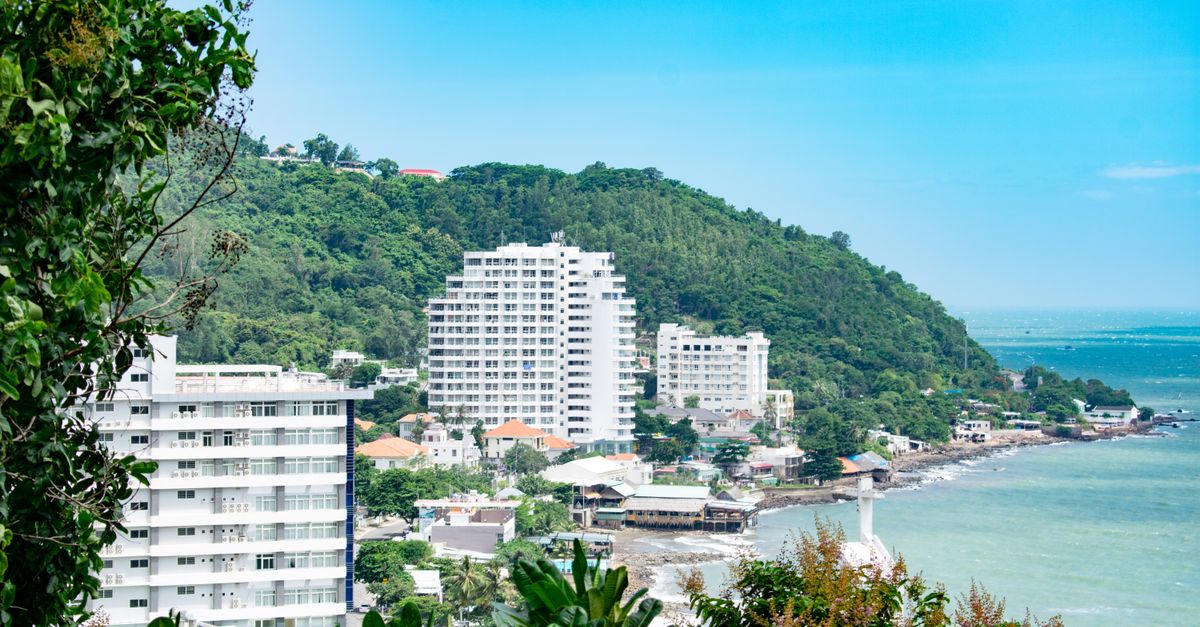
Koh Lanta sits at the southern end of Thailand's Andaman coast, far enough from the Phuket tourist infrastructure to still function as an island with a genuine local identity. The food here carries that distance from the mainstream — this is southern Thai cooking in its fullest, most fiery expression, shaped by Muslim fishing communities in the north of the island, Buddhist farming families in the south, and the Chao Ley (sea gypsies) who have lived off the surrounding waters for generations longer than Thailand has existed as a political entity.
What distinguishes Koh Lanta's food from the more internationally familiar Thai cooking is the southern Thai commitment to heat and pungency. Southern Thai curry pastes are more complex and more aggressive than their central Thai counterparts — turmeric and dried spices feature prominently, chili quantities are doubled, and the coconut milk, when used, is less dominant than in the tourist-adjusted curries served in Bangkok restaurants. The local seafood — crab, cuttlefish, grouper, mantis shrimp, and sea bass pulled from the Andaman Sea each morning — is cooked with a directness that lets the fish speak first and the spicing support rather than dominate.
Find the old town at the island's southeastern tip (Ban Koh Lanta, the historic Chinese-Malay commercial settlement), walk the fishing village at Ban Saladan in the north, and ask the guesthouse owner where their family eats. The answers will lead you away from the beach road restaurants toward the food that actually feeds the island — cheaper, spicier, and more genuinely interesting than anything aimed at Western palates.
10 Must-Try Dishes in Koh Lanta
1. Fresh Crab (ปูสด — Poo Sod)
Koh Lanta's waters produce mud crab and flower crab of extraordinary size and quality. The mud crab (ปูทะเล, poo ta lay) in particular — the large, heavy-clawed species with dense, sweet flesh — arrives at the island's fishing village markets each morning from the traps set overnight in the mangrove-fringed channels behind the island. These are not the small, scraggly crabs of tourist seafood restaurants on the beach road; they are proper, heavy crustaceans with claws that require tools to open and flesh of genuine depth.
The most traditional Koh Lanta crab preparation is stir-fried with yellow curry paste and egg (ปูผัดผงกะหรี่, poo pad pong kari) — the egg scrambles into a fragrant, golden sauce that coats every piece of crab in a combination of rich yolk, curry aromatics, and the crab's own released juices. Alternatively, the crab is steamed whole and served with nothing more than a small bowl of naam jim seafood sauce (lime juice, fish sauce, sugar, chili, and garlic). Both preparations are correct. Both require eating with your hands and absolute commitment to the mess involved.
The fishing village restaurants in Ban Saladan (the northern fishing community near the ferry pier) are the best source for fresh crab. The seafood market opens early in the morning when the boats return, and the restaurants immediately adjacent to the market buy what came in that day. The morning's catch is on the table by lunch. In the old town (Ban Koh Lanta), several family restaurants serve crab from their own traps — look for a handwritten sign saying "ปูสด" (poo sod — fresh crab) outside.
A whole mud crab costs THB 400–800 per kilogram depending on size and season; a full meal-sized crab runs THB 600–1,200 at a local restaurant. Beach road restaurants charge 30–50% more for identical quality. The cooking fee (if you buy the crab at the market and take it to a nearby cook shop) is typically THB 100–150. The stir-fried egg curry version requires at minimum two portions of rice per person to handle the quantity of sauce — order extra rice without hesitation.
2. Kang Tai Pla (แกงไตปลา — Southern Fermented Fish Kidney Curry)
Kang tai pla is the most challenging, most fascinating, and most distinctly southern Thai dish you will encounter on Koh Lanta. It is a curry made from tai pla — fermented fish innards (specifically the intestines and kidneys of the pickled fish used to make fish sauce) that have been cured in salt until they develop an intense, powerfully pungent flavor that acts as the curry's entire seasoning base. The resulting curry is dark, complex, deeply umami, and simultaneously spicy, sour, and pungent in a way that is impossible to prepare for without having eaten it before.
The curry contains southern Thai vegetables — bamboo shoots, young jackfruit, eggplant, and wing beans — that absorb the intense sauce and provide textural contrast. Fresh fish, dried fish, or shrimp are often added. The paste used to build the curry includes dried chilies, lemongrass, galangal, and shrimp paste, but these are supporting elements rather than the flavor foundation — tai pla provides the entire depth. Understanding this is understanding southern Thai cooking: fermentation provides complexity that no spice blend can replicate.
Kang tai pla is a dish that requires a local recommendation to find in its best version. The beach road tourist restaurants rarely serve it because its intense flavor does not align with tourist expectations. In Ban Saladan and the old town, local rice-and-curry shops (ข้าวแกง, khao kaeng) include it in their daily rotation. Ask specifically for "แกงไตปลา" — the phonetic is "kaeng tai pla" — and the response will tell you immediately whether the shop serves genuine southern food.
Kang tai pla costs THB 60–120 at a local rice-and-curry shop. It is always eaten with rice — generous portions of steamed jasmine rice, which moderates the intensity. The first spoonful will likely be the most intense thing you eat on the trip; the second will be slightly less so as your palate adjusts. Approach it with curiosity rather than caution and you will understand, by the fifth spoonful, why southern Thai cooks consider it the defining expression of their region's food philosophy.
3. Khao Mok Gai (ข้าวหมกไก่ — Thai Muslim Chicken Biryani)
Koh Lanta's northern end is predominantly Thai Muslim in population — descendants of Malay Muslim fishing families who have lived here for centuries — and their food is the best argument for eating in the morning at any of the Muslim-owned restaurants and market stalls near Ban Saladan. Khao mok gai is the Thai Muslim biryani: fragrant jasmine rice cooked with chicken, coconut milk, turmeric, cinnamon, cardamom, and dried chili until the rice is golden-yellow and every grain has absorbed the chicken fat and spice aromas. It is served with a sour-sweet cucumber relish (ajaad) and a bowl of chicken broth for dipping.
The Muslim biryani tradition in southern Thailand arrived with Malay and Indian trade influences and has evolved over centuries into something distinctly Thai — less rich than Indian biryani, spiced differently than Malay nasi briyani, and accompanied with condiments that are completely Thai in origin. The chicken for khao mok gai should be bone-in and relatively fatty — the fat renders into the rice during cooking and is what provides the characteristic richness. A lean chicken produces a drier, less flavorful result.
The Thai Muslim restaurants near the Saladan ferry pier serve khao mok gai from 7am onward as a morning staple. The best version on the island is arguably at a small shop on the main road in Saladan that opens by 6:30am and sells out completely by 10am. Arriving early enough to get the first batches — when the rice is still slightly crispy where it touched the bottom of the cooking pot — is essential to understanding the dish at its best.
Khao mok gai costs THB 80–150 per plate. The portion includes a specific quantity of rice and chicken that is meant to be eaten as a complete unit — do not separate the rice from the chicken to eat individually, as the ratio has been calculated by the cook to produce the right combination in each bite. The cucumber relish provides necessary acidity; do not skip it. Pair with traditional Thai Muslim sweet milk tea (ชาไข่มุก, cha kai muk) for the authentic Saladan morning eating experience.
4. Grilled Seafood on the Beach (อาหารทะเลย่าง)
The simplest and most satisfying eating on Koh Lanta does not require a restaurant at all — it requires a beach barbecue stall at sunset, a whole fish or fresh tiger prawns grilled directly over charcoal, and the accompanying dipping sauce of naam jim seafood. This format appears on the beach at Long Beach (Hat Yao), Klong Dao Beach, and Klong Nin Beach from mid-afternoon onward, where local vendors set up charcoal grills and sell whatever the boats brought in that day.
The grilled seafood at these beach stalls is simple and excellent precisely because the ingredient quality is high. A fresh whole grouper (ปลาเก๋า, pla kao) grilled skin-on over charcoal has a smoky exterior, moist flesh, and a clean ocean flavor that needs only fish sauce, lime, and shredded lemongrass to be complete. Mantis shrimp (กุ้งตั๊กแตน, goong tak gatan) grilled whole split the difference between lobster and prawn — richer than prawn, more accessible in flavor than lobster. Whole squid stuffed with garlic and herbs is another standout.
The beach barbecue vendors on Long Beach (Hat Yao) set up from approximately 4pm and are most active from 5–8pm when the sunset crowd arrives. The price boards written on cardboard with the day's catch and per-kilogram prices are the honest indicator of quality — vendors who change their boards daily are working with fresh stock. Fixed menus with photographs are often using frozen seafood regardless of what they say.
Whole grilled fish costs THB 200–500 depending on species and size. Tiger prawns cost THB 400–700 per serving (usually four to six pieces). Squid costs THB 150–300 per piece. Beer (Chang or Leo, the beach choices) costs THB 60–80 per can. A full beach dinner for two with seafood and drinks costs THB 600–1,400 — a fraction of what the same quality costs at European coastal beach restaurants. This is one of Thailand's genuine price-to-experience advantages.
5. Pad Kra Pao (ผัดกระเพรา — Holy Basil Stir-Fry)
Pad kra pao — stir-fried meat with holy basil, garlic, dried chili, oyster sauce, and fish sauce, served over rice with a fried egg on top — is Thailand's most universally available dish and also its most consistently excellent when made properly. Koh Lanta's version uses the same preparation as anywhere else in Thailand, but the local seafood options elevate it beyond the standard: pad kra pao with fresh cuttlefish or wild-caught shrimp rather than the ubiquitous minced pork produces a version with sea-salt complexity that the protein standard cannot approach.
The key ingredient is kra pao (holy basil, กระเพรา) — not the Thai sweet basil (horapa) or lemon basil (manglak) that appear in other dishes, but specifically the spicy, slightly clove-scented holy basil variety that wilts quickly and blackens at the edges when hit with a properly hot wok. A cook who substitutes sweet basil for holy basil is making a different dish with a similar name. The holy basil's slight bitterness and clove-pepper note is what gives the dish its character; sweet basil produces something less interesting and more familiar.
Pad kra pao is available at every local restaurant on Koh Lanta. The quality marker is the wok heat — the dish requires a genuinely hot wok to achieve the characteristic smoky wok flavor (wok hei). Home kitchens and low-volume restaurants do not maintain the wok temperature needed; busy local restaurants with high turnover are invariably better. Order it "spicy" (เผ็ด, phed) unless you have established your tolerance; the standard version is mild by local standards.
Pad kra pao costs THB 80–150 at local restaurants. The seafood version (shrimp or squid) costs THB 120–200. The fried egg on top (ไข่ดาว, kai dao) is included in most preparations; if it is not, add it for THB 10–20. Mix the egg yolk into the basil and rice before eating — the yolk enriches the sauce and balances the chili heat. This is the dish to order when you are not sure what else to eat; it is never wrong.
6. Chao Ley (Sea Gypsy) Seafood
The Chao Ley (ชาวเล, literally "sea people") — the indigenous maritime communities of the Andaman Coast — have lived from the sea around Koh Lanta for longer than any historical record extends. Their relationship to the ocean is as intimate and as ancient as any food tradition in Southeast Asia. The Chao Ley communities on Koh Lanta's northwestern coast maintain traditional methods of fishing that involve reading tidal patterns, following bioluminescent plankton at night, and understanding the specific locations where different species congregate at specific times of year.
The seafood from Chao Ley fishermen — sold directly from their boats or at small informal markets on the beaches of their communities — is the freshest and least processed available on the island. Their traditional preparations are simpler than the main island's cooking: fish grilled directly over wood fires with minimal seasoning, sea urchin eaten raw with a squeeze of lime, shellfish steamed open and eaten with fermented shrimp paste. Eating at or near a Chao Ley community requires sensitivity and respect — these are functioning communities, not tourist attractions — but when the connection is made correctly, the food experience is incomparable.
The Chao Ley village on Koh Lanta's northwestern coast (accessible by longtail boat from Saladan or by road) has a small market area where community members sell fresh catch and occasionally serve simple food to visitors. Some Chao Ley community members offer boat tours that include stopping for grilled seafood — this is the most respectful and most interesting way to access their food culture. Contact local guesthouses in Saladan that have established relationships with Chao Ley community guides before attempting to visit independently.
The cost of Chao Ley-caught seafood bought at their community market is often lower than at the main fishing village — THB 150–400 per kilogram for fresh fish, comparable prices for shellfish. A boat tour that includes seafood costs THB 1,200–2,500 per person depending on duration. The experience of eating fish grilled over a wood fire on a beach by people who have been doing exactly this for centuries is worth whatever it costs to access properly.
7. Rotee (โรตี — Thai Muslim Flatbread)
Rotee (derived from the same Indian roti tradition that spread throughout Southeast Asia with Muslim trade networks) is Koh Lanta's most satisfying street snack. A thin wheat flatbread, fried in generous amounts of butter or ghee on a flat griddle, stretched thin by the vendor's practiced tossing and folding technique, then served with either a savory curry dipping sauce or sweet condensed milk and banana inside. The sweet version — banana rotee with condensed milk — has become one of Thailand's most beloved street food experiences across the region.
The technique of making rotee is highly skilled and intensely theatrical — vendors pound the dough, stretch it impossibly thin by tossing it through the air, then fold it into a layered square that fries quickly in the hot butter to produce dozens of flaky, crispy layers. The interior remains slightly doughy and soft while the exterior crisps and caramelizes. It should be served immediately; a rotee that has been sitting for ten minutes loses the textural contrast entirely.
Rotee vendors appear near the Saladan ferry pier in the mornings and evenings, and along the beach road between Long Beach and Klong Dao Beach from late afternoon onward. Muslim-owned rotee carts near the mosque in Ban Saladan serve a particularly excellent savory version with massaman curry sauce — less sweet and more spice-complex than the tourist beach banana version. Both are worth eating; neither is inferior to the other, just different expressions of the same technique.
Rotee costs THB 30–80 depending on filling. A banana and condensed milk rotee is approximately THB 60–80 at tourist beach vendors; the plain or egg version is THB 30–50 at local vendors. Order it and eat it standing at the cart — the theatrical preparation is part of the experience, and the vendor's speed is a quality indicator. Slow, uncertain hand movements producing an uneven, thick rotee reflect inexperience; fast, confident, paper-thin result reflects decades of practice.
8. Massaman Curry (แกงมัสมั่น)
Massaman curry is southern Thailand's most famous export to the world's restaurants — a rich, aromatic, relatively mild curry with Persian and Indian influences that arrived via the Muslim spice trade routes. The paste includes roasted dried spices (cinnamon, cardamom, star anise, nutmeg) that are absent from other Thai curry styles, and the result is a curry that is simultaneously Thai and distinctly different from any other Thai curry. Koh Lanta's Muslim community, which has maintained direct cultural connections to the Malay Peninsula for centuries, makes massaman with a depth of tradition that tourist-area restaurants cannot match.
The classic massaman is made with beef or lamb (both halal options consistent with the Muslim community's practice), potatoes, roasted peanuts, and onions in a rich coconut milk base with tamarind adding the background acidity. The meat should be cooked until genuinely tender — three to four hours — allowing the spiced coconut sauce to penetrate fully. Shortcuts produce a pleasant curry but not the deeply satisfying, complex version that extended cooking provides.
The Muslim restaurants in Saladan and Ban Koh Lanta old town serve massaman as a weekend speciality — on Friday (Jumu'ah/Friday prayer day) the Muslim community cooking typically includes massaman as a celebration meal. For the best version on regular weekdays, Krua Koh Lanta restaurant in Ban Koh Lanta old town maintains a proper curry that has been the standard for food travelers to the island for over a decade. Order it a day in advance if possible for the maximum cooking time.
Massaman curry costs THB 120–250 at local restaurants. It comes with steamed jasmine rice and a small side of pickled vegetables. The peanuts should be whole and slightly crunchy — not pulverized into the sauce. The potato should be tender but intact. The meat should fall apart when pressed with a spoon. These three texture markers indicate the cooking time was sufficient and the technique was correct. Eat it slowly; massaman rewards attention to its layered flavors.
9. Khao Kaeng (ข้าวแกง — Rice and Curry Shop)
Khao kaeng (rice and curry) shops are the backbone of everyday eating throughout Thailand, and Koh Lanta's versions are more interesting than those of most Thai beach destinations because the Muslim food influence adds curries and preparations that do not appear at the standard khao kaeng shop on the mainland. At a well-stocked Koh Lanta khao kaeng, you might find: kang tai pla (fermented fish curry), kang massaman, kang leung (yellow curry — a southern Thai specialty with turmeric as the primary spice), pad kra pao, stir-fried morning glory (pak boong fai daeng), and a rotating cast of daily specials determined by what came to market that morning.
The khao kaeng format is inherently social and exploratory — you walk up to the counter, point at what looks appealing, receive a plate of rice with your chosen curries spooned over or served in small bowls alongside, and eat at a plastic table for a total cost that is almost always under THB 100. The cook determines the menu each morning based on what ingredients are available and fresh; the flexibility is the point. Returning to the same khao kaeng shop multiple days in a row reveals the breadth of a cook's repertoire in a way that ordering from a fixed menu cannot.
Look for khao kaeng shops in Ban Saladan's back streets (away from the tourist seafood restaurants on the main road), in the Muslim community area between the main road and the sea, and in Ban Koh Lanta old town. A shop with a large selection of curries visible from the street, full of local workers during the lunch hour, is invariably the right choice. Tourist-oriented restaurants do not operate in the khao kaeng format; if it has a printed menu with photographs, it is not a khao kaeng shop.
A full khao kaeng lunch with two to three curries and rice costs THB 60–100 at a local shop. Adding a grilled fish or fried egg costs THB 20–50 extra. These are the cheapest proper meals available on the island and frequently among the most genuinely delicious. Budget travelers who eat exclusively at khao kaeng shops for lunch will spend THB 60–100 per day on their midday meal and eat better than most resort guests eating buffet lunches at ten times the cost.
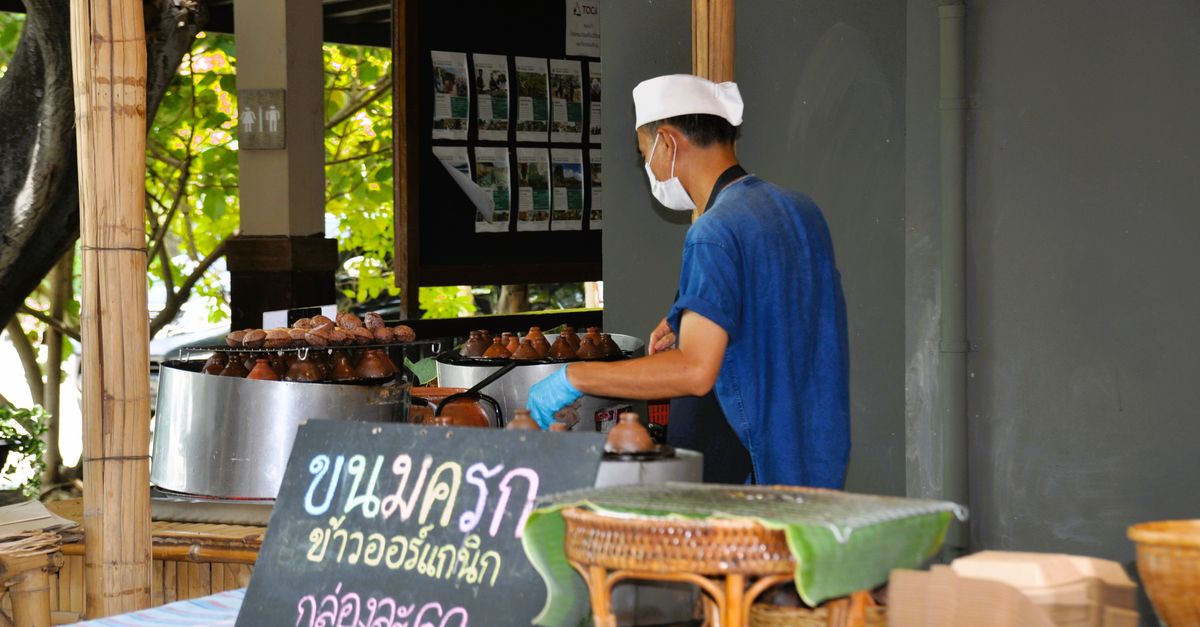
10. Khanom Krok (ขนมครก — Coconut Rice Pancakes)
Khanom krok are small, round, custard-like coconut rice pancakes cooked in a cast-iron mold with rounded indentations — a traditional dessert and snack food that appears at morning markets and evening food stalls throughout Thailand. The batter is a mixture of rice flour, coconut milk, and sugar with a little salt that cooks in the hot oiled mold until the bottom is set and slightly charred while the top remains soft and creamy. Two pieces are placed flat-side together to create a sphere that is crispy outside and barely set inside — a textural contrast that makes them compulsively eatable.
On Koh Lanta, khanom krok appears at the morning markets in Saladan and Ban Koh Lanta old town with an additional set of local flavor variations. Corn kernels or green onion are mixed into the savory version; the sweet version sometimes includes a grated fresh coconut and pandan leaf flavoring that gives it a distinctly southern Thai character. They are morning food — the best batches are made before 9am and any khanom krok purchased after noon is from a second or third batch with less fresh-baked energy.
Morning market vendors in Saladan sell khanom krok from approximately 6:30–9am. The vendor with the heaviest cast-iron mold and the darkest, most well-seasoned surface produces the crispiest exterior — a well-seasoned mold releases the pancake cleanly while adding a faint, pleasant iron flavor. New molds stick; old, properly seasoned molds do not. Watch for this when choosing which vendor to buy from.
Khanom krok costs THB 20–40 for six to eight pieces (one full mold). They are eaten hot in pairs — pick them up with a toothpick or fold in a piece of banana leaf. They do not travel or keep — the crispy exterior softens within fifteen minutes at room temperature. Buy them and eat them standing at the market. They pair perfectly with Thai iced coffee (oliang, โอเลี้ยง) from the vendor next door.

Koh Lanta's Essential Food Neighborhoods
Ban Saladan (สาลาดัน): The northern fishing village and ferry arrival point is the island's most authentic food zone. The morning market (7–10am) has fresh seafood, tropical fruit, khao kaeng, and rotee vendors. The restaurants adjacent to the fishing pier serve last night's catch at breakfast. The Muslim community's early-opening food stalls near the mosque are the best source for khao mok gai and southern Thai Muslim cuisine. The tourist restaurants here are outnumbered by local eating places — the ratio is unusually favorable.
Ban Koh Lanta Old Town (บ้านเกาะลันตา): The historic commercial center of the island on the southeastern coast, connected to the mainland before the causeway was built. The main old town street of wooden shophouses contains several excellent family restaurants, a morning market, and the island's most interesting food shopping for packaged local products (dried seafood, local dried spices, pickled vegetables). Less visited by beach tourists than the main beach road area, the old town food scene operates at a pace and quality that reflects its historical status as the island's original commercial heart.
Beach Road Restaurants: The restaurants along the main road parallel to Long Beach and Klong Dao Beach serve a tourist-adjusted version of Thai food that is perfectly decent — milder, cleaner, and less challenging than the local versions described above, but not dishonest. The fresh seafood sold here by weight is good, and the sunset setting from beachfront restaurants provides an atmosphere worth paying the 20–30% tourist premium for on at least one occasion. Order the freshest whole fish by weight rather than from a set menu for the best value.
Practical Eating Tips for Koh Lanta
Budget guidance: Koh Lanta is extremely affordable for food. Street breakfast at a local market costs THB 60–120. A khao kaeng lunch costs THB 60–100. Beach barbecue dinner for two costs THB 600–1,400. Total daily food spend for enthusiastic eating without premium restaurants is THB 400–800 per person. The tourist restaurant premium on the beach road adds approximately 30–50% to prices for equivalent quality — eating at local shops and khao kaeng restaurants rather than tourist-menu places approximately halves the daily food budget.
Muslim dietary considerations: A significant portion of Koh Lanta's permanent population is Muslim, and the northern end of the island has no pork on most menus. The southern end and beach road area serve pork freely. Visitors with halal dietary requirements will find the northern end comfortable; those who specifically want pork dishes (including many popular Thai preparations) should be aware that northern-end Muslim restaurants do not serve them. Both zones serve excellent food; they are just different menus.
Seafood safety: Order seafood at restaurants near the sea where turnover is high. Avoid pre-cooked seafood sitting in glass cases at tourist-strip restaurants — it may have been cooked hours earlier. Fresh whole fish or live crab that is cooked to order is always the safer and better-tasting choice. The seafood quality on Koh Lanta is genuinely excellent; the cooking method and freshness decisions are what separate excellent from mediocre eating.