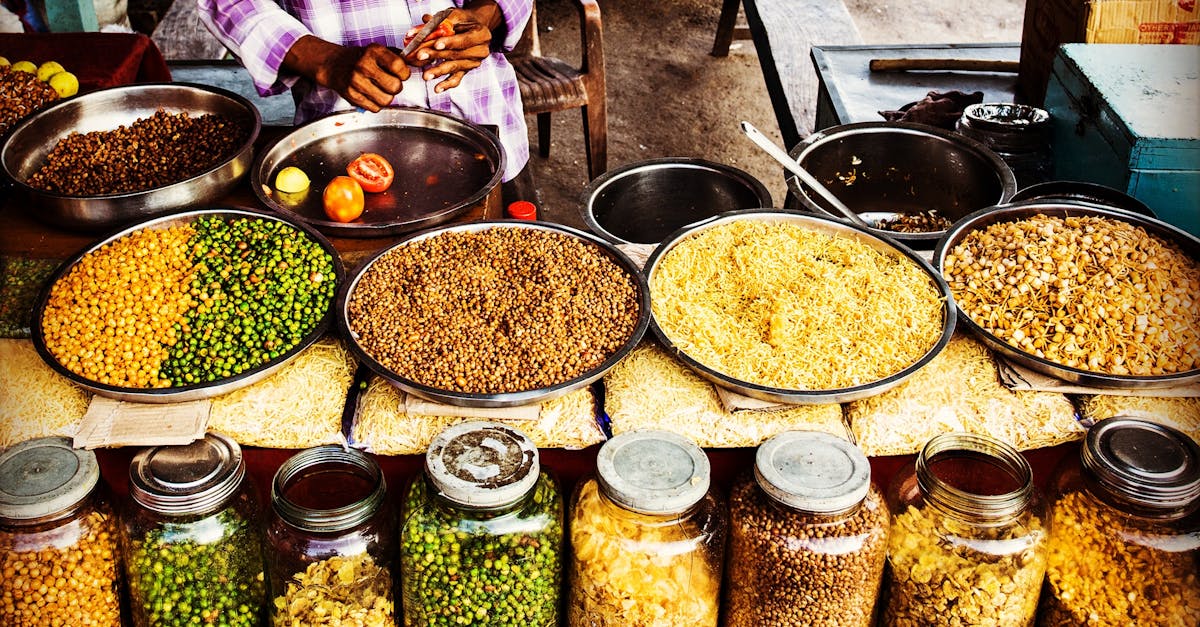
Jodhpur blazes in the Thar Desert sun, its blue-painted old city rising from the dust like something hallucinated. And its food blazes just as fiercely — Rajasthani cuisine was engineered for an environment where water is scarce, temperatures are extreme, and long desert journeys require food that sustains without spoiling. The result is a culinary tradition of staggering ingenuity: ghee instead of water for cooking, dried lentils instead of fresh vegetables, whole spices toasted to extract maximum flavor from minimum moisture.
What makes Jodhpur's food distinct is its commitment to technique and its fearlessness with spice. The mirchi (chili) here is not background heat — it is a principal ingredient in some dishes. The mawa kachori is a fried pastry filled with sweetened condensed milk and dry fruits that somehow manages to be simultaneously a savory snack and a dessert. The dal baati churma is a three-part meal that has sustained Rajput warriors for centuries. Nothing here is accidental; every preparation reflects centuries of adaptation to the desert environment.
Eat at the old city's street stalls near Sardar Market, push beyond the Blue City hotel restaurants that water down the spice for tourist palates, and find the family-run thali restaurants where the same dal baati has been served the same way since the owner's grandfather ran the shop. That is where Jodhpur's food makes its full statement. The Blue City is beautiful from every angle; its food is beautiful from the inside.
10 Must-Try Dishes in Jodhpur
1. Dal Baati Churma
Dal baati churma is the triumvirate that defines Rajasthani cooking — three distinct preparations served together as a complete, supremely satisfying meal. Baati are hard wheat rolls baked in a wood fire or buried in hot coals until they form a dense, cracked exterior while the inside remains soft and doughy. They are then cracked open and submerged in ghee — enormous quantities of ghee, enough to make a cardiologist wince — before being dipped into dal.
The dal (lentil soup) is made from five different lentil varieties slow-cooked with ghee, cumin, mustard seeds, garlic, ginger, and a deeply flavored spice blend called panch phoron. The lentils break down into a thick, textured soup that is simultaneously filling and complex. The churma is the sweet counterpart: coarsely ground wheat baati that has been crumbled, mixed with ghee, sugar, cardamom, and dried fruits into a rough, granular sweet that provides dessert contrast within the same meal.
Gypsy Restaurant near Clock Tower is the most respected address for dal baati churma in the old city — a rooftop setting with views of Mehrangarh Fort where the dal baati is served in traditional clay pots with unlimited dal refills. Indique restaurant at Hotel Pal Haveli serves a refined version that maintains authenticity without sacrificing comfort. For the most traditional experience, the rooftop thali restaurants on the streets near Ghanta Ghar (Clock Tower) serve it as a complete set meal.
Dal baati churma as a full thali costs INR 250–500 at local restaurants. The tourist-oriented versions with views of the fort cost INR 400–800 but often include more accompaniments. The key markers of quality: the baati should have visible char marks from a real fire (not an oven-baked pale version), the dal should be viscous and heavily fragrant, and the ghee quantity should be generous to the point of excess. If the baati is pale and uniformly round, it was baked in an oven, not cooked properly.
2. Mirchi Bada
Mirchi bada is Jodhpur's most essential street food — a large, thick green chili pepper stuffed with a spiced potato filling, dipped in besan (chickpea flour) batter, and deep-fried until the coating is golden, crispy, and light as a cloud. The green chili is blanched briefly before stuffing to reduce (though never eliminate) its heat, and the potato filling is seasoned with dried mango powder (amchur), chili powder, garam masala, and fresh coriander. It is simultaneously fiery, crispy, savory, and completely addictive.
The mirchi bada has become so identified with Jodhpur that the city is sometimes called the "mirchi bada capital of Rajasthan." Every street corner near Sardar Market and Clock Tower has a vendor frying them fresh, and the smell of hot oil and green chili drifting through the narrow old city lanes is as characteristic of Jodhpur as the blue paint on the walls. They are eaten at breakfast, as afternoon snacks, and at any point where hunger strikes in between.
Shahi Samosa near Sardar Market is the definitive address — despite its name suggesting samosas, the mirchi bada here is what people queue for, and queuing is the appropriate response to the smell of their freshly fried batches. Jodhpur Mishtan Bhandar near the Clock Tower is a close second with particularly crispy batter. Both shops open by 7am and run until they sell out, usually by early afternoon.
Mirchi bada costs INR 20–40 per piece at street stalls. Eat them immediately — the batter softens within minutes of frying and the textural contrast that makes them magnificent disappears. Order two or three as a breakfast with chai, then assess whether your heat tolerance permits another round. The veteran local eaters manage four or five before the morning is complete. Start at two and work from there.
3. Mawa Kachori
Mawa kachori is one of the most distinctive pastries in Indian street food — a deep-fried whole wheat pastry shell filled with mawa (khoya — reduced condensed milk), dry fruits (cashews, almonds, raisins), cardamom, saffron, and rose water, then soaked in warm sugar syrup and sometimes garnished with edible silver leaf. It reads as a dessert but is sold as a snack food, occupying that delightful Indian culinary middle ground where sweet things are eaten at any point in the day without apology.
The combination of textures is remarkable: the crispy, flaky fried shell gives way to a dense, sweet, fragrant filling where the mawa has absorbed the dry fruit flavors and the cardamom permeates everything. The sugar syrup adds moisture without making the pastry soggy — a technical achievement that requires experience. A perfectly made mawa kachori should have a shell that is brittle enough to shatter but not so thin that it collapses, and a filling that is sweet but not cloying.
Mishrilal Hotel near Clock Tower is considered the original and best address for mawa kachori in Jodhpur — the family has been making it since 1927 and the recipe has not changed. The shop opens at 8am and the mawa kachori sells out completely by mid-morning. Arriving after 10am on any day risks disappointment. A second respected option is Janta Sweet House near Sardar Market, which makes a version with slightly more saffron in the filling.
Mawa kachori costs INR 30–60 per piece. Eat it warm — the mawa filling is best when it has not fully set. The sugar syrup on top makes it naturally sticky, so licking fingers is not just acceptable but practically required. Pair with a small cup of chai if you want to moderate the sweetness. Do not refrigerate leftover mawa kachori; the shell becomes impenetrably hard. Eat everything you buy immediately.
4. Pyaz ki Kachori (Onion Kachori)
Pyaz ki kachori is the savory counterpart to mawa kachori — a deep-fried wheat pastry filled with a spiced onion mixture that is simultaneously sharp, herby, and warming. The filling combines raw onion, fennel seeds, coriander seeds, green chili, dried mango powder, and a generous quantity of spice mix into a stuffing that contrasts the neutral fried dough with intense, complex flavor. This is the kachori that locals eat for breakfast, the one that appears at every tea stall from dawn onward.
The pyaz kachori from Jodhpur specifically is considered the finest in Rajasthan because the local onions — smaller, sharper, and more sulfurous than the sweet onions of other regions — create a filling with more personality and heat than versions made elsewhere. The fennel seeds provide the aromatic top note; the dried mango powder provides the acidity that makes the whole thing pop. It is eaten with green chutney (fresh coriander and chili) and tamarind chutney together — both are essential, not optional.
Sojati Gate area, particularly the stretch near Umaid Bhawan Road, has the highest concentration of kachori vendors who have been operating for multiple generations. The morning vendors set up around 6am and the fresh batches keep coming until mid-morning. Geetanjali Sweets near Nai Sarak is a sit-down option with consistent quality and a full menu of Rajasthani snacks beyond just kachori.
Pyaz ki kachori costs INR 15–30 per piece at street stalls. Order three at minimum — one is not enough to understand what is happening. The chutney should be served in a small cup alongside; if it comes separately on the plate, it will soak into the bottom of the kachori and soften the pastry before you get a chance to eat it properly. Eat the kachori immediately and dip as you go.
5. Ker Sangri (Desert Vegetable Curry)
Ker sangri is the quintessential expression of Rajasthani desert ingenuity — a curry made entirely from dried ingredients: ker berries (a small, tart wild fruit from the Capparis decidua bush) and sangri pods (from the Prosopis cineraria tree, the desert's most resilient plant). Both are dried in the sun until shelf-stable, then rehydrated and cooked with dried red chilies, mustard seeds, and spices in a preparation that has sustained Rajasthani families through the harshest desert conditions for generations.
The flavor of ker sangri is extraordinary: the ker berries are slightly bitter, tangy, and astringent; the sangri pods are nutty and slightly sweet. Together, with the heat of dried red chilies and the earthiness of coriander and cumin, they create a dish that tastes genuinely of the desert — austere, complex, and deeply satisfying in the way that only food built from pure necessity can be. It is not a dish that impresses through richness; it impresses through intelligence.
Ker sangri is most authentically found at traditional Rajasthani thali restaurants rather than street stalls, because it requires time to prepare properly. On the Rocks restaurant at Hotel Pal Haveli includes it in their Rajasthani thali as a matter of regional pride. Gypsy Restaurant serves it as a component of their full dal baati churma thali. For the most traditional preparation, home cooks in the old city neighborhoods near Toorji Ka Jhalra step well make it better than any restaurant.
As a thali component, ker sangri is included in the full meal price (INR 250–600). As a standalone dish it costs INR 150–250. It keeps well and improves over one to two days of storage, which is consistent with its origins as a preservation-oriented preparation. Eat it with thick bajra (millet) flatbread rather than wheat roti for the most traditional pairing.
6. Laal Maas (Red Meat Curry)
Laal maas is Rajasthan's most celebrated meat curry — a fiery, deeply colored preparation of mutton (goat) in a sauce built almost entirely from dried Mathania chilies, yogurt, garlic, and ghee. The Mathania chili is a specific variety grown near Jodhpur that gives laal maas its distinctive deep red color and its particular heat profile — not the sharp, immediate heat of kashmiri chili but a slow-building, sustained warmth that intensifies over several minutes and stays with you for considerably longer.
The technique is labor-intensive: the chilies are soaked, ground into a paste, and added in staggering quantities — sometimes fifty dried chilies for a kilogram of meat. The yogurt marinade tenderizes the mutton and creates the sauce base; the garlic provides depth; the ghee provides richness. The result is a curry so red it is almost alarming, with a heat level that most visitors find at the absolute outer limit of their tolerance. Locals eat it with equanimity born of lifelong habituation.
Indique restaurant at Hotel Pal Haveli serves what many food writers have called the finest laal maas in Jodhpur — cooked to authentic heat levels unless you specifically request otherwise. Gypsy Restaurant also makes an excellent version. For the most authentic preparation, ask any resident of the old city where their family's preferred laal maas restaurant is — the answers will point you to small, unremarkable-looking places with extraordinary cooking.
Laal maas at a restaurant costs INR 350–600 for a main course portion. Order it with plain white rice or bajra roti — neither competes with the curry's intensity. Have a lassi (yogurt drink) ready as a dairy-based heat counteraction, not water. If you are genuinely sensitive to chili heat, ask the kitchen to reduce the Mathania chili by half — they will understand the request, though they may consider it a mild personal failing.
7. Makhaniya Lassi
Jodhpur's lassi is not the thin, sweet drink sold at tourist cafés across India. Makhaniya lassi is a thick, cream-rich, saffron-scented preparation — essentially a drinking yogurt of such density that it almost requires a spoon — topped with a layer of malai (cream), garnished with pistachios and almonds, and flavored with just enough sugar and cardamom to round the yogurt's natural tang without obscuring it. It is as much a dessert as a drink, and it is the definitive Jodhpur beverage.
The name "makhaniya" refers to the butter-like richness of the preparation — the malai floating on top and the dense, high-fat yogurt base give it a creamy, almost buttery character unlike the light lassis of Punjab or the fruit-flavored versions found elsewhere. Saffron (kesar) dyes the top layer a warm amber and provides a subtle floral note that elevates the whole preparation from excellent to genuinely memorable.
Shahi Samosa near Clock Tower is famous for both its mirchi bada and its makhaniya lassi, and the lassi is what most locals actually come for. Jodhpur Mishtan Bhandar on Nai Sarak makes a slightly thinner but equally well-flavored version. The morning hours (7–11am) are the best time for lassi — the fresh yogurt is most vibrant, the malai is freshly prepared, and the heat has not yet made the walk to the shop an endurance test.
Makhaniya lassi costs INR 60–120 depending on size. Order the large version — the small is never enough. It should arrive in a clay cup or thick glass tumbler, topped with the cream layer visible and the saffron staining it amber. Drink it slowly; this is not a rushed beverage. It will counteract a morning of mirchi bada with its cooling, calming dairy richness. Order one every morning for the duration of your stay.
8. Bajre ki Roti (Millet Flatbread)
Bajre ki roti is the desert's essential bread — a thick, slightly coarse flatbread made from bajra (pearl millet) flour that is the staple of Rajasthani cooking and the foundation of nearly every traditional rural meal. Bajra grows where wheat cannot — in the sandy, low-water soils of the Thar Desert — and has sustained this population for thousands of years. The bread is darker than wheat roti, slightly nutty in flavor, with a dense, satisfying chewiness that pairs perfectly with dal, ker sangri, and laal maas.
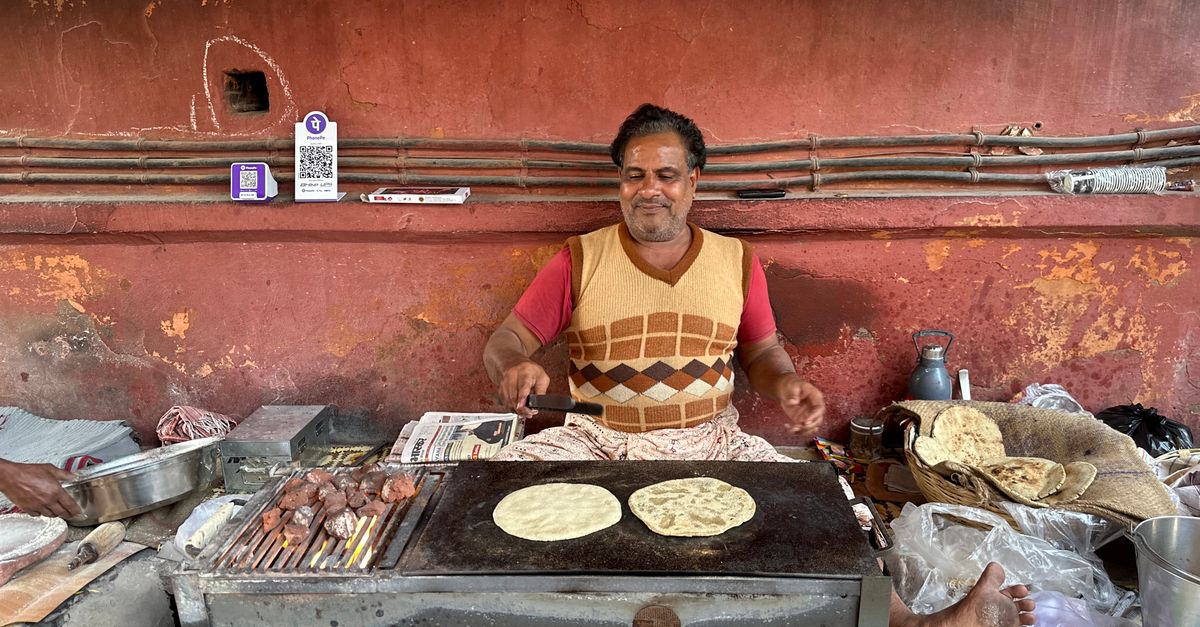
Bajre ki roti requires practice to make well — millet flour lacks gluten, so shaping it into a round, even flatbread without tearing requires technique developed over years. Traditional cooks pat the dough between their palms rather than rolling it, maintaining a thickness that gives the bread its characteristic bite. The roti is cooked directly on a tawa (flat griddle) over high heat, then finished briefly in the flame to produce small char spots that add a smoky note.
Bajre ki roti appears as a standard accompaniment at every Rajasthani thali restaurant in Jodhpur. The traditional pairing is with ghee rubbed generously into the hot roti before eating and a small bowl of raw onion on the side — a combination that farmers have eaten for centuries and that modern nutritionists grudgingly admit makes reasonable sense. The best versions are served at traditional dhaba restaurants on the road to Mandore, where the food is made for locals commuting to the city rather than for tourists.
As a thali component, bajre ki roti is included in the meal price. Individually at a restaurant, one roti costs INR 20–40. Ask for it specifically rather than the default wheat roti — at tourist-oriented restaurants, wheat roti is often assumed as the preference. The millet version is more authentic to the region and more nutritionally interesting. Eat it hot; cold bajre ki roti stiffens considerably and loses much of its appeal.
9. Gatte ki Sabzi
Gatte ki sabzi is one of the most ingenious preparations in Rajasthani cooking — gram flour (besan) dumplings simmered in a tangy, spiced yogurt curry. The gatte (dumplings) are made by kneading besan with oil, spices, and yogurt into a firm dough, rolling it into cylinders, boiling them briefly until firm, then cutting them into coins and adding them to the yogurt curry. The result is a dish that provides protein and texture in an environment where fresh vegetables are not always available.
The yogurt curry base is the real achievement — sour yogurt thinned slightly with water, then cooked with mustard seeds, cumin, dried red chili, and asafoetida into a sauce that is simultaneously tangy, spiced, and warming. The gatte absorb this sauce over time, becoming softer and more flavorful as they sit. This is another dish that improves with age — day-two gatte ki sabzi, reheated, is often better than the fresh version as the dumplings fully absorb the curry.
Gatte ki sabzi appears on every Rajasthani thali in Jodhpur. The version at Indique at Hotel Pal Haveli is particularly well-made — the gatte are soft but have a slight chew remaining, and the curry is balanced without excess sourness. Traditional dhabas on the Jodhpur–Jaisalmer highway serve it as part of a complete Rajasthani meal that costs very little and tastes like it was made for someone who actually had to travel a long distance on limited food.
As a standalone dish, gatte ki sabzi costs INR 120–250 at restaurants. As a thali component, it is included in the full meal. Eat it with bajre ki roti for the most traditional pairing, or with plain rice if the roti is unavailable. The combination of yogurt-based curry and millet bread is one of the Thar Desert's great food achievements — a complete meal from ingredients that survive the harshest conditions imaginable.
10. Churma Ladoo
Churma ladoo is the celebratory sweet form of the churma element from dal baati churma — coarsely ground wheat or millet, roasted in ghee until nutty and fragrant, then bound with sugar and shaped into balls with dried fruits, cardamom, and sometimes edible gum (gond). They are dense, rich, intensely caloric, and completely irresistible. They appear at weddings, at festivals, and as the Rajasthani answer to any occasion requiring food that expresses abundance and celebration.
The roasting of the flour in ghee is the critical step — underdone churma tastes raw and starchy; properly roasted churma has a deep, toasty, nutty character that makes it smell like caramelized butter with wheat undertones. The shape is important too: the mixture must be warm enough when shaped to hold together properly, but not so hot that the ghee separates. An experienced hand can produce a perfectly round ladoo in under ten seconds; a beginner produces a roughly spherical object that falls apart on first bite.
Every sweet shop (mithai shop) in the old city near Clock Tower and Sardar Market makes churma ladoo. Mishrilal Hotel — already mentioned for mawa kachori — makes an exceptional churma ladoo alongside their pastry work. The ladoo made during the winter months (October–February) uses more ghee, which solidifies slightly in the cooler weather and gives the sweets a particularly rich, firm texture. Summer versions are lighter and sometimes more crumbly.
Churma ladoo costs INR 20–50 per piece at sweet shops. Buy a box to take home — they travel well and keep for several days without refrigeration, consistent with their desert-preservation origins. A box of twelve makes an excellent and genuinely local gift. Eat one with chai in the late afternoon, when the desert heat begins to abate and the sweetness of the ladoo contrasts perfectly with the bitter, strong Rajasthani tea.

Jodhpur's Essential Food Neighborhoods
Old City (Sardar Market and Clock Tower area): This is the center of gravity for street food in Jodhpur. The streets radiating from Ghanta Ghar (Clock Tower) and surrounding Sardar Market contain the highest density of mithai shops, kachori vendors, mirchi bada stalls, and lassi bars anywhere in the city. The morning hours transform these streets into a fragrant maze of frying oil, cardamom, and green chili smoke. This is non-negotiable eating territory; anything else in Jodhpur is secondary.
Nai Sarak (New Street): The commercial street running south from the Clock Tower area is where many of the old city's most respected permanent food shops are located. Geetanjali Sweets, Jodhpur Mishtan Bhandar, and several established restaurant have operated on this street for decades. It is slightly calmer than the Sardar Market area and better suited to sit-down eating rather than the standing-while-eating chaos that characterizes the market zone.
Rooftop Restaurants near Mehrangarh Fort: The streets climbing toward Mehrangarh Fort are lined with rooftop restaurants that serve Rajasthani thali with views of the Blue City below and the fort above. These restaurants are tourist-oriented and priced accordingly, but the best of them — Gypsy, Indique, and On the Rocks — maintain genuine quality rather than just selling a view. The elevated setting is spectacular for dinner, when the fort is illuminated and the city cools to a bearable temperature.
Practical Eating Tips for Jodhpur
Budget guidance: Jodhpur is one of India's better value eating destinations. Street food breakfast of mirchi bada, kachori, and makhaniya lassi costs INR 100–200 total. A full Rajasthani thali lunch at a traditional restaurant costs INR 250–400. Dinner at a mid-range rooftop restaurant with drinks costs INR 500–900. Splurging on the premium rooftop restaurants near the fort costs INR 1,000–1,500 per person. By any global benchmark, eating in Jodhpur is extremely affordable.
Timing and heat: Jodhpur's desert climate means daytime temperatures from April through September regularly exceed 40°C. During peak summer, eating the main meal in the morning (10am–noon) and again in the late evening (8–10pm) is the local strategy. Midday eating in the height of summer requires shade, lassi, and genuine commitment. The best food season is October through February when temperatures are moderate and the food festival circuit brings additional traditional preparations to the city.
Water safety and drinks: Stick to bottled or filtered water in Jodhpur. Fresh coconut water from vendors is safe and excellent. Lassi at reputable establishments is safe because the milk is from established dairy sources. Street chutneys and raw salads carry higher risk than cooked food; exercise judgment based on how busy and how hot the stall appears. Spicy food in hot weather is culturally normal here — the capsaicin promotes sweating and the sweating cools the body. Trust the local tradition.