
Harbin is China's most European city, built by Russian engineers along the Sungari River in the early twentieth century as the hub of the China Eastern Railway. Its architecture is a surreal pastiche of Russian Orthodox churches, Art Nouveau facades, and Soviet-era civic grandeur, and its food culture reflects this layered history with a straightforwardness that is entirely Harbiner in character: you want to eat Russian honey bread and pelmeni? You can. You want the hearty northeastern Chinese (dongbei) cooking that developed in this frigid climate? You can eat that too. And in January, during the Ice and Snow Festival, when the city's temperature drops to minus thirty Celsius and the entire world seems made of ice, you can eat in ways that no other city on earth offers.
Dongbei (northeastern Chinese) cuisine — the cooking tradition of Heilongjiang, Jilin, and Liaoning provinces — is China's most robust and least internationally known regional food culture. Where Sichuan chili-forward cooking and Cantonese seafood-based cuisine have become globally recognized, Dongbei food is virtually unknown outside its region. This is a considerable oversight: the stews, dumplings, grilled meats, and fermented preparations of northeastern China are among the most satisfying cold-weather cooking anywhere on earth, developed by communities that have been surviving winters of extraordinary severity for millennia and have never been willing to eat badly while doing so.
The food experience in Harbin is shaped by temperature in a way that few other cities can claim. In winter, outdoor street food — lamb skewers over charcoal, roasted potatoes, sugar-coated hawthorn fruits on skewers — is consumed while standing in coats so thick they restrict movement, the steam from hot food mingling with condensed breath. In summer, when the same streets are warm and flowers line Zhongyang Street (the Russian-era pedestrian avenue), the food culture relaxes without losing its essential character. Winter Harbin food is more authentic and more memorable. Plan accordingly.
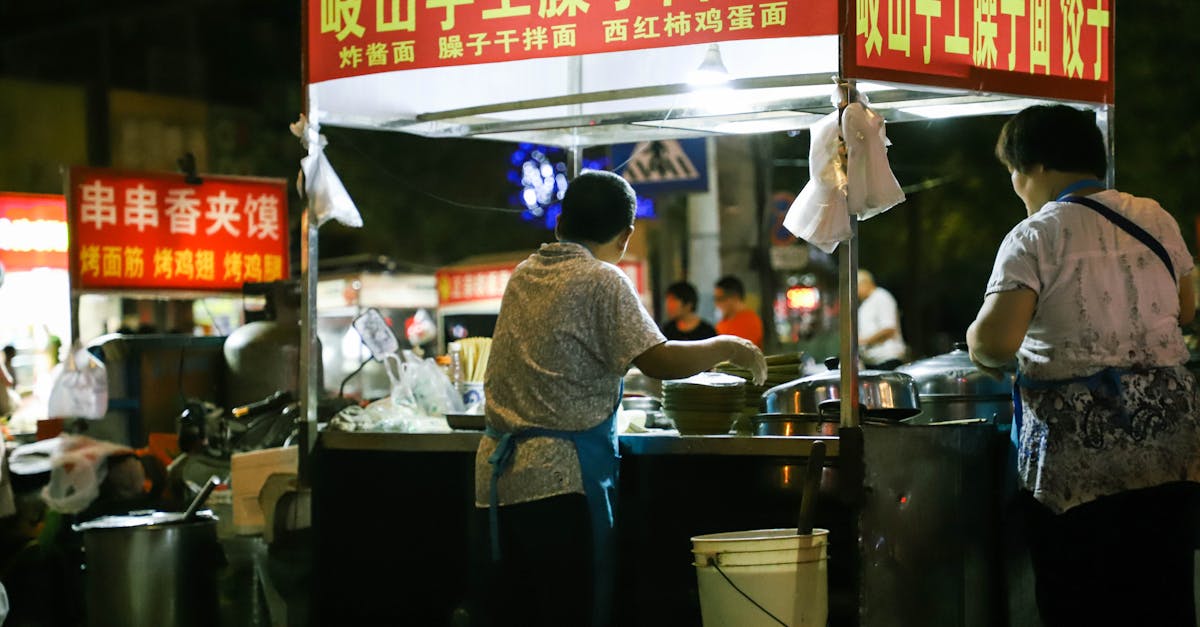
10 Must-Try Dishes in Harbin
1. Dōngběi Guōbāo Ròu (东北锅包肉 — Caramelized Sweet-Sour Pork)
Guōbāo ròu is Harbin's gift to Chinese cuisine — a preparation invented in the late Qing Dynasty specifically to suit the palates of Russian railway officials who found traditional Chinese sour preparations too vinegary. The dish takes tenderloin pork, sliced thin, coated in a potato starch batter, deep-fried until golden and crispy, then tossed in a sauce of rice vinegar, sugar, soy sauce, and ginger that caramelizes around the crispy pork to produce a coating of extraordinary texture: simultaneously sweet, tart, crispy, and slightly sticky. The name means "pot-wrapped meat" but the key is the double-frying that creates a crust that remains crispy even after sauce application.
The sauce's sugar caramelizes slightly during the final toss, giving the exterior a faintly amber, lacquered quality that looks and tastes very different from the thick, cornstarch-heavy versions sold internationally as "sweet and sour pork." The pork itself must be very tender — the thin slicing and the potato starch batter, not egg batter, produces a lighter, crisper coating that is the Harbin distinction. The dish was specifically modified for Russian guests in its vinegar content and sweetness level, and that adaptation has become the definitive version in Heilongjiang.
Guōbāo ròu is available at virtually every traditional dongbei restaurant in Harbin. Láo Cháng Chūn (老长春) restaurant on Zhongyang Street is the most historically authenticated address — it has been serving this dish since the Republican period and maintains the original Harbin-style recipe rather than the province-wide adaptations. The dish is also available at the Daoli District night market for ¥30 to ¥50 as a street food portion.
Guōbāo ròu at a traditional Harbin restaurant costs ¥48 to ¥78 for a share portion. Order it early in the meal and eat it quickly — the crust begins to soften within minutes of sauce application. If you let it sit, it becomes a good but not exceptional sweet-sour braised pork rather than the specific crispy-caramelized experience that makes it distinctive. This is a dish that punishes hesitation.
2. Hóng Cháng (红肠 — Harbin Red Sausage)
Harbin red sausage is the most tangible expression of the Russian cultural influence on Harbin's food — a smoked pork sausage developed by Lithuanian Jewish immigrants and Russian sausage makers in the early twentieth century, adapted by local producers into something that is now both Chinese-made and Russian in character. The sausage is made from finely ground pork mixed with garlic, black pepper, nutmeg, and other spices, stuffed into natural casings and cold-smoked over alder wood until the exterior turns deep brown-red and the flavor develops the complex combination of smoke, garlic, and cured meat that characterizes good Central European sausage.
Harbin red sausage is served sliced thin as a cold cut or cut in pieces as a snack — it is not a cooking sausage intended to be cooked further. The correct eating context is at room temperature (or slightly warm in winter conditions), sliced on a cutting board with black bread, accompanied by mustard and a glass of vodka. This is not a Chinese eating pattern but a Russian one transplanted to a Chinese city and maintained with genuine fidelity to the original tradition.
The most respected Harbin red sausage producer is the Harbin Sausage Factory (哈肉联红肠 — Hā Ròu Lián Hóng Cháng), whose products are sold at the factory store on Zhongyang Street and at shops throughout the city. The Zhongyang Street store has been selling sausages from the same location since 1936. Buy a length (approximately 200g, enough for two to four people as a snack) and eat it on the pedestrian street with black bread from the adjacent bakery.
A Harbin red sausage from the original factory store costs ¥18 to ¥35 per 200g length depending on grade. Inferior imitations sold at tourist shops throughout the city are cheaper and noticeably less good — the smoke character is lighter and the garlic and spice balance is different. The factory-direct purchase from Zhongyang Street is worth the specification. This is also the most appropriate food souvenir to bring back from Harbin — it keeps for several weeks under refrigeration and is entirely unavailable at comparable quality anywhere outside Heilongjiang.
3. Dōngběi Règuō (东北热锅 — Northeastern Hot Pot)
Northeastern Chinese hot pot is categorically different from the Sichuan ma la hot pot that dominates global Chinese hot pot recognition. Where Sichuan hot pot uses a fiercely spicy, numbing broth loaded with dried chili and Sichuan peppercorn, dongbei hot pot uses a mild, clear-broth or white-cabbage base that is comforting and warming rather than challenging. The traditional vehicle is a brass chimney pot (火锅 huǒguō) filled with charcoal embers that heat the broth surrounding the central chimney — an ancient technology perfectly suited to Harbin's winters.
The ingredients for dongbei hot pot reflect northeastern China's agricultural and pastoral character: thinly sliced pork belly, lamb, and beef; vermicelli noodles; tofu in various preparations; suan cai (fermented Chinese cabbage, the dongbei answer to sauerkraut) that is the essential ingredient; frozen tofu (一种特有豆腐 — the porous, ice-crystal-expanded tofu that forms naturally in the Harbin winter and absorbs broth beautifully); and various mushrooms and greens. The suan cai is the flavor center — its fermented acidity brightens the mild broth and provides the balance that makes the dish satisfying rather than bland.
Dongbei hot pot is at its most authentic in winter (November through March) when the brass charcoal pots operate naturally in the ambient temperature and the suan cai is fresh from the autumn fermentation. Several restaurants in Daoli District near the Central Market operate year-round with this tradition. Gǒng Tǐng Lǎo Cài (宫廷老菜) restaurant maintains the brass charcoal pot tradition rather than using the electric induction versions that many modern hot pot restaurants have adopted.
Dongbei hot pot for two people costs ¥100 to ¥200 for the base ingredients with additional items priced individually. The charcoal-heated brass pot is preferable to the electric version for both the aesthetic experience and the more even heat distribution. Order extra suan cai — it is the defining ingredient and is refillable at most establishments for a small additional charge.
4. Suan Cai Dumplings (酸菜饺子)
Suan cai — fermented Chinese cabbage — is Harbin's most important condiment and ingredient, the product of the autumn harvest when enormous quantities of napa cabbage are shredded, salted, and fermented in large clay pots for several weeks until the lactobacillus activity transforms the cabbage into something pleasantly sour, soft, and deeply aromatic. The result is functionally similar to European sauerkraut but produced with Chinese cabbage and a different salt ratio, giving it a slightly milder, less aggressive sourness and a characteristic fermented aroma.
Suan cai dumplings (饺子 jiǎozi) are the most beloved winter dumpling preparation in the northeast — pork and suan cai filling inside wheat flour wrappers, the sourness of the fermented cabbage cutting through the pork fat and providing the acidic brightness that makes these dumplings more complex than the standard pork and cabbage (non-fermented) version. The dumplings are boiled in large batches in pots of salted water and served with black vinegar, chili oil, and raw garlic on the side.
Dumplings in Harbin are a serious food tradition with specialist restaurants and competitive home cooks. The Old Harbin Restaurant (老哈尔滨饭店) in the Daoli district makes excellent suan cai dumplings. More accessibly, the Zhongyang Street area has numerous dumpling shops where you can watch the filling and wrapping operation through the kitchen window — the speed and economy of motion of experienced dumpling makers is itself entertaining. A portion of twenty dumplings takes about two minutes to make when the maker is practiced.
Suan cai dumplings cost ¥25 to ¥45 for a portion of twenty at a mid-range dumpling restaurant. At the market night food stalls, ¥15 to ¥25. The steamed version (蒸饺 — zhēng jiǎo) has a slightly different texture from the boiled version — both are excellent, with the steamed version having a drier skin and more concentrated flavor, and the boiled version being juicier and more yielding. Try both over the course of a Harbin visit.
5. Shā Guō Wán Zǐ (砂锅丸子 — Clay Pot Meatball Soup)
Shā guō — clay pot soup — is the winter comfort food of Harbin, a tradition of slow simmering in individual clay pots that produces soups of extraordinary depth and warmth. The meatball version (wán zǐ) uses pork and tofu meatballs combined with vermicelli noodles, tofu, mushrooms, and cabbage in a clear pork bone broth, simmered in the clay pot for an extended period until all the components have exchanged their flavors and the broth has become rich and warming without the use of heavy spicing. The clay pot retains heat better than metal, meaning the soup stays hot through an entire winter meal.
The pork and tofu meatballs are made fresh at quality establishments — ground pork mixed with silken tofu (which lightens the texture and extends the protein), ginger, spring onion, egg white, and soy sauce, formed into balls and poached directly in the clay pot broth. They should be tender and yielding, not bouncy or dense, and they should give up some of their fat and flavor to the surrounding broth during cooking. The broth at the end of a properly prepared shā guō is different and better than at the beginning.
Shā guō preparation is found at traditional dongbei restaurants throughout Harbin. The clay pot cooking tradition is particularly associated with the Russian Bund area along the Sungari River, where several older restaurants maintain the traditional clay pot service. Xīn Hǎo Jì (新好记) restaurant in Daoli District is the most consistently recommended address for shā guō preparations among local food writers.
A clay pot soup for one costs ¥28 to ¥55 depending on the contents and the restaurant. The clay pot itself arrives at the table still bubbling over a small burner — the continuing cooking adds another dimension to the eating experience. Order it as the centerpiece of a winter Harbin meal: begin with cold red sausage, eat the clay pot soup through the main course, and end with a sweet preparation. This sequence works with Harbin's cold weather eating rhythm.
6. Russian Bread (Lieba)
Lieba — the Harbin word for "bread" from the Russian "хлеб" (khleb) — is the round, dense, slightly sour dark rye bread that Russian settlers brought to Harbin and that local Harbin bakers have been producing continuously since the early twentieth century. It is made from a sourdough starter of rye flour, water, and caraway seeds, shaped into a large round loaf, and baked until the crust is deep brown and the interior is dense, moist, and faintly sweet from the fermentation. It has the character of good German or Russian rye bread and is completely unlike any Chinese bread tradition.
Lieba is sold at bakeries on Zhongyang Street that maintain the tradition, including the Central Commercial Street bakeries that have been baking this specific bread since the Russian era. The bread is sold whole or by the slice, and the correct eating is with cold butter, red sausage, or hard-boiled egg and salt — the Russian breakfast pattern that persists in Harbin's food culture as a distinct tradition separate from the Chinese breakfast eating of congee and dumplings.
The most authentic lieba is from Xiǔ Fā Lōng (秀发隆) bakery on Zhongyang Street — one of the oldest continuously operating bakeries in Harbin, maintaining the Russian bread-baking tradition including the sourdough starter method rather than commercial yeast. A whole lieba loaf costs ¥15 to ¥25. A slice with red sausage from the adjacent sausage vendor costs ¥8 to ¥15.
Eat lieba for breakfast on Zhongyang Street, standing at the bakery counter or at the small tables inside with a glass of black tea from the same establishment. The combination of the bread's slight sourness and caraway seed fragrance with the pork-and-smoke character of the red sausage is the most completely Russian-Harbin food experience available in any single moment. It is inexpensive, historically grounded, and genuinely very good.
7. Bīng Táng Hú Lu (冰糖葫芦 — Candied Hawthorn on a Stick)
Bīng táng hú lu — skewered hawthorn fruits (shanzha, 山楂) coated in hardened clear sugar candy — is a northern Chinese winter street food tradition that reaches its peak expression in Harbin, where the extreme cold instantly hardens the sugar coating into a perfectly transparent, brittle shell around each tart hawthorn berry. The combination of the coating's sweetness, the hawthorn's aggressive tartness (raw hawthorn is almost mouth-puckeringly tart and high in pectin), and the temperature contrast between the cold candy and the warm breath consumed eating it is a specific winter sensory experience.
The traditional version uses only hawthorn berries. Modern variations add strawberries, mandarin orange sections, cherry tomatoes, and various confectionery fillings, turning the original street food into something more elaborate. The original hawthorn version is the most interesting because the hawthorn's tartness and the sugar's sweetness are in genuine tension rather than harmony — each bite is simultaneously sweet and sour, and the fruit's astringency lingers pleasantly after the sugar dissolves.
Bīng táng hú lu vendors appear throughout Harbin from November through February, recognizable by their bundles of red-skewered fruits displayed outside the stalls. The best versions are made fresh — the sugar is poured over the skewered fruit immediately before sale, producing a thin, uniform coating. Older batches develop moisture absorption that turns the coating from brittle-clear to sticky-opaque. Buy from vendors actively pouring sugar rather than from those selling from a display that has been standing for hours.
A skewer of bīng táng hú lu costs ¥5 to ¥15 depending on size and vendor. Buy one for each person in your group — the skewers are designed for individual consumption while walking. The combination of eating hot food at the Ice Festival while holding a cold candy fruit skewer is definitively Harbin winter culture and should be experienced without reservation about its basic character as a carnival food. Good carnival food is good food.
8. Dōngběi Jiāo Pán (东北饺盘 — Dongbei Platter)
The northeastern Chinese concept of a large shared platter (大碗菜 dà wǎn cài — "big bowl dishes") is one of the most impressive presentations in regional Chinese cooking. Dongbei dining culture is built around abundance — large portions, many dishes, generous use of pork fat and slow cooking — and the classic platter presentation puts several signature dishes on a single platter for the table to share: strips of guōbāo ròu, grilled lamb skewers, pickled vegetables, a section of red sausage, cold tofu with sesame sauce, and various seasonal preparations. The entire platter is designed to be photographed by contemporary dining culture, and it was designed to be eaten communally long before social media existed.
The dongbei platter tradition is essentially the Chinese equivalent of meze or tapas — a way of conveying the range and generosity of a regional food culture in a single presentation. The component preparations are individually available, but the platter format provides the horizontal comparison that gives each element context. The guōbāo ròu's caramelized sweetness reads differently alongside the suan cai's sourness; the red sausage's smokiness contrasts with the fresh tofu's mild, slightly bitter creaminess.
The Old Harbin Restaurant (老哈尔滨饭店) assembles the definitive northeast platter for groups of four to six. Advance ordering is recommended as the platter requires preparation time and specific component availability. The platter costs ¥200 to ¥400 for a group depending on size and components included, representing exceptional value for the quantity and variety of preparations included.
The dongbei platter is the correct order for a group visiting Harbin and wanting to understand the breadth of northeastern Chinese food culture in a single meal. Order it alongside a clay pot soup and rice, and you have covered the essential architecture of a Harbin winter feast. This is not a dish for a solo diner — it requires a group of three minimum to eat proportionally and a group of five or six to eat completely without significant leftovers.
9. Russian Borsch (罗宋汤 Luó Sòng Tāng)
Luó Sòng tāng — Harbin's adaptation of Russian borscht — is a definitive demonstration of cultural adaptation producing genuine new cuisine. The Russian original uses beets as the dominant ingredient and flavor; the Harbin version has evolved to deprioritize beets and to heavily feature tomato, carrot, potato, cabbage, and beef in a rich, slightly sweet-sour broth that owes more to the Chinese soup aesthetic than to the Ukrainian original. The color is orange-red from the tomato rather than the deep purple-red of authentic borscht, and the flavor is gentler, more rounded, and perhaps more accessible to Chinese palates than the original.
Whether this represents improvement or loss depends entirely on what you are seeking. Authentic borsch enthusiasts will note the differences immediately and correctly. Food culture enthusiasts will recognize that a hundred years of local adaptation has produced a Harbin soup that is native to this specific city rather than imported, and that has its own identity and logic. Both positions are valid. The Harbin version is not the same as Russian borscht; it is Harbin luó sòng tāng, which is its own thing.
The best luó sòng tāng in Harbin is at Soviet Cuisine Restaurant (前苏联料理) on Diduannan Street near the Russian quarter, where the kitchen maintains a commitment to the hybrid tradition that most Harbin restaurants have drifted away from toward purely Chinese preparation. The restaurant itself is decorated with Soviet-era iconography and serves the soup in large ceramic bowls with a dollop of sour cream on top — the most Russian element of the preparation, preserved.
A bowl of luó sòng tāng at a Harbin restaurant costs ¥28 to ¥55. It is typically served as a starter before the main dongbei preparations, providing a warming, acidic counterpoint to the richer meat preparations that follow. Eat it with the lieba bread from Zhongyang Street if you can manage the logistics — the combination is the most completely Harbin eating experience available in a single sitting.
10. Lamb Skewers (烤串 Kǎo Chuàn)
Northeastern Chinese lamb skewer culture (烤串 kǎo chuàn) is one of the great outdoor cooking traditions of cold-climate China, and Harbin's winter version is the definitive expression. Pieces of lamb — typically from the shoulder or ribs, cut with fat intact — are skewered on thin iron sticks, seasoned with a dry rub of cumin, chili flakes, coarse salt, and dried herbs, and grilled over a charcoal brazier in the open air while the temperature outside is negative enough to make your eyes water. The charcoal smoke mixes with the rendered lamb fat and the cumin perfume into a complex, meaty, spiced fragrance that is detectable from fifty meters downwind.
The lamb used in Harbin skewer culture is from Inner Mongolian sheep — specifically the salt-grass-fed sheep of the Hulunbuir grasslands, whose meat has a distinctive flavor from the wild grasses, mineral-rich soils, and clean winds of the northeastern steppe. This lamb lacks the strong "sheepiness" that makes lamb unappealing to those who dislike the flavor — it is clean, slightly sweet, and intensely satisfying when properly cooked over charcoal. The cumin is not there to mask the flavor but to amplify it.
Lamb skewer vendors appear throughout Harbin from early evening, but the most concentrated and most atmospheric cluster is at the night markets around Daoli District and near the Ice Festival grounds in winter. The smoke from a dozen simultaneous charcoal braziers in subzero temperature creates a scene of extraordinary atmosphere — hot coals, steam, charcoal smoke, and the smell of cumin lamb fat in minus twenty-five degree air is a sensory experience that no indoor restaurant can replicate.
A lamb skewer costs ¥5 to ¥12 depending on size. Order at least ten. Eat them immediately off the stick while standing next to the brazier — the fat needs to be consumed while it is fluid and the cumin needs to be smelled at its volatile peak. Cold lamb skewers are merely adequate; hot lamb skewers eaten outdoors in Harbin winter are exceptional. This is a case where context and temperature are inseparable from quality.

Harbin's Essential Food Neighborhoods
Zhongyang Street (Central Commercial Street) is the Russian-era pedestrian boulevard and the most concentrated tourist food zone. The lieba bakeries, red sausage vendors, and various Russian and northeastern Chinese restaurants along this street provide an accessible introduction to Harbin's dual food heritage. The street is crowded in winter during the Ice Festival period — visit early morning (before 9 AM) or late evening (after 8 PM) for a more manageable experience. The food quality here ranges from genuinely good (the original sausage and bread vendors) to tourist-facing mediocre (several restaurants that have optimized for footfall rather than quality).
Daoli District (Central District, around the Central Market) is the working-class heart of Harbin's food culture — the wet market, dongbei restaurants that have been operating for decades, dumpling shops, and clay pot soup establishments that serve local residents rather than tourists. The evening market here is active from around 5 PM and provides the most authentic outdoor eating experience in the city. Less photogenic than Zhongyang Street, considerably more representative of what Harbin actually eats.
Russian Quarter Area (Sougfen Area near Stalin Park) — the historically Russian neighborhood along the Sungari River — has the most concentrated expression of Harbin's Russian food heritage. Several restaurants here maintain Russian and Soviet-era decorative schemes alongside hybrid Chinese-Russian menus. The area is atmospheric in winter when the river freezes and the snow-covered Orthodox church domes are lit against the dark sky. Soviet Cuisine Restaurant and several adjacent cafes make this a coherent food-and-history walking destination.
Practical Eating Tips for Harbin
Daily food budget in Harbin ranges from ¥80 to ¥150 (approximately USD 11 to USD 21) eating at dongbei restaurants, dumpling shops, and street markets, to ¥250 to ¥450 for a full traditional restaurant experience with multiple shared dishes and drinks. Harbin is one of China's most affordable major cities for food — the northeastern Chinese cooking tradition emphasizes quantity and variety over price premium, and large portions at low prices are the norm rather than the exception. Winter timing: the Ice Festival (January through February) is the optimal visit for the most complete Harbin experience, including the outdoor food culture and the specific seasonal preparations. Book accommodation three to four months in advance for peak festival period. Temperatures of minus twenty to minus thirty require proper clothing investment before the trip — no amount of food enthusiasm compensates for inadequate cold weather gear, and the outdoor eating culture that makes Harbin food special is not accessible from an insufficiently warm position. Summer visits: Harbin in summer (June to August) has a completely different food character — the outdoor beer and barbecue culture takes over from the indoor clay pot and dumpling culture, with evening riverfront establishments serving lamb skewers, crayfish, and cold dongbei preparations to a city that has shed its winter coat. Both seasons are worth experiencing; neither substitutes for the other. Food safety in winter: frozen street food (bīng táng hú lu, for example) is inherently safe because the extreme cold functions as natural preservation. Hot food items from high-traffic vendors are generally safe. The combination of genuine cold weather and high-heat cooking methods that define Harbin's street food makes it among the safest street food environments in China.


