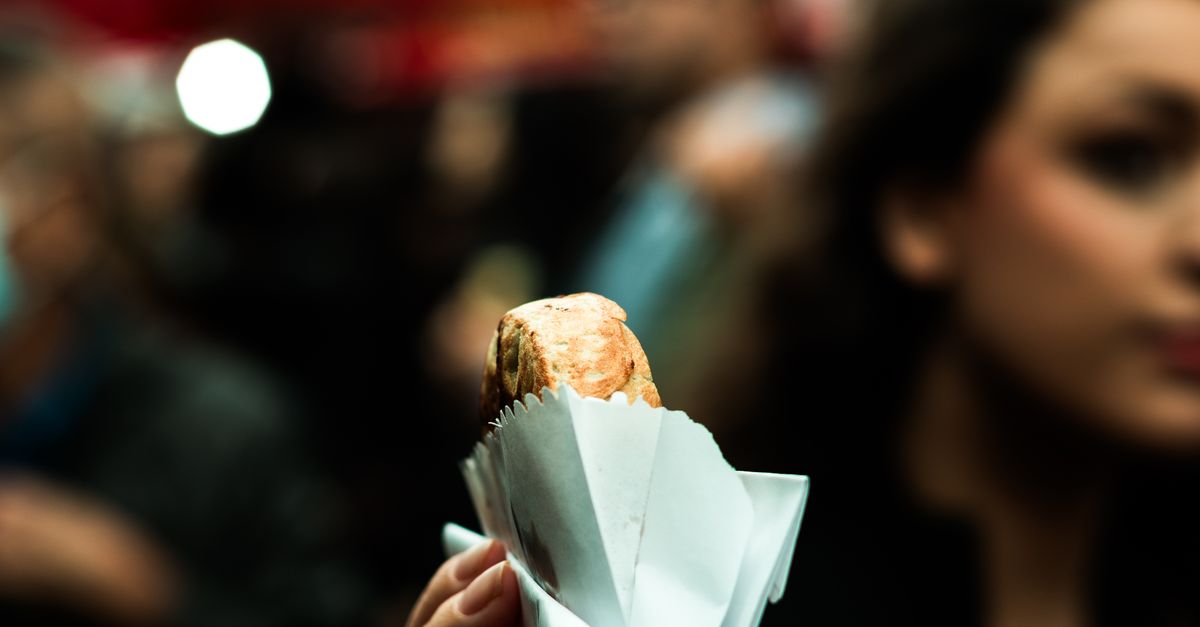
Cologne is a city that has never been mistaken for a culinary destination, and it wears that unfashionability with the cheerful indifference of a city that is too busy being itself to care about food media trends. The food here is honest, generous, and built entirely around the logic of Kölsch beer — the delicate, golden, top-fermented ale that is Cologne's greatest cultural achievement and the organizing principle of the city's food culture. You drink Kölsch; you eat what goes with Kölsch; the Kölsch arrives in a perpetual series of 0.2L Stangen (cylindrical glasses) brought by the Köbes (traditional waiter) without you needing to ask, until you place your bierdeckel (coaster) over the glass to signal you've finished.
Rhenish cuisine — the food of the Rhine valley between Cologne and Düsseldorf — is a cuisine of modest ingredients prepared with considerable craft: pickled meats, offal, blood sausages, potato preparations, and the specific genius of Reibekuchen (potato fritters) that dominate the winter street food culture of the entire region. It is not fashionable. It is not refined. But a plate of Halver Hahn (rye bread with Dutch Gouda and mustard, incorrectly named — it contains no chicken) and a Kölsch glass at a traditional Brauhaus, in the company of Cologne's determinedly egalitarian pub culture where factory workers, businessmen, and university professors share long wooden tables in a tradition going back centuries, is a profoundly satisfying experience.
Cologne also has one of Germany's finest diverse food scenes outside Munich and Hamburg — the Turkish döner kebab culture (the city has a large Turkish community), excellent Vietnamese and Korean restaurants in the Belgisches Viertel, and a growing restaurant scene in Ehrenfeld that has put Cologne on the German food map in ways the city's food traditionalists regard with amused skepticism. Come for the Brauhaus culture; stay for whatever else you find.
10 Must-Try Dishes in Cologne
1. Kölsch (The Beer)
Kölsch is not a dish, but it is the most important single thing you consume in Cologne and the organizing principle of the entire food culture, so it requires its own entry. Protected by geographic indication (only beer brewed in Cologne by members of the Kölsch Konvention can be called Kölsch), it is a top-fermented, cold-conditioned pale ale of 4.8% ABV — crisp, delicate, slightly fruity, with a clean bitterness and an almost Champagne-like effervescence from the specific Kölsch yeast strains used by the city's traditional breweries (Gaffel, Früh, Reissdorf, Päffgen, Sion, Dom, and a dozen others). Each has its own subtle character; Cologne residents are fanatical loyalists.
The service ritual of Kölsch is as important as the beer itself. The Köbes — the traditional Brauhaus server, historically a gruff, quick-moving figure in a blue apron — carries a Kranz (a circular metal tray holding multiple Kölsch Stangen) and replaces your empty glass without asking until you signal otherwise. The 0.2L glass ensures the beer is always cold; warming Kölsch is considered a tragedy. The communal long tables (Stammtisch culture) mean you will be seated with strangers, and the egalitarian Brauhaus atmosphere is a specific and wonderful aspect of Cologne's social culture.
The best Brauhauses for experiencing the full Kölsch ritual are: Brauerei Päffgen (Friesenstrasse 64) — the smallest and most traditional of Cologne's own-brewing establishments, where the Kölsch is unfiltered (naturtrüb) and notably complex; Früh am Dom (Am Hof 12–18) — the most famous tourist destination but also genuinely excellent; and Brauerei zur Malzmühle (Heumarkt 6) — the oldest working Brauerei in Cologne, brewing since 1858, with a particularly fine food menu alongside their Mühlen Kölsch.
A Kölsch costs €2.20–3.50 per Stange (0.2L). Never order a large glass; the 0.2L Stange is the correct format. Never accept a warm glass. Never ask for a different beer; the Köbes's patience is finite and Cologne's collective disappointment in you will be palpable. Pair with absolutely any Rhenish food — Kölsch is the universal solvent of this cuisine.
2. Halver Hahn
Halver Hahn — which means "half a chicken" in Cologne dialect but contains no chicken whatsoever — is one of Germany's most amusingly misnamed dishes: a rye roll (Röggelchen, the distinctive Cologne small round rye roll) split and topped with a thick slice of Dutch Gouda, sharp mustard, and optional pickled gherkin and raw onion rings. The name derives from 19th-century Brauhaus vernacular, where "Halver Hahn" was a joke reference to the cheese's pale color. It has been on every Brauhaus menu since and remains one of the city's most beloved and unassuming snacks.
The quality of a good Halver Hahn rests entirely on the components: the Röggelchen must be fresh-baked, dense, and slightly sour from the rye fermentation; the Gouda must be properly aged (middle-aged, with some crystallization in the paste and a nutty sharpness — not the young, mild variety that Germans call "jung") and cut thick enough to be substantial; the mustard must have a bite. These three conditions, met correctly, produce a snack of genuine satisfaction that goes with Kölsch as naturally as Champagne goes with oysters.
Order it at any traditional Brauhaus in Cologne — it is on every Brauhaus menu without exception. The best version is at Brauerei Päffgen (Friesenstrasse 64), where the Röggelchen is baked to a properly dense, sour-rye standard and the Gouda is genuinely aged. Also excellent at Gaffel am Dom (Bahnhofsvorplatz 1) near the cathedral, which serves it as a 24-hour option even when the kitchen is otherwise closed.
A Halver Hahn costs €4–7. It is a snack, not a meal — order it alongside other Brauhaus dishes or as a mid-afternoon bridge between lunch and dinner. No pairing needed beyond Kölsch, which is already in your hand.
3. Himmel un Äd (Heaven and Earth)
Himmel un Äd — "Heaven and Earth" in Kölsch dialect — is one of the great Rhineland dishes and one of the most unusual-sounding dishes in German cuisine: a combination of black pudding (Blutwurst, blood sausage — "earth," buried in the ground like potatoes), mashed potato mixed with apple purée ("earth" again, for the potatoes), and fried onion rings, all arranged together on a single plate. The contrast between the deeply savory, slightly funky blood sausage, the sweet-sharp apple-potato mash, and the caramelized onions is one of German cuisine's finest balancing acts — sweet, savory, acidic, and rich simultaneously.
The blood sausage used in Himmel un Äd is typically Flönz — the Cologne word for blood sausage, a thick, soft, spreadably cooked version made from pork blood, fat, and spices (cloves, allspice, marjoram) that is distinct from the firmer, sliceable Blutwurst of other German regions. Cologne-style Flönz is fried in a pan until the exterior caramelizes and crisps slightly, melting at the interior. Against the neutral potato and the tart apple, it achieves a combination that defies its humble components.
The definitive Himmel un Äd in Cologne is served at Brauerei zur Malzmühle (Heumarkt 6) — a recipe that has been unchanged for decades and uses locally sourced Flönz from a Cologne butcher. Also excellent at Haxenhaus zum Rheingarten (Frankenwerft 19) — a waterfront Brauhaus with excellent traditional Rhenish food and a view of the Rhine. Order it as a main course, not a side.
Costs €13–18. Pair with Kölsch (obviously) — the slight sweetness of Kölsch and the sweet-savory complexity of Himmel un Äd is one of those pairings that seems inevitable in retrospect. Alternatively, a glass of Mosel Riesling Kabinett from a good producer (the Rhine Valley wine tradition connects directly to this food culture) provides an excellent wine pairing for this dish.
4. Reibekuchen (Potato Fritters)
Reibekuchen — grated potato fritters — are the great Rhenish street food and one of the finest things produced at any outdoor market anywhere in Germany. Raw potatoes are grated, squeezed to remove excess liquid, mixed with egg, onion, and salt, then fried in oil (or lard, in traditional preparations) until the exterior is deeply golden and crackling crisp while the interior remains soft and slightly starchy. Served with Apfelmus (apple sauce) and sour cream, or on their own with salt, they are simultaneously simple and extraordinary when freshly made.
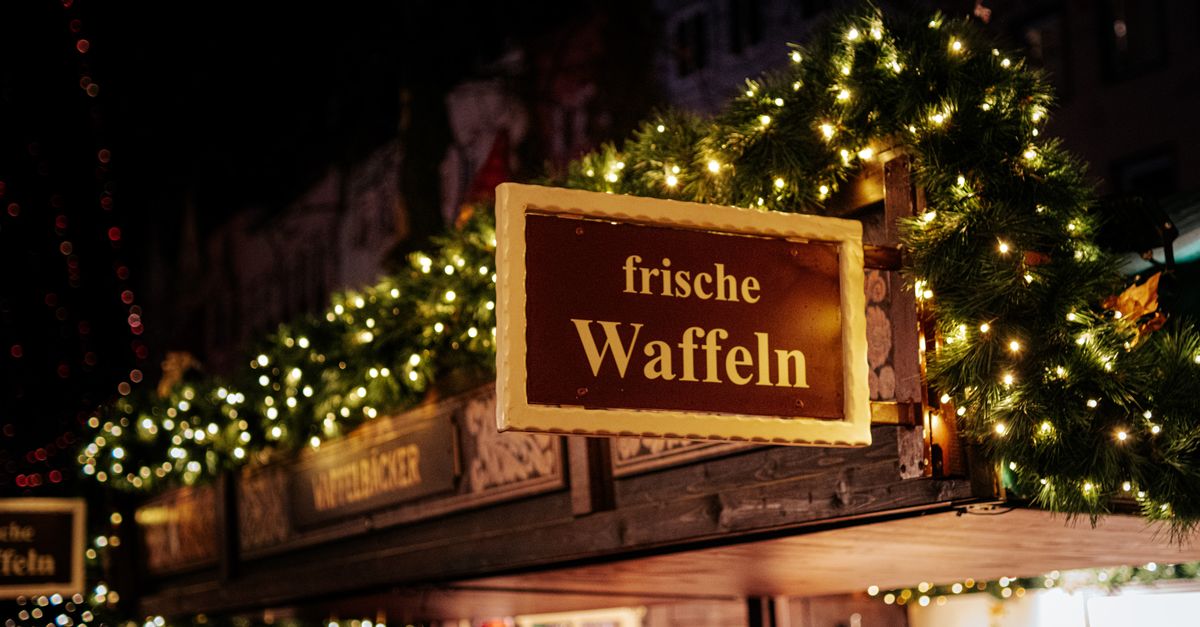
Reibekuchen appear at every Cologne Christmas market (from late November through December 23rd), at the spring Karnevalszeit celebrations, and at the city's numerous outdoor food markets year-round. The smell of Reibekuchen frying in oil — a slightly nutty, starchy, caramelizing aroma — is one of the definitive sensory signatures of Cologne winters. They must be eaten immediately; Reibekuchen that have cooled are limp and disappointing. Hot, fresh, with apple sauce and a pint of warm Glühwein at a Christmas market stand: this is the Cologne winter food experience that no restaurant can replicate.
In-restaurant versions are available at Brauhaus establishments year-round — look for them on the seasonal menu at Früh am Dom and Malzmühle. The best outdoor version is at any of the Saturday markets in Ehrenfeld or Nippes, where a Reibekuchen vendor always operates from a large, fragrant frying station. During Christmas market season, they appear at virtually every market stand in the city center.
A portion of three Reibekuchen with apple sauce costs €5–8 at a street stand. At a restaurant, €8–14 as a side dish. Pair with a Kölsch or, for the Christmas market outdoor version, with Glühwein (mulled red wine with cinnamon, cloves, and orange — the traditional Rhineland winter drink) or a warming Feuerzangenbowle (a spectacular mulled wine with a rum-soaked sugar cone ignited over the bowl).
5. Sauerbraten (Cologne Style)
Sauerbraten is one of Germany's most important dishes and the Cologne version has a specific and unusual character: where most German sauerbraten is made with beef, Cologne's traditional version uses horse meat (Pferdefleisch), reflecting the historical abundance of horse in the Rhineland and the practical culture of using all available protein. The meat (horse or beef) is marinated for days in a mixture of red wine, vinegar, onions, bay leaves, juniper berries, and allspice, then slow-braised in the marinade until it is fall-tender, and the braising liquid is thickened with raisins and honey into a sweet-sour sauce of remarkable complexity. Served with potato dumplings or bread dumplings and red cabbage.
The sweet-sour sauce profile of Cologne Sauerbraten — influenced by the same medieval spice trade that shaped Aachener Printen cookies and other Rhenish confections — is unlike any other German Sauerbraten. The raisins and honey create a genuinely sweet element that American raisins-and-gingersnap versions attempt but cannot fully achieve. The horse meat version, if you're open to it, is leaner and more assertively flavored than beef, with a slightly sweeter, almost game-like character that works particularly well with the sweet-sour sauce.
Find the classic horse meat Sauerbraten at Gasthaus Lommerzheim (Siegesstrasse 18, Deutz) — a legendary Cologne institution that has served horse meat Sauerbraten since 1959, operating in the same family, with a menu printed on a chalkboard and a beer price that hasn't changed since the building was renovated. Also available (beef version) at Haxenhaus zum Rheingarten and at most traditional Brauhaus restaurants. For horse meat specifically, call ahead to confirm availability.
Costs €16–24. Pair with a Kölsch for the horse version or a glass of Ahr Pinot Noir (the light, elegant red wine from the Ahr valley south of Cologne — Germany's most northern red wine region) for a more refined pairing that suits the sweet-sour sauce complexity.
6. Muscheln (Rhine Mussels)
Mussels in Cologne might seem unexpected for a landlocked city, but the Rhine has historically provided freshwater mussels (now rarely eaten due to water quality concerns), and Cologne's proximity to the Dutch and Belgian mussel-farming coasts means that excellent farmed mussels from Zeeland (Netherlands) have been a staple of the city's Brauhaus menus since the 19th century. Cologne-style mussels (Muscheln Kölner Art) are cooked in white wine with onions, celery, parsley, and black pepper — a simple, clean preparation that lets the mussels' briny freshness speak clearly alongside the sharp herbal vegetables.
Mussels are a September-through-March food in Cologne — the traditional rule "only eat oysters and mussels in months with an 'r'" applies here with the German equivalent, and the city respects this seasonal logic even at its most tourist-facing establishments. During mussel season, virtually every Brauhaus and traditional restaurant offers them; off-season, they disappear from the menu. This seasonality is one of the things that makes Cologne mussel culture still feel genuine rather than manufactured.
Order mussels at Gaffel am Dom (Bahnhofsvorplatz 1) — the large Brauhaus near the cathedral that maintains an excellent seasonal mussel preparation alongside its year-round Kölsch menu. Also excellent at Paffgen am Dom (Brückenstrasse 1) during mussel season. Order a full pot (usually 1kg, served with a large bowl for the empty shells and a separate fork for scraping the shells) and white bread for the broth.
A pot of mussels costs €18–26. The broth is as important as the mussels; eat it with bread. Pair with Kölsch — the crisp, slightly fruity lager and the briny mussel broth is one of the Rhineland's most satisfying casual food and drink combinations, requiring no refinement or elaboration.
7. Rievkooche (Rhenish Potato Pancakes)
Rievkooche are slightly larger and crispier than the standard Reibekuchen — a Cologne-specific dialect name for the same basic concept (grated potato pancakes) but often prepared with additional binding (more egg, sometimes a little flour) and fried to a deeper, more robust crispness. In the context of a sit-down restaurant rather than a street stand, Rievkooche are served as a substantial lunch main: three large potato cakes with a selection of accompaniments — apple sauce, crème fraîche, and often smoked salmon or pickled herring on top for a more serious preparation.
The smoked salmon Rievkooche — golden, crisp potato cake topped with crème fraîche, cold-smoked Rhine salmon (increasingly rare but available from specialty fishmongers), capers, red onion, and dill — is one of Cologne's finest restaurant preparations. The contrast of the hot, crunchy potato and the cold, silky salmon with the tangy crème fraîche is a textural and flavor experience well beyond its humble components. It has been on the menus of Cologne's better traditional restaurants since the late 20th century and shows no sign of disappearing.
Find the salmon Rievkooche at Restaurant Peters Brauhaus (Mühlengasse 1) — a mid-range Brauhaus and traditional restaurant where the potato cakes are made to order and the smoked fish is properly sourced. Also at Zum Wohl (Klingelpütz 22) in the old town — a smaller, more personal establishment with a menu focused on traditional Rhenish dishes with well-considered sourcing.
A main course of Rievkooche with salmon costs €16–24. Pair with a Mosel Riesling Spätlese from a Wehlener or Graacher producer — the slate-mineral, apple-and-citrus Riesling is the ideal wine for smoked salmon on potato, providing the acid that cuts through the cream and amplifies the fish. Or Kölsch, which is always appropriate in Cologne.
8. Döner Kebab (Cologne Style)
Cologne has one of Germany's largest Turkish communities, concentrated primarily in the Mülheim and Kalk districts east of the center, and the city's döner kebab culture is both deeply authentic and deeply local. The Cologne döner — a large, seeded bun stuffed with spit-roasted lamb (or mixed lamb and beef), shredded white cabbage, tomato, red onion, cucumber, and a choice of sauces (yogurt-garlic, chili, or the house combination) — is one of the finest versions of this Turkish-German invention available anywhere in Germany, and considerably better than the standard tourist-district versions found in central Berlin.
The quality difference between an excellent Cologne Turkish döner and a mediocre one comes down to the meat: good döner uses seasoned lamb thigh and shoulder, hand-pressed onto the vertical spit, seasoned with a blend of Turkish spices (cumin, coriander, paprika, garlic), rotating slowly and carved in real-time as customers order. The bread must be fresh-baked — ideally from a Turkish bakery nearby — and the vegetables must be crisp. At its best, a properly made döner is one of the world's great fast foods; at its worst, it is grey compressed protein on stale bread with bottled sauce.
The best döner in Cologne is in the Mülheim district (accessible by U-Bahn, 20 minutes from the Dom) at Mustafa's Gemüse Kebap equivalent in Düsseldorfer Strasse — ask any Cologne Turkish community member for their current favorite. In the city center, Döner Haus on Ehrenstrasse in the Belgisches Viertel consistently produces excellent product with fresh-baked bread.
A döner costs €5–9. No refinement needed — eat it standing at the counter or on the street, with both hands, with a paper napkin that will prove entirely insufficient. Pair with Ayran (cold, salted yogurt drink — the traditional Turkish döner accompaniment) rather than beer or Kölsch. This is the one food in Cologne where Kölsch is not the correct choice.
9. Kölner Spritz (Cologne Brauhaus Snack Plate)
The traditional Brauhaus snack plate — called variously Kölner Brettchen, Brotzeitbrett, or simply a Gemischte Platte in different establishments — is a board of cold Rhenish charcuterie and cheese, assembled as a communal snack or light meal. Standard components include: Mettwurst (raw seasoned pork sausage, spreadable, typically on rye bread), Blutwurst/Flönz (blood sausage, sliced), a wedge of aged Gouda or Tilsiter cheese, pickled gherkins, pickled onions, bread butter, and the indispensable Röggelchen (small round rye rolls) for the spreading. It is not a refined cheese board; it is a working man's snack plate, meant to be eaten with beer and conversation.
Mettwurst — raw, seasoned pork — is the ingredient that most surprises non-Germans. A good Kölner Mett is made from freshly ground pork loin and shoulder, seasoned with salt, black pepper, caraway, marjoram, and raw onion, never cooked, and spread thickly on rye bread or Röggelchen. The flavor is clean, gently spiced, with a fresh pork sweetness that requires excellent sourcing — Mett from a reputable butcher is a completely different product from the commercial equivalent. It is consumed throughout northwest Germany as a breakfast and snack staple and is one of the great simple pleasures of the German food tradition.
Order a Brauhaus snack plate at Päffgen (Friesenstrasse 64) or at any Brauhaus where you can specify your selections. For the finest Mett specifically, buy it fresh from a Cologne Metzgerei (butcher) such as Metzgerei Hoss (Bismarckstrasse) or Metzgerei Werner (Zülpicher Strasse) — both source local pork and produce Mett to traditional recipes. Eat it within an hour of purchase.
A snack plate costs €12–22 depending on selections. Pair with Kölsch — the standard. The combination of fresh Mett, rye roll, and cold Kölsch on a warm afternoon in a Brauhaus garden is one of the simple German pleasures that require no elaboration or improvement.
10. Millowitsch Traditionelle Rhenish Christmas Cookies (Bredele)
Cologne's Christmas food culture — active from late November through Christmas Eve — revolves around its famous markets (Weihnachtsmarkts, particularly the historic market around the Dom) and the extraordinary array of traditional Rhenish Christmas cookies and sweets. Aachener Printen (a Cologne-adjacent gingerbread of medieval origin, spiced with cardamom, cinnamon, clove, and anise, glazed or dipped in chocolate) are the regional specialty. Spekulatius (thin, spiced shortbread molded in carved wooden shapes), marzipan from Cologne's traditional confiserie shops, Stollen-style fruit breads, and an enormous variety of Plätzchen (Christmas cookies) appear at markets, bakeries, and confiserie windows throughout December.
The Aachener Printen is technically from Aachen (60km west) but so deeply embedded in Cologne's Christmas culture that it may as well be indigenous. The spice mixture (Printengewürz) is a closely guarded combination of star anise, cloves, cardamom, cinnamon, allspice, and nutmeg, with treacle and sugar creating a dense, dark dough that bakes to a crisp exterior and a surprisingly chewy interior. The chocolate-dipped version (Schokoladen Printen) is the finest Christmas confection in northwestern Germany.
Buy Aachener Printen at the Christmas market stalls around the Dom (late November–December 23) or year-round at Confiserie Richter (Ehrenstrasse 64) and at Süsswaren Klingenberg (Apostelnstrasse). For the full Cologne Christmas confiserie experience, visit Fassbender & Rausch (they have a Cologne location) for artisan chocolate alongside traditional Christmas cookies.
A box of Aachener Printen costs €8–20. Individual pieces at market stalls cost €1–3. Pair with Glühwein (mulled red wine) at the Christmas market for the complete sensory experience — the warm spiced wine and the dark, aromatic gingerbread create a winter comfort combination that is entirely, unashamedly, correctly German. Also excellent with a cup of strong, milky Kaffee und Kuchen.
Cologne's Essential Food Neighborhoods
The Altstadt (Old Town), in the immediate surrounds of the Dom and the Rhine waterfront, contains Cologne's most famous Brauhouses — Früh am Dom, Gaffel am Dom, Peters Brauhaus, and Haxenhaus. This is tourist-central but the beer and food at the better establishments is genuinely Cologne. Walk from the Dom south along the Rhine promenade for the most beautiful setting for a Kölsch.
Friesenviertel, the neighborhood north of the ring road around Friesenstrasse and Flandrische Strasse, is home to Päffgen (the finest traditional Brauerei in the city) and a mix of local bars, restaurants, and wine bars that serves a Cologne professional class rather than tourists. This is where to eat for the most genuine local atmosphere alongside excellent Kölsch and Rhenish food.
Belgisches Viertel, the fashionable district around Aachener Strasse and Roonstrasse, is Cologne's most creative food neighborhood — excellent Vietnamese, Korean, and contemporary German restaurants; specialty coffee shops; wine bars with serious natural wine lists; and the Cologne branch of the döner tradition in a more cosmopolitan context. The Metzgerei Werner (Zülpicher Strasse area) is the best butcher in the district.
Ehrenfeld, the multicultural, slightly edgy district west of the center (U-Bahn: Ehrenfeld), has emerged as Cologne's most interesting new food area — Turkish and Lebanese grocery shops, excellent natural wine bars, creative restaurant openings, and the Ehrenfeld night market in summer. The Saturday market at Venloer Strasse has excellent local produce and some of the city's best Reibekuchen vendors.
Practical Tips for Eating in Cologne
Cologne is moderately priced by German standards and quite affordable by European standards. A full Brauhaus meal (Halver Hahn or Reibekuchen, main course, four or five Kölsch Stangen) costs €25–45 per person. Fine dining at the city's better restaurants (Restaurant Le Moissonnier, Ox & Klee) costs €80–150 with wine. The best value in Cologne food is the Brauhaus — the food is generous, the Kölsch is priced to encourage consumption, and the quality at the established establishments is consistently good.
Tipping in German restaurants: 10% is standard; for Brauhaus service, round up or add €1–2 per person. The Köbes will accept tips with a grunt that means something warmer than it sounds. Reservations are advisable at smaller, more personal establishments (Malzmühle, Päffgen) for weekend dinner but often unnecessary for weekday lunch. The Christmas market season (late November–December 23) makes central Cologne enormously crowded — arrive early or late, avoid weekends if possible, and accept that the Reibekuchen queues will be long and absolutely worth it.