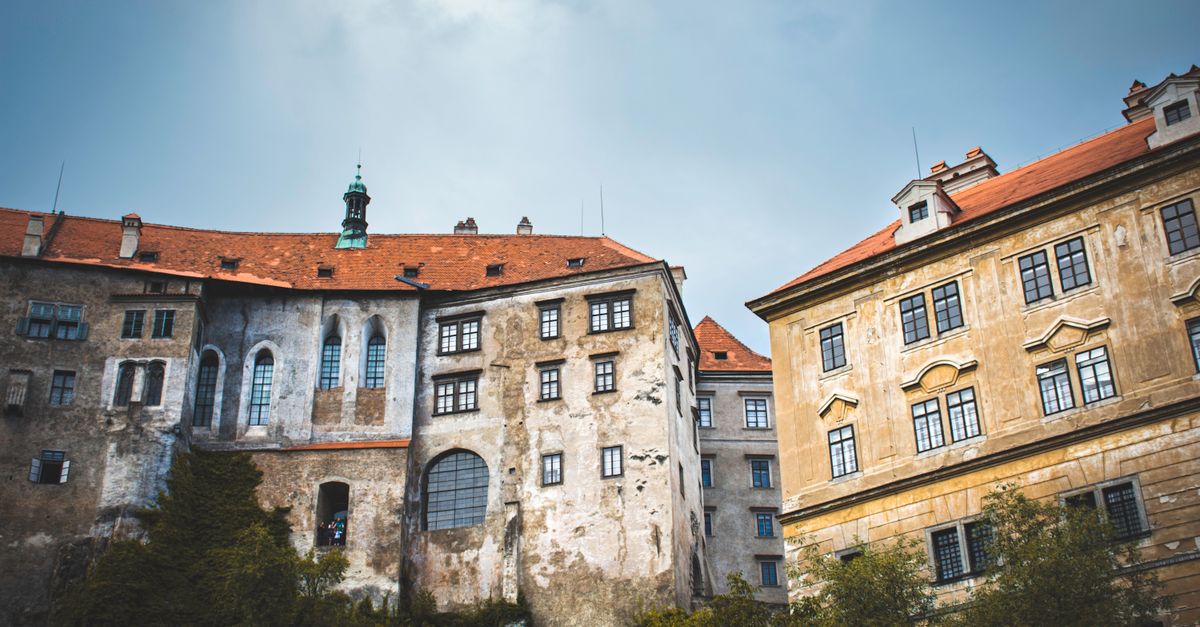
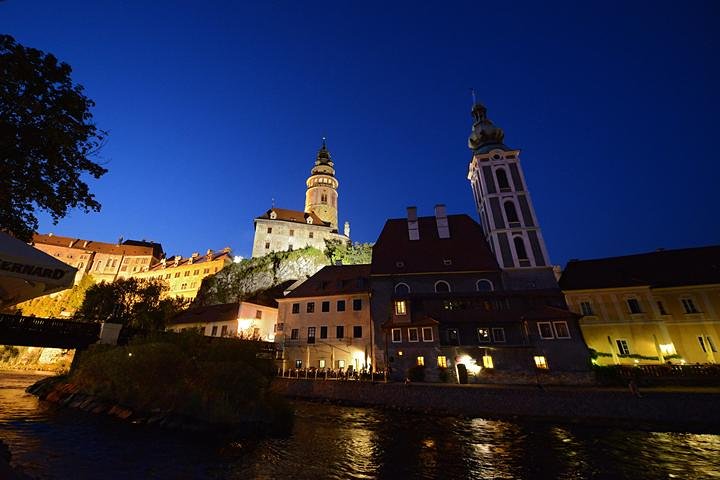
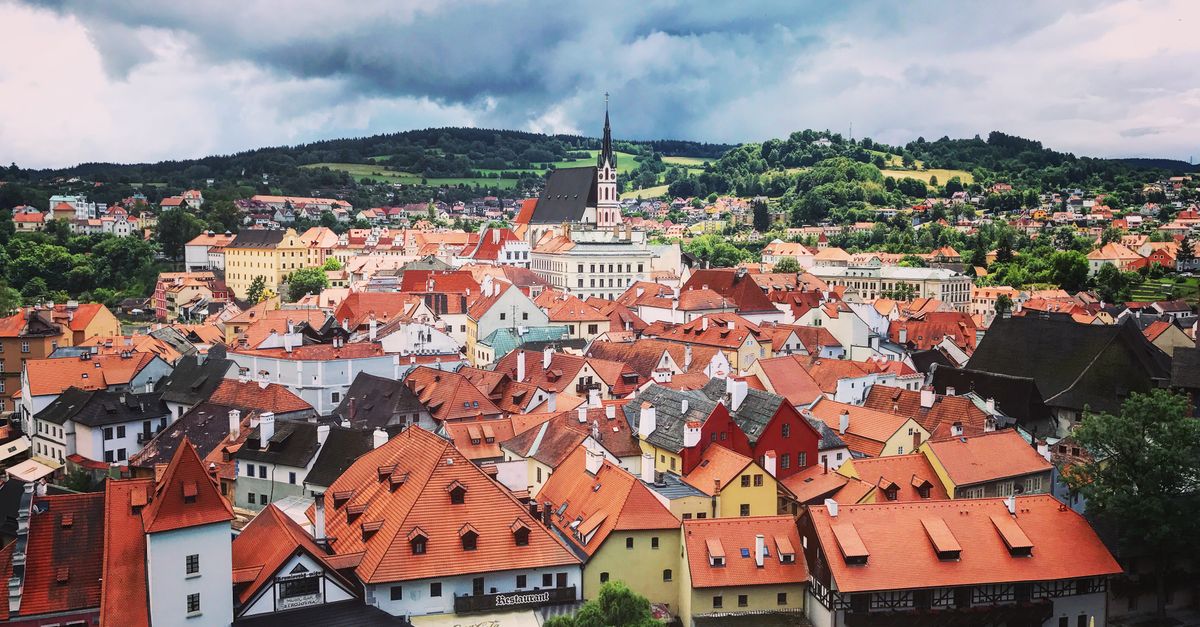
Český Krumlov is one of Central Europe's most perfectly preserved medieval towns — a UNESCO World Heritage Site of baroque towers, painted facades, and cobblestone alleys wrapped in a horseshoe bend of the Vltava River. Its food culture is proportionally modest to its size (the old town has fewer than 15,000 residents) but far more interesting than its tourist-heavy streets might suggest. Behind the souvenir shops and the trdelník vendors, a genuine South Bohemian culinary tradition survives — roast meats, dumplings, mushroom soups, freshwater fish from the surrounding Šumava forest ponds, and beer that has been brewed locally since the 14th century.
South Bohemian cuisine is the most purely Czech of all the Czech regional food traditions — less influenced by German, Hungarian, or Slovak neighbors than the borderlands, and shaped primarily by the forest and water environment of the Šumava National Park that surrounds the town. Freshwater carp (kapr) from the Třeboň fish ponds 60km to the east, wild mushrooms (hřiby, lišky) from the Šumava forest, venison and wild boar from the hunting estates of the former Schwarzenberg aristocracy — these are the ingredients that define South Bohemian cooking.
Český Krumlov is also a beer town. The Eggenberg Brewery in the castle grounds has been producing beer since 1560, making it one of the oldest continuously operating breweries in Central Europe. Drinking a dark Eggenberg under the castle walls on a summer evening, watching the river bend below, is one of the finest beer experiences in the Czech Republic. The food exists partly in service of this beer, which is exactly as it should be.
10 Must-Try Dishes in Český Krumlov
1. Svíčková na Smetaně
Svíčková is Czech cuisine's most celebrated dish, and in South Bohemia it maintains its most traditional form. A beef sirloin is marinated for 24–48 hours in a mixture of root vegetables (carrot, parsnip, celeriac), bay leaves, allspice, and black pepper with red wine vinegar, then slow-braised until the meat reaches fork-tender submission. The braising vegetables are strained, puréed, and enriched with heavy cream to create the sauce — simultaneously sweet from the carrots, sour from the vinegar marinade, and deeply savory from the beef. Served with houskový knedlík (bread dumplings), a spoon of whipped cream, lingonberry jam, and a slice of lemon.
South Bohemia's version of svíčková tends to be slightly earthier and more forest-influenced than the Prague version — some restaurants add dried mushrooms to the braising liquid for additional depth, and the cream sauce is less sweet than the Bohemian urban versions. The bread dumplings are typically steamed rather than boiled, giving them a lighter, more open crumb that absorbs the sauce with particular elegance. This is a dish that rewards the patience of slow cooking and the patience of slow eating.
Try it at Restaurace v Šatlavské (In the Jail Restaurant) on Šatlavská street — a beloved local institution in a 16th-century building with stone vaulted ceilings and a menu of traditional South Bohemian food. Also available at Hotel Ruze restaurant on Horní street, which occupies a Renaissance college building and serves traditional recipes with quality local sourcing.
Expect to pay CZK 280–420 (€11–16). Pair with Eggenberg Tmavý (dark lager) from the castle brewery — the roasted malt notes and slight sweetness of the dark beer complement the cream-and-vinegar sauce of the svíčková in a way that lighter lager cannot. Order extra knedlík for the sauce.
2. Kapr na Černo (Carp in Black Sauce)
Kapr na černo — carp in black sauce — is the most distinctly South Bohemian of all Czech dishes and one of the strangest and most compelling in Central European cuisine. Freshwater carp from the Třeboň or Hluboká fish ponds, slowly braised in a sauce of dark beer, gingerbread (perník), vinegar, root vegetables, prunes, and almonds until the sauce becomes a complex, dark mahogany reduction with flavors that move between sweet, sour, spiced, and deeply savory. It is a medieval recipe with almost no changes over five centuries.
The use of gingerbread as a thickening and flavoring agent is the most unusual element — it adds a warm spice complexity (cinnamon, anise, ginger) alongside its thickening starch. The prunes contribute sweetness and a slightly bitter, dried-fruit depth. The dark beer (traditionally Eggenberg Tmavý or similar) provides bitterness and color. The result is a sauce that tastes like the 16th century — complex, slightly exotic by modern standards, and utterly unlike any other European fish preparation.
Kapr na černo is a Christmas Eve specialty (South Bohemia's traditional Christmas dinner), but it appears year-round at restaurants committed to traditional regional recipes. Find it at Restaurace v Šatlavské and at Krčma v Šatlavské — both in the same historic building complex on Šatlavská street. It is not always available; call ahead to confirm.
Costs CZK 320–480 (€12–18). Pair with Eggenberg Světlé (pale lager) rather than the dark — the black sauce is already deeply flavored and needs a lighter, crisper beer to provide contrast. Alternatively, Frankovka wine from South Moravia works surprisingly well with the sweet-sour sauce.
3. Kulajda
Kulajda is South Bohemia's most famous soup and one of the great soups of Central European cuisine — a thick, cream-enriched broth of dried or fresh forest mushrooms (hřiby, lišky), young potatoes, dill, and caraway seeds, finished with a swirl of smetana (sour cream) and topped with a soft-poached egg at its center. The egg yolk, broken at the table into the hot soup, enriches the broth further and creates a textural contrast with the earthy mushrooms and soft potato. The dill is essential — its anise-herbal note lifts the whole soup from comforting to extraordinary.
The best kulajda uses dried wild mushrooms from the Šumava forest — hřiby (porcini) in particular, whose intense, almost truffle-like flavor when dried permeates the cream broth far more deeply than cultivated mushrooms can achieve. The potatoes should be floury and just barely cooked, providing starch without becoming mushy. The sour cream must be genuinely sour — Czech smetana (30% fat, properly cultured) rather than the milder crème fraîche of Western Europe. And the poached egg must have a liquid yolk; a fully cooked egg is a kulajda tragedy.
Order kulajda at virtually any traditional restaurant in Český Krumlov — it is so embedded in South Bohemian cuisine that any establishment serving traditional food will offer it. The version at Krčma v Šatlavské (Šatlavská 1) and at Restaurace Na Louži (Kájovská 66) are particularly reliable.
A bowl costs CZK 120–180 (€5–7). Pair with Eggenberg Světlé on draft — the subtle bitterness of the pale lager provides the perfect counterpoint to the cream and egg richness. This soup is served in winter as a main-course-sized bowl or year-round as a starter, and either format is valid. Eat it slowly; the pleasure is in the interplay of flavors as the egg yolk dissolves.
4. Trdelník
Trdelník vendors occupy every corner of Český Krumlov's old town, and while the commercialization of this traditional pastry has been excessive (ice cream trdelník "chimneys" are a Prague tourist trap), the genuine version — properly made and eaten at the right temperature — remains one of Central Europe's most enjoyable street foods. A strip of sweet, yeast-leavened dough (made with flour, eggs, butter, milk, and sugar) is wound around a wooden or metal spit, rolled in a mixture of sugar and ground walnuts, and slow-roasted over charcoal until it develops a caramelized, walnut-studded crust and a warm, slightly hollow interior.
The key to trdelník is freshness — it must be eaten within 10 minutes of coming off the spit, when the exterior is still warm and slightly crackling, the interior still soft and fragrant with vanilla and caramel. Trdelník that has cooled is ordinary; trdelník freshly pulled from the heat, with the sugar just setting at the edges, is genuinely wonderful. The walnut coating adds a pleasant bitterness against the sweetness of the caramelized sugar.
In Český Krumlov, look for stalls with visible charcoal grills and rapid turnover — a line of locals is your best indicator of quality. Avoid any stall where the trdelník appears to be pre-made and sitting in a rack warming. The best stall in the old town is at the corner of Linecká and Šatlavská streets, operated by a family that has been making trdelník here for two decades.
Costs CZK 60–100 (€2.50–4). No pairing needed other than the cold mountain air of a Český Krumlov evening. Eat while walking across the old bridge over the Vltava for the optimal experience — the baroque skyline of the town reflected in the river, a warm sugar pastry in your hand, the cathedral bell marking the hour. South Bohemia at its most completely itself.
5. Pečené Vepřové s Knedlíkem a Zelím
Roast pork with dumplings and sauerkraut (vepřo-knedlo-zelo in Czech shorthand) is arguably the most important dish in all Czech cuisine — the trinity of flavors and textures that defines the national food identity as much as any single ingredient. The pork (typically shoulder or neck) is slow-roasted for three or four hours with caraway seeds, garlic, and lard until the skin renders to deep, amber crackling and the meat becomes falling-tender. The sauerkraut is braised with onion, bacon, and caraway. The bread dumplings are steamed. Together they create one of the most harmonious combinations in European cooking.
In South Bohemia, the roast pork tends to use local breeds — Přeštice Black-Spotted pig, the indigenous Czech breed — rather than commercial white pork, giving the meat a richer, more marbled character and significantly better flavor. The crackling (škvarky) is the chef's exam: it must shatter at the bite without being burnt, which requires precise heat control throughout the long roasting process. The sauerkraut should retain some texture while being fully tender, with a tangy freshness that cuts through the pork fat.
Order it at Restaurace Na Louži (Kájovská 66) — one of the oldest and most respected traditional restaurants in the city, operating in a historic building with a menu focused entirely on South Bohemian specialties. Also at Restaurace v Šatlavské and at the Eggenberg Brewery restaurant where the pork is served with the house-brewed beer.
A full portion costs CZK 250–380 (€10–15). Pair with Eggenberg Světlé (pale lager, 5%) — the clean, slightly bitter lager and the caraway-scented pork and sauerkraut are one of Czech cuisine's most enduring flavor pairings. Order the crackling separately if you want extra; any kitchen that makes vepřo-knedlo-zelo well will have extra škvarky available.
6. Smažený Kapr (Fried Carp)
Smažený kapr — beer-battered and deep-fried carp — is the most accessible form in which to eat the South Bohemian freshwater fish that dominates the local cuisine. Thick fillets of pond-raised carp are coated in a light beer batter and fried until the exterior is golden and shatteringly crisp, the interior moist and sweetly flavored. Served with potato salad (bramborový salát — a Czech institution made from cooked potatoes, pickled vegetables, onion, and a thick egg mayonnaise) and tartar sauce, it is the quintessential Czech pub lunch and one of the most satisfying fried fish preparations in Central Europe.
Carp from the Třeboň fish pond system east of Český Krumlov is among the finest in Europe — the ponds are fed by natural spring water, and the fish are raised over multiple years to develop proper size and flavor. Good carp is clean-tasting and sweet, with a mild muddy note that the frying process largely eliminates. The key to a good smažený kapr is the batter (thin, crisp, light enough to let the fish speak) and the oil temperature (high enough to cook quickly without absorbing excessive fat).
Available at virtually every traditional pub and restaurant in Český Krumlov. The most reliable version is at Restaurace Na Louži, which sources its carp directly from Třeboň suppliers. Smažený kapr is most commonly served as the Czech Christmas dinner on December 24th, but is available year-round in South Bohemia where the freshwater fish is abundant.
Costs CZK 220–320 (€8–12). Pair with Eggenberg Světlé on draft — a classic combination that the locals have been executing for four centuries. The bramborový salát should be cold and slightly tangy; the tartar sauce should contain real capers and cornichons. This is unpretentious Czech comfort food at its most satisfying.
7. Šumava Mushroom Dishes
The Šumava National Park that surrounds Český Krumlov is one of Central Europe's richest wild mushroom territories — thousands of square kilometers of mixed forest producing extraordinary quantities of hřiby (porcini), lišky (chanterelles), ryzce (saffron milk caps), and smrže (morels) depending on the season. From July through October, the forest floors around the town yield mushrooms that appear on every serious restaurant menu in the region — in soups, with roasted meats, in sauces for venison and pork, and simply pan-fried in butter with garlic and parsley as one of the most perfect standalone preparations in Czech cuisine.
Mushroom picking (houbaření) is a Czech national obsession, and the forests around Český Krumlov attract thousands of pickers on autumn weekends. Local restaurants that participate in this culture source their mushrooms directly from known pickers — the traceability of a restaurant that can tell you which forest their mushrooms come from is a sign of kitchen integrity in this region. Fresh chanterelles pan-fried in butter with garlic, a squeeze of lemon, and dark bread is a completely perfect, five-ingredient dish that requires no improvement.
Order any mushroom preparation at Restaurant Nové Město (Nádražní 17) or at Šumavský Dvůr, which specializes in forest-sourced ingredients. The mushroom soup (houbová polévka) and mushroom sauce (houbová omáčka) over venison or game are the most common forms in which to eat them, but ask daily about fresh preparations depending on what came from the forest that morning.
A mushroom starter or soup costs CZK 120–200 (€5–8). A main course with mushroom sauce costs CZK 280–420 (€11–16). Pair with Moravian Chardonnay (if serving with white meat) or Neronet red (with venison or pork) — the earthiness of the mushrooms calls for wine with some wood aging and complexity. Eggenberg Tmavý dark lager is also an excellent pairing for mushroom dishes.
8. Venison and Game
The Schwarzenberg hunting estates that dominated the Šumava region for centuries created a game-cooking tradition in South Bohemia that persists in the menus of its best restaurants. Venison (jelení), wild boar (divoké prase), and roe deer (srnčí) appear throughout the autumn and winter menus of Český Krumlov's traditional restaurants, typically prepared in classic Central European game preparations: slow-braised srnčí guláš (roe deer goulash) in red wine and juniper berries, roasted leg of venison with rosehip sauce (šípková omáčka), or wild boar schnitzel breaded and fried in lard.
South Bohemian game cooking uses the forest's aromatics alongside the meat — juniper berries, bay leaves, rosehips (which grow wild along the Vltava banks), and dried mushrooms from the Šumava. The sauces are complex: the rosehip sauce for venison is simultaneously tart, slightly sweet, and deeply fruity, providing the same function that cranberry sauce plays with turkey in North America but with more complexity. Game here is not an exotic restaurant experience — it is a continuation of a centuries-old aristocratic and peasant food tradition.
Game dishes are most available October–February (hunting season). Find them at Restaurace v Šatlavské and at Hotel Ruze restaurant. The venison goulash at v Šatlavské is particularly good — long-cooked, juniper-scented, served with bread dumplings and lingonberry compote.
Game main courses cost CZK 320–520 (€12–20). Pair with Frankovka Modrá from South Moravia — a red wine with sufficient body, tannin, and dark fruit to stand alongside game without being overwhelmed. Alternatively, Eggenberg Tmavý Speciál (special dark) is the beer choice for game in the local tradition.
9. Perník (Gingerbread)
South Bohemian perník — gingerbread — has a distinctly different character from the hard, dry variety sold in German Christmas markets. Czech perník is soft and spiced: a dark, moist cake or biscuit made from honey, rye flour, and a complex spice mixture (cinnamon, anise, cloves, cardamom, ginger) that has been produced in South Bohemia since the medieval period when spice trade routes passed through the region. It is used in cooking (as a thickener for sauces, particularly kapr na černo) and eaten as a standalone confection.
In Český Krumlov, perník is sold at artisan shops and bakeries throughout the old town in both decorative (hard, iced, painted as gifts) and edible (soft, fragrant, produced for eating) forms. The edible versions — plain, with a chocolate glaze, or sandwiched with plum jam — are significantly better than the decorative and worth seeking out specifically. The best perník should be dense and slightly sticky, darkly spiced, with a lingering warmth that makes it ideal in cold weather.
Buy edible perník at Cukrárna Labuť on Latrán street — one of the few bakeries in the town still producing traditional South Bohemian gingerbread for eating rather than decoration. Also at the town market on Friday mornings in summer where local producers sell perník alongside honey and seasonal preserves.
A piece of edible perník costs CZK 20–50 (€0.80–2). Pair with Eggenberg Tmavý (dark lager) — the roasted malt sweetness and the gingerbread spicing are a natural combination that the old Schwarzenberg court would have recognized. Or simply with a cup of Czech black tea, drunk strong with lemon in the Eastern European style.
10. Eggenberg Beer Tasting
The Eggenberg Brewery, operating within the walls of Český Krumlov Castle since 1560, is one of Central Europe's oldest continuously operating breweries and produces beers of genuine quality and distinct local character. The range includes Světlé Výčepní (pale draft, 4%), Světlý Ležák (pale lager, 5%), Tmavé Výčepní (dark draft, 3.8%), Tmavý Ležák (dark lager, 4.5%), and a seasonal Pšeničné (wheat beer) — all brewed with local water that has flowed through the castle's limestone foundations for centuries.
The Eggenberg Tmavý Ležák is the brewery's signature achievement: a dark lager with notes of toasted bread, dark plum, and a hint of chocolate, with a dry, clean finish that makes it remarkably drinkable despite its deep character. It is brewed according to a 16th-century recipe adapted for modern brewing techniques — the result is a beer with genuine historical depth that also functions beautifully as a modern craft product. Drinking it in the brewery restaurant under the castle walls, with a view of the Vltava bend through the stone arches, is a distinctly South Bohemian experience.
The Eggenberg Brewery restaurant and tasting room is located in the Pivovar Eggenberg complex on Latrán street, open daily. Brewery tours (CZK 200–350) include tastings of the full range. The restaurant serves traditional Czech food designed to complement each beer style.
A 0.5L beer costs CZK 55–80 (€2.20–3.20) at the brewery taproom — excellent value for the quality. A brewery tour with tasting costs CZK 200–350 per person. The tasting progression recommended by the brewery: Světlé Výčepní (pale draft) → Tmavý Ležák (dark lager) → Pšeničné (wheat, seasonal). This sequence moves from lighter to heavier, letting each style register fully before the next.

Český Krumlov's Essential Food Areas
The Old Town (Staré Město), the horseshoe-shaped historic center surrounded by the Vltava, is where the majority of restaurants operate. The concentration of tourists means prices are slightly higher than the surrounding region, but the quality at the best establishments — Restaurace v Šatlavské (Šatlavská 1), Restaurace Na Louži (Kájovská 66), and Hotel Ruze restaurant (Horní 154) — is genuinely good and locally sourced.
Latrán, the strip of streets connecting the old town to the castle complex, contains the Eggenberg Brewery restaurant and taproom — the most important food address in the town for beer lovers. Several small traditional pubs and Czech snack shops also operate here, serving as the neighborhood's local food economy rather than the tourist food economy of the main square.
The Surrounding Šumava Villages, particularly Kájov (7km, famous for its Gothic church and a superb traditional krčma), Přídolí (10km), and the town of Horní Planá (35km, on Lipno Reservoir) represent the most authentic South Bohemian food experience outside the city proper. Driving into the Šumava countryside for a meal at a village hospoda (local pub) — ordering whatever the kitchen has cooked that day, drinking local beer from a barrel — is the experience that connects food to landscape in the most fundamental way.
Practical Tips for Eating in Český Krumlov
Český Krumlov is moderately expensive by Czech standards (tourist premium) but inexpensive by Western European standards. A full traditional lunch at a good restaurant costs CZK 350–550 (€14–22) per person with beer. Dinner at the same restaurants costs CZK 450–700 (€18–28). The polední menu (lunch special, 11am–2pm) typically offers soup plus main for CZK 150–220 (€6–9) — excellent value and often the freshest food of the day. Street snacks (trdelník, smažený sýr, sausages) cost CZK 50–100 (€2–4).
The town is extremely busy with day-trippers from Ceske Budejovice, Vienna, and Prague May–September; restaurants in the old town fill rapidly for dinner from 7pm. Book restaurants by phone or in person (many small establishments don't have online booking) by early afternoon at the latest. Cash is preferred at traditional pubs and smaller restaurants; larger establishments accept credit cards. Always check whether the beer on offer is Eggenberg (brewed on-site) or a generic commercial lager — in Český Krumlov, you want the local beer.