
Barbados is the Caribbean island that takes its food most seriously — a remarkable claim for a region known for excellent food, but one supported by evidence. The flying fish and cou-cou combination that is the national dish, the breadfruit and macaroni pie side dishes that anchor every Bajan meal, the rum shops that serve as social institutions and produce the island's most genuinely excellent rum (Mount Gay is the world's oldest rum brand, established 1703), and the afternoon fish fries that turn the fishing town of Oistins into a weekly food festival — all of these constitute a food culture of real depth and identity that has developed over four centuries of island history.
Bajans (Barbadians) are proud of their food culture and have strong opinions about it. The national dish is non-negotiable — flying fish with cou-cou (a firm polenta made from cornmeal and okra) is the foundation, and any restaurant claiming to serve it must do it properly. The rum shop culture is also entirely genuine: the thousands of small, neighborhood rum bars that serve Banks beer, rum, and often simple food to the local community are the social fabric of Barbadian life in a way that pub culture is to England. Visiting these spaces — friendly, unhurried, often in someone's front room — gives you access to a Barbados that the beachfront hotels do not reveal.
This guide focuses on the real Bajan food experience: not the hotel restaurants or the tourist-oriented West Coast seafood establishments (which are good but not the story), but the fish fries at Oistins, the rum shops of St. Philip and St. John, the neighborhood restaurants in Bridgetown's Garrison area serving proper cou-cou and flying fish, and the dessert culture (rum cake, coconut bread, Bajan bread pudding) that is inseparable from Bajan hospitality. Once you understand what to look for, Barbados rewards curious eaters with one of the Caribbean's most cohesive and satisfying food traditions.
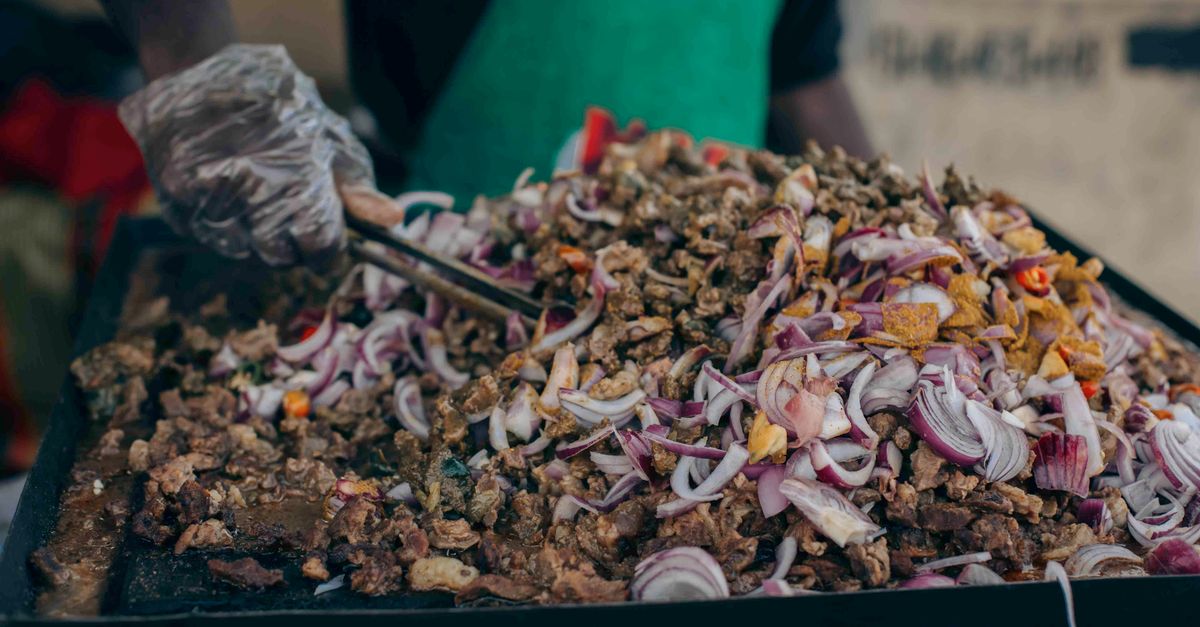
10 Must-Try Dishes in Barbados
1. Flying Fish and Cou-Cou (The National Dish)
Flying fish and cou-cou is Barbados's national dish and one of the most distinctive food combinations in the Caribbean — a preparation that is entirely specific to the island and reflects its history, landscape, and culture in every element. The flying fish (Hirundichthys affinis) — small silver fish with elongated pectoral fins that allow them to glide above the water — were historically the primary protein of the Bajan working class, so abundant in Barbadian waters that the island was called "the land of flying fish and cou-cou." The flying fish is deboned (a skilled and time-consuming process called "boning the fish"), steamed or lightly fried with a sauce of onion, tomatoes, peppers, and aromatic herbs, then served atop cou-cou.
Cou-cou is the dish's second genius element — a firm, polenta-like preparation of finely ground cornmeal cooked with sliced okra until the okra's natural mucilage thickens the mixture into a smooth, slightly sticky, yielding cake that is formed into a dome or shaped with a cou-cou stick (a special wooden paddle used to stir and shape the mixture). The okra's slight mucilaginous quality gives cou-cou a texture different from Italian polenta or Caribbean funchi — more cohesive, slightly slippery in the best possible sense. The combination of the soft, yielding cou-cou with the aromatic steamed fish above it is greater than its parts suggest.
The finest cou-cou and flying fish is at Champers Restaurant (Hastings, Christ Church) — a long-established Bajan restaurant on the water with serious kitchen credentials and an excellent version of the national dish. The Waterfront Café (The Careenage, Bridgetown) serves it properly in a beautiful historic waterfront setting. For the most affordable and authentic version, the Oistins Fish Fry (every Friday and Saturday evening, Bay Street, Oistins) has multiple vendors serving flying fish prepared various ways — the fried version with the traditional pepper sauce is excellent and costs a fraction of restaurant prices.
Flying fish and cou-cou at a proper restaurant: BDS$45–$80 (approximately USD$22–$40). At Oistins Fish Fry: BDS$20–$35 per plate. The national dish should always be ordered — it's the most meaningful way to engage with Bajan food culture. Ask for the pepper sauce on the side so you can control the heat level. Always finish every bit of the cou-cou — leaving it is considered disrespectful by Bajan cooks who have spent time making it.
2. Oistins Friday Night Fish Fry
The Oistins Fish Fry is not simply a meal — it's one of the Caribbean's great weekly social institutions, a gathering that transforms the normally quiet fishing town of Oistins (southeast coast, Christ Church parish) into a festive outdoor food market every Friday and Saturday evening from approximately 6pm until midnight. Dozens of vendors set up tables and cooking stations around the fish market building, with fresh fish — flying fish, mahi-mahi, swordfish, shark (locally called "barracuda"), marlin, and shrimp — fried, grilled, and steamed to order while calypso and soca music plays from speakers throughout the space.
The Oistins Fish Fry experience is egalitarian and genuinely Bajan — tourists and locals eat at the same plastic tables, drink from the same coolers of Banks beer and rum punch, and compete for the same parking spaces. The food quality varies between vendors but the best stalls — usually those with the longest local queues — produce fried flying fish with a crispy, well-seasoned batter and a light, fresh fish interior that is genuinely excellent. The macaroni pie (see below), breadfruit fritters, and rice and peas that accompany the main fish orders are all executed at their best here. The combination of fresh air, live music, affordable food, and genuine community atmosphere makes Oistins the single experience most recommended by Bajans to visitors who want to understand the island's culture.
Friday night is the primary Oistins event (Saturday is similar but slightly quieter). Arrive by 7pm for the best atmosphere and food availability — by 9pm many stalls have sold out of flying fish. Pat's Place and Uncle George's are consistently named by locals as the most reliable stalls. Any stall with a long queue of Bajans rather than tourists is a safe choice. BDS$ and USD are both accepted at all stalls (though BDS$ is preferred).
A full Oistins plate (flying fish, macaroni pie, coleslaw, salad): BDS$20–$35 (USD$10–$17). Banks beer: BDS$4–$6. Rum punch: BDS$6–$10. A complete evening of food, drinks, and the full cultural experience for two people: BDS$100–$150 (USD$50–$75) including generous drinking. This is extraordinary value for a food-and-culture experience that is genuinely irreplaceable.
3. Macaroni Pie (Bajan Mac and Cheese)
Bajan macaroni pie is the island's most beloved side dish and comfort food — a thick-set, oven-baked macaroni and cheese preparation that is categorically different from American mac and cheese or Italian baked pasta. The Bajan version uses elbow macaroni bound in a sauce of evaporated milk, eggs, cheddar, onion, mustard, and ketchup (the ketchup is the surprising but essential ingredient that adds sweetness and tang), mixed with ketchup and seasoned well, then baked until set into a firm, sliceable mass that holds its shape when cut. The surface browns to a golden crust; the interior is creamy but firm enough to serve in neat squares.
Macaroni pie appears alongside virtually every Bajan main dish — with flying fish and cou-cou, alongside BBQ chicken at cookouts, as part of the Sunday lunch spread, and at every family celebration and funeral gathering. It's considered a defining element of Bajan hospitality: a house that doesn't serve macaroni pie at a gathering has failed to properly provide. The recipe varies significantly between families — some add more mustard, some use more evaporated milk for creaminess, some add pepper sauce for heat. Every Bajan cook claims their family recipe is superior, and many are right.
Macaroni pie appears as a side dish at virtually every Bajan restaurant. For the finest home-style version, The Barbados Cooking Experience (cooking class company operating at various locations in St. Joseph and St. James) teaches the authentic recipe. Champers Restaurant serves excellent macaroni pie as part of their traditional Bajan lunch. For the definitive judgment — try it at three or four different places and decide for yourself which recipe style you prefer.
Macaroni pie as a side dish: BDS$8–$15. It should always be ordered alongside your main dish — not as an optional extra but as an essential component of the meal. A plate of flying fish without macaroni pie is only half of what it should be. Take a portion home from Oistins if you're self-catering — it keeps well and reheats excellently.
4. Rum (The Original Barbados Product)
Barbados is the birthplace of Caribbean rum — the world's first commercial rum distillery, Mount Gay, was established here in 1703, and the island's 500-year relationship with sugarcane has produced a rum tradition of extraordinary depth and quality. Bajan rum is typically made in pot stills (producing more complex, flavorful rum than the column stills used for lighter Caribbean rums) from molasses, aged in former bourbon barrels for a minimum of two years. The result is a rum of genuine complexity: caramel, vanilla, dried fruit, and subtle wood spice, with a backbone of tropical fruit character from the Barbadian yeast strains.
The rum culture in Barbados operates at several levels. At the tourist end: the Mount Gay Rum Visitor Centre tour (Bridgetown) and the Ron Simonette distillery in St. Peter. At the local end: the rum shops throughout the island where Banks rum and Cockspur rum are drunk neat with water, in rum punch (rum, lime juice, sugar, water, and Angostura bitters — the most balanced rum cocktail in existence), and mixed with Bajan ginger beer or sorrel. The 1703 edition of Mount Gay is considered one of the finest rums in the world and worth the BDS$200+ investment for the experience.
The Mount Gay Rum Visitor Centre (Spring Garden, Bridgetown) offers factory tours (BDS$40–$80 depending on level) and tastings. Ron Simonette Rum Experience (Speightstown, St. Peter) is a smaller artisanal distillery with a more personal tour experience. For rum in its natural Bajan habitat, any of the thousand-plus rum shops throughout the island — particularly in St. Philip, St. John, and St. George parishes (the rural interior) — serve Cockspur or Banks Rum at BDS$3–$6 per shot in an atmosphere that is completely local and completely genuine.
A shot of rum at a rum shop: BDS$3–$6 (roughly USD$1.50–$3). A rum punch (properly made): BDS$8–$15. A bottle of Mount Gay Eclipse (the standard expression): BDS$30–$45 at the distillery. A bottle of Mount Gay 1703 Old Cask Selection: BDS$200–$280. The rum is not optional — it is the beating heart of Bajan culture and the lens through which the island's 500-year history is most clearly visible.
5. Bajan Pepperpot (Christmas Stew)
Bajan pepperpot is the island's most ancient surviving dish — a slow-cooked stew of multiple pork cuts (pork tail, trotter, and belly) cooked with cassareep (a thick, dark sauce made from cassava juice), peppers, cinnamon, and spices until the meat is falling-tender and the sauce is deep mahogany and intensely flavored. Cassareep — made by boiling down raw cassava juice until it caramelizes and thickens — is one of the Caribbean's most distinctive cooking ingredients, both a flavoring and a preservative that allowed the stew to be kept warm and added to indefinitely in pre-refrigeration times. Bajan pepperpot is a living dish: traditional families keep a pepperpot running continuously, adding new meat and cassareep regularly, with the "mother" sauce potentially decades old.
The flavor of pepperpot is unlike any other stew: the cassareep's bittersweet, slightly molasses-like depth mingles with the pork's richness, the cinnamon and cloves add warmth, and the whole preparation has a dark complexity that builds with each addition of new ingredients. It's served with Bajan bread (an enriched, slightly sweet loaf) for soaking up the exceptional sauce. Pepperpot is primarily a Christmas dish in Barbados — Bajan families start or revive their pepperpots in December and the stew is central to Christmas morning celebrations. However, several restaurants serve it year-round as a special.
Bajan pepperpot is found year-round at The Brown Sugar Restaurant (Aquatic Gap, Bay St, St. Michael) — one of Barbados's premier traditional Bajan restaurants, which serves pepperpot and other traditional preparations at a high quality level. Cutters of Barbados (Speightstown, St. Peter) serves an excellent version. The Holder's Hill Plantation area sometimes hosts Bajan food events featuring traditional preparations including pepperpot.
Pepperpot at a restaurant: BDS$35–$65. The dish is rich and complex — one serving is a complete meal. Order the Bajan bread or coconut bread on the side specifically for sauce absorption. This is a dish that represents Barbados's history as clearly as any museum — the cassareep technique came from the Arawak indigenous population, the pork from European settlement, and the spice profile from the island's position in the colonial spice trade.
6. Breadfruit (The Versatile Starchy Foundation)
Breadfruit is one of the most important starchy foods in Barbadian cooking and has been so since HMS Bounty's Captain Bligh delivered the first breadfruit trees to the Caribbean in 1793 (the famous Mutiny on the Bounty voyage was specifically a breadfruit-transport mission). The large, green, football-sized fruits from the breadfruit tree (Artocarpus altilis) contain a starchy flesh that can be roasted, fried, boiled, or baked and has a mild, slightly sweet flavor reminiscent of potato with its own distinctive quality. In Barbados, breadfruit appears as a side dish prepared in multiple ways at traditional family meals and Bajan restaurants.
The most beloved preparation is breadfruit cou-cou — made the same way as cornmeal cou-cou but using boiled, mashed breadfruit instead of cornmeal, which creates a lighter, slightly sweeter version. Roasted breadfruit (placed directly in hot embers or on a barbecue grill until charred outside and steaming within) is another preparation that allows the mild flavor to develop complexity from the caramelization. Breadfruit also appears in pudding and souse (a cold dish of pickled breadfruit and pork served on Saturday mornings), fried as fritters, and as a simple boiled side dish with butter and salt.
Pudding and Souse at Bajan markets and roadside vendors on Saturday mornings is the classic Bajan breadfruit experience — sliced pickled breadfruit alongside steamed black pudding and pickled pork, a traditional Saturday breakfast eaten after the morning market. The Cheapside Public Market in Bridgetown on Saturday mornings has the most concentrated pudding and souse vendors. The Brown Sugar Restaurant serves breadfruit preparations as part of their traditional menu.
Pudding and Souse (Saturday morning): BDS$10–$20 per portion. Breadfruit as a side dish at a restaurant: BDS$8–$14. Roasted breadfruit at a roadside vendor: BDS$5–$10. This is not a tourist food — it's what Bajans eat for Saturday breakfast, and participating in the pudding and souse tradition connects you to the weekly rhythm of Bajan community life in a way that hotel breakfasts never will.
7. Conkies (Traditional Bajan Sweet)
Conkies are the most distinctly Barbadian traditional sweet — a mixture of cornmeal, grated pumpkin, sweet potato, coconut, raisins, sugar, butter, and warming spices (nutmeg, cinnamon, vanilla) wrapped in banana leaf packets and steamed until set into fragrant, slightly dense, moist cakes. They're traditionally made and eaten around Guy Fawkes Day (November 5th) and Independence Day (November 30th), and their appearance in Bajan bakeries and markets at these times signals the seasonal approach of Barbados's national celebrations. The banana leaf imparts a subtle grassy fragrance during steaming that is fundamental to the conkie's character.
A properly made conkie has a dense, moist, slightly sticky texture from the combination of cornmeal, starchy sweet potato, and moist pumpkin — not crumbly or dry, but yielding and fragrant. The raisins provide sweetness bursts and the coconut adds a chew and tropical richness. Nutmeg — grown in Barbados and the broader Caribbean — appears in significant quantity and gives conkies their characteristic warmth. They're eaten warm or at room temperature, unwrapped from the banana leaf at the table, making a small meal or substantial snack.
Conkies are seasonal (October–November primarily), but several Bajan bakeries and food shops produce them year-round to meet visitor demand. Mango's Restaurant in Speightstown occasionally features traditional conkies. The Cheapside Public Market in Bridgetown has vendors selling conkies, particularly during the November celebrations. The Barbados Museum Shop (St. Ann's Garrison) often stocks conkies from local producers.
Conkies from a market vendor: BDS$3–$6 each. A bag of four or five: BDS$15–$25. This is a food that is almost impossible to find outside Barbados — the specific combination of Caribbean ingredients wrapped in banana leaf and the cultural significance attached to specific Bajan celebrations makes the conkie a genuinely place-specific food experience. If you visit during November, conkies should be a daily priority.
8. Bajan Rum Cake
Bajan black cake — the dense, alcohol-saturated fruit cake made with dried fruits soaked in rum and cherry brandy for months before baking — is the definitive Bajan celebration food and the most prized of all Barbadian food souvenirs. The preparation begins months before Christmas (when it's primarily made) with the soaking of dried fruits — raisins, prunes, currants, and mixed peel — in Mount Gay rum and cherry brandy until they've absorbed the liquor and swollen to extraordinary richness. These fruits are then blended or chopped fine, mixed with flour, butter, eggs, sugar, browning (a Bajan molasses-based caramel sauce), and spices, and baked in the lowest possible oven for several hours until completely set.
The result is a cake of extraordinary density, darkness, and alcoholic richness — each slice is intensely fruity, deeply spiced, and saturated with rum. Unlike European Christmas cake or British fruit cake, Bajan black cake is moister, darker, and more heavily laden with fruit at the expense of cake structure. It keeps for weeks, months, or even longer when well-doused in rum during aging — traditional Bajan families make it in November and serve it at Christmas, weddings, and any occasion that merits celebration. Served in thin slices with tea or coffee, it's one of the finest examples of Caribbean rum-based baking.
Cakes By Cole in Bridgetown is widely considered the finest Bajan black cake producer and ships internationally. Sweetfield Manor in Brittons Hill makes black cake and other traditional Bajan sweets. Most Barbadian supermarkets (particularly Massy Stores and Chefette) stock commercial versions — these are significantly inferior to artisanal versions from home bakers and specialty shops. The best black cake is made by Bajan grandmothers and sold at church sales and community markets — worth seeking out specifically.
Artisanal Bajan black cake: BDS$40–$80 per pound (approximately 450g). A small cake for gifts: BDS$30–$60. This is the finest food souvenir from Barbados — shelf-stable, uniquely Bajan, and genuinely excellent quality from a good producer. The alcohol content makes it fine to travel with (confirm with your airline on liquids regulations — the rum content makes it technically a food, not a liquid). Vacuum-packed individual slices: BDS$8–$15 each.
9. Cou-Cou (Beyond the National Dish)
Cou-cou deserves its own entry beyond its role as the national dish's companion — it is a complex preparation that is harder to make well than it looks, and understanding it separately deepens the appreciation for the full national dish. Cornmeal and okra cou-cou requires constant attention and physical effort: the cornmeal is added to simmering water with sliced okra and stirred continuously with the cou-cou stick (a long-handled paddle specifically designed for this purpose) for 20–30 minutes, working the mixture against the sides of the pot to break down lumps and incorporate the okra's natural thickener. The finished cou-cou is turned out of the pot by pressing the stick against the sides and rolling the mixture onto a plate, where it holds its dome shape.
Cou-cou made with breadfruit rather than cornmeal is a variation that many older Bajans prefer — it's lighter, slightly sweeter, and has the mild tropical flavor of breadfruit providing a different base for the dish. Cou-cou with saltfish (salted cod, rehydrated and cooked with onions and peppers) is the everyday version of the national dish concept, substituting the more affordable saltfish for flying fish while maintaining the cou-cou base. This budget version is what most working Bajans ate historically and what many still eat as a weekday staple — the saltfish version lacks the prestige of flying fish but has its own satisfying character.
The Brown Sugar Restaurant makes consistently excellent cou-cou in both cornmeal and breadfruit versions. The Oistins Fish Fry vendors serve cou-cou with their flying fish. For a Bajan home cooking experience, the Barbados Culinary Heritage Trail (a program of cooking demonstrations in historic plantation houses, bookable through Barbados Tourism Marketing Inc.) includes cou-cou making demonstrations with participation.
Cou-cou as part of the national dish: included in the price of flying fish and cou-cou (BDS$35–$65). As a standalone side dish: BDS$12–$20. The experience of watching cou-cou being made — the rhythmic stirring, the skill of turning it out into a perfect dome — is as interesting as eating it. Ask any traditional Bajan restaurant cook to let you watch the process if you're curious.
10. Fishcakes and Bajan Street Snacks
Bajan fishcakes — deep-fried cakes of salted cod (saltfish) mixed with flour, onion, herbs, and Scotch bonnet pepper, fried until golden — are one of the Caribbean's finest street snacks and the Bajan working-class breakfast food par excellence. Eaten hot from the oil on a salt bread (the small, crispy-crusted Bajan roll), a fishcake sandwich is the Bajan "ham and egg" — affordable, satisfying, available everywhere from early morning, and requiring no cutlery. The saltfish provides intense, briny protein; the Scotch bonnet (added in small quantities for warmth without overwhelming heat) adds aromatic depth; the crunchy-tender texture of the fried cake is addictive.
Beyond fishcakes, Bajan street food includes: Scotch eggs (hard-boiled eggs wrapped in seasoned sausage meat and breadcrumb-fried — a British legacy that has become genuinely Bajan), sweet potato pudding (steamed pudding of sweet potato, spices, and rum — found at Saturday morning markets), and jerk chicken (imported from Jamaica but adapted with Bajan pepper sauce and local spicing). The Cheapside Public Market and Fairchild Street Market in Bridgetown are the primary locations for traditional street snacks sold to local workers and market vendors rather than tourists.
Fishcake and salt bread: BDS$3–$6. Saturday morning pudding and souse: BDS$10–$20. Street snacks at market vendors: BDS$2–$8 each. Arriving at the Cheapside Market by 7am on a Saturday morning and eating fishcakes with salt bread while watching the market wake up is one of the most genuinely Bajan food experiences available — low-cost, entirely local, and deeply connected to the island's daily rhythm.

Barbados's Essential Food Neighborhoods
Oistins (Christ Church) — The Fish Fry Capital: The southeast-coast fishing town of Oistins is the center of Bajan food culture — the Friday night Fish Fry makes it the most important single food destination on the island, but the town also has excellent seafood restaurants and fish market vendors that operate year-round. The Oistins Bay Garden area is permanent market with several reliable vendors. The town's everyday restaurants cater to locals at local prices — eating here on a Tuesday or Wednesday provides the same food quality as the Friday fry at quieter, more affordable prices.
Bridgetown — The Capital's Historic Food Scene: The capital's food culture centers on the Cheapside and Fairchild Street markets (traditional Bajan food, street snacks, and produce), The Careenage waterfront (tourist-accessible restaurants with good traditional food including The Waterfront Café), and the Garrison area south of the city center where the historic racecourse neighborhood has a cluster of Bajan restaurants including The Brown Sugar, considered one of the island's finest traditional Bajan dining establishments. The Bridgetown Craft Market area has food vendors but quality is variable — prioritize the markets over the craft area for eating.
Speightstown (St. Peter) — The North Coast Food Hub: Speightstown on the northwest coast is Barbados's second town and has developed a genuinely good restaurant and bar scene that is more local and less tourist-facing than the West Coast resort strip. The old town's central street has excellent rum shops, Bajan restaurants, and the excellent Fisherman's Pub which has operated since 1962 as both a local gathering spot and a reliable seafood restaurant. The area north of Speightstown toward Crab Hill has excellent roadside fish vendors and small restaurants serving the fishing communities at authentic prices.
Practical Tips for Eating in Barbados
Barbados food safety is excellent — the island has first-world infrastructure and strong health inspection systems for commercial food businesses. Flying fish should be fresh and properly cooked; if it smells off, don't eat it. Rum shops and market vendors operate with the same hygiene standards as the rest of the Caribbean rather than the stricter standards of hotel restaurants — common sense applies (eat hot food hot, avoid pre-cooked food that's been sitting out). Scotch bonnet peppers appear in many Bajan dishes; they're extremely hot (significantly hotter than jalapeños) — always ask before ordering if you're heat-sensitive. The standard Bajan pepper sauce (typically made from Scotch bonnet, mustard, and vinegar) served at every table is also very hot relative to most other hot sauces.
Budget guide: Barbados uses the Barbadian dollar (BDS$, fixed at 2:1 to USD). A street fishcake and salt bread: BDS$3–$6. A full plate at Oistins Fish Fry: BDS$20–$35. A traditional Bajan restaurant lunch: BDS$35–$65 per person. A mid-range restaurant dinner: BDS$70–$120 per person. High-end West Coast hotel dining: BDS$150–$250+ per person. The value gap between local Bajan food (Oistins, rum shops, market vendors) and hotel dining is the largest in the Caribbean — the local food is better. Budget approximately BDS$80–$130 per day for excellent eating at the local-to-mid-range level.

