
Sukhothai is the dawn of Thai civilization — the 13th-century kingdom where Thai script, Theravada Buddhist art, and Thai national identity were born. The UNESCO Historical Park's graceful walking Buddha statues, lotus-filled moats, and ancient brick stupas are Thailand's most serene and spiritually powerful ruins, best explored by bicycle at sunrise.
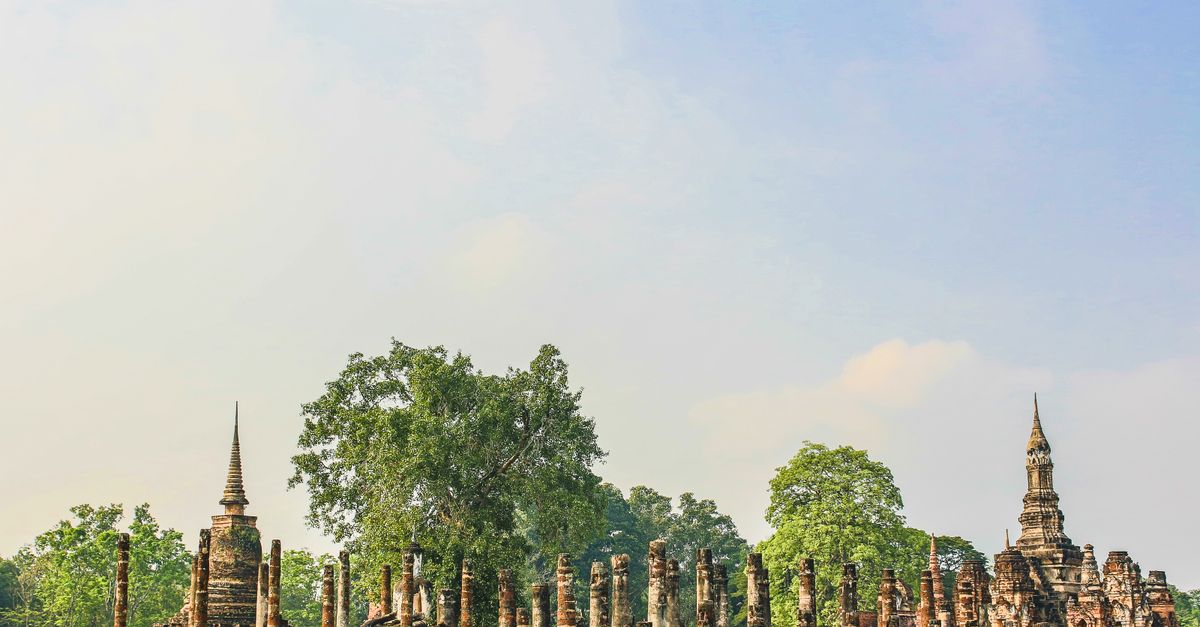
Central Zone Temples
Morning: Enter Sukhothai Historical Park Central Zone (฿100 entry plus ฿10 for bicycle access). Wat Mahathat, the spiritual heart of the ancient kingdom, features a massive seated Buddha surrounded by 198 columns, subsidiary chedis, and reflecting pools. The lotus-bud finials crowning the brick stupas define the distinctive Sukhothai artistic style that would influence Thai Buddhist art for centuries. Early morning mist rising from the ponds adds haunting atmosphere.
Afternoon: Explore Wat Si Sawai with its three Khmer-style corn-cob prangs — older than the Thai kingdom itself, originally constructed as a Hindu shrine before Theravada Buddhism became the state religion. Cross the parkland to Wat Sa Si, which sits serenely on an island in the Traphang Trakuan reservoir — the graceful walking Buddha statue reflected in perfectly still water at sunrise is hauntingly beautiful and one of Thailand's most iconic Buddhist images.
Evening: Dinner in New Sukhothai town (12km east, songthaew ฿30). The evening night market near the bridge serves Sukhothai noodles (฿30-50 per bowl) — the city's unique local specialty featuring thin rice noodles, crushed peanuts, sliced green beans, and dried shrimp in a slightly sweet pork-based broth that differs distinctly from other Thai noodle traditions. The quiet provincial town has simple but excellent Thai food stalls.
Outer Zones & Countryside
Morning: Cycle to the Northern Zone (฿100 separate entry). Wat Si Chum houses a mesmerizing 11-meter-wide seated Buddha statue framed by the narrow slit opening of its mondop enclosure building. The enormous Buddha appears to gaze directly and intimately at each individual visitor through the crack in the wall — the visual effect is deliberately designed and truly mesmerizing. Hidden stairs within the walls once led monks to the roof for ceremonies.
Afternoon: Explore the Western Zone (free entry) where ruins are scattered through open countryside. Wat Saphan Hin sits atop a forested hilltop reached by an original stone-slab walkway. The commanding standing Buddha at 12.5 meters tall overlooks the entire Sukhothai plain spread below in every direction. The moderate climb takes approximately 15 minutes and rewards with unobstructed views of the ancient city's complete layout visible from above.
Evening: Watch the sunset from within the Central Zone park. The warm golden light illuminating the ancient brick ruins and reflecting in the lotus-filled ponds creates perfect photography conditions during golden hour. The park closes at 6:30pm — position yourself at Wat Mahathat's reflecting pools or the island setting of Wat Sa Si for the most beautiful light and compositions during the final hour.
Si Satchanalai & Pottery Heritage
Morning: Day trip to Si Satchanalai Historical Park (฿100, 60km north of Sukhothai). The sister city and satellite capital is set among forested hills on the banks of the Yom River and receives far fewer visitors than the main park. Wat Chang Lom features a unique elephant-base chedi with 39 sculpted elephant figures supporting the bell-shaped stupa. The jungled hillside setting feels like discovering ancient ruins in the wilderness.
Afternoon: Visit the Sangkhalok Kiln archaeological sites near Si Satchanalai. The 13th and 14th century ceramic kilns produced distinctive celadon and brown-glazed stoneware that was traded across Southeast Asia, Japan, and the Philippines. The Sangkhalok Kiln Study and Preservation Centre museum displays beautifully preserved excavated pottery. The celadon tradition continues in modern workshops where visitors can try their hand at pottery-making (฿200-500 per session).
Quick Tips
- Rent a bicycle (฿30-50/day) at the Central Zone park entrance — the distances between the five zones make cycling the essential and most enjoyable transport option for exploring the spread-out ruins.
- The Loy Krathong Festival held in Sukhothai (November full moon) is widely regarded as Thailand's most atmospheric and authentic celebration of this beautiful tradition — held within the illuminated historical park with fireworks and traditional performances.
- Stay in New Sukhothai town for significantly better accommodation and dining options than the limited choices near the park itself. Songthaews shuttle regularly between town and park (฿30, 30 minutes).
Practical Information
Sukhothai has a small airport with Bangkok Airways flights from Bangkok (1 hour, from ฿2,000). Buses from Bangkok (6 hours, ฿300-400) and Chiang Mai (5 hours, ฿250) serve the route. Within the historical park zones, bicycles are the standard transport. Songthaews connect New Sukhothai town to the park. The park's information center provides free maps. English signage is good at major temple sites. Accommodation in New Sukhothai ranges from guesthouses (฿300-500) to comfortable hotels (฿800-1,500).
Best Times to Visit & Budgeting
November through February offers the most comfortable visiting weather with cool mornings perfect for cycling through the ruins. March-May is extremely hot. The rainy season (June-October) brings afternoon thunderstorms but fewer visitors and green landscapes. Sukhothai receives far fewer international tourists than Ayutthaya despite arguably more beautiful and atmospheric ruins — this relative quiet is part of the park's special appeal and spiritual quality.
| Travel Style | Daily Cost (฿) |
|---|---|
| Budget | ฿400-700 |
| Mid-Range | ฿800-1,500 |
| Luxury | ฿2,500-5,000 |
Local Culture & Etiquette
Sukhothai is not simply a museum set — it is an active site of living Buddhist practice, and approaching it with that understanding transforms the visit from a history tour into something genuinely moving. Monks in saffron robes still make merit-offerings at the ruins at dawn. Local families place flower garlands and incense at ancient Buddha images that have been venerated continuously for seven hundred years. The archaeological park shares space with this ongoing devotion, and visitors who recognise it are rewarded with a qualitatively different experience.
Dress respectfully throughout the park. Shoulders and knees should be covered when approaching active shrines, stupas, and seated Buddha images — not because guards will turn you away, but because these are genuinely sacred objects to Thai Buddhist people and the respect is noticed and appreciated. A lightweight long-sleeved shirt and linen trousers, or a sarong tied at the waist, manage both modesty and the morning heat comfortably. The rental shops near the central park entrance sell and lend sarongs if needed.
The wai — pressing palms together at chest height and bowing slightly — is the standard Thai greeting and gesture of respect. It is not required of foreign visitors but offering one when passing monks or elderly locals at the ruins earns a warm response. Never touch a monk, hand anything directly to a monk if you are a woman (place items on a table or cloth first), or point your feet at a Buddha image when sitting. These are baseline courtesies that take seconds to observe and signal genuine cultural awareness.
Sukhothai noodles deserve their own cultural briefing. The city's signature dish — thin sen lek rice noodles in a mildly sweet pork broth topped with crushed roasted peanuts, sliced green beans, dried shrimp, and occasionally a soft-boiled egg — is eaten at breakfast and lunch, rarely dinner. The night market near the main bridge in New Sukhothai serves the best versions from 6am to 2pm, and locals will readily tell you which stall is their personal favourite. Accepting a recommendation from a local and following it invariably leads to the better bowl.
The Loy Krathong festival transforms Sukhothai in November (timing follows the full moon). The historical park illuminates its ruins and ponds, traditional longtail boat races cross the reservoirs, and thousands of krathong — small banana-leaf floats carrying candles and incense — are released on the water. This is the single most atmospheric festival celebration in all of Thailand, and Sukhothai's claim to being its true birthplace is backed by historical evidence dating to the Ramkhamhaeng era.


