
Seoul is a city that contains multitudes in a way that few places on Earth can match. Within a single afternoon, you can walk the grounds of a 600-year-old royal palace, duck into a hanok (traditional wooden house) converted into a tea room, eat a three-dollar bowl of tteokbokki at a neon-lit street food stall, and end up in a rooftop bar overlooking a skyline of glass towers that did not exist twenty years ago.
The city's history stretches back to 18 BC, but its modern identity was forged in a period of almost incomprehensible transformation — from the devastation of the Korean War in 1953 to the world's 11th-largest economy by GDP today. That tension between ancient and hyper-modern runs through everything: the architecture, the food, the social customs, and the way Seoul presents itself to visitors.
Three days in Seoul is not enough to do the city justice, but it is enough to experience its essential character — the palaces that anchor its identity, the neighborhoods that define its personality, the food that fuels its relentless energy, and the cultural experiences that exist nowhere else. This itinerary is designed for first-time visitors who want to cover the essential ground without burning out.
It balances major sights with neighborhood exploration, includes practical transportation logistics, and builds in time for the spontaneous discoveries that make Seoul genuinely exciting. The pace is active but not punishing, and every recommendation includes specific costs so you can budget with confidence.

Day 1: Palaces, Tradition, and Street Food
Morning: Gyeongbokgung Palace
Start your Seoul experience at its symbolic heart. Gyeongbokgung is the largest and most important of the five grand palaces built during the Joseon Dynasty, originally constructed in 1395 and serving as the main royal residence for centuries.
The palace was devastatingly damaged during the Japanese occupation and the Korean War, and its ongoing restoration is itself a statement about Korean resilience and cultural identity. The grounds are vast — over 300 buildings once stood here — and the current restoration covers approximately 40% of the original complex.
Arrive by 9:30 AM to catch the Royal Guard Changing Ceremony at 10 AM (also at 2 PM), which takes place at the main Gwanghwamun Gate. Guards in full Joseon-era costume perform a precise, colorful ceremony that lasts about 20 minutes and is one of Seoul's most photographed moments.
Admission to the palace costs ₩3,000 (about $2.25), making it one of the best value cultural experiences in any major city. An excellent hack: if you wear a hanbok (traditional Korean dress), admission is free.
Hanbok rental shops line the streets approaching the palace and charge ₩15,000 to ₩25,000 for a four-hour rental, which means the hanbok essentially pays for itself if two people share the savings, and you get spectacular photos in the process.
Inside the palace, do not miss the Geunjeongjeon (main throne hall), where kings held court and received foreign envoys. The ceiling is painted with phoenixes and dragons in vivid color.
Behind the main halls, Gyeonghoeru Pavilion sits on an artificial lake and is one of the most beautiful structures in Korea — the reflection in the water on a calm morning is genuinely breathtaking. The National Palace Museum of Korea is on the palace grounds and is free to enter, with excellent exhibits on Joseon royal culture and artifacts.
Budget 90 minutes to two hours for the full palace visit.
Late Morning: Bukchon Hanok Village
A ten-minute walk north from Gyeongbokgung brings you to Bukchon Hanok Village, a residential neighborhood of approximately 900 traditional hanok houses nestled between Gyeongbokgung and Changdeokgung palaces. The narrow, hilly lanes offer some of Seoul's most iconic views — traditional wooden houses with curved tile roofs against a backdrop of modern high-rises.
This is a living neighborhood, not a museum, and the residents have understandable frustrations with tourist crowds. Respect the "quiet please" signs, do not peer into private homes, and keep your voice down.
The best photo spots are along Bukchon-ro 11-gil and Bukchon-ro 5-gil, where the hanok rooflines align with the city skyline behind them.
Stop at one of the small galleries or craft workshops that dot the village. Several offer hands-on experiences in traditional crafts — hanji (Korean paper art), natural dyeing, and ceramic painting — for ₩15,000 to ₩30,000.
These workshops are intimate, usually limited to five or six participants, and provide a deeper understanding of Korean aesthetic traditions than any museum exhibit.
Afternoon: Insadong Tea and Art
Walk south from Bukchon to reach Insadong, Seoul's traditional art and antiques district. The main street, Insadong-gil, is a pedestrian lane lined with galleries, craft shops, tea houses, and restaurants.
This is the neighborhood where Korean traditional culture meets contemporary expression — you will find centuries-old calligraphy brushes next to modern Korean design shops. Ssamziegil is a unique open-air shopping complex with a continuous spiraling path that leads you past four floors of artist studios, craft shops, and small galleries — it is architecturally interesting and a good place to find unique souvenirs.
Insadong's tea houses are essential. Shin Old Tea House has been serving traditional Korean teas since the 1970s — try omija-cha (five-flavor berry tea, ₩8,000) or daechu-cha (jujube tea, ₩7,000) in a room filled with antique ceramics and wooden furniture.
Korean tea culture is more meditative than Japanese tea ceremony — there is no rigid formality, just quiet appreciation of subtle flavors. Yuja-cha (citron tea) is sweet, fragrant, and ideal if you are new to Korean teas.
Evening: Myeongdong Street Food and Shopping
Myeongdong is Seoul's most famous shopping district, but for food travelers, the real draw is the street food. Every evening, the neighborhood's main streets transform into an open-air food market with dozens of stalls selling Korean street food classics.
Tteokbokki (spicy rice cakes in a gochujang sauce, ₩3,000) is the essential first bite — chewy, sweet, fiery, and addictive. Hotteok (sweet filled pancakes with brown sugar, cinnamon, and chopped nuts, ₩1,500) are crispy on the outside and molten-sweet inside.
Tornado potatoes — whole potatoes spiraled on a stick and deep-fried — are pure street food theater (₩3,000). Egg bread (gyeran-ppang, ₩2,000) is a whole egg baked into sweet bread dough, surprisingly delicious.
For a proper dinner, end the evening with Korean fried chicken. Seoul's fried chicken culture is fierce and competitive, with dozens of chains each claiming supremacy. Kyochon has multiple Myeongdong locations and serves both soy-garlic and spicy varieties — the soy-garlic version, lacquered and glistening, is the one to order.
A half chicken costs ₩9,000 to ₩12,000, and it pairs perfectly with a cold Cass or Hite beer (₩4,000). The Korean term chimaek (chicken + maekju, meaning beer) describes this sacred combination.
Day 2: DMZ, Culture, and Nightlife
Morning: DMZ Tour
The Demilitarized Zone — the 4-kilometer-wide buffer between North and South Korea — is one of the most surreal places on Earth and an essential Seoul experience. The DMZ is not technically in Seoul (it is about 50 km north), but half-day tours depart from the city every morning and return by early afternoon.
A standard tour costs ₩60,000 to ₩80,000 and typically includes the Joint Security Area (JSA) at Panmunjom, where you can literally step into North Korean territory inside the blue UN conference buildings; the Third Infiltration Tunnel, a narrow passage dug by North Korea in the 1970s for a potential invasion; and the Dora Observatory, where you can look across the border into North Korea through binoculars.
The JSA is the highlight — standing in the conference room with one foot in South Korea and one in North Korea, while soldiers from both sides stand meters apart, is a profoundly strange and sobering experience. Book your tour at least a week in advance, as JSA visits require passport information for security clearance.
Koridoor and VIP Travel are reliable operators. Note: there is a dress code — no sandals, shorts, or ripped jeans, as you are technically entering a military area.
If the DMZ is sold out or not your interest, an excellent alternative morning is the War Memorial of Korea (free admission), a massive museum covering Korea's military history with particular focus on the Korean War. The outdoor exhibit of tanks, aircraft, and naval vessels is impressive, and the indoor galleries are genuinely moving.
Follow this with lunch in Itaewon, Seoul's most international neighborhood, where restaurants cover every cuisine from Ethiopian to Turkish to Mexican.
Afternoon: Hongdae Indie Culture
Hongdae (short for Hongik Daehakgyo, Hongik University) is Seoul's creative heart — a neighborhood of indie music venues, street art, vintage clothing shops, quirky cafes, and a youthful energy that pulses day and night.
The area around the university's main gate is where Seoul's indie rock, hip-hop, and electronic music scenes incubate, and on weekend afternoons, the Hongdae Free Market (Saturdays, 1 PM to 6 PM) fills a park with young artists selling handmade goods, while buskers and dance crews perform on the surrounding streets.
Spend the afternoon wandering Hongdae's side streets, where the discoveries are constant: a cafe entirely staffed by raccoons (yes, really), a vintage shop specializing in 1990s Korean fashion, a gallery showing work by Hongik art students. Thanks Nature Cafe has sheep roaming the indoor garden (coffee ₩6,000).
Zapangi is hidden behind a pink vending machine door and serves photogenic desserts (₩8,000 to ₩12,000). These are not tourist traps — they are expressions of Korean pop creativity that delights in surprise and visual spectacle.
Evening: Hongdae Nightlife
Hongdae after dark is Seoul's best nightlife zone and one of the most vibrant in Asia. The streets fill with university students, young professionals, and visitors, and the energy is infectious.
Start with dinner at a Korean BBQ restaurant — the Hongdae area has excellent options at every price point. Sit at a table with a built-in grill, order samgyeopsal (thick pork belly slices, ₩12,000 to ₩15,000 per serving) or galbi (marinated beef short ribs, ₩20,000 to ₩25,000), and grill the meat yourself, wrapping each piece in lettuce with garlic, ssamjang (spicy paste), and pickled radish.
Korean BBQ is not just a meal — it is a social ritual that can stretch for hours.
After dinner, explore Hongdae's bars and clubs. Pocha (tent bars) — outdoor drinking stalls with orange tents, plastic furniture, and anju (drinking snacks) — line the main streets and offer the most authentically Korean drinking experience.
Order soju (₩4,000 per bottle) and pair it with pajeon (scallion pancake) or dakbal (spicy chicken feet). For live music, Club FF and DGBD host indie bands most nights with covers of ₩5,000 to ₩10,000 that usually include a drink.
For dancing, NB Club and Cocoon are the big weekend venues (₩20,000 to ₩30,000 cover).
Day 3: Views, Markets, and the River
Morning: Namsan Tower (N Seoul Tower)
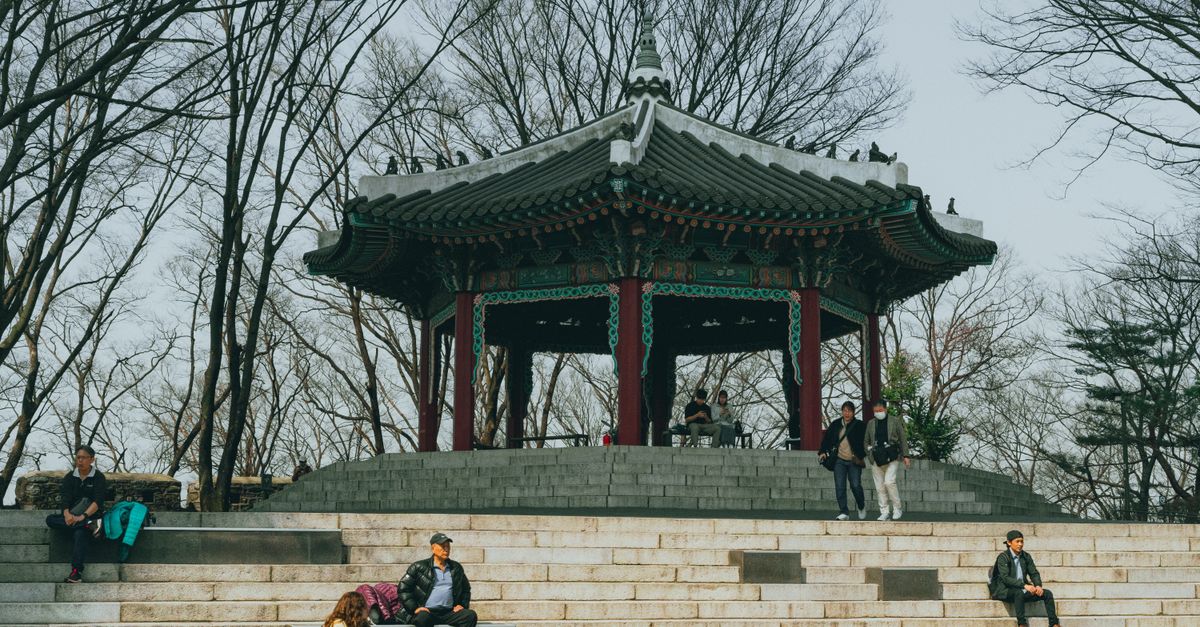
Namsan Tower sits atop Namsan Mountain in the center of Seoul and offers the best panoramic views of the city. On a clear day, you can see from the mountains of Bukhansan in the north to the southern districts of Gangnam and beyond.
There are two ways up: the Namsan Cable Car (₩16,000 round trip) is the scenic option, offering sweeping views as you ascend, while the walk up takes about 30 minutes and is a pleasant hike through forested parkland. The tower's observation deck costs an additional ₩16,000, and the views are worth it — Seoul spreads out below in every direction, a vast urban landscape punctuated by palace green spaces, the glittering thread of the Han River, and mountains on the horizon.
The "Locks of Love" fence near the tower's base is covered with thousands of padlocks left by couples — it is kitschy and oddly charming. If you skip the observation deck, the views from the base area are still excellent and free.
Budget about 90 minutes for the full Namsan experience including cable car travel.

Midday: Gangnam and COEX
Cross the Han River to Gangnam, the district immortalized by Psy's 2012 mega-hit and synonymous with Seoul's modern wealth and sleek aesthetics. COEX Mall is the main attraction — one of the largest underground shopping malls in the world, with over 300 shops, a massive aquarium, and the stunning Starfield Library: two 13-meter-tall bookshelves in an open atrium, stocked with over 50,000 books and magazines, creating one of the most photogenic public spaces in Seoul (free to visit).
The library alone is worth the trip south of the river.
For K-beauty shopping, Gangnam is ground zero. The streets around Gangnam Station are lined with cosmetics shops — Innisfree, Olive Young, Etude House, and Laneige flagship stores — where you can sample and buy Korean skincare products at domestic prices, which are significantly cheaper than export prices.
K-beauty is a legitimate cultural export, and the product quality justifies the global hype. Sheet masks (₩1,000 to ₩3,000 each) make excellent lightweight souvenirs.
Afternoon: Noryangjin Fish Market
Noryangjin Fish Market is Seoul's largest seafood market and one of the most exciting food experiences in the city. The market operates 24 hours, but the best time to visit is mid-afternoon when the stalls are fully stocked and the atmosphere is lively.
The ground floor is the wholesale market — rows of tanks and stalls displaying every imaginable seafood: live octopus, king crab, sea squirt, abalone, sea cucumber, and fish species you will not recognize. The purchasing system is interactive: you choose your seafood from a vendor, negotiate a price, and they send it upstairs to one of the second-floor restaurants, which prepare it for you for a small fee (₩5,000 to ₩10,000).
The essential Noryangjin experience is live sashimi (hoe). Choose a whole flatfish or sea bream (₩20,000 to ₩40,000 depending on size), and within minutes it arrives at your upstairs table as thin, translucent slices that are incomparably fresh — the texture is firm, almost crunchy, nothing like the soft sashimi most Westerners know.
Dip it in sesame oil with salt, or wrap it in perilla leaves with a dab of ssamjang. For the adventurous, sannakji (live octopus) is here — freshly cut tentacles that still wriggle on the plate.
Chew thoroughly before swallowing; the suction cups can stick to your throat.
Evening: Han River Parks
End your three days in Seoul at the Han River parks, specifically Yeouido Hangang Park or Banpo Hangang Park. The riverside parks are where Seoul relaxes — locals spread blankets, order chicken and beer delivery (yes, you can get fried chicken delivered to your exact GPS coordinates on the riverbank via apps like Baedal Minjok), ride bikes, and watch the city light up.
At Banpo Bridge, the Moonlight Rainbow Fountain shoots illuminated water from both sides of the bridge in a choreographed display (April to October, multiple shows nightly, free).
The most Korean way to experience the Han River evening is to stop at a convenience store (CU or GS25), buy ramyeon (instant noodles), cook them at the hot water stations that many riverside convenience stores provide, add a triangle kimbap (₩1,200), a beer (₩2,500), and sit on the grass watching the city shimmer across the water. This is not a budget hack — it is genuinely how millions of Koreans spend their evenings.
Total cost: about ₩5,000. Total experience value: priceless.
Seoul 3-Day Budget Breakdown
| Category | Budget (₩) | Mid-Range (₩) | Splurge (₩) |
|---|---|---|---|
| Accommodation (3 nights) | Guesthouse 90,000 | Hotel 300,000 | 5-star 900,000 |
| Gyeongbokgung + Hanbok | Palace entry 3,000 | Entry + rental 18,000 | Premium hanbok 40,000 |
| DMZ Tour | Basic tour 60,000 | JSA included 80,000 | Private tour 150,000 |
| Namsan Tower | Walk up + deck 16,000 | Cable car + deck 32,000 | Tower dinner 80,000 |
| Transport (T-money) | 30,000 | 40,000 | 60,000 (inc. taxis) |
| Food (3 days) | Street food 60,000 | Mixed dining 150,000 | BBQ + fine dining 400,000 |
| Nightlife (3 nights) | Pocha + soju 30,000 | Clubs + drinks 80,000 | Premium bars 200,000 |
| Shopping / Activities | Minimal 20,000 | K-beauty + gifts 80,000 | Full haul 300,000 |
| Total 3 Days | ₩309,000 (~$230) | ₩780,000 (~$585) | ₩2,130,000 (~$1,600) |
Seoul is an exceptionally good-value major city. The budget tier — ₩309,000 for three full days including accommodation — is achievable without feeling deprived. Street food is filling and delicious, guesthouses are clean and often in excellent locations, and the most impressive experiences (palaces, markets, river parks, temple visits) are either free or nearly so.
The mid-range tier adds comfort and flexibility without becoming expensive by global capital standards. Even the splurge tier — ₩2,130,000 for three days of premium everything — would barely cover two nights in Tokyo or one dinner at a comparable London restaurant.
Seoul is a city that rewards curiosity and punishes rigidity. The best meal might be at a street stall you stumble upon while lost, the best view from a rooftop you reach by accident, the best conversation at a pojangmacha (tent bar) at midnight.
This itinerary gives you the structure to see the essentials, but leave room for the unplanned — Seoul always delivers something unexpected when you let it.
Dive deeper into Seoul's food scene with our complete food guide


