
Rome's tourist trail is one of the most well-trodden on earth — the Colosseum, the Vatican, the Trevi Fountain, the Spanish Steps, the Pantheon — a circuit so established that millions of visitors walk it every year in roughly the same order, see roughly the same things, and leave having experienced a Rome that, while genuinely magnificent, represents only a fraction of what the city contains.
Beyond this circuit lies another Rome: a city of hidden viewpoints that frame St. Peter's dome through keyholes, of neighborhoods where Art Nouveau architecture looks like it belongs in a fairy tale, of sculpture galleries set inside decommissioned power plants, of ancient roads where you can cycle past 2,000-year-old tombs, and of residential quarters where the best food in Rome is served from market stalls and family trattorias that tourists never find because they're three neighborhoods away from the Colosseum.
These ten hidden gems represent the Rome that Romans love and that the tourist infrastructure ignores — places that are free or affordable, mostly uncrowded, and offer encounters with the city's history, art, architecture, and daily life that the major attractions cannot.
Each is accessible by Metro, bus, or a reasonable walk, and each rewards the traveler willing to step off the ancient path and into the modern, living city that surrounds it.

1. The Aventine Keyhole: St. Peter's Through a Door
On the Aventine Hill, one of Rome's seven classical hills, there is a large green door set into the wall of the Priory of the Knights of Malta. The door is usually locked.
But in the center of the door is a keyhole, and when you look through it, you see one of the most perfectly composed views in the world: a garden hedge creates a natural tunnel of green that frames, at its end, the dome of St. Peter's Basilica in perfect alignment — the dome appears to float at the end of the green corridor, centered with architectural precision. The view is tiny, ephemeral, and requires you to close one eye and press the other to a medieval keyhole — and it is one of the most magical moments in Rome.
The Piazza dei Cavalieri di Malta, where the keyhole is located, was designed by Giovanni Battista Piranesi (the same artist famous for his fantastical prison etchings) in the 18th century. The square itself is elegant and quiet — decorated with obelisks and military trophies carved in stone — and the view from the edge of the Aventine Hill over the Tiber and across to Trastevere is beautiful in its own right.
The keyhole is free, the square is free, and the walk up the Aventine Hill passes through the Orange Garden (Giardino degli Aranci), which offers one of the best sunset viewpoints in Rome. The entire experience — the climb, the garden, the keyhole — takes an hour and costs nothing.
2. Quartiere Coppedè: Rome's Fairy-Tale Neighborhood
Hidden in the residential streets between Via Salaria and Piazza Buenos Aires, Quartiere Coppedè is a small cluster of buildings designed by the architect Gino Coppedè between 1913 and 1926 that look like nothing else in Rome — or anywhere else, for that matter. The style defies easy classification: Art Nouveau meets medieval fantasy meets Moorish palace meets Gothic cathedral, all rendered in stone, iron, and painted plaster with a level of decorative excess that borders on hallucination.
Gargoyles, turrets, frescoed facades, wrought-iron spiders, Greek columns, Egyptian motifs, and medieval coats of arms cover every surface of buildings that were designed as luxury apartments and are still private residences today.
The entrance to the quarter is marked by a dramatic archway spanning Via Dora, with an enormous wrought-iron chandelier hanging from its center — you walk under this chandelier and into a small piazza (Piazza Mincio) centered on the Fountain of the Frogs (Fontana delle Rane), a fantastical fountain surrounded by Coppedè's most extravagant buildings. The Villino delle Fate (House of the Fairies) is the most photographed — its facade covered with painted scenes, coats of arms, and elaborate stonework that rewards 20 minutes of close examination.
The entire quarter covers just a few blocks, but the density of decorative detail is overwhelming — every doorway, balcony, and cornice has something unexpected carved, painted, or mounted on it.
Quartiere Coppedè is free to walk through (it's a public street), uncrowded even in peak season, and virtually unknown to most tourists. Take the Metro to Policlinico or Buenos Aires station and walk 5-10 minutes.
The buildings are best seen in morning or late afternoon light, when the shadows pick out the relief carvings and the painted facades glow.

3. Centrale Montemartini: Ancient Sculpture in an Industrial Cathedral
Centrale Montemartini is the most visually arresting museum in Rome — and the least visited. The concept is simple but brilliant: classical Greek and Roman sculptures from the Capitoline Museums collection are displayed inside Rome's first public thermoelectric power plant, a vast industrial space of turbines, generators, boilers, and control panels from the early 20th century.
White marble gods, emperors, and athletes stand among black diesel engines and steel pipes. A headless Venus poses in front of a wall of pressure gauges. A mosaic floor depicting a hunt scene lies beneath the control room's instrument panels.
The contrast between ancient art and industrial machinery is not just visually stunning — it creates a dialogue between two eras of Roman ambition, two kinds of power, two definitions of civilization.
The museum occupies the ground floor and first floor of the power plant, with the original industrial equipment preserved in situ and the sculptures arranged among and around the machines. The collection includes significant pieces — the Togata Barberini (a Republican-era statue of a man holding ancestor busts), mosaics from Republican-era villas, and fragments of monumental temple sculptures.
The space is vast, cool, and almost always uncrowded — a dramatic contrast to the elbow-to-elbow experience of the Capitoline Museums proper. Admission is €7.50 (free with Roma Pass). Take Metro Line B to Garbatella station and walk 10 minutes, or take bus 23 along the Tiber.
The museum is closed on Mondays.
4. Protestant Cemetery: Keats, Shelley, and Roman Cats
The Cimitero Acattolico (Non-Catholic Cemetery, commonly called the Protestant Cemetery) is one of the most beautiful and atmospheric places in Rome — a walled burial ground at the base of the Pyramid of Cestius (a genuine 2,000-year-old Roman pyramid) where poets, artists, diplomats, and scholars from across Europe have been buried since the 18th century.
The cemetery is shaded by towering cypress trees, carpeted with wildflowers in spring, and populated by a colony of well-fed cats who pick their way among the tombstones with the proprietary air of creatures who know they own the place.
The two most famous graves are those of the English Romantic poets.
John Keats (1795-1821) is buried in the older section, his tombstone famously inscribed not with his name but with his own chosen epitaph: "Here lies One Whose Name was writ in Water." Percy Bysshe Shelley (1792-1822) is buried in the newer section, his stone bearing a quote from The Tempest: "Nothing of him that doth fade / But doth suffer a sea-change / Into something rich and strange." The Italian Marxist theorist Antonio Gramsci is also buried here, as are numerous artists, writers, and diplomats from across centuries of European Rome.
The cemetery is free to enter (a donation of €3-5 is suggested and deserved — the cemetery is maintained by a private foundation). Open Monday to Saturday, 9 AM to 5 PM. Take Metro Line B to Piramide station — the pyramid and cemetery are immediately adjacent.
Allow an hour to walk the paths, read the inscriptions, pet the cats, and absorb the extraordinary atmosphere of this walled garden of rest in the middle of a chaotic modern city.
5. The Appian Way: Cycling Through Ancient History
The Via Appia Antica — the Appian Way — was the first and most important of Rome's military roads, built in 312 BC to connect Rome to the port of Brindisi in southern Italy. Today, a stretch of the original road survives south of the city center, and cycling or walking along it is one of the most extraordinary historical experiences in Rome.
The road is paved with the original basalt stones — worn smooth by 2,300 years of feet, hooves, wheels, and weather — and lined with the ruins of Roman tombs, mausoleums, and villas that once announced the families of Rome's elite to every traveler approaching the capital.
The Appian Way is best experienced by bicycle. Rent from one of the rental shops at the entrance to the Parco Regionale dell'Appia Antica (€5-15 for a half day) and ride south along the ancient road.
The Tomb of Cecilia Metella (a massive circular mausoleum from the 1st century BC) marks the point where the road becomes car-free and the countryside opens up. Beyond it, the road stretches into the Roman Campagna — flat agricultural land punctuated by ruins, aqueduct fragments, and pine trees that together create one of the most evocative landscapes in Italy.
The Catacombs of San Callisto and San Sebastiano are accessible along the route (€8 each, guided tours only), offering underground networks of early Christian burial tunnels.
The Parco dell'Appia Antica information center near the Tomb of Cecilia Metella provides maps and route suggestions. The road is car-free on Sundays, making it the best day for cycling.
On weekdays, some vehicle traffic shares the road in the first section (Porta San Sebastiano to the tomb), but the road beyond is always peaceful.
6. Garbatella: Rome's Secret Neighborhood
Garbatella is a residential neighborhood south of the historic center that most tourists never hear of and most Romans consider one of the city's most charming quarters. Built in the 1920s as a garden city for workers — a social housing experiment inspired by British garden suburb ideals — Garbatella is characterized by low-rise apartment buildings arranged around communal courtyards (lotti), each courtyard a small world of clotheslines, gardens, children playing, and neighbors chatting.
The architecture mixes Roman vernacular (stucco walls, terracotta roofs, arched loggias) with garden city principles (green spaces, pedestrian paths, community facilities), creating a neighborhood that feels more like a Mediterranean village than a district of a capital city.
Walking through Garbatella is free and rewarding — the streets are quiet, the architecture is human-scaled and beautiful, and the neighborhood has a genuine community atmosphere that the tourist center of Rome lost decades ago. Piazza Bartolomeo Romano is the neighborhood's social center.
The Teatro Palladium (a 1920s theater now used by Roma Tre University) hosts performances and events. The trattorias and pizzerias on Via Ostiense and within the neighborhood serve Roman food at local prices — significantly cheaper than the centro storico, and often significantly better.
Pizzeria Marigold and the neighborhood's supplì shops serve quintessential Roman street food. Take Metro Line B to Garbatella station — you're immediately in the neighborhood.
7. Palazzo Doria Pamphilj: A Private Palace You Can Enter
Palazzo Doria Pamphilj is one of the largest private palaces in Rome — the ancestral home of the Doria Pamphilj family, which has occupied the building since the Renaissance and still lives in a private wing today.
The public galleries contain one of the finest private art collections in Italy: works by Caravaggio, Velázquez, Titian, Raphael, Bernini, and dozens of other masters, hung in rooms that are themselves works of art — gold-leafed ceilings, mirrored galleries, frescoed halls, and a chapel that glitters with marble and gilt.
The highlight of the collection is Velázquez's portrait of Pope Innocent X — a painting so psychologically penetrating that the pope himself reportedly said it was "troppo vero" (too real). It hangs in a small room at the end of a gallery, and seeing it in this intimate, palace setting — rather than in a crowded museum — is a profoundly different experience from encountering a masterpiece at the Uffizi or the Louvre.
Caravaggio's Rest on the Flight into Egypt and Penitent Magdalene are also here, along with Bernini busts and a collection of Dutch and Flemish masters. The audio guide (included in the admission price of €14) is narrated by a member of the Doria Pamphilj family, adding a personal dimension that no museum guide can match.
The palazzo is on Via del Corso, steps from Piazza Venezia — technically in the heart of tourist Rome, yet most visitors walk right past its facade without realizing what's inside. Open daily 9 AM to 7 PM.

8. The Orange Garden (Giardino degli Aranci): Rome's Best Sunset
The Giardino degli Aranci — the Garden of the Oranges — occupies a terrace on the Aventine Hill with a view that might be the finest sunset panorama in Rome.
From the stone balustrade at the garden's edge, you look out over the Tiber, across Trastevere's terracotta rooftops, past the dome of St. Peter's, and toward the Janiculum Hill — a 180-degree sweep of Rome that encompasses 2,000 years of architecture and captures the city's characteristic palette of ochre, terracotta, and white marble bathed in golden light.
The garden itself is small but perfect — a grove of bitter orange trees (the oranges are not for eating) planted in a medieval cloister space attached to the Basilica of Santa Sabina, one of Rome's oldest churches (5th century). In spring, the orange trees bloom and the garden fills with a citrus fragrance.
In summer, the trees provide shade and the views are hazy and golden. At sunset year-round, the garden fills with locals, couples, and the occasional tourist who has discovered it — but even at its busiest, it's a fraction as crowded as any viewpoint on the tourist circuit.
The Basilica of Santa Sabina next door is free to enter and worth a visit — its interior preserves the austere early Christian aesthetic of the 5th century, with Corinthian columns, a wooden door carved with biblical scenes (one of the oldest depictions of the Crucifixion in existence), and a simplicity that makes it more moving than many of Rome's more famous baroque churches. Free, open daily until sunset.
Walk up from Circo Massimo Metro station (10 minutes uphill) or combine with the Aventine Keyhole visit.
9. Testaccio Market: Where Romans Actually Eat
Testaccio is Rome's most food-obsessed neighborhood — a working-class quarter built around the former slaughterhouse (now a contemporary art and event space) where Roman cuisine was literally invented by the butchers and laborers who took home the "quinto quarto" (the fifth quarter — offal, heads, tails, and organs) and turned them into the dishes that define Roman cooking: coda alla vaccinara (oxtail stew), trippa alla romana (tripe in tomato sauce), rigatoni con la pajata (pasta with intestines), and other preparations that are either revelatory or terrifying depending on your relationship with organ meats.
The Nuovo Mercato di Testaccio is Testaccio's modern covered market — a clean, well-organized space where stalls sell fresh produce, cheese, meat, fish, and — crucially — prepared food. The market's food stalls are where many Romans eat lunch: Mordi e Vai serves Roman boiled meat sandwiches (panini con bollito) that draw queues of locals for €4-6.
Da Bucatino and other stalls serve porchetta, supplì (fried rice balls), pizza al taglio, and seasonal dishes at prices well below restaurant levels. A full market lunch costs €8-15 and is often better than what the tourist center charges €25-35 for.
Beyond the market, Testaccio's streets contain some of Rome's best trattorias — Da Felice (famous for its cacio e pepe and carbonara), Flavio al Velavevodetto (built into the ancient Monte Testaccio pottery mound), and Pizzeria Da Remo (thin, crispy Roman pizza at local prices). The neighborhood is also home to the MACRO Testaccio contemporary art space in the former slaughterhouse, and the Monte Testaccio itself — an artificial hill made entirely of ancient Roman pottery shards (amphorae) that accumulated over centuries of trade at the river port.
Take Metro Line B to Piramide station.
10. Ostiense Street Art District: Rome's Open-Air Gallery
The Ostiense district, stretching south from Piramide along Via Ostiense, has become Rome's most vibrant street art quarter — a neighborhood of former industrial buildings, warehouses, and apartment blocks that have been transformed into canvases for large-scale murals by Italian and international artists.
The street art boom in Ostiense began around 2010 and has accelerated, with new murals appearing regularly and the neighborhood gaining recognition as one of Europe's most important street art districts.
The murals range from building-sized photorealistic portraits to abstract compositions that cover entire apartment facades. Blu, one of Italy's most famous street artists, has several major works in the district.
JB Rock's faces cover multiple walls. International artists including Seth, Borondo, and Agostino Iacurci have contributed pieces that interact with the architecture — some murals incorporate windows, doors, and architectural features into their designs, blurring the line between painting and building.
The district is best explored on foot, starting from Piramide Metro and walking south along Via Ostiense and its side streets — the murals are scattered across a dozen blocks and appear unexpectedly on side walls, underpasses, and building ends.
The street art is free and open-air — no gallery hours, no admission, no crowds. The district also contains some of Rome's best nightlife (clubs, live music venues, and bars in former industrial spaces), a Roma Tre University campus that adds student energy, and a growing restaurant scene driven by the neighborhood's creative reputation.
Combine with a visit to the nearby Centrale Montemartini museum and the Protestant Cemetery for a full day in a Rome that most tourists never discover.
Aventine afternoon: Orange Garden sunset + Aventine Keyhole + Basilica of Santa Sabina (all free, all on the same hill). South Rome day: Protestant Cemetery + Centrale Montemartini + Garbatella + Ostiense street art + Testaccio Market lunch (all reachable on foot from Piramide Metro). Appian Way morning: Cycling the Via Appia Antica (half day).
Centro discoveries: Palazzo Doria Pamphilj + Quartiere Coppedè (accessible by Metro/bus from the center). Spread across 2-3 days, these hidden gems provide a complete alternative Rome itinerary.
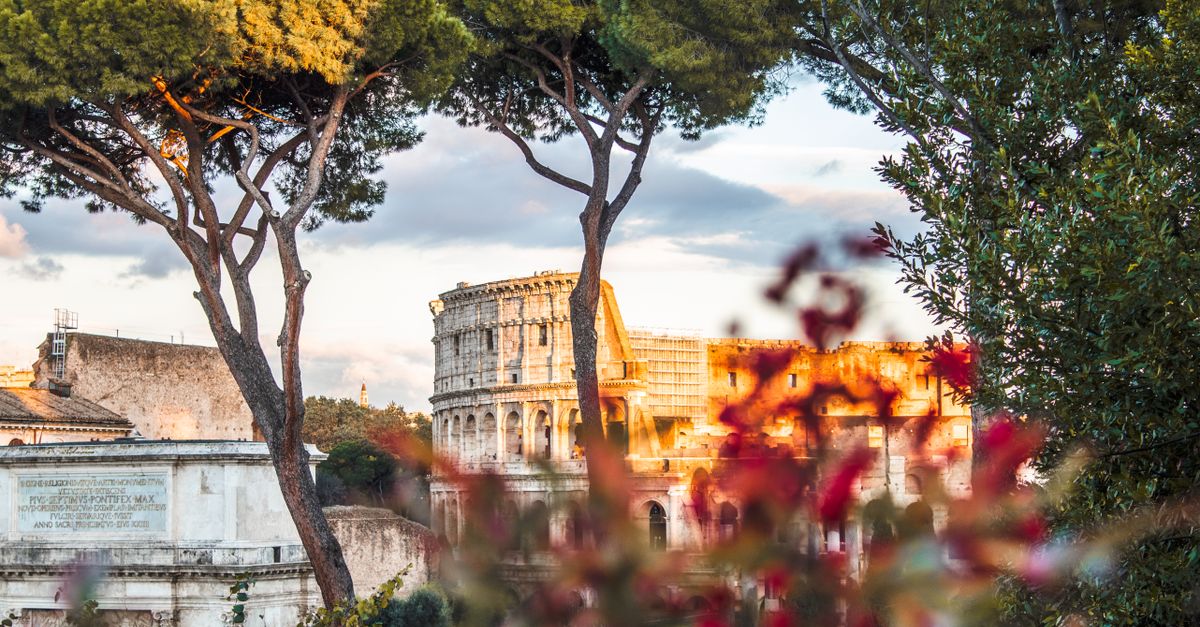
These ten places reveal the Rome that exists beneath and beyond the ancient monuments — a city that is simultaneously 2,700 years old and startlingly contemporary, monumental and intimate, famous and secret. The tourist Rome of the Colosseum and the Vatican is genuinely magnificent and worth every minute spent there.
But the hidden Rome — the keyhole view, the fairy-tale quarter, the sculptures among the turbines, the poets' graves, the ancient road, the garden city neighborhood, the private palace, the sunset garden, the workers' market, the painted walls — is where the city reveals itself as a living, layered, endlessly surprising place that rewards curiosity more than any museum admission ever could. Visit even half these places, and your Rome will be richer, stranger, and more personally yours than any guidebook itinerary can deliver.
Rome Budget Travel Guide: Affordable in the Eternal City Rome Food Guide: Pasta, Pizza, and Roman Cuisine Rome 5-Day Itinerary: Ancient and Modern


