
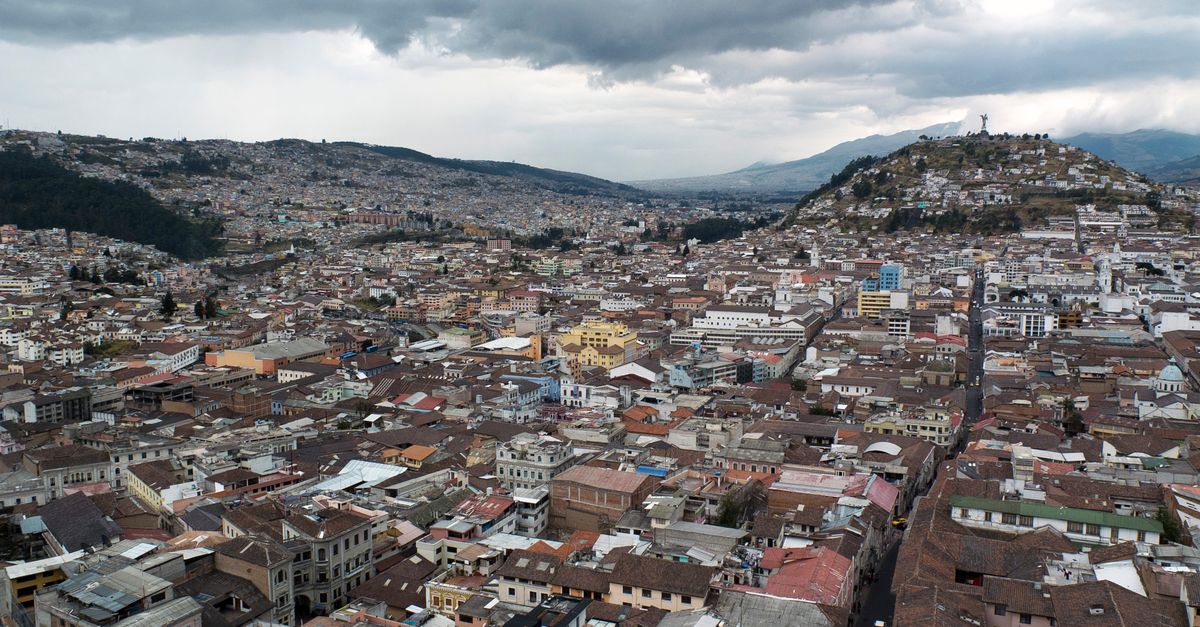
Quito sits at 2,850 meters in a long, narrow valley between Andean ridges — a city that has been continuously occupied for 10,000 years and that contains the best-preserved colonial historic center in Latin America, recognized by UNESCO as one of the world's first World Cultural Heritage Sites in 1978. Most travelers pass through Quito on the way to or from the Galápagos and spend one or two nights in the Mariscal Sucre tourist district, which is fine but represents perhaps 5% of the city. The old city (Centro Histórico), the Indigenous markets of the surrounding highlands, the cloud forest reserves descending from the Pichincha volcano, and the altitude-adapted local food culture are all within reach of any visitor willing to walk uphill or take a short bus ride.
This guide is for travelers who want to understand Quito as a place rather than a transit node. The real Quito is in the weekend markets of Otavalo and Cayambe, in the Centro Histórico's Baroque churches and convents, in the paramo (high-altitude moorland) ecosystem of the Pichincha summit, and in the local food of the Mercado Central. Altitude matters here: acclimatize gently on the first day, drink coca tea or other herbal remedies, and avoid alcohol for 24 hours. The city becomes much more enjoyable once the body adjusts.
Quito's Ecovía, Metrobús, and Trolebús systems cover the main routes for USD 0.25 per ride. Taxis within the city cost USD 2–6 depending on distance; insist on the meter. The historic center is walkable; the outlying neighborhoods require transit or taxi. Budget in USD — Ecuador uses the US dollar as its currency.
1. La Compañía de Jesús and the Baroque Churches of the Centro
Quito's Centro Histórico contains a concentration of 17th and 18th-century Baroque churches that is without equal in the Americas. La Compañía de Jesús on Calle García Moreno, completed in 1765 after 163 years of construction, is typically called the most ornate church in South America and possibly the world: every surface of the interior — ceiling, walls, columns, and side altars — is covered in carved and gilded wood, painted in brilliant colors, and assembled into a visual totality that is simultaneously overwhelming and coherent. Seven tons of gold were used in the interior decoration. Adjacent churches — La Catedral on Plaza de la Independencia, San Francisco's enormous atrium complex (the first church built after the conquest, 1537), Santo Domingo — each contribute a different variation on the Quiteño Baroque style, a regional synthesis of European and Indigenous Andean visual traditions.
The Quiteño Baroque school — sometimes called the "School of Quito" — developed in the 17th and 18th centuries when Indigenous and mestizo artists trained by Franciscan and Jesuit missionaries synthesized European Baroque forms with pre-Columbian Andean iconography. The resulting art form is globally distinctive and is the foundation of Ecuadorian cultural identity in ways that most visitors don't know to look for.
Walk from Plaza de la Independencia (the main plaza, accessible from the Trolebús stop) along Calle García Moreno toward La Compañía. All churches are within a 15-minute walking circuit of the main plaza. La Compañía: open daily, admission USD 4. San Francisco: free entry, museum USD 3. Total combined church circuit: USD 10–15.
La Compañía: USD 4. San Francisco museum: USD 3. La Catedral: USD 2. Budget USD 15–20 for a complete Centro Histórico church morning including entry fees and a breakfast at the Mercado Central food stalls (USD 2–4 for a bowl of caldo de bola or hornado). Allow 3–4 hours for the full circuit without rushing.
2. Mercado Central's Caldo de Bola
The Mercado Central on Venezuela Street in the Centro Histórico is Quito's primary food market — and the specific experience worth seeking is the caldo de bola, the Ecuadorian soup of green plantain dumplings stuffed with meat and vegetables in a rich beef broth. This is the breakfast of Quito, consumed by everyone from construction workers to government officials at the market's communal benches. A large bowl costs USD 2–3 and is the most restorative dish available after arrival at altitude. The market's fruit section sells Andean and Amazonian varieties that are unavailable in most other contexts: mora (blackberry relative), naranjilla, taxo (banana passionfruit), and tree tomato — all blendable into juices at the market juice stalls for USD 1–2.
The Mercado Central has operated in this location since the colonial period, and its role as a social and economic institution for Quito's working population is unchanged. The Indigenous Kichwa women who run many of the food stalls wear traditional dress — the distinctive pollera skirts, embroidered blouses, and woven shawls of the highland Andean tradition — as working clothes rather than cultural performance.
Walk from Plaza de la Independencia south on Venezuela Street to the market — about 5 minutes. Open daily from 5am; the breakfast peak is 6–9am. Soup stalls are concentrated in the central covered section; the fruit and juice stalls line the market perimeter.
Budget USD 5–8 for a complete market breakfast: caldo de bola (USD 2–3), fresh juice (USD 1–2), and a pastelito (small pastry, USD 0.50–1). This is one of South America's best value breakfast experiences and provides genuine cultural contact with Quito's daily working life.
3. Otavalo Market and the Indigenous Town
Otavalo, 90 kilometers north of Quito in the Imbabura region, hosts the largest and most famous Indigenous craft market in South America — the Plaza de Ponchos Saturday market has been running continuously for centuries and sells hand-woven textiles, leather goods, carved wood, musical instruments, and the full range of Otavaleño craft production. More interesting than the market itself is the Otavaleño community: a Kichwa-speaking Indigenous people with an extraordinary economic success story, maintaining cultural identity and traditional dress (the distinctive blue poncho, white trousers, and long single braid that Otavaleño men wear) while running an international craft export business from a small Andean town.
Otavalo's market success is the result of a specific historical trajectory: the Otavaleños developed textile production skills under forced labor in colonial obrajes (textile workshops), converted those skills into independent craft production, and have built an international distribution network that makes Otavaleño textiles available on multiple continents. Visiting the market without understanding this history is to miss the most interesting part of the experience.
Take a bus from Quito's Carcelén terminal to Otavalo (USD 2–3 each way, 2 hours). Arrive on Friday evening for the setup and Saturday morning by 7am for the peak activity before tour buses arrive. The Plaza de Ponchos market concentrates crafts and textiles; the adjacent Mercado Copacabana has the animal market (Saturday and Wednesday mornings) which is one of the most culturally specific experiences in highland Ecuador.
Bus: USD 2–3 each way. Market purchases: USD 5–100 depending on item. A hand-woven tablecloth: USD 15–30. A quality woven wall hanging: USD 30–80. Budget USD 50–100 for the full Otavalo day including transport, market purchases, and a meal in the town plaza (USD 5–10 for a complete almuerzo).
4. Teleférico and Pichincha Paramo Walk
The Quito Teleférico cable car rises from 3,000 meters to 4,050 meters on the slopes of Volcán Pichincha in 8 minutes — one of the highest accessible urban cable car rides in the world. At the top station, a short walk on a well-marked trail leads into the paramo ecosystem: the high-altitude moorland of the Andes, characterized by giant frailejon plants, cushion bogs, and occasional condors overhead. The walk to the secondary summit at 4,200 meters requires fitness and 2–3 hours; the shorter loop from the cable car station through the paramo and back is 45 minutes and adequate for understanding the ecosystem. The views over Quito from the cable car are extraordinary — the city extending for 50 kilometers in the narrow valley below.
Paramo is one of the most ecologically significant ecosystems in South America — the sponge-like vegetation captures and releases water in a system that supplies Quito and other Andean cities with much of their fresh water supply. The frailejon plants (Espeletia species) are characteristic paramo organisms found only in the northern Andes; their presence signals a genuinely Andean ecology distinct from anything at lower elevations.
Take the Ecovía or Metrobús north to the Teleférico terminal (La Gasca neighborhood) and walk or take the shuttle to the cable car base. Operating hours: Tuesday–Sunday 9am–7pm. Cable car round trip: USD 8.50 adults. The paramo walk from the top station requires warm clothing — temperatures drop to 5–10°C at 4,050 meters regardless of season.
Teleférico: USD 8.50 round-trip. Budget USD 15–20 for the full experience including cable car and paramo walk. Bring warm layers, rain gear, and 1.5 liters of water. Altitude at the top is serious — move slowly and turn back immediately if experiencing significant dizziness or nausea. Morning visits (before noon) have the best visibility; afternoon cloud usually obscures the views.
5. La Ronda Street's Evening Culture
La Ronda — Calle Morales in the Centro Histórico, running east from Calle García Moreno — is Quito's oldest street and the city's arts and entertainment corridor in the evening: a narrow cobblestone lane flanked by colonial houses with wrought-iron balconies, now occupied by artisan workshops, galleries, small theaters, and the kind of bars and restaurants that serve the local arts community. The street comes alive after 6pm when the workshops open their doors, musicians perform in the street, and the evening air fills with the smell of hot chocolate from the traditional chulpi vendors. This is the most atmospheric evening space in the city.
La Ronda's colonial character is genuinely preserved — the houses here date to the 17th and 18th centuries and maintain their original proportions and materials. The street's narrow width and human scale create an enclosed evening atmosphere that broader colonial streets cannot replicate. The artisan workshops (instrument makers, candy makers, hat workshops) represent trades that have operated on this street for generations.
Walk from Plaza de la Independencia south on García Moreno to the intersection with Morales/La Ronda. The street runs east for about 400 meters. Best visited Tuesday–Sunday from 6–10pm. On weekend evenings, street music and cultural events are sometimes organized by the municipality.
Free to walk and explore. Budget USD 10–20 for drinks and snacks: a hot chocolate from the traditional vendors (USD 1–2), a craft beer at one of the small bars (USD 3–5), and a small meal at a La Ronda restaurant (USD 8–15 per person). The shops sell artisan products (USD 5–50) including the famous Quito instruments (pan flutes, charangos).
6. El Panecillo and the Virgin of Quito
El Panecillo — the small hill (the "bread roll") rising from the center of Quito's urban fabric — is topped by the Virgen de Quito, a 45-meter aluminum statue of the Virgin Mary standing on a globe with a serpent underfoot and wings extended, visible from most of the city and serving as Quito's skyline landmark. The view from the base of the statue encompasses the entire Centro Histórico, the Ilaló volcano to the east, and Pichincha to the west — an extraordinary panorama of the Quito valley. The hill is most safely reached by taxi from the Centro (USD 3–5) — the walking path has historically had security concerns that taxi access bypasses entirely.
El Panecillo sits on a geographically significant point — it was a Inca ceremonial site before the Spanish arrival, and the current Virgin statue (erected in 1975) occupies approximately the position of an Inca temple platform. The visibility of the hill from the entire valley meant that whatever stood on it communicated symbolically to the entire city, a logic that both the Inca and the Catholic Church recognized and applied in sequence.
Take a taxi from anywhere in the Centro to El Panecillo (USD 3–5 from Plaza de la Independencia). The taxi can wait during your visit (negotiate USD 15–20 round-trip with waiting time). Open daily 9am–6pm. Entry to the statue's base and the small museum: USD 2. The climb to the statue's base provides the view; ascending inside the statue costs an additional USD 1.
Entry: USD 2. Taxi round-trip with waiting: USD 15–20. Budget USD 20–25 for the full El Panecillo visit. Combine with an evening walk through La Ronda (directly below El Panecillo to the north) for a complete Centro Histórico afternoon and evening itinerary.
7. Yaku Museo del Agua
The Yaku Museum of Water, housed in the restored colonial El Placer hacienda in the hills above the Centro on the way to El Panecillo, is simultaneously a water science museum and a remarkable piece of colonial heritage. The hacienda's 18th-century reservoir system — which supplied Quito's drinking water for over 200 years — is preserved and displayed within the museum complex, providing an intimate look at colonial urban hydraulic engineering. The museum's contemporary galleries cover the water cycle, Andean water culture, and the ecological importance of the paramo as a water source for Quito and the region. Entry is USD 3 and the setting — terraced gardens above the colonial city — is one of Quito's finest viewpoints.
Water is the central ecological concern for Quito and all high Andean cities — the paramo ecosystem that feeds the city's water supply is under pressure from climate change and land conversion. The Yaku Museum's presentation of this issue in the context of colonial and pre-colonial water management provides a genuinely educational experience that connects the tourist visit to the city's most pressing contemporary challenge.
Take a taxi from the Centro to Yaku Museum at Calle El Placer Oe3-224 (USD 3–4). Or walk uphill from the Centro Histórico (about 20–25 minutes, recommended for the neighborhood views). Open Tuesday–Sunday 9am–5:30pm. Admission USD 3.
Admission: USD 3. Budget USD 15–20 for the museum visit including taxi transport. The museum's café serves light meals and juices from locally grown produce. Combine with El Panecillo (10 minutes by taxi from the museum) for a full hilltop afternoon above the Centro.
8. Guayasamín Museum and Capilla del Hombre
Oswaldo Guayasamín (1919–1999) is Ecuador's most important 20th-century artist and one of Latin America's great painters — his monumental works depicting indigenous suffering, poverty, and the violence of Latin American history are in the tradition of Diego Rivera but more emotionally raw and technically accomplished. His house-museum (La Casa Museo) and the adjacent Capilla del Hombre (Chapel of Man), an architectural work he designed as his permanent memorial and primary gallery, sit in the Bellavista neighborhood above the Mariscal Sucre tourist district. The Capilla del Hombre's enormous canvases — some 20 meters wide — address slavery, conquest, dictatorship, and mestizo identity with a directness that is genuinely confrontational. Admission USD 8 for both sites.
Guayasamín was born in Quito to an Indigenous father and mestiza mother and spent his career producing large-scale figurative works that drew from pre-Columbian visual culture, European expressionism, and his own political convictions — he was a committed socialist who was close to Fidel Castro, Salvador Allende, and Pablo Neruda, and whose art was sometimes called "social realism with Andean cosmology." The Capilla del Hombre was his life's work and is one of the most powerful art spaces in the Americas.
Take a taxi from Mariscal Sucre neighborhood to the Guayasamín Museum in Bellavista (USD 3–4). Museum: Lorenzo Chávez E18-143. Open Tuesday–Sunday 10am–5pm. Admission USD 8 for both museum and Capilla. Budget 2 hours minimum for a thorough visit.
Admission: USD 8 for both sites. The museum shop sells reproductions of Guayasamín's work at reasonable prices (USD 10–50). Budget USD 20–25 for the full museum experience including taxi transport. Combine with the nearby Parque Metropolitano de Bellavista for a post-museum walk through the forest park.

9. Mindo Cloud Forest Day Trip
Mindo, a small village 80 kilometers northwest of Quito at 1,250 meters in the cloud forest zone of the western Andean slopes, is one of the world's most important birdwatching destinations — a cloud forest environment with over 400 bird species including tanagers, toucans, cock-of-the-rock, and hummingbirds of extraordinary variety. The descent from Quito's paramo (4,000m) to Mindo's cloud forest (1,250m) takes 90 minutes by bus and passes through every Andean vegetation zone — a vertical journey through ecosystems that normally require days of hiking. Tubing on the Mindo River (USD 5–8), zip-lining through the forest canopy (USD 10–15), and visiting the butterfly farm (USD 4) round out a full day-trip experience.
Mindo's biodiversity reflects its position at the intersection of three major biogeographic zones and its position in the northwestern Andes, one of the world's most biodiverse regions. The deforestation that has affected most of the western Andean slope has been partly arrested around Mindo through a combination of ecotourism income and community conservation activism — making Mindo's preservation a story of tourism directly funding biodiversity conservation.
Bus from Quito's Ofelia terminal to Mindo (USD 3–4 each way, every 2 hours departing 6am–3pm, 2 hours journey). Alternatively, take the 7am bus for a full day in Mindo and return on the last afternoon bus. Mindo has numerous guesthouses for overnights (USD 20–40 per night).
Bus: USD 3–4 each way. Activities: USD 5–15 each. Full-day budget: USD 30–50 per person including transport, 2–3 activities, and lunch in Mindo village (USD 5–10 for a complete lunch). Best for birdwatching November–May during migration season; year-round for hummingbirds and toucans.
10. Quilotoa Crater Lake Circuit
Quilotoa, a volcanic crater lake 200 kilometers south of Quito at 3,900 meters, holds a body of water of extraordinary turquoise-green color in a collapsed volcanic caldera 3 kilometers across. The lake cannot be seen until you crest the crater rim — the visual impact of suddenly encountering this geological spectacle at altitude is one of the most genuinely surprising experiences in Ecuador. The crater rim walk (12 kilometers, 3–4 hours) provides varying perspectives on the lake and the surrounding Andean landscape. The Quilotoa loop — a 3–4 day hiking circuit through Indigenous Kichwa communities in the Cotopaxi Province — is one of the finest multi-day highland treks in the Americas for independent travelers.
Quilotoa's unusual turquoise color is caused by dissolved minerals — primarily sulfur and volcanic gases — in the lake water. The caldera formed in an eruption approximately 800 years ago that affected communities across the region; the lake has been sacred to the surrounding Indigenous communities since the eruption created it. Modern geothermal activity is still visible in occasional gas bubbling at the lake surface.
Take a bus from Quito's Quitumbe terminal to Latacunga (USD 2–3, 1.5 hours), then a bus from Latacunga to Quilotoa via Zumbahua (USD 2–3, 2 hours). Total journey approximately 4 hours. Or take an organized day tour from Quito (USD 40–60 per person, including transport and guide). The crater rim entry fee: USD 3.
Public transport: USD 8–12 round-trip. Crater entry: USD 3. Budget USD 20–35 for an independent Quilotoa day trip. The descent to the lake's shore takes 45 minutes; the ascent back takes 90 minutes at altitude (mule hire available for USD 10–15 for the uphill return). Altitude at the crater rim is very real — take it slowly.


