
Pokhara is Nepal's adventure capital — a lakeside city directly beneath the stunning Annapurna massif where paragliding, trekking, and boating combine with some of the most dramatic mountain panoramas on Earth. Phewa Lake reflects the Himalayan snow peaks in its still morning water, creating unforgettable mirror images of mountains reaching over 8,000 meters.
Lakeside & Viewpoints
Morning: Pre-dawn taxi to Sarangkot viewpoint (NPR 1,500-2,000, 30 minutes uphill drive). At 1,592 meters, Sarangkot offers a sweeping panorama of Annapurna I, the perfect fish-tail peak of Machhapuchhre, distant Dhaulagiri, and Manaslu — four of the world's fourteen 8,000-meter peaks visible from one location. The first light of dawn turning the icy summits from blue to pink to brilliant gold against still-dark valleys is Nepal's most spectacular sunrise.
Afternoon: Rent a rowboat on Phewa Lake (NPR 500-700 per hour). Paddle to the small Tal Barahi Temple on its tiny island. The calm lake surface acts as a natural mirror reflecting the entire Annapurna range when conditions are still — early morning and late afternoon provide the best mirror effects for photography. Lakeside restaurants along the eastern shore offer comfortable seating with unobstructed mountain views from water level.
Evening: Walk Pokhara's Lakeside strip — a continuous stretch of adventure sport operators, trekking gear shops, international restaurants, and casual bars lining the waterfront. Dinner at Moondance Restaurant (NPR 500-1,200 per dish) for Nepali-international cuisine with direct mountain views from the terrace. Try dal bhat — Nepal's essential staple meal of lentil soup, steamed rice, seasonal vegetable curries, pickled achar, and crispy papadums (NPR 300-600 for a complete thali).
Paragliding & Caves
Morning: Tandem paragliding from Sarangkot (NPR 8,000-12,000, approximately 30 minutes flight time). Launch from the hilltop and soar high above the emerald Phewa Lake with the Annapurna range stretching across the entire northern horizon behind you — experienced pilots perform thermal spirals and acrobatic maneuvers above the valley. GoPro action photos and HD video packages are available (NPR 2,000-3,000 additional). Absolutely no prior experience is needed.
Afternoon: Visit Gupteshwor Mahadev Cave (NPR 100) — a sacred limestone cave containing a natural Shiva lingam shrine and an underground waterfall that thunders through the rock during monsoon season. Davis Falls (Patale Chhango, NPR 50) directly above is a dramatic waterfall that disappears into a subterranean tunnel. The International Mountain Museum (NPR 400) houses comprehensive exhibits on Himalayan climbing history including original equipment used on Everest expeditions.
Evening: Dinner at Busy Bee Cafe (NPR 400-900) or Caffe Concerto for wood-fired pizza and Italian cuisine. The Lakeside nightlife is mellow and welcoming — live music at Reggae Bar, creative cocktails at Maya Pub, and shared tables at rooftop restaurants. Pokhara's relaxed pace is a welcome decompression after the chaos of Kathmandu or the exertion of multi-day trekking in the surrounding mountains.
Peace Pagoda & Tibetan Culture
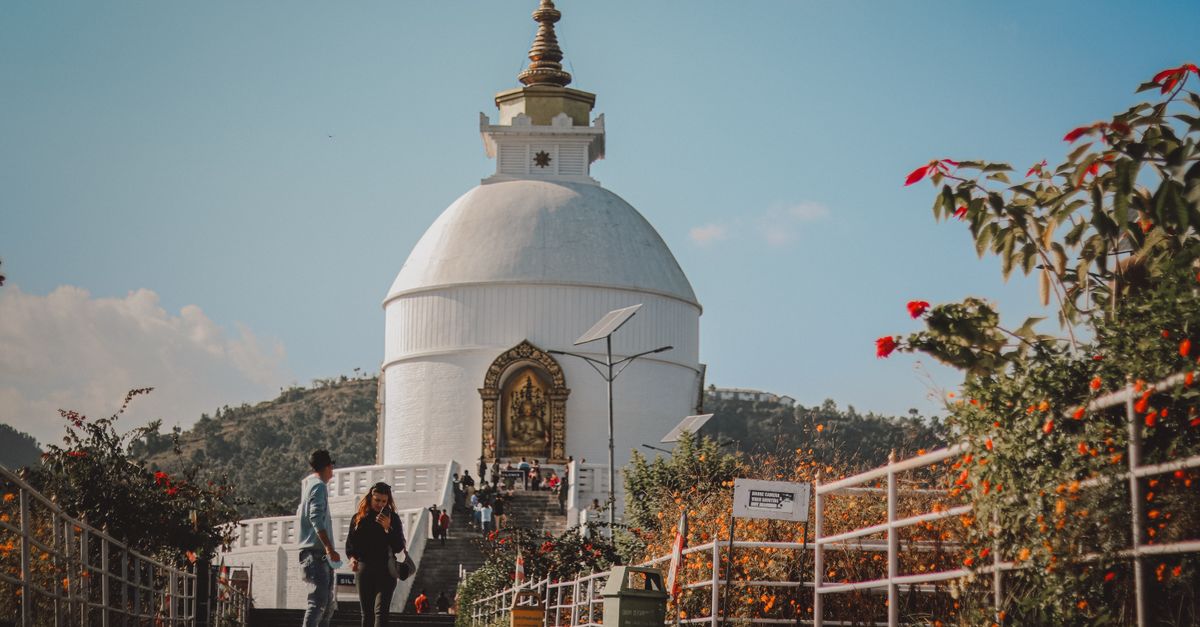
Morning: Hike to the World Peace Pagoda (approximately 1.5 hours uphill walk from Lakeside through forest, or boat across the lake and hike 1 hour from the southern shore). The gleaming white Japanese Buddhist stupa at 1,113 meters offers the best panoramic photograph available of Pokhara — the town, Phewa Lake, and the complete Annapurna range spread below in a single magnificent frame. The trail passes through peaceful forest with birdsong.
Afternoon: Visit the Tibetan refugee settlement at Tashiling established in the 1960s after the Chinese occupation of Tibet. The carpet-weaving workshops demonstrate traditional Tibetan knotting techniques and the small golden-roofed monastery provides insight into the exile community's spiritual resilience. Handmade Tibetan wool carpets (NPR 3,000-30,000 depending on size), silver jewelry with turquoise and coral, and thangka paintings make meaningful and beautiful purchases.
Quick Tips
- Pokhara is the starting point for the Annapurna Circuit and Annapurna Base Camp (ABC) treks — hire guides and porters through TAAN-registered licensed agencies (NPR 2,500-4,000 per day for guide services).
- October and November offer the clearest mountain views after monsoon rains wash the atmosphere. March-April brings vibrant rhododendron blooms on the trekking trails. Monsoon season (June-September) obscures mountain peaks almost entirely.
- Domestic flights from Kathmandu (NPR 5,000-8,000, 25 minutes) are dramatically faster than the scenic but grueling 6-8 hour bus ride (NPR 800-1,500) on winding mountain highways.
Practical Information
Pokhara airport has flights from Kathmandu (25 minutes). Tourist buses from Kathmandu take 6-8 hours on mountain roads (NPR 800-1,500). Lakeside is the main tourist area with all services concentrated along the waterfront. Local transport includes taxis, auto-rickshaws, and rented scooters. ATMs are available along Lakeside. The Nepal Tourism Board has an information office. Trekking permits (TIMS card and Annapurna Conservation Area permit) should be arranged in Kathmandu or Pokhara before departure.
Best Times to Visit & Budgeting
Peak seasons are October-November (clearest views, post-monsoon) and March-April (rhododendron blooms, pre-monsoon). Winter (December-February) has clear skies but cold nights at altitude. Summer monsoon (June-September) brings rain and cloud cover obscuring the mountains. Budget accommodation along Lakeside starts at NPR 800/night. Mid-range hotels with mountain-view rooms from NPR 3,000-8,000 offer excellent value. Pokhara is significantly cheaper than comparable mountain destinations worldwide.
| Travel Style | Daily Cost (NPR) |
|---|---|
| Budget | NPR 2,000-4,000 |
| Mid-Range | NPR 5,000-10,000 |
| Luxury | NPR 15,000-30,000 |
Getting Around
Pokhara is easily the most navigable city in Nepal for independent travellers. The entire Lakeside strip — from Camping Chowk in the north to Baidam in the south — is walkable in under 30 minutes on the flat lakefront promenade. Most travellers never need motorized transport within the tourist zone itself. Hotels, trekking agencies, restaurants, gear shops, and boat rental stalls are all clustered along this single corridor, making day-to-day logistics remarkably simple.
For destinations beyond Lakeside, three-wheeled electric tempos (NPR 30–60 per seat) and auto-rickshaws run regular routes toward Pokhara's old Bazaar area, Mahendrapul bus park, and the airport. Metered taxis are scarce — most work on fixed routes negotiated before boarding (NPR 300–700 within the urban area). Ride apps like Pathao and InDrive are active in Pokhara and provide price transparency lacking from street hailing.
Renting a scooter or motorbike (NPR 700–1,500/day, valid driving licence required) gives complete freedom to reach Sarangkot, the Peace Pagoda trailheads, the Tibetan settlements at Tashiling and Paljorling, and the lakeside villages of Begnas and Rupa. Sarangkot road is steep and winding but tar-surfaced. Bicycles (NPR 300–600/day, mountain bikes NPR 600–1,000) work well for the flat lakefront and for the Fewa Lake circuit on the south shore trail — the climb to Sarangkot on a pedal bicycle is genuinely gruelling and best avoided unless you are an experienced cyclist.
Long-distance connections from Pokhara: the Prithvi Highway to Kathmandu (NPR 800–1,500, 6–8 hours by tourist bus, or book a private car for NPR 6,000–9,000). Buses to Chitwan take 4–5 hours (NPR 500–900). The domestic airport handles flights to Kathmandu (25 minutes, NPR 5,000–8,000 one-way) and the mountain airstrips at Jomsom for Mustang trekkers and Lukla for Everest-bound hikers. Book domestic flights several days ahead during the October–November peak season when seats fill completely.
Seasonal Highlights
Pokhara's character changes dramatically with the season, and matching your visit to the right time window transforms the experience. The city operates on two distinct modes: the crystalline post-monsoon clarity of autumn and the flowering green intensity of spring, separated by the clouded wet months of summer and the cold quiet of winter. Each season has genuine merit, but they deliver radically different trips.
October and November represent Pokhara at its most spectacular. The monsoon rains that swept through from June to September have scrubbed the atmosphere to extraordinary clarity. From Sarangkot at dawn, all four of the visible 8,000-metre peaks — Annapurna I, Machhapuchhre, Dhaulagiri, and Manaslu — appear in sharp focus, their glaciers glittering in the pre-dawn blue before the sunrise colours arrive. The trekking trails on the Annapurna Circuit and toward Annapurna Base Camp are at their firmest and driest. Lodges along the trail operate at full capacity. Day temperatures on Lakeside reach 22-26°C. Nights require a light jacket. The Lakeside strip is at its most lively, with trekkers arriving and departing constantly and the gear rental shops buzzing.
March and April offer a contrasting but equally compelling visit. Rhododendron forests at mid-altitude (1,500-3,000 metres) burst into bloom — vivid crimson and pink against the still-snowbound peaks above. The Poon Hill viewpoint trek (3-4 days from Nayapul, NPR 3,000-5,000 for permit fees) passes through forest corridors of flowering rhododendrons that are one of Nepal's great visual experiences. Temperatures are warmer than October — daytime highs of 25-30°C on Lakeside — and humidity is beginning to build. Views remain clear until mid-morning when haze develops; early starts are more important in spring than in autumn.
December through February is cold — Lakeside nights drop to 5-8°C — but offers remarkably uncrowded conditions. Prices at hotels and restaurants fall by 30-50%. The Annapurna sanctuary trails are accessible to lower altitudes before snow closes the high passes, and the absence of tourist crowds on the trails creates a very different mountain experience. Davis Falls runs at its weakest (a trickle rather than a torrent), which is actually better for exploring the cave safely. Lakeside restaurants are quiet; you can always get a table at Moondance or Busy Bee without waiting.
Monsoon season (June-September) is the single genuine reason not to visit. Mountains are invisible behind thick cloud for weeks at a time. Trails become slippery and leech-infested above 1,000 metres. Paragliding is grounded on most days. Phewa Lake turns murky with runoff. If you find yourself in Pokhara during monsoon unexpectedly, the Pokhara Regional Museum (NPR 100) and the indoor sections of the International Mountain Museum become genuinely valuable ways to spend a rain-locked afternoon.
Explore more Pokhara travel guides →


