
Palawan is the Philippines' last ecological frontier — a 450km-long island province stretching from Puerto Princesa in the south to the Calamian Islands in the north, with the world's longest underground river, some of the most biodiverse coral reef systems on Earth, and a biodiversity index that has made it one of the world's most important conservation areas. Most visitors know about El Nido and Coron and come for the island-hopping tours. Those tours are excellent. But Palawan is also a province of traditional Tagbanua and Batak indigenous communities, of mangrove fishing villages that have maintained the same practices for centuries, and of wilderness areas that require real commitment to access but reward with experiences unavailable anywhere else.
This guide is for travelers who want more from Palawan than the standard island-hopping itinerary — though those tours should absolutely be done. It's for those willing to spend a day reaching a destination that most travelers skip, willing to sleep in basic accommodation in exchange for having an extraordinary place to themselves, and willing to eat at tables with no menu because the cook serves whatever was fresh that morning. Palawan at its best is not packaged; it is discovered.
Ten Palawan experiences that go beyond the standard El Nido and Coron circuit.
1. Puerto Princesa Underground River — The Dawn Entry
The Puerto Princesa Subterranean River National Park, a UNESCO World Heritage site and one of the New Seven Wonders of Nature, requires no introduction — the 8.2km navigable underground river through a limestone cave system is genuinely extraordinary. What requires mention is the timing: the official tour starts at 8am and by 9am the dock is crowded with tourist boats competing for the cave entrance. Getting on the 7:30am boat (the first of the day, requiring arrival at the Sabang Beach dock by 7am and a 7:15am beach clearing with the ranger station) gives you the cave in something approaching solitude for the first 20 minutes of navigation.
The cave at this hour, with the morning light still only partially illuminating the entrance and the guide's torch the only source of light beyond the first 200 meters, has a quality of darkness and geological depth that the midday crowded boats entirely prevent. The cave formations — stalagmites and stalactites on a scale that requires a powerful flashlight to fully appreciate — are at their best in the first morning boat when the air temperature inside has not yet been raised by hundreds of exhaling tourists. The 45-minute navigation to the natural end of the accessible section passes through chambers that are genuinely cathedral-scale.
The Underground River is 80km north of Puerto Princesa City via the Puerto Princesa–Sabang Road (2.5 hours by van, PHP 200/person on shared transport; book through the city tourism office). Entry permits (mandatory): PHP 200 per person; book well in advance at the Puerto Princesa City Tourism Office or through accredited operators as daily permits are capped. The permit includes a mandatory local guide. The boat ride from Sabang Beach to the cave entrance takes 15 minutes. Sabang Beach itself, with its forest trail and mangrove river system, is worth a 2-hour exploration independent of the cave.
The Sabang mangrove river paddle (available from the beach, PHP 300–500 per person, 1.5 hours) navigates through one of the finest intact mangrove ecosystems in the Philippines — the specific combination of mangrove channels, limestone walls, and the extraordinary birdlife (Philippine pied hornbills, collared kingfishers, large sea eagles) makes this trip substantially better value than many of the more famous Palawan tours. The guides who do the mangrove paddle are often the same local community members who have been fishing this river for decades.
2. El Nido Small Lagoon by Kayak — The Tour C Version
El Nido's island-hopping tours (A, B, C, D — each covering different island combinations) are all excellent, but Tour C, which visits the Big and Small Lagoons of the Miniloc Island area, has a specific experience available only to kayakers. The Small Lagoon (Munting Lagoon) is accessible through a low rock arch at water level — the entrance requires bending flat to the kayak and pushing through a gap barely 60cm high. Once inside, the lagoon is completely enclosed by 200-meter limestone walls, with turquoise water over a white sand floor visible 5–6 meters below, and an absolute silence that is enhanced by the geological containment. This experience is only possible in a kayak — the standard tour bangka cannot enter.
The Big Lagoon can be entered by bangka but is more interesting by kayak for the same reasons — the freedom to navigate into the shallower sections, the mangrove channels at the lagoon's eastern end, and the ability to stop in any position without the motor noise that the tour boats maintain. The Tour C operators who rent kayaks within the lagoon (PHP 400 for the Small Lagoon kayak rental, typically included in Tour C price) provide equipment and brief instructions for those who haven't kayaked before — the lagoon is calm, sheltered from wind, and not suitable for a beginner's kayak to encounter any difficulty.
El Nido island-hopping tours depart from El Nido town beach from 8:30–9am. Tour C cost PHP 1,500–2,000 per person including lunch and equipment. The tours are operated by dozens of competing operators; the quality difference between them is largely in guide knowledge and boat maintenance — seek operators who have received the CBET (Community-Based Ecotourism) certification from the El Nido Resorts environmental program. The kayak rental is a separate item on Tour C; confirm it's included or available when booking. The lagoons are most visited (and therefore least magical) from 10am–2pm — Tour C boats that depart at 8:30am reach the lagoon by 9:30am, which is the optimal window.
The limestone karst islands visible throughout all El Nido tours — the specific geological formation that makes this landscape unique — are Miocene-era reef limestone that was uplifted and subsequently eroded into the current pinnacle formations. Walking the beach of any of the uninhabited tour-stop islands and examining the base of the karst walls reveals the fossilized coral and shell material that was once a functioning reef and is now a vertical rock face 200 meters above sea level. Geology made dramatic by tectonic forces and then made beautiful by erosion.
3. Coron's Wreck Diving — The WWII Fleet
Coron Bay in northern Palawan has the finest accessible wreck diving in Southeast Asia — a Japanese supply fleet of 12 ships sunk by a single US air attack in September 1944 lies in 15–40 meters of water, covered in 80 years of coral growth, with their structures still largely intact. The Okikawa Maru (a tanker, 25 meters, accessible to Open Water divers), the Kogyo Maru (a cargo freighter with armaments in the hold), and the Irako (a refrigerator ship with intact galley and engine room) are among the most spectacular wreck dives in the Pacific Ocean. The coral growth on the wrecks — hard corals, sea fans, and crinoids covering every horizontal surface — makes each wreck a reef as well as a historical artifact.
The specific historical context makes Coron's wrecks more affecting than typical resort wreck diving: these ships were part of the Japanese supply chain that sustained the WWII Pacific campaign, sunk in a single morning by U.S. Navy dive bombers in an attack that was operationally perfect and human catastrophe. Artifacts are protected by law (no removal) but are visible in situ — bullets, gas masks, sake bottles, china crockery, and the personal effects of the crew are visible in various states of preservation on the wreck interiors. Treating the wrecks as war graves (which they are — some have intact human remains) is both the legal and appropriate frame.
Coron is in Busuanga Island, Palawan Province, accessible by air (40-minute flight from Manila, twice daily) or by boat from El Nido (3–4 hours, various fast craft operators). Dive operators in Coron: Sea Dive Resort, Sunlight Eco Tourism Resort, and Discovery Divers are well-regarded. A single wreck dive costs PHP 2,000–3,500 including equipment and boat; a multi-day dive package PHP 8,000–15,000 covering multiple wrecks. Certification required: Open Water for shallower wrecks; Advanced Open Water or wreck specialty for deeper and penetration dives.
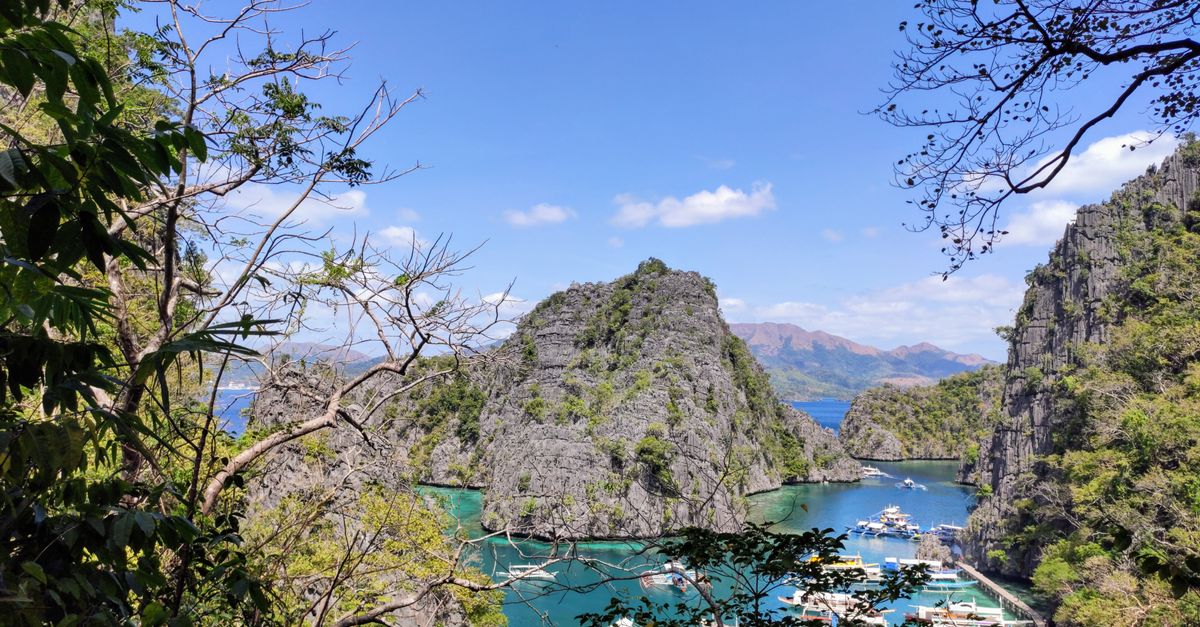
Coron also has Kayangan Lake, widely marketed as the "cleanest lake in Asia" (a tourism board designation, not a scientific certification, but the visibility in the lake's clear water is genuinely extraordinary — up to 15 meters). The lake is accessible via a 15-minute climb over a karst ridge and a descent to the lake's edge. Entry PHP 200. The standard Coron tour boats visit it, but arriving early (7:30am, before the 9am tour boats) gives the lake in something approaching its natural state — the calm water, the limestone walls, and the kingfishers and sea eagles using the lake as their hunting ground in the morning hours before the tourist boat engines begin.
4. Bacuit Bay's Secret Lagoons — Finding Your Own
The Bacuit Archipelago around El Nido has over 45 islands, of which the standard island-hopping tours visit perhaps 8. The remaining 37 islands include dozens of limestone karst formations with beaches, lagoons, and snorkeling spots that no tour operator visits — because they're slightly further, or have no specific attraction that translates to a tour itinerary item, or simply because the tour circuit calcified around specific stops years ago and no one has revisited the alternatives. Getting to these islands requires renting a private bangka (PHP 3,000–5,000 for a full-day private boat) and telling the captain simply that you want to explore the outer archipelago.
The specific areas worth requesting on a private boat: the outer islands of the Tapiutan Strait (south of the main El Nido tour area, with excellent reef snorkeling and no other boats); the eastern islands near the mainland coast (accessible in calm weather, with completely deserted beaches and mangrove channels that the tour boats don't go to); and the area around Cadlao Island (the large island visible immediately northwest of El Nido town, usually bypassed because it's so close — but the north and east shores of Cadlao have excellent reefs and a cave accessible at low tide that is as good as any of the standard tour caves).
Private boat rental from El Nido town: PHP 3,000–5,000 for a full day, fuel additional (discuss the route and distance before agreeing to avoid fuel surcharge disputes). The best time to arrange: the evening before, at the boat operators' area near the town beach. The captain's local knowledge is the most valuable asset — ask where they go when they're not on tours, and book that boat. The standard tours cover the most photogenic and technically easy islands; private boats cover the most interesting ones.
The limestone towers that define the El Nido landscape have specific names among the local fishermen that don't appear on any tourist map — the "Three Fingers" formation northeast of Miniloc Island, the "Arch Island" between the tours A and B circuits, and the specific underwater pinnacle formation called "Maxima" by the dive community. Your private boat captain knows these names and their exact GPS positions from decades of fishing the archipelago.
5. Culion Island — The Former Leper Colony
Culion Island in the Calamian group north of Coron is one of the Philippines' most remarkable and least-visited historical destinations. The island was established as a leper colony by the American colonial administration in 1906 — at its peak in the 1930s it housed over 16,000 patients and was the largest leper colony in the world, with its own government, court system, currency, economy, and civil society. The disease (now properly called Hansen's disease and entirely curable) is no longer endemic, but the physical infrastructure of the colony — the hospital buildings, the church, the segregated residential sections, the municipal hall — survives in remarkable condition. The island's 25,000 current residents include many whose families have lived here for generations as patients, staff, or locally born children.
The Culion Museum and Archives (open Tuesday–Sunday 8am–5pm, PHP 50) is the most complete institutional documentation of the American colonial public health project in the Philippines and tells the story of Culion with appropriate complexity — the genuine medical achievement of reducing one of Asia's largest disease populations alongside the coercive aspects of forced detention and family separation. The Spanish-era Culion Church (1740) and its adjacent fort, built to defend against piracy from Mindanao, give the island's history another century deeper. The combination makes Culion one of the most layered historical destinations in the Philippine archipelago.
Culion is accessible by FastCraft from Coron (1.5 hours, PHP 250–350) or by local bangka (3 hours, cheaper). Accommodation in Culion is basic — several guesthouses in the town proper at PHP 600–1,200/night. The island's food is excellent by the standards of remote Philippine destinations: fresh seafood from the surrounding Calamian waters, the specific Culion-style cooking that developed from the colony's multicultural patient population (Tagalog, Visayan, Ilocano, Chinese patients all contributed to the local food synthesis), and the extraordinary honey produced from the island's flowering forest trees. A jar of Culion forest honey costs PHP 200–350 and is unavailable outside the island.
The snorkeling and diving around Culion is world-class and almost entirely unexplored commercially — the reefs here were protected by isolation rather than designation and have coral coverage that El Nido's most visited sites no longer achieve. Culion Divers in the town proper runs dive excursions for certified divers; the wall dive off the southwest coast of Culion Island is one of the finest wall dives in the Philippines at a depth accessible to Advanced Open Water divers.
6. Honda Bay — The Palawan Mainland Alternatives
Honda Bay, 15km north of Puerto Princesa City, is the local island-hopping alternative for visitors who don't want to commit to the El Nido journey. The 30-plus islands of Honda Bay have white sand beaches, coral gardens, and mangrove systems that are not as dramatically beautiful as El Nido but are very fine by any objective standard and are significantly less crowded. Starfish Island (Pandan Island), Cowrie Island, and Luli Island (which disappears underwater at high tide) are the standard tour stops — all excellent in their own right and significantly cheaper (PHP 500–800 per person for a full day) than the El Nido equivalent.
The specific Honda Bay advantage is a half-day marine turtle snorkeling tour to the Ursula Island area — green sea turtles are resident on the shallow seagrass beds north of Ursula and are regularly encountered by snorkelers. This tour requires a separate boat hire from the Puerto Princesa waterfront (PHP 1,500–2,000 for the boat, shared) and a permit from the Protected Area Management Board (PAMB) office near Puerto Princesa airport. The turtles are genuinely wild and the interactions are unpredictable — which makes them more satisfying than the provisioned turtle encounters at some other Philippine sites.
Honda Bay tours depart from Santa Lourdes Wharf, 15km north of Puerto Princesa City, accessible by tricycle (PHP 200–300 one way) or by joining an organized tour from any Puerto Princesa hotel or travel agency. The bay is calm year-round in Puerto Princesa's relatively sheltered location on Palawan's eastern side. October–May is the best season for visibility and weather; June–September has more rain and rougher conditions. The PAMB permit for Ursula Island turtle snorkeling costs PHP 150 per person and can be arranged through accredited tour operators in Puerto Princesa.
Puerto Princesa's Iwahig Prison and Penal Farm, 23km south of the city, is one of the Philippines' most unusual tourist attractions — an "open prison" where prisoners farm and work in an agricultural community without walls or guards. Guided tours (free with registration at the warden's office) walk through the working farm, explain the rehabilitation model (considered one of the most successful in Asia), and visit the various agricultural enterprises. The prisoners operate a gift shop selling prison-made handicrafts. The experience of touring a functioning prison farm as a genuinely positive social enterprise is specific to Palawan and unlike anything else in Southeast Asian tourism.

7. El Nido's Nacpan Beach — The Long Empty Shore
Nacpan Beach, 45km north of El Nido town on the northern tip of Palawan Island, is one of the finest beaches in the Philippines — a 4km crescent of cream-colored sand facing the South China Sea, with minimal resort development, excellent swimming in the protected bay, and the specific atmospheric quality of a beach that is genuinely remote from urban infrastructure. It lacks the dramatic karst limestone backdrop of El Nido Bay's islands, but it compensates with the sheer scale of its undeveloped sand and the quality of the waves (rolling in from the open South China Sea rather than the sheltered bay) that make it the finest swimming beach in Palawan Province.
Getting to Nacpan requires either a 1.5-hour tricycle ride from El Nido town (PHP 500–700 round trip, long but manageable on the paved road) or a 45-minute motorbike ride if you're comfortable with the route. There is virtually no tourist infrastructure on the beach itself — a few small local restaurants serve basic food, accommodation consists of four or five basic beach guesthouses (PHP 600–1,500/night), and no major resort has been built because the area remains outside the El Nido Special Tourism Zone. The chance that this will change is real; visiting now means seeing the beach in its current state before development arrives.
Nacpan is best reached by motorbike rental from El Nido (PHP 400–600/day; the road north is paved and well-maintained to Nacpan). Alternatively, several trekking tour operators offer the Nacpan overnight option as part of a northern Palawan exploration package. The beach is free to access. The small restaurants serve basic Filipino food (rice and fish) for PHP 100–200 per meal. The camping area at the north end of the beach (PHP 100–200/person per night) is the finest free-camping option in El Nido municipality.
The twin beach of Calitang, accessible by a 20-minute walk over the headland at Nacpan's south end, is even more isolated — it faces southwest and gets afternoon sun while Nacpan catches the morning light. Together the two beaches form a day loop from El Nido that represents the finest beach walking available in northern Palawan. Pack lunch from El Nido town (several bakeries on the main road open early) and plan to spend the full day.
8. Tagbanua Indigenous Community — Coron's Original Inhabitants
The Tagbanua people of Palawan are among the Philippines' indigenous communities with the longest continuous occupation of their territory — DNA analysis suggests their ancestors arrived in the Calamian Islands over 30,000 years ago. In Coron, the Tagbanua have successfully maintained their ancestral domain rights over several of the most beautiful lakes and reefs in the area, including Kayangan Lake and the Twin Lagoon — the entrance fees collected from tourists visiting these areas fund community healthcare, education, and environmental conservation programs run entirely by the Tagbanua themselves.
Several Tagbanua community members work as guides and boat operators for the Coron island-hopping tours — identifying and choosing these guides (ask specifically for Tagbanua-operated tours at the Tagbanua Community Tourism Office, PHP 200 additional community fee) ensures that tour revenue flows directly to the indigenous community rather than to outside operators. The guides have an ecological knowledge of the Coron island system that is genuinely distinctive — the Tagbanua were managing these reef and lake systems for millennia before the national park designation, and their traditional fishing territories correspond closely to the areas of highest ecological value.
The Tagbanua Community Tourism Office is near the Coron town public market. The community tour includes access to the Tagbanua ancestral domain areas (some restricted to standard tourists) and interaction with the community at the Tagbanua Cultural Village. The cultural visit (PHP 500–800 per person, including guide and entrance fees) covers the traditional Tagbanua animist practices, the specific forest products that form the basis of Tagbanua livelihood (rattan, honey, orchids), and the remarkable beadwork and weaving tradition that encodes cosmological knowledge in geometric patterns. The visit is genuinely educational in ways that typical heritage tours are not.
The Tagbanua community around Busuanga Island's interior also maintains several traditional fishing practices — the babayo technique (a specific net-and-fish-trap combination for the freshwater fish of the island's interior rivers) is being documented by ethnobiologists from the University of the Philippines as part of an ongoing indigenous knowledge preservation project. Visitors who express interest in these practices and ask through the community tourism office occasionally receive access to observe them in context.
9. Port Barton — The Village That Resisted Resort Development
Port Barton, on Palawan's west coast between Puerto Princesa and El Nido, is a fishing village that has deliberately resisted the resort development scale that transformed El Nido and Coron. The village has comfortable guesthouses (PHP 600–1,500/night), excellent fresh seafood restaurants (PHP 200–400 for a complete meal), and a community that built a small island-hopping industry around local boat operators rather than outside investors. The result is one of the most pleasant small coastal communities in the Philippines — a place to stay for three or four days with kayaking, snorkeling, hiking, and social interaction with the village community as the daily activities.
The snorkeling around Port Barton's accessible islands (German Island, Exotic Island, Snake Island) is comparable to El Nido in coral quality but receives a fraction of the visitors. The reef off German Island in particular has hard coral coverage and fish diversity that is as impressive as anything the El Nido tours regularly visit. Kayak rental from village operators (PHP 300–500/day) allows independent exploration of the surrounding islands and mangrove channels. The sunset from the village beach, facing west across the South China Sea, is the finest free evening event available in Palawan Province outside of El Nido.
Port Barton is accessible from Puerto Princesa by shared van (PHP 200–300, 3 hours on unpaved road in the last section) or private car/motorbike. The roads are improving but were unpaved in the final sections as of late 2024. From El Nido by motorbike: a full day's ride south (3–4 hours on improving roads). There is no airport. The isolation is deliberate and maintained by community decision — the barangay council has repeatedly rejected large-scale resort development proposals. Accommodation books up during Philippine school holidays (April, December); otherwise available on arrival.
The waterfall hike from Port Barton to the interior falls (2.5 hours one way through forest and river crossings) is the finest hiking available in the Puerto Princesa–El Nido corridor — the route passes through primary forest where the forest canopy closes overhead, the rivers are used for bathing by the farming families along the trail, and the falls at the end have a natural pool deep enough for swimming. Guide required (hire at the village for PHP 300–500); bring proper footwear and a change of clothes.
10. Palawan's Mangrove River Safari — The Nocturnal Version
The mangrove river systems of Puerto Princesa Bay and the surrounding coastal areas support one of the most diverse and accessible mangrove ecosystems in the Philippines — the firefly population in the mangroves of Iwahig and Brgy. Tagburos, 15km south of Puerto Princesa City, rivals the famous Malaysian firefly experiences in intensity and exceeds them in accessibility. On still nights from December to May, the synchronized flashing of the mangrove fireflies (Pteroptyx malaccae, the same species as in Malaysia) turns the river edges into walls of rhythmic green light. The experience, conducted from a small bangka drifting through the dark channels, is available at PHP 300–500 per person through several local operators.
The day version of the same mangrove system, accessible by kayak from Puerto Princesa City (15km, or arrange transport to the river launch point), reveals the mangrove's remarkable biodiversity at a different scale — the mud crabs, archerfish, and mangrove herons active in daylight contrast with the nocturnal firefly community. The crocodile population of the Puerto Princesa mangroves includes both Philippine crocodile (Crocodylus mindorensis, critically endangered) and saltwater crocodile (Crocodylus porosus) — a fact mentioned not to alarm but to explain the importance of staying in the boat during the nocturnal tour. The crocodiles in this system are wild, healthy, and appropriately treated with respect.
Night firefly tours from Puerto Princesa: book at the Ugong Rock Adventures tourism hub near the city (ugongrockadventures.com) or through the Puerto Princesa Subterranean River National Park visitor center. Tours depart at 7pm and return by 10pm. PHP 350–500 per person. Life jackets provided. The combination of a sunset mangrove paddle, the transition to nocturnal mangrove, and the full firefly display over 3 hours is one of the finest ecological tours available anywhere in Southeast Asia — at a price that makes it accessible to any budget traveler. The Puerto Princesa tour office can also arrange the Ugong Rock spelunking experience (PHP 200–300) and the 4km zip line over limestone karst (PHP 300) as combination activities for a full day in the mangrove-forest-cave ecosystem of the southern Puerto Princesa area.


