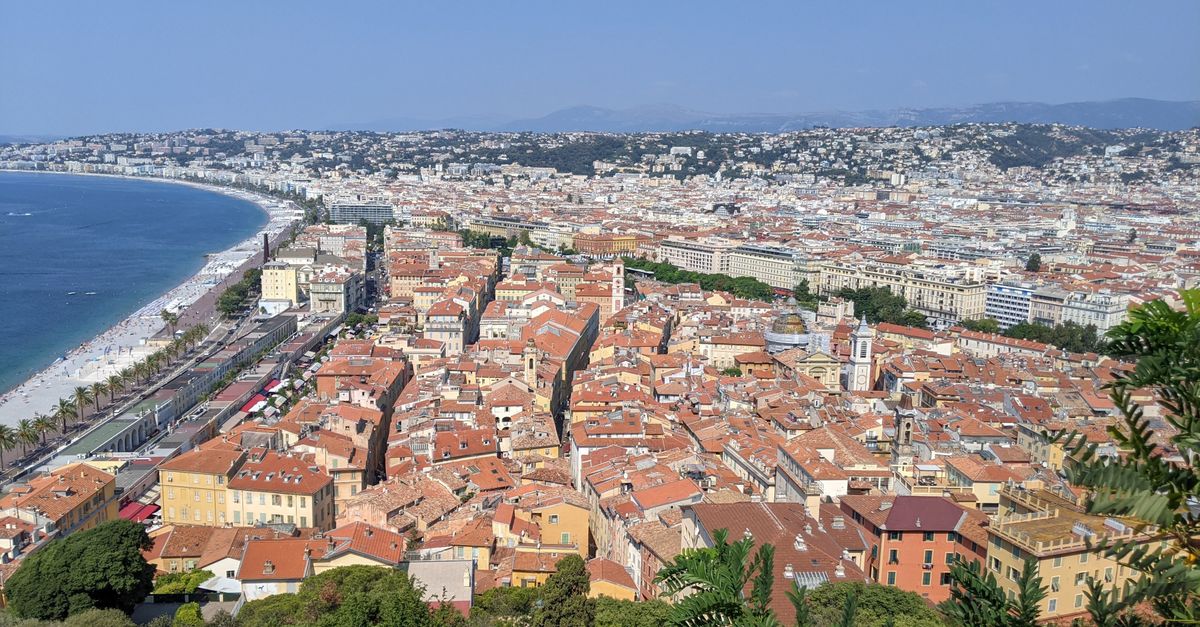
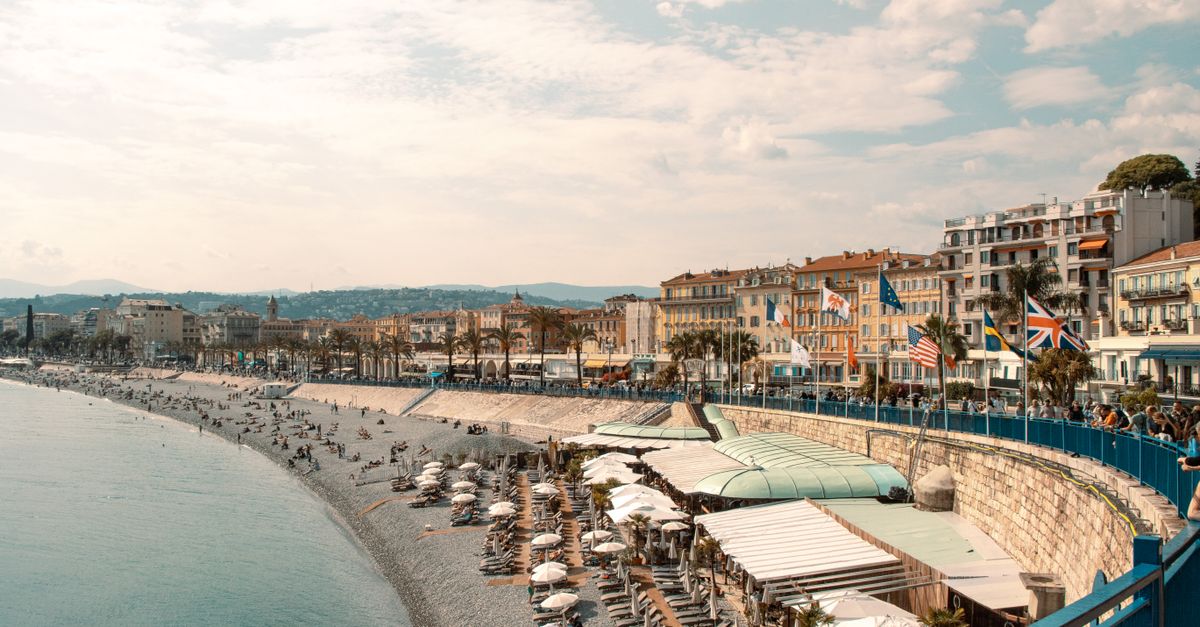
Nice sits at the eastern edge of the French Riviera and has been selling its sunshine, its Promenade des Anglais, and its proximity to Monaco so successfully for so long that most visitors experience the city in a single loop: seafront, old town market, rosé at lunch, seafront again. The city that Niçois actually live in is different: the quartier Libération with its North African and Italian neighbourhood market, the hills of Cimiez where the finest collection of Matisse in the world sits in a museum almost no one queues for, and an extraordinary Belle Époque hotel district that most tourists walk through without recognising what they're seeing.
This guide is for the traveller who has a few extra days on the Riviera and wants to understand that Nice is both more complex and more authentic than its reputation suggests. The Niçois are proudly neither fully French nor Italian — the city was Savoyard until 1860 — and that distinct identity shows up in the food (socca, pissaladière, pan bagnat), the dialect that still survives in the old quarter, and a civic pride that occasionally shades into defensiveness.
Nice is also an excellent base for the less-visited parts of the Côte d'Azur: the Mercantour mountains behind it, the villages of the arrière-pays, and the ancient Ligurian ruins above the sea at the Tête de Chien. The Promenade des Anglais is just the beginning.
1. Marché du Cours Saleya at Dawn
The Cours Saleya flower and vegetable market is Nice's most celebrated and most visited market — and the most visited is the tourist version that runs from 8am onward. The market at 6:30am, before the tourist wave, is a different institution: the wholesale section serves the restaurants and cafés, crates of flowers are being unpacked from vans, the vegetable sellers are arranging their displays, and the café at the west end of the market (Café le Cours) is serving coffee to market workers at a counter that is purely functional rather than decorative. This is what the Cours Saleya was before it became picturesque.
The market has been on the Cours Saleya since the 18th century, when the space was cleared between the former palace of the Kings of Sardinia and the sea. Flowers, vegetables, Niçois specialities (olive oil, socca flour, pissaladière, tapenade), and in the afternoons an antique and vintage market that sets up from 2pm. On Mondays there's no morning market — only the antiques all day. Tuesday to Sunday is the full flower and food market.
Walk east from the Promenade des Anglais along the beach and then left into the Vieux-Nice. The Cours is at the southern edge of the old town. The first tram (Line 1) runs before 6am if you want to arrive at dawn from a hotel further from the centre. The market runs 6am–1:30pm (approx). Weekday mornings are quieter than weekends. The socca vendor at the eastern end of the market serves the traditional Niçois pancake (made from chickpea flour, olive oil, salt, and black pepper, cooked on a massive iron plate in a wood oven) from 8am — €2.50 for a generous portion, eaten from a paper cone, no fork.
The Vieux-Nice streets surrounding the Cours repay morning exploration. The lanes are narrow, Baroque, and layered with colour — ochre, rose, terracotta — and the best coffee in the neighbourhood is not on the Cours but on the side streets: Café La Merenda on Rue de la Formiga serves excellent café and a breakfast plate of bread with olive paste and anchovies for €6, and it's full of Niçois not tourists from 7am onwards.
2. Cimiez Hill and the Matisse Museum
The Musée Matisse is in the villa-studded hill neighbourhood of Cimiez, 2 kilometres north of the centre — reached by bus and almost entirely ignored by visitors doing the Riviera in a day. The museum occupies a 17th-century Genoese villa surrounded by Roman ruins and a medieval Franciscan monastery. The collection is the finest in the world for tracing Matisse's development: early Fauve oils, the paper cut-outs of the final period, the preparatory work for the Vence Chapel, his Nice apartment reconstructed in miniature. Queue: essentially none.
Matisse lived in Nice and Cimiez for most of the last 37 years of his life — he's buried in the Cimiez monastery cemetery just outside the museum. The decision to live here was both personal (the light, which he described as unlike anywhere else he'd worked) and creative: the colour and pattern of the Niçois domestic interiors became central to his mature work. The museum contextualises that connection in a way that no other Matisse collection can replicate.
Take bus 15 from the city centre to the Arènes/Cimiez stop — approximately 15 minutes, €1.70 single. The museum is open Wednesday to Monday 10am–6pm. Closed Tuesday. Free admission. The Roman amphitheatre (les Arènes) immediately adjacent to the museum entrance is a small and well-preserved 1st-century structure used for summer music events; free to enter at any hour. The monastery church of Notre-Dame de l'Assomption beside the museum has a beautiful Gothic interior and a cloister garden of roses.
The Franciscan cemetery beside the monastery is where Matisse is buried — a simple headstone near the east wall. Renoir also lived and died in the area (his studio is at Cagnes-sur-Mer, 15 minutes west by train) and the two painters define the specific quality of Riviera light that makes this stretch of Mediterranean coast different from all others. After the museum, walk the paths through the Cimiez olive grove park — 2,000 olive trees on terraced slopes above Nice, free, quiet, and extraordinary at sunset.
3. Quartier Libération Market
The Libération neighbourhood, north of the train station and largely unknown to visitors, contains Nice's most genuinely diverse daily market — less picturesque than the Cours Saleya, more functional, cheaper, and more representative of the city's actual population. The covered market on Place du Général de Gaulle (Marché de la Libération) opens six mornings a week and sells North African spices, Italian provisions, Niçois charcuterie, Socca flour, and fresh fish from the day's catch at prices about 30% lower than the tourist market in the old town.
The Libération neighbourhood has a significant Maghrebi community (primarily Algerian and Moroccan) and the market reflects this: harissa pastes, preserved lemons, merguez sausage, Tunisian dried figs and dates, and fresh bread from the Algerian bakery on the corner that opens at 5:30am. It also has Italian-Niçois provision shops selling the local specialities — socca flour, anchoïade (anchovy paste), olive tapenade — at prices that don't account for tourist purchasing power.
Take tram Line 1 to the Libération stop (or walk north from the station, 7 minutes). Market days are Tuesday, Thursday, and Saturday mornings from 7am to 1pm; the outdoor market extends into the side streets on Saturdays. The covered market building is open most mornings. The café inside the market building serves the cheapest coffee in Nice (€1 standing at the counter) and the crowd at 8am is entirely local — market workers, local shoppers, taxi drivers.
The surrounding streets of the Libération neighbourhood have excellent and honest North African and traditional Niçois restaurants. Restaurant Chez Simon on Avenue Malausséna does a very good couscous merguez for €13 at lunch. La Socca des Artistes on Rue Gubernatis, just south of the market, is the finest affordable socca restaurant in Nice — order the full plate (socca, pissaladière, salade niçoise) for €14 and eat at the counter bar for maximum authenticity.
4. Castle Hill at Dusk
The Colline du Château (Castle Hill) at the eastern end of the Promenade des Anglais is the site of the original Greek and Roman city of Nikaia — now a public park with a large waterfall feature, medieval ruins, and the finest free panoramic view of Nice and the Baie des Anges available from any publicly accessible point. The tourist postcards know it; the tourists follow the Promenade and rarely climb up. Take the lift (free, from the street level near the Place Masséna) at 6pm in summer and you'll find the park largely given to local families and dog walkers.
The original medieval city on the hill was destroyed by Louis XIV in 1706 to prevent it being used against France — only the ruins of the Tour Bellanda remain, now housing a small naval museum. The park was laid out in the 19th century with formal gardens, paths, and the artificial waterfall that provides the background soundtrack to the belvedere. The cemeteries on the eastern side of the hill are among the most beautiful in France: the Jewish cemetery and the Russian cemetery both date from the Belle Époque and contain the graves of many of the Northern European aristocrats who came to Nice and died here.
Access from the Promenade: walk east to the end, where a free lift rises to the park level (7am–8pm in winter, until 10pm in summer). Alternatively, walk up the stairs — steeper but faster. The park is always free and open until dusk. The panoramic terrace looks west over the entire Baie des Anges — the curve of the coast from Cap d'Antibes to the Cap de Nice, with the Promenade des Anglais below and the Alps in the background on clear days. This is the view that turned Nice into a tourist destination in the 19th century; it still earns it.
The view looking east from the opposite side of the hill takes in the port of Nice, the fishing boats, and the outline of the Cap Ferrat peninsula. On the eastern slope, the Cimetière du Château contains the graves of many of Nice's most notable historical residents — a very Niçois mix of Italian, French, Russian, and British names. The tombstone inscriptions alone tell the social history of the Riviera. Free, always open. Come back after dark in summer — the illuminated city below is extraordinary.
5. Cathédrale Orthodoxe Russe Saint-Nicolas
The Russian Orthodox Cathedral near the Nice-Ville train station is an extraordinary presence in a French Mediterranean city — an onion-domed structure of vivid red and green ceramic tiles, built between 1903 and 1912 by the Russian imperial family as a memorial to Nicholas Alexandrovitch, the Tsarevitch who died in Nice in 1865. The interior is one of the finest examples of Russian religious art outside Russia: iconostasis in carved gilded wood, walls hung with icons, the smell of incense and beeswax. Entry is free.
The Russian connection to Nice is substantial — the Romanovs and their aristocratic circle began wintering on the Riviera in the 1860s, building the hotels and villas of the Cimiez neighbourhood and patronising the arts and restaurants of the city. The cathedral was the religious centre of this community and was built on land donated by the Tsar. After the revolution, the Russian community that remained in Nice worshipped here continuously. The cathedral is still active and services take place on Sunday mornings.
Find it on Boulevard du Tzarewitch, a 10-minute walk north of Nice-Ville station. Open Monday to Saturday 9am–noon and 2–6pm, Sunday after the morning service (approximately noon–5pm). Free admission. Men should remove hats; women should cover their heads — scarves are available at the entrance. The morning light through the eastern windows falls directly on the iconostasis and the effect is genuinely affecting.
The neighbourhood around the cathedral is the quieter, more residential Belle Époque district — the hotels and apartment buildings from the 1880s–1910s are extraordinary, mostly painted in the warm terracotta colours of the Riviera and decorated with Beaux-Arts ironwork. Walk through the streets between the cathedral and the Cimiez neighbourhood for the finest concentration. This is where Thomas Cook's first package tourists stayed; it's still an area of fine architecture and relative quiet.
6. The Arrière-Pays Villages: Peillon and Peille
Twenty kilometres north of Nice, in the Maritime Alps, the medieval villages of Peillon and Peille cling to rocky spurs above the valley of the Paillon river. These villages were settled in the Middle Ages as defensive positions against coastal raids — their inaccessibility preserved them from modernisation. Peillon is a perfectly intact medieval hamlet of 100 inhabitants, its lanes so narrow that cars can't enter. Peille has a slightly larger population (700) and a 13th-century church with an extraordinary fresco cycle. Both receive perhaps 20 visitors a day where the Côte d'Azur coast towns receive 20,000.
The drive from Nice takes 30–40 minutes by car (bus service exists but infrequent). The mountain landscape immediately behind Nice is the characteristic Provençal garrigue — limestone scrub, lavender in July, wild thyme, the scent of warm stone in afternoon sun. Peillon is reached by a road that ends at the village car park; you enter on foot through a medieval gateway and immediately enter the 14th century. The Auberge de la Madone has been the single guesthouse and restaurant for a century — the Provençal cooking is excellent and the terrace overlooks the valley.
Peille, 10 kilometres further north (but a different valley, requiring a 20-minute drive), is slightly less polished — the church of Saint Marie is open most afternoons and the fresco cycle (15th century) covers the nave walls with scenes from local saints' lives rendered with remarkable expressive quality. The village bar on the main square is the social centre of the community and serves cold rosé wine and sandwiches at prices that reflect a village economy rather than a tourist economy.
The drive between the two villages involves the Col de la Madone pass (941 metres) — a climb used regularly in Tour de France training and beloved by serious cyclists. On a clear day the view from the pass takes in the sea from Cannes to the Italian border. Both villages are best visited on weekday mornings when they're genuinely quiet. The combined visit takes half a day; combine with the Col de Laghet sanctuary (a Baroque pilgrimage church in the next valley, decorated with ex-voto paintings) for a full exploration of the Niçois arrière-pays.
7. Cours Saleya Antiques on Monday
On Mondays — the one day there's no food market — the Cours Saleya transforms into one of the largest and finest antique and brocante markets on the Côte d'Azur. More than 200 dealers set up from 8am, selling furniture, silverware, vintage clothing, ceramics, art prints, books, jewellery, and the accumulated objects of Riviera estate sales. The quality range is wide: genuine antiques alongside flea-market bric-a-brac. Arrive before 10am and know what you're looking for.
The antiques market specialises in the specific aesthetic of the Côte d'Azur Belle Époque period — Art Nouveau silverware, 1920s Riviera resort posters (originals and reproductions, often displayed together without clear distinction), Venetian glassware, and the small decorative objects that once furnished the villas of the aristocratic European visitors who wintered here. Prices are negotiable; the opening ask is usually 30–40% higher than what a polite and firm negotiation can achieve.
Arrive at 8am for the best selection and least competition. The café at the eastern end of the Cours opens at 7:30am and serves excellent coffee to the dealers setting up. By 11am the market is in full swing; by 1pm it begins packing up. The most interesting section is the western end near the Palais des Rois de Sardaigne — the furniture and silver dealers are there, and occasionally something extraordinary appears: a set of Belle Époque hotel crockery, a 1930s travel poster, a piece of Provençal faience.
Bargaining is expected and respected. Begin at 60% of the asking price and settle somewhere above that. Cash is strongly preferred — carry small denominations. Not everything labelled "antique" is antique; not everything unmarked is not. The best deals are typically in the textile and clothing section (vintage 1960s–80s Riviera clothing, linen, and provençal fabrics) and in the ceramics (Vallauris pottery, often genuinely old, often underpriced). Bring a canvas bag — the plastic bag tax applies here as everywhere in France.
8. Tête de Chien and the Corniches Drive
The three Corniches roads between Nice and Monaco — Corniche Inférieure, Moyenne Corniche, and Grande Corniche — each offer different perspectives on the same stretch of cliff coast. The Grande Corniche, highest and most ancient (following the Roman Via Julia Augusta), reaches the Tête de Chien viewpoint above Monaco at 550 metres — a military fort with a 360-degree panorama taking in Monaco below, the Italian coast to the east, and the entire French Riviera to the west. The drive alone is one of the finest in Europe.
The Grande Corniche was built by Napoleon to move troops rapidly along the coast and has been part of the tourist experience of the Riviera since the first motor cars arrived in the 1900s. The Moyenne Corniche passes through the Eagle's Nest village of Eze — famous, picturesque, and extremely crowded — which justifies using the Grande Corniche instead for the views without the tour-group congestion. The Tête de Chien military fortification is accessible on foot (2km from the nearest parking on the Grande Corniche) and open to visitors.
Drive east from Nice on the D2564 (Grande Corniche). The drive from Nice to the Tête de Chien viewpoint takes approximately 45 minutes. Park at the Col de la Paillole and walk the path to the fort — 45 minutes round trip on a rocky path (walking shoes required). The fort is a 19th-century structure built to defend against Italian invasion; the panoramic view from its walls is the finest free viewpoint in the entire Riviera.
The full Corniches circuit from Nice to Monaco and back (using a different road each way) takes approximately 3–4 hours with stops. The Corniche Inférieure through Villefranche-sur-Mer and Beaulieu-sur-Mer passes through two of the Riviera's most beautiful Belle Époque resort towns — both quieter and more authentic than Monte Carlo. Villefranche has an extraordinary deep-water harbour and a painted chapel decorated by Jean Cocteau in 1957 (free, open daily except Tuesday).
9. Vieux-Nice Evening Aperitif Trail
The Vieux-Nice, after 6pm and before the restaurant dinner rush, has an aperitif circuit worth knowing: a string of bars in the lanes around Rue de la Boucherie and Rue Droite that serve the local alternatives to the tourist Spritz — Pastis 51 with water and a bowl of olives (€4), a glass of local Bellet white wine (€6, an extremely rare AOC from the hills immediately above Nice), or the extraordinary Niçois liqueur Cap Corse (a quinine-bitter aperitif, €5). These bars cater primarily to the neighbourhood's remaining residential population and the young Niçois who live in the old town.
The Vieux-Nice is one of the finest Baroque old towns in France — not the most famous (that's Avignon or Aix-en-Provence) but arguably the most intact and certainly the most colourful. The street facades are painted in the intense ochres, corals, and yellows of the Ligurian-Italian Baroque tradition rather than the cooler Provençal palette, and the lanes are genuinely narrow — original medieval width. The Baroque churches (most of which are free and open) include the extraordinary Cathédrale Sainte-Réparate on the Place Rossetti.
Enter the Vieux-Nice from the Place Masséna end and walk east along Rue Masséna into the old town. Rue de la Boucherie, Rue du Marché, and the lanes around Place du Jésus are the best hunting ground for aperitif bars. Cave Wilson on Rue du Marché is a natural wine bar with excellent local producers including the rare Bellet wines. Le Bar du Coin, technically unnamed and identified only by the blue plastic chairs outside, on Rue Emmanuel Philibert, serves the best cheap wine in the old town.
The aperitif hour (roughly 6–8pm) is followed by the dinner hour (8–10pm) in the lanes — the restaurants that serve real Niçois cuisine rather than tourist menus are typically booked in advance and don't have menus in the window. La Merenda on Rue de la Formiga (8 seats, no reservations, no credit cards, no phone) serves the finest traditional Niçois cooking in the city: pissaladière, ravioli niçois, daube à la niçoise. Show up at noon or 7pm and join the queue — it's worth it.
10. Promenade du Paillon Urban Garden
The Promenade du Paillon is a 12-hectare linear park that replaced a road in 2013, running from the National Theatre through the heart of the new city to the seafront. It's Nice's Jardí del Túria — a reclaimed urban axis, planted with 1,200 trees and 8,000 perennials, with children's play fountains, petanque courts, and a design quality that stands comparison with the finest urban parks in France. Most visitors to Nice walk it without realising it's a relatively recent creation, which is the best possible compliment to the landscape architects.
The park connects the Musée d'Art Moderne et d'Art Contemporain (MAMAC) at the northern end — a free museum with a significant Warhol and Klein collection — to the Place Masséna at the centre and the seafront at the south. The fountains that line the central section spray upward from flush-mounted nozzles in the paving, with no warning, which is why children run among them permanently in summer and why many adults get unexpectedly soaked.
MAMAC (Musée d'Art Moderne et d'Art Contemporain) at the northern end of the promenade is one of the underrated art museums of France — its collection focuses on French and American contemporary art from the 1960s onward, with an exceptional collection of Klein's blue monochromes, Niki de Saint Phalle's large sculptures, and an Warhol series. Free admission. Open Tuesday to Sunday 10am–6pm.
The petanque courts in the middle section of the promenade are used every evening by neighbourhood players. Watching a serious game of pétanque — the intense concentration, the walking of measurements, the subtle arc of the throw — is one of the most French experiences available in Nice and it's entirely free. The park is best at dusk when families gather and the fountain lights come on. The light through the plane trees in autumn is extraordinary. The entire park is a 5-minute walk from the Place Masséna, which is 5 minutes from the Promenade des Anglais — it's in the middle of everything and most visitors somehow miss it entirely.