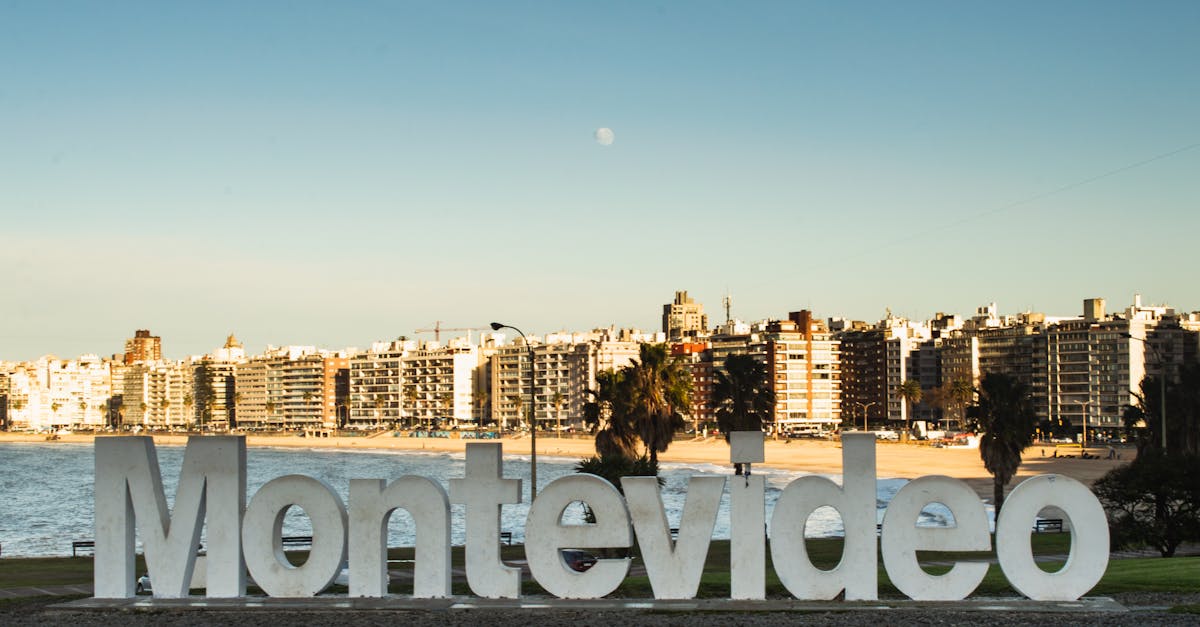
Montevideo is the most consistently underestimated capital city in South America. Rio has the scenery, Buenos Aires the drama, São Paulo the scale — and Montevideo quietly has quality of life, a remarkable art and culture scene for its size, the best-preserved early 20th-century architecture in the Southern Cone, and a food and music culture that is genuinely its own rather than Argentina's smaller echo. The tourist infrastructure is minimal not because Montevideo lacks content but because the city doesn't perform for visitors — it simply does its thing at a human pace, and the visitors who pay attention discover a city of extraordinary coherence and livability.
This guide is for travelers who either specifically chose Montevideo (good instincts) or are stopping between Buenos Aires and the southern beaches. The hidden Montevideo is the Mercado del Puerto's Saturday ritual, the Barrio Sur's candombe tradition, the Rambla waterfront that stretches for 22 kilometers without a tourist attraction interrupting it, and the luthiers and craftspeople operating in the Ciudad Vieja's back streets. Budget time for doing nothing — Montevideo rewards the willingness to sit in a café and watch the city without an agenda.
Montevideo's STM bus system covers the entire city for UYU 45–50 per ride. Taxis are metered and reasonable (UYU 200–500 within the city). The Rambla — the waterfront promenade — is excellent for cycling; rental shops operate near the Ciudad Vieja. Budget in Uruguayan pesos (UYU) — approximately UYU 40 per USD at current rates. Montevideo is more expensive than most South American capitals but significantly less expensive than Buenos Aires for comparable quality.
1. Mercado del Puerto on Saturday Morning
The Mercado del Puerto in the Ciudad Vieja — an 1868 iron market hall a block from the original port — is the weekly ritual center of Montevideo's social life on Saturday mornings. The parrilladas (barbecue grills) that line the market's interior produce the overwhelming smell of asado: beef, chorizo, morcilla (blood sausage), and organs grilling on enormous parilla setups, consumed by Montevideo residents who come every Saturday in a social ritual that has nothing to do with tourism despite the market's fame. The experience of eating a choripán (grilled chorizo sandwich, UYU 180–250) at the market bar with a Pilsen beer while the grills send smoke through the iron roof at 11am on a Saturday is one of the most purely Uruguayan experiences available.
Uruguay's asado culture is distinct from Argentina's — the cuts, the parrilla technique, and the social conventions are similar but with specific Uruguayan characteristics (the use of achuras — organ meats — is more central in Uruguayan barbecue than in Buenos Aires). The Mercado del Puerto on Saturday morning is the most legitimate expression of this culture available to visitors without a private invitation to a family asado.
Walk from anywhere in the Ciudad Vieja to the Mercado del Puerto on Pérez Castellano Street near the port. Open Tuesday–Sunday, but Saturday is when the full barbecue ritual operates. Arrive between 10:30am and 1pm for peak activity. The market's ground floor parrilladas are the authentic experience; the sit-down restaurants upstairs are more expensive and less interesting.
Choripán: UYU 180–250. Draft beer: UYU 100–150. A complete asado meal (standing at the bar): UYU 400–700. Budget UYU 700–1,000 for a full Saturday market morning including two drinks and a full asado plate. Arrive without expectations of hurry — this is an experience that should unfold over 90 minutes to 2 hours.
2. Barrio Sur's Candombe Tradition
The Barrio Sur and Palermo neighborhoods south of the Ciudad Vieja are the heartland of Montevideo's Afro-Uruguayan community and of the candombe musical tradition — the drum-based music developed from West African traditions by enslaved Africans in Montevideo in the 18th and 19th centuries. Candombe is the foundation of Uruguayan popular music and carnival culture; the rhythm's distinctive three-drum pattern (chico, repique, and piano drums played simultaneously) is one of the most recognizable in Latin America. On Sunday evenings and Friday nights, neighborhood groups (comparsas) practice their llamadas (candombe calls) through the streets of Barrio Sur in impromptu sessions that are completely open to observers.
Uruguayan candombe received UNESCO Intangible Cultural Heritage designation in 2009, recognizing its significance as a living musical tradition with roots in the African diasporic experience of the Río de la Plata region. The Llamadas festival each year in Barrio Sur (February, during Carnaval) is the most concentrated public expression; the neighborhood street practice sessions that precede and follow Carnaval are the most authentic version available outside the festival context.
Take any bus south from Ciudad Vieja toward Barrio Sur and Palermo. The candombe practice sessions happen on weekend evenings — listen for the drums, which are audible several blocks away. The Ansina Street corridor and the streets around Isla de Flores are the primary practice zones. No tickets, no admission, no schedule — simply follow the sound.
Free. Budget UYU 100–200 for a beer from a nearby kiosk while listening. The neighborhood also has excellent parrilladas and evening restaurants — budget UYU 400–800 for dinner in Barrio Sur after a candombe session. The Casa de los Negros cultural center on Isla de Flores has occasional community events related to Afro-Uruguayan culture.
3. Ciudad Vieja's Art Nouveau Architecture
Montevideo's Ciudad Vieja contains the finest concentration of early 20th-century Art Nouveau, eclecticism, and modernist architecture in the Southern Cone — buildings designed in the 1900s–1930s when Uruguay was one of the wealthiest countries in South America and when the capital's construction boom attracted architects trained in Paris, Madrid, and Barcelona. The Palacio Salvo on Plaza Independencia (1928, at the time the tallest building in South America), the Palacio Piria on Sarandí, and the facades along Calle Cerrito and Calle Buenos Aires display an architectural ambition that Montevideo's current modest self-presentation doesn't signal. A dedicated 2-hour walking tour of the Ciudad Vieja's built environment reveals a city that was, at its peak, extraordinarily confident.
Uruguay's early 20th-century wealth came from its position as a beef-exporting country when beef prices were high and from the Batllista social reforms (1903–1930) that created Latin America's first welfare state. That wealth was expressed architecturally in a manner that is only now being appreciated — the subsequent economic difficulties of the mid-20th century preserved much of the heritage by removing the economic impetus to demolish and redevelop.
Walk the Ciudad Vieja from Plaza Independencia (Palacio Salvo, the Teatro Solís) south to the port along Calle Sarandí, then back through Calle Cerrito and Calle 25 de Mayo. The circuit is 3–4 kilometers and can be walked in 2 hours. The Ciudad Vieja walking tour brochure (available free at the Ministerio de Turismo office on Rambla) provides detailed architectural commentary.
Free. The Teatro Solís on Buenos Aires Street (Uruguay's most important theatre, founded 1856) offers backstage tours on Tuesday mornings for UYU 200. The Palacio Salvo's viewpoint is occasionally open to visits — check at the building's administration office. Budget UYU 300–500 for a coffee at one of the Ciudad Vieja's surviving old cafés (Bar Facundo, Bar Roldós) during the walk.
4. The Rambla at Dawn and Dusk
The Rambla Naciones Unidas runs 22 kilometers along Montevideo's Río de la Plata waterfront from the Ciudad Vieja west to the Playa Ramírez, Pocitos Beach, and beyond into the eastern residential neighborhoods. At dawn, the Rambla is the property of joggers, cyclists, and the fishing community setting their lines from the rocky breakwaters. At dusk, it becomes a social promenade: families walking, teenagers gathering at the beachfront squares, and the extraordinary spectacle of the sun setting into the Plata estuary — a body of water so wide that the opposite Argentine shore is invisible and the horizon line is uninterrupted. This is the finest urban waterfront promenade in South America, and it's used exclusively by Montevideo residents.
The Río de la Plata is technically the world's widest river — its mouth measuring over 220 kilometers across. The light on the Plata estuary has a silvery, diffuse quality that reflects the water's distinctive brown-grey color (from Paraná River sediment) and produces some of the most consistently beautiful sunsets in the Southern Hemisphere. Painters have come to Montevideo specifically to capture this light for two centuries.
The Rambla is accessible from any point along its 22-kilometer length — simply walk or cycle toward the water from any east-west street in the residential neighborhoods. Bicycle rental near the Ciudad Vieja end: UYU 300–500 for 2 hours. The Rambla is always open; dawn and dusk are the optimal times.
Free. Bicycle rental: UYU 300–500. Budget UYU 200–400 for a post-Rambla walk refreshment: a café cortado and medialunas (croissants) at any of the Rambla-adjacent bars for UYU 150–250. Pocitos Beach is the most socially active section; the stretch between Playa Ramírez and Playa de los Pocitos is the Rambla's most beautiful.
5. Feria de Tristán Narvaja on Sundays
The Feria de Tristán Narvaja on Calle Tristán Narvaja in the Cordón neighborhood has been one of South America's most important outdoor antique and book fairs every Sunday since 1910. The street fills for ten blocks with vendors selling used books (in Spanish, Portuguese, French, and Italian — reflecting the city's immigrant composition), antique furniture and household goods, coins and stamps, vinyl records, art, vintage clothing, and the general accumulation of a literate, historically conscious city's unwanted possessions. The book section alone — several hundred vendors specializing in Uruguayan and South American literature, history, and philosophy — is extraordinary for anyone who reads Spanish.
The Tristán Narvaja fair's longevity reflects the Ciudad Vieja and Cordón neighborhoods' continuous occupation by the educated middle class that generates and recirculates the cultural goods on display. The fair is simultaneously a commercial market, a community gathering, and a kind of outdoor museum of Uruguayan material culture from the past century.
Take any bus to the Cordón neighborhood and walk to Calle Tristán Narvaja (runs north-south from Bulevar España to 18 de Julio Avenue). The fair runs every Sunday from 8am to approximately 2pm. Arrive before 10am for the best book selection before serious collectors have worked through the stalls.
Free to browse. Books: UYU 50–500 depending on rarity and edition. Vinyl records: UYU 100–500 per disc. Antiques: variable. Budget UYU 500–2,000 for a serious browser's morning including several purchases. The neighboring Parque Rodó is an excellent post-fair walk destination, with the Museo Nacional de Artes Visuales (free admission) adjacent to the park.
6. Café Brasilero and the Ciudad Vieja Café Culture
Café Brasilero on Ituzaingó Street in the Ciudad Vieja has been serving espresso and the Uruguayan morning ritual of café con leche and tostadas (toasted bread with butter and marmalade) since 1877 — making it one of the oldest continuously operating cafés in South America. The interior, unchanged since its early 20th-century renovation, has dark wood paneling, a marble bar, and a quality of commercial antiquity that feels genuinely earned rather than recreated. The café culture here — where newspapers are still read at bar stools, where the same customers have been coming for decades — is disappearing rapidly in Montevideo as in every other South American city, which makes spending time in a place that has preserved it valuable now rather than "someday."
Montevideo's café culture was shaped by the large Spanish and Italian immigrant communities who arrived from the 1880s onward, bringing café social customs from the Mediterranean. The City Vieja's café density in its peak (the 1930s–1960s) is documented in Uruguayan literature — writers including Mario Benedetti and Eduardo Galeano were regular café inhabitants, and the literary culture of the city was substantially produced in spaces like Brasilero.
Café Brasilero is at Ituzaingó 1447 in the Ciudad Vieja. Open Monday–Friday 8am–9pm, Saturday 10am–9pm. Closed Sunday. The morning rush (8–10am) is when the café is most itself; afternoon visits are quieter and more contemplative.
Café con leche and tostadas: UYU 200–300. Budget UYU 300–500 for a leisurely morning at the café including coffee, a pastry, and adequate time to read something. Combine with a Ciudad Vieja architectural walk — Café Brasilero is central to the historic district.
7. Museo Gurvich and the Taller Torres García
Montevideo produced one of the 20th century's most important artists: Joaquín Torres García, whose "Constructive Universalism" synthesized Pre-Columbian art, Mondrian's geometric abstraction, and South American cultural identity into a visual language that influenced generations of artists. The Museo Torres García on Sarandí Street (admission UYU 200, free on Sundays) is the primary repository of his work. The Museo Gurvich (UYU 200), honoring his student José Gurvich, explores the subsequent generation of Constructivism in a small museum of extraordinary quality. Together they represent an art-historical lineage as significant as any in 20th-century South American culture, and they draw almost no international visitors compared to their significance.
Torres García's most quoted statement — "Our North is the South" (he drew a map of South America with south at the top, inverting the conventional orientation) — articulates a philosophical position about cultural self-determination that still resonates. The Taller Torres García that he founded in Montevideo in 1943 trained an entire generation of Uruguayan artists in constructivist principles; the subsequent cultural diffusion has made this small Montevideo school one of the most influential in Latin American art history.
Both museums are in the Ciudad Vieja. Torres García Museum: Sarandí 683; open Tuesday–Saturday 10am–6pm, Sunday 10am–2pm (free). Gurvich Museum: Reconquista 587; open Monday–Friday 10am–5pm, Saturday 10am–1pm. Admission to each: UYU 200 (free Sundays at Torres García).
Admission: UYU 200 each (free Sundays at Torres García). Allow 45–60 minutes per museum. Combine them into a half-morning Ciudad Vieja cultural walk with Café Brasilero for breakfast (as above). The quality of these collections exceeds most South American cities' primary art museums.
8. Colonia del Sacramento Day Trip
Colonia del Sacramento, 180 kilometers west of Montevideo on the banks of the Río de la Plata, is Uruguay's most visited UNESCO World Heritage site — a Portuguese colonial settlement of extraordinary preservation from the 17th century, with cobblestone streets, low whitewashed colonial houses, a lighthouse on the original fortification walls, and the gentle absurdity of a town that has maintained its 300-year-old character while Buenos Aires (visible across the Plata on clear days) developed into a megacity. The ferry from Buenos Aires takes 1 hour; from Montevideo, a bus takes 2.5 hours (UYU 600–800 round-trip). For travelers coming from Buenos Aires, a Colonia day trip with an overnight in Montevideo provides the most efficient way to experience both cities.
Colonia was founded by the Portuguese as a strategic counterpoint to Spanish Buenos Aires, and the resulting border tension shaped the early history of both countries. The historic quarter's survival is the result of Colonia's subsequent marginalization — the town's 20th-century economic unimportance meant there was no impetus to modernize the colonial structures. What was economic failure has become cultural preservation.
Bus from Montevideo's Three Crosses terminal to Colonia: UYU 600–800 round-trip, 2.5 hours. Alternatively, ferry from Colonia Connect terminal in Montevideo. The historic quarter is entirely walkable in 3–4 hours. Entry to the historic quarter: free. The lighthouse viewpoint is an additional UYU 50.
Bus: UYU 600–800 round-trip. Historic quarter: free. Lunch in Colonia's restaurants: UYU 500–900 per person (pricier than Montevideo due to tourist orientation). Budget UYU 1,500–2,000 for a full Colonia day including transport, entry fees, and lunch. Return to Montevideo in the late afternoon for dinner.

9. Barrio Punta Carretas and the Converted Prison
Punta Carretas, in the upscale residential area east of Ciudad Vieja, contains one of Montevideo's most unusual commercial spaces: the Punta Carretas Shopping mall, built inside the former Punta Carretas Prison — a maximum-security facility from 1910 where Tupamaro guerrillas staged a spectacular 111-prisoner escape through a tunnel in 1971. The prison's outer walls, guard towers, and structural elements are preserved and integrated into the shopping mall design in a way that is simultaneously bizarre, historically significant, and oddly successful as retail architecture. Walking the mall with awareness of its history transforms a standard shopping experience into something genuinely strange.
The Tupamaros escape from Punta Carretas was one of the most extraordinary prison breaks in South American history — the tunnel was dug from a cell block into the basement of a neighboring house whose owners were Tupamaro sympathizers. The subsequent military dictatorship used the prison for political prisoners until it was closed in 1986. The decision to convert it to a shopping mall in 1994 reflected Uruguay's characteristic approach to difficult history: practical repurposing rather than either demolition or memorial preservation.
Walk or take a bus from Ciudad Vieja east along 18 de Julio Avenue to the Punta Carretas neighborhood. The mall entrance is on Solano García Street — conspicuously marked by the original prison gate. Open daily 10am–10pm. A free historical pamphlet explaining the prison's history is available at the information desk inside.
Free to enter and browse. The surrounding Punta Carretas neighborhood is Montevideo's most pleasant upscale residential area for a walk — the Rambla along the Pocitos Beach is 10 minutes walk east. Budget UYU 300–600 for coffee and food in the mall's café level, which has good options.
10. Cerro de Montevideo and Its Fortress
The Cerro — the hill that gives Montevideo its name, rising 139 meters above the western entrance to the bay — is topped by an 1802 Spanish fortress that is the last functioning military stronghold in Uruguay (the army maintains a small presence). The Cerro provides the finest view of the bay entrance, the Ciudad Vieja skyline, and the Río de la Plata that the city offers — and is visited by approximately 1% of the tourists who photograph the skyline from the Rambla. The Fortaleza del Cerro museum (UYU 150) is small but contains artifacts from the various military epochs of the fortress. The surrounding Cerro neighborhood, at the base of the hill, is one of Montevideo's most working-class and most authentic areas.
The Cerro's name gave Montevideo its name — the Spanish called the hill "Monte vide eu" (Portuguese, "I see a mountain") upon spotting it from the Río de la Plata in the early 16th century. The hill's strategic importance as a navigational landmark and defensive position shaped the city's development around the bay it commands.
Take bus 125 from Ciudad Vieja to the Cerro neighborhood, then walk or take a local bus up the hill to the fortress entrance. The fortress is open Tuesday–Sunday 10am–5pm. Entry UYU 150 including the small museum. The hike up the hill from the base takes approximately 30 minutes on a zigzag path.
Entry: UYU 150. Bus: UYU 45–50. The view from the fortress walls is the reward — budget 1.5–2 hours for the visit including the ascent, fortress walk, and descent. Combine with a walk through the Cerro neighborhood's local market and café culture at the hill's base before returning to the city center.