
Langkawi has a reputation as a duty-free island resort — cable cars, eagle statues, beach hotels. This reputation is both accurate and severely incomplete. The island is also a UNESCO Global Geopark, home to some of the oldest geological formations in Southeast Asia, a mangrove ecosystem that is one of the richest in the region, and a traditional Malay fishing culture that has barely registered the resort economy that developed around it. The duty-free booze and the jet ski rentals exist on Pantai Cenang; ten kilometers away, elderly fishermen repair nets using the same techniques their grandfathers used.
This guide is for travelers who want to get beyond the resort strip — not necessarily to reject it entirely, but to add dimensions to the island that most visitors never find. Langkawi is, at its core, a remarkably beautiful archipelago of 99 islands surrounded by the Andaman Sea's clearest waters and covered in primary rainforest that has survived because the island's geology makes it unsuitable for palm oil cultivation. That combination of forest, sea, and geology creates experiences unavailable anywhere else in Malaysia.
Ten places in Langkawi where the island's genuine character comes through — most of them free or very cheap, none of them in the resort brochures.

1. Kilim Karst Geoforest Park by Kayak — The Best Mangrove in Malaysia
The Kilim Karst Geoforest Park in northeastern Langkawi is the island's most extraordinary natural environment and is technically well-known — tour boats run through it daily on the standard "mangrove tour." What those boat tours entirely miss is the experience available only by kayak: paddling silently into the narrow mangrove channels, where the roots form tunnels at water level, where brahminy kites drop from limestone cliffs to snatch fish in front of you, and where the silence (broken only by the splash of your paddle and the calls of mangrove inhabitants) allows you to understand what you're actually in the middle of. This is a coastal ecosystem of extraordinary density — the mangrove roots host mud lobsters, monitor lizards, archerfish that shoot insects from the surface, and the kingfisher species that is the park's unofficial mascot.
The geological formations are equally spectacular: the limestone karst towers that rise from the mangrove channels are among the oldest exposed rock formations in Southeast Asia (over 550 million years old), predating even the Cambrian period. The caves within these formations have stalactites, bats by the million, and the occasional cave swiftlet nest — the basis of the bird's nest soup industry that has operated from these caves for centuries. Bat Island (Pulau Kelawar) is the most accessible of the cave systems; the bat exodus at dusk, when 3–5 million bats spiral out of the cave entrance into the evening sky, is one of Asia's great wildlife spectacles.
Kayak rental for the Kilim area is available from several operators near the Kilim jetty (northeast Langkawi). Half-day guided kayak tour approximately MYR 120–180 per person; self-guided kayak rental MYR 50–80. Kilim jetty is 25km from Pantai Cenang; rent a car or motorbike (MYR 35–50/day) for the access road. The best times are early morning (7–9am, before speed boats arrive) or late afternoon (3–5pm). The bat exodus from Bat Island happens approximately 30 minutes after sunset — time your kayaking to be near Bat Island at that moment.
The Gua Kelawar (Bat Cave) can be visited by longtail boat (included in most kayak tour packages). The cave's interior is accessible on foot for about 50 meters and provides the extraordinary experience of being surrounded by sleeping bats during the day — they hang from every surface of the ceiling and their quiet social noise fills the cave like white noise. Entirely safe; bring a flashlight.
2. Telaga Tujuh — Seven Waterfalls Without the Tour Groups
Telaga Tujuh (Seven Wells) waterfall in the island's northwest is mentioned in every Langkawi travel article, which means it can be crowded on weekend afternoons. But the peak experience at this site — swimming in the natural rock pools while the forest canopy drips above you and the sound of the falls creates a white noise wall — is only available in the morning, before 10am, when the tour minibuses haven't arrived. The hike to the falls from the base is 30 minutes of steep stone steps through primary rainforest; the payoff at the top is multiple natural rock pools at different levels, connected by water channels and small cascades, cool even in the Malaysian heat.
The forest on the hillside above Telaga Tujuh is primary rainforest that extends over the central mountain range of Langkawi — this is where the island's wildlife is concentrated. Long-tailed macaques are guaranteed (bring no food), but patient observers in the early morning may see hornbills, fruit bats, and the flying lizards that glide between tree trunks using their extended rib-flanges. The dusky langur monkeys, which are gentler than macaques and don't steal things, are often seen on the trail in the morning light.
Telaga Tujuh is on the northwestern coast, 6km from the cable car base in Burau Bay. Accessible by rental motorbike or car (20 minutes from Pantai Cenang). Entry MYR 2. Parking MYR 2. Open 8am–5pm. The hike to the main pools takes 25–30 minutes. Arrive before 9am for the most serene experience. Wear water shoes or solid sandals — the rocks are wet and sometimes slippery. The lagoon at the base of the falls' main cascade is the finest natural swimming hole in Langkawi and should not be missed.
The adjacent Durian Perangin waterfall, accessible via a 10-minute walk north from the Telaga Tujuh car park, is less visited than its neighbor and has several pools at different levels. The stream connecting the two falls through the forest makes a pleasant 45-minute upstream walk for those with sturdy footwear.
3. Kuah Town's Waterfront Market — The Unglamorous Capital
Kuah is Langkawi's capital and ferry port, and most visitors pass through it without stopping — its waterfront is dominated by duty-free liquor shops and souvenir stores. But the area behind the main duty-free strip, around Jalan Bukit Tekoh and the town's Chinese shophouse district, has a market and food culture that is entirely untouched by tourism. The morning wet market (Pasar Besar Kuah), operating from 6am, has the full range of Langkawi's freshest seafood, tropical fruits, and Malay provisions at prices that reflect a local not tourist economy.
The specific food items not to miss: the sweet lime (limau nipis) that Langkawi produces in a variety of exceptional flavor, the local coconut (kelapa muda) sold from roadside stalls everywhere in town, and the freshly-caught coral fish at the market that fishermen bring directly from their boats. The Chinese coffee shops (kopitiam) on the shophouse streets around the market serve roti canai and nasi lemak from 6am at MYR 2–4 per portion — the standard of Malaysian breakfast at prices that the resort zone has long since abandoned.
Kuah town is at the southeastern tip of Langkawi, accessible from the ferry terminal (walking distance) or from Pantai Cenang by rental motorbike (15 minutes). The waterfront from the ferry terminal north to the Eagle of Langkawi statue (the island's main landmark) is a pleasant 30-minute walk. The Masjid Al-Hana mosque, built in 1959 and expanded several times, is the most important religious building in Kuah and can be visited by non-Muslims outside prayer times with modest dress. Its location on the waterfront, with views of the islands to the south, makes the exterior as satisfying as the interior.
The lakeside area east of Kuah town, around Tasik Dayang Bunting (the Lake of the Pregnant Maiden), is a short boat trip from the Kuah jetty area and is one of Langkawi's most beautiful natural sites — a freshwater lake in the interior of a large island, surrounded by limestone and primary forest, where freshwater fish feed from visitor hands near the jetty. The surrounding legend (a fairy who became human and miscarried in the lake, whose waters are now considered to aid fertility) is one of Langkawi's most poetic stories.
4. Pantai Pasir Hitam — The Black Sand Beach
Langkawi's most famous beach (Pantai Cenang) is white sand and crowded. The black sand beach on the northern coast, Pantai Pasir Hitam, is neither. The dark coloration comes from volcanic mineral deposits in the sand — the beach is actually dark gray rather than true black, with a sheen in the right light that makes it look painted. It is a genuinely beautiful and unusual beach that receives almost no visitors because it lacks the resort infrastructure of the west coast. The north coast is quieter, the water calmer (sheltered from the open Andaman Sea), and the small fishing villages visible from the beach road are the authentic Langkawi that the west coast has largely replaced with hotels.
The black sand beach itself is best visited in the late afternoon when the low sun catches the mineral deposits in the sand and the beach turns a warm dark bronze. Swimming is possible (no rip currents on this sheltered coast) but the seabed shelves gradually and the water is shallow for 50 meters — better for wading and paddling than serious swimming. The surrounding area has several kelp and seaweed farming operations visible from the shore — one of Langkawi's traditional aquaculture practices that is entirely invisible from the resort zone.
Pantai Pasir Hitam is on the northern coast, accessible from the Pantai Cenang area by motorbike (about 20km, 25 minutes via Route 112). Free access. The beach has no facilities except a small car park. Combine with a drive along the northern coast road (Jalan Pantai Kok to Jalan Datai), which passes through the Datai Bay area where some of Langkawi's finest forest and wildlife is concentrated on the northwest peninsula.
The Datai Bay area, at the northwest tip of the island, has three luxury resorts whose prices are inaccessible for most visitors — but the beach at Datai Bay is accessible to the public via a short walk from the road (follow the signs to "Pantai Datai") and is one of the finest beaches in Malaysia: white sand, clear water, jungle coming down to the beach edge, and almost always empty of people except the hotel guests who have paid a great deal to be there.
5. Gunung Raya — The Forest Walk That Outclasses the Cable Car
The Skybridge cable car at Gunung Mat Cincang is Langkawi's main attraction and has queues to match. Gunung Raya, Langkawi's highest peak at 881 meters, is accessible by a sealed road that winds through primary rainforest to a summit with a telecommunications tower — and a panoramic view that is arguably finer than the Skybridge view because it encompasses the entire island rather than the northwestern edge. More importantly, the road up Gunung Raya passes through some of the island's best birding habitat, and driving or motorbike-riding slowly up the mountain at dawn allows wildlife encounters that the cable car system entirely prevents.
The rare Langkawi specialty birds — including the resident great hornbill (the largest hornbill in the region), the crested serpent eagle, and the chestnut-headed bee-eater — are most active in the forest canopy at dawn. Driving the Gunung Raya road at 7am with windows down and engine off at intervals (the road is quiet at that hour) is one of the best wildlife experiences in Peninsular Malaysia. Langkawi is a globally important birding destination — over 250 species have been recorded on the island — and Gunung Raya is the most accessible concentration point.
Gunung Raya summit road starts from Kampung Belanga Pecah in central Langkawi, accessible by motorbike or rental car (no public transport). The road is sealed to the summit and takes about 20 minutes to drive. Free access. Best visited at dawn (6–8am) for wildlife and clear views. Mist often covers the summit by 10am. The summit has a simple viewpoint shelter and picnic tables — bring your own food and water. The forested slopes on the way down are worth slow exploration on foot in sections if you're comfortable with Malaysian forest hiking.
The night sky from Gunung Raya summit on clear nights (away from the full moon period) is among the finest in Malaysia — low light pollution from the small island, clear tropical air in the dry season, and the Milky Way visible as a structural feature. Bring a blanket and a red-light torch; the summit is significantly cooler than the coast.
6. Kampung Belanga Pecah — The Island's Most Traditional Village
Most of Langkawi's Malay villages have adapted to the tourism economy — souvenir shops, home-stay signs, English-speaking guides for hire. Kampung Belanga Pecah, at the center of the island near the Gunung Raya road, has not. It is a working rice-farming village where the agricultural cycle still dictates the rhythm of life, where the mosque is the social center, and where the traditional Malay wooden houses on stilts, painted in the bright colors that are specific to Kedah state's architectural tradition, have not been replaced by concrete. Walking through Kampung Belanga Pecah without any agenda except observation is one of the most quietly revealing experiences on the island.
The village's paddy fields, particularly beautiful in June–July when the rice is tall and green before the August harvest, produce a variety of langkawi beras (Langkawi rice) that is considered among Malaysia's finest. The local cooperative that manages the harvest produces a small surplus sold in Kuah market — buying a kilogram of this rice (MYR 8–12) is both a genuinely useful souvenir and a support for the farming community that maintains the landscape. The rice straw after harvest feeds the water buffalo that are still used for plowing on the island's more traditional farms.
Kampung Belanga Pecah is near the center of the island, about 12km from Pantai Cenang, accessible by motorbike. The village has no formal tourist infrastructure. The appropriate way to visit is by slow motorbike ride around the village perimeter — admiring the architecture and the agricultural landscape without entering private compounds. The village mosque welcomes non-Muslim visitors for exterior viewing; for interior visits, approach respectfully and ask. Morning and late afternoon are the most atmospheric times.
The paddy field roads around Belanga Pecah that extend toward Bukit Malut in the south are excellent cycling routes — flat, quiet, and passing through the most traditional agricultural landscape remaining on the island. The morning mist in the rice fields, with the central mountains rising behind them, is the Langkawi that no resort brochure shows.
7. Pantai Kok Sunset — The Western Beach with No Hotels
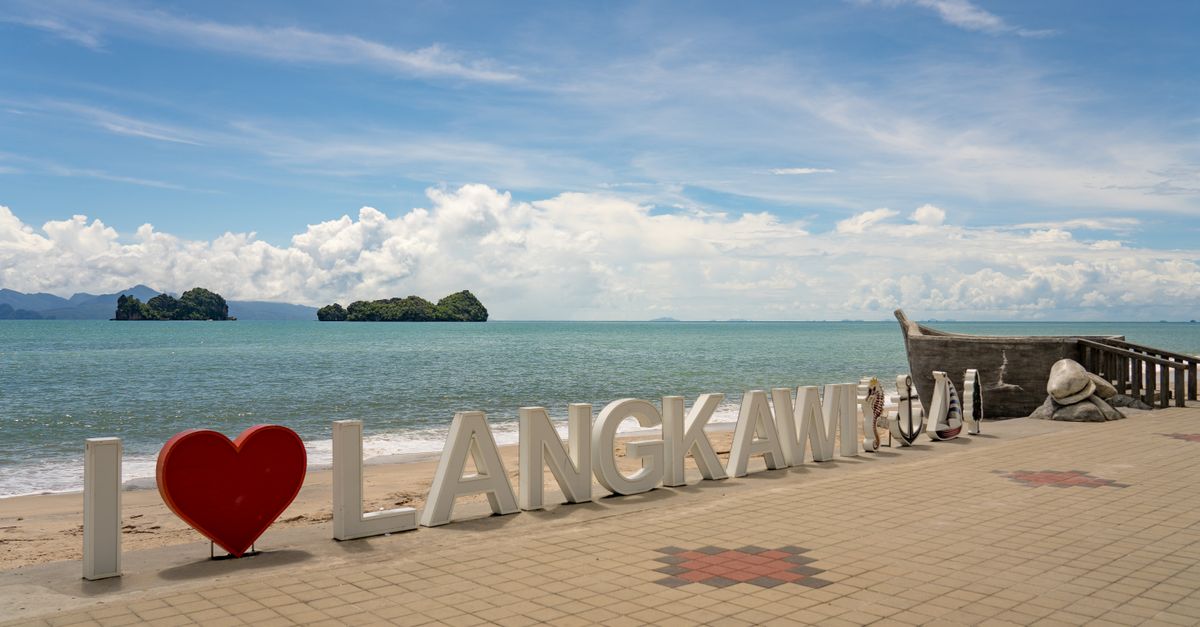
Pantai Kok, on Langkawi's western coast south of the cable car area, has one of the island's finest sunsets and virtually no tourist infrastructure. The beach faces directly west over the Andaman Sea, and in the dry season (November–April) the sun sets in a clear arc directly above the water, painting the sky in colors that the east-facing resort beaches of Cenang never see. A handful of local food stalls set up on the beach road from 4pm serving grilled corn, coconut ice cream, and iced coconut water to the small number of locals who know about this sunset. The beach itself is clean, the sand is slightly coarser than Cenang, and the swimming is good.
The best position for the Pantai Kok sunset is at the rocky headland at the north end of the beach, where a path leads down to a series of natural rock platforms at sea level — sitting on these platforms as the sun drops is genuinely spectacular, with the limestone islands of Pulau Beras Basah and Pulau Dayang Bunting visible in silhouette to the south. The Oriental Village resort complex at the southern end of Pantai Kok has an Italian-owned gelato shop that is inexplicably excellent — mango, durian, and coconut flavors at MYR 8–12 per scoop, using local fruit.
Pantai Kok is on the western coast, 15km north of Pantai Cenang, accessible by motorbike (20 minutes on Route 112). Free beach access. The stalls set up from about 4pm. Arrive 30 minutes before sunset for the best position. The cable car at Mat Cincang mountain is 3km north — a late afternoon cable car ride (queues are minimal after 4pm) followed by a short drive to Pantai Kok for the sunset makes the optimal combination of the western coast's two best experiences.
The area around Pantai Kok north toward Tanjung Rhu (Langkawi's second-best beach, on the northeast coast) via the mountain road is one of the island's finest driving routes — primary forest, occasional wildlife crossings on the road, and the extraordinary view from the Gunung Mat Cincang pass down toward the Andaman Sea on the west and the sheltered bay on the east.
8. Mangrove Night Tour — Firefly Watching on the Kilim River
After dark, the mangrove channels of the Kilim Geoforest transform into something magical: the riverbanks are lined with fireflies whose synchronized flashing — a behavior unique to this region of Southeast Asia and not fully scientifically explained — creates walls of blinking green light along the mangrove edge. The effect, on a dark night from a small boat moving slowly through the channel, is one of Southeast Asia's most beautiful natural phenomena. The fireflies blink in specific patterns depending on the species, and the males and females communicate through these patterns in a biological light show that has been happening on these riverbanks for millennia.
Several operators run evening firefly tours from the Kilim jetty area, typically departing at 8pm and returning by 10pm. The standard tours use boats with outboard motors that are too fast and too loud for the best experience; the kayak-based firefly tours (rarer, but available from specialist operators) are vastly superior — the silence of paddling allows you to hear the sounds of the night mangrove (frogs, cicadas, the occasional splash of a fishing bat) alongside the light show. Cost for motorboat tours: MYR 80–120 per person; kayak tours: MYR 120–180 per person.
The night mangrove is also excellent for wildlife: nocturnal species including fishing cats, otters, and the extraordinary colugo (flying lemur) that glides between mangrove trees can occasionally be seen from boats. The guide's spotlight is essential for spotting the reflective eyes of animals at the water's edge. Saltwater crocodiles are present in Langkawi's mangroves (confirmed, not just rumor) — swimming or wading from boats is not recommended after dark. This is genuine wilderness.
The firefly population in Langkawi's mangroves has declined in recent years due to increased boat traffic and light pollution from the growing resort area nearby. Choosing a kayak tour over a motorboat tour makes a measurable difference to the firefly habitat. The operators who use kayaks and keep group sizes small (maximum 6 paddlers) are doing the most to preserve what they're selling — the Firefly Tour Langkawi cooperative lists responsible operators on their website.
9. Rebak Island by Kayak — The Marina Island's Wild Side
Rebak Island, just offshore from Langkawi's western coast, has a marina and a resort on its northern side that make it technically accessible. Its southern and eastern sides, however, are undeveloped mangrove and beach — accessible only by water and completely empty of visitors. A kayak trip from the Pantai Kok or Awana Porto Malai area to Rebak's eastern shore takes about 30 minutes of paddling across calm water and deposits you on a beach of almost startling beauty: white sand, clear shallow water over coral and seagrass, and a forest edge that comes down to the high tide mark. This is the beach that the resort brochures pretend to offer but can't deliver because of their own presence.
The coral reef fringing Rebak Island's eastern and southern shores, while less spectacular than the reefs further out in the archipelago, has excellent snorkeling — reef fish in abundance, some live coral despite the modest visibility, and sea turtles that use the seagrass beds for grazing. Several species of eagle ray cruise the sandy channels between coral heads in the morning. The snorkeling is best on an incoming tide (ask any local kayak operator for the day's tide times) when visibility improves and fish activity increases.
Self-guided kayak rental (MYR 50–80/half day) is available from several operations near Pantai Kok. The crossing to Rebak is manageable in calm conditions but requires attention to weather — afternoon winds can make the return crossing difficult. Depart before 10am and plan to return before 2pm. Bring snorkeling gear (rent with the kayak, MYR 10–15), sunscreen, water, and a dry bag for valuables. The beach on Rebak's eastern shore has no facilities; bring lunch. The island has a private resort on its north end — paddling around the island's perimeter and staying on the undeveloped south and east is the correct approach.
The small islands between Rebak and the Langkawi mainland — particularly Pulau Bunting and the unnamed sandbar islands that emerge at low tide — are excellent snorkeling stops and completely unused by organized tours. A full-day kayaking circuit of these islands costs nothing more than the kayak rental and provides a better Langkawi experience than any organized tour can replicate.
10. Langkawi's Kedah Malay Food — Beyond the Resort Menus
Langkawi's food scene is dominated by resort restaurants serving generic "Asian fusion" and international standards. The real Langkawi food is Kedah Malay — a cuisine that emphasizes aromatic curries, freshwater fish from the paddy field canals, sambal belacan (shrimp paste sambal) of extraordinary heat, and the most-loved dish on the island, nasi campur (mixed rice) served with up to a dozen different curries, vegetables, and pickles. The correct address for this experience is Warung Selera on Jalan Pandak Mayah 1 in Kuah — a no-frills canteen that has been cooking Kedah Malay food for local workers since the 1980s and where the standard of the curry selection is consistently remarkable.
The specific Langkawi fish preparation most worth seeking out is ikan bakar (grilled fish), available at the Ayer Hangat village area on the north coast and at the Kampung Tok Senik waterfront. The fishermen here marinate the day's catch in turmeric, lemongrass, and chili, then grill it over coconut husk charcoal — the result is dramatically different from the ikan bakar at tourist restaurants and costs MYR 15–25 for a whole fish. The accompanying nasi goreng (fried rice) or plain rice with sambal and pickles brings the complete meal to MYR 20–30 for two people.
The night market (pasar malam) that rotates between Langkawi's villages on different nights of the week is the finest food event on the island — stalls selling kuih (Malaysian cakes and sweets), satay, rojak (fruit salad in sweet-sour-spicy sauce), and fresh tropical juice at prices (MYR 1–5 per item) that make the resort restaurants look like a different economic planet. Ask at your accommodation for the current night market schedule; Kuah's pasar malam runs on Thursdays and is the island's largest, with the best selection of Kedah-specific sweets. Bringing home a box of kuih from the night market and eating it with morning coffee is among the most specifically Malaysian pleasures available.


