Kraków is the best budget destination in Central Europe that most travellers haven't fully unlocked yet. The medieval Old Town, Wawel Castle, and the Kazimierz Jewish Quarter draw millions of visitors every year — but most of them are paying tourist prices for experiences that locals access for a fraction of the cost. The formula is straightforward: eat at milk bars rather than rynek-adjacent restaurants, sleep in one of Kraków's outstanding hostels, use the MPK tram and bus network instead of tourist shuttle vans, and pace yourself through paid attractions rather than buying combination tickets for everything on day one. Do this and you can live well in one of Europe's most beautiful cities on PLN 160–230 per day, including accommodation, food, transport, and the most important museums.
Getting There on a Budget
Kraków John Paul II International Airport (KRK), also known as Kraków-Balice Airport, is located approximately 15 km west of the city centre. It is well-served by budget carriers — Ryanair, Wizz Air, easyJet, and LOT Polish Airlines — with direct routes from London, Dublin, Edinburgh, Amsterdam, Berlin, Vienna, Rome, and most other major European cities. Booking four to eight weeks in advance, particularly for midweek flights, frequently yields return fares under PLN 350 from the UK and under PLN 250 from Central Europe. Signing up for Ryanair and Wizz Air fare alerts for the KRK route code is the most reliable way to catch flash sales.

From the airport to the city centre, the cheapest option combines Bus 252 from the terminal to the Kraków Bronowice tram terminus, followed by Tram line 3 or 13 into the centre. The total cost is PLN 3.80 for the bus plus PLN 4.40 for the tram — approximately PLN 8 total — with a journey time of around 45 minutes. Buy tickets from the machine at the airport bus stop before boarding, and validate immediately. This is significantly cheaper than the train option (PLN 18 on the airport rail link to Kraków Główny) and perfectly comfortable with a standard travel bag.
The airport rail link — a dedicated train connection between KRK and Kraków Główny (Main Railway Station) — costs PLN 18 and takes approximately 17 minutes. This is faster and easier than the bus-tram combination and more comfortable for heavy luggage. Trains run frequently during peak hours. If your time is worth more than PLN 10, the train is the right call.
For late arrivals or travellers with large bags, Bolt from the airport to the city centre typically costs PLN 55–75. This is reasonable for a city of Kraków's size. Uber operates too, usually at similar prices. Never use unmarked taxis or drivers soliciting fares inside the arrivals hall — the official taxi rank outside arrivals uses meters and costs approximately PLN 60–80.
Overland, FlixBus connects Kraków to Warsaw (from PLN 19, 2.5 hours), Wrocław, Gdańsk, Prague, Vienna, and Budapest. PKP InterCity trains to Warsaw start at PLN 49 in advance for the 2-hour 15-minute journey and are worth booking ahead, especially for weekend travel when cheap fares sell out within days of release.
Budget Accommodation
Kraków has one of the best hostel scenes in Europe. The combination of a large student population, year-round international tourism, and a competitive hostel market means you get quality facilities and social atmosphere at prices that feel almost implausibly low by Western European standards.

Greg & Tom Hostel (ul. Pawia 12, near Kraków Główny) is the flagship of Kraków's budget accommodation scene. Dorm beds in four- to eight-person rooms run PLN 60–95 per night depending on season; private doubles with shared bathroom cost PLN 190–260. The hostel has a lively common area, an in-house bar offering inexpensive drinks, free city walking tours most mornings, and a location that is a five-minute walk from both the Old Town and the main train station. It fills up quickly — book at least two weeks ahead for summer stays and further ahead for the August high season.
Mosquito Hostel (ul. Floriańska 14) occupies a beautiful position on Floriańska Street, one of the most atmospheric pedestrian lanes in the Old Town. Dorm beds start at PLN 55–80; private rooms PLN 170–230. The location is unbeatable for Old Town access and the hostel has a sociable kitchen-lounge area on the upper floors. Its central position means slightly more noise from the street, but for travellers who want to walk everywhere, it is hard to beat.
Mundo Hostel (ul. Sarego 10, Kazimierz) is the best option for travellers who want to base themselves in the Jewish Quarter rather than the Old Town. The Kazimierz neighbourhood — atmospheric, café-dense, and genuinely local — is a 15-minute walk or short tram ride from the Rynek Główny. Mundo charges PLN 50–75 per dorm bed; private rooms run PLN 150–210. The hostel attracts a slightly older, quieter crowd than the party-oriented Old Town hostels and has an excellent neighbourhood location for evening bar-hopping on Plac Nowy.
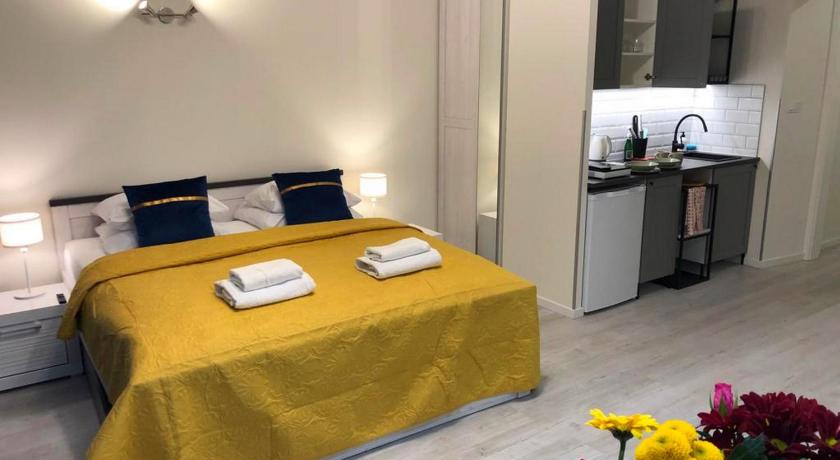
For private apartments, Booking.com and Airbnb list studio apartments in Kazimierz from PLN 130–180 per night, offering a kitchen that reduces food costs considerably. Longer stays of five or more nights can often negotiate a 10–15% discount with hosts directly.
Eating Cheaply Like a Local
Kraków's food scene rewards the curious and punishes the lazy. The restaurants immediately surrounding Rynek Główny charge PLN 45–80 for a main course. Walk five minutes in any direction and the same quality of food costs half as much. Walk to Kazimierz and you eat better food for less money in a setting that feels genuinely lived-in rather than tourist-facing.

Milkbar Tomasza (ul. Tomasza 24, Stare Miasto) is the premier milk bar in central Kraków — a communist-era canteen that has survived because the food is simply good and the prices make it indispensable. A full meal — a bowl of żurek (sour rye soup with sausage and hard-boiled egg), a main course such as kotlet schabowy (breaded pork cutlet with mashed potato and sauerkraut), and a glass of kompot (fruit drink) — costs PLN 17–24. The menu rotates daily and is chalked on the board; point if the language is challenging. Queue with the lunch crowd and do not leave without trying the barszcz if it is on the menu.
Bar Centralny (ul. Szewska 3) is the second milk bar worth seeking out, located on a busy street just south of the Rynek Główny. Slightly larger than Milkbar Tomasza, with a broader menu that runs to gołąbki (stuffed cabbage rolls in tomato sauce), bigos (hunter's stew), and several varieties of pierogi. Full meal PLN 14–22. Lunch rush from noon to 1:30pm brings queues — arrive at 11:45am or after 2pm for a calmer experience.
Pierogarnia restaurants in Kazimierz are the sweet spot between milk-bar basics and tourist-restaurant prices. A plate of ten pierogi — choose from ruskie (potato and cheese), meat, sauerkraut-mushroom, or seasonal specials — costs PLN 25–38 depending on filling. Pierogarnia Mandu on Plac Wolnica in Kazimierz and Pierogarnia Stary Młyn on ul. Szpitalna are both worth a visit. Order the sour cream (śmietana) on the side for dipping.
Obwarzanek sellers are found at blue-and-yellow street carts across the city, concentrated around the Rynek Główny and the main train station. These ring-shaped bread pretzels — a Kraków culinary icon with protected geographical status — cost PLN 2–3 each and come plain, seeded (poppy or sesame), or with salt. Buy one for breakfast walking to a museum. They are the most affordable and culturally authentic snack in the city.
Plac Nowy in Kazimierz is the evening food hub for budget travellers. The round central rotunda sells zapiekanki — open-faced baguette halves loaded with mushrooms, cheese, and various toppings — for PLN 12–18. Order at the windows of the rotunda, take your food to one of the outdoor benches, and eat surrounded by a mix of locals, students, and travellers. This is Kraków street food at its best and cheapest.
Free & Low-Cost Attractions
Kraków charges entry to most of its headline attractions, but the gap between free and paid sights is smaller here than in most comparable European cities — and the free options include some of the most powerful experiences the city offers.

Rynek Główny, the main market square, is free to walk at any hour. At roughly 200 metres per side, it is one of the largest medieval market squares in Europe and has been in continuous use since the thirteenth century. The Cloth Hall (Sukiennice) is free to browse at street level; the upper gallery houses the National Museum's Gallery of Polish Art (PLN 15). The St. Mary's Basilica tower is worth the PLN 15 entry for the views over the square.
Kazimierz itself requires no entry fee. The former Jewish Quarter is best experienced by walking its streets — from ul. Szeroka (the long square at the heart of the old ghetto) to Plac Nowy, through the atmospheric lanes of ul. Józefa and ul. Estery, past the Remuh Synagogue (PLN 10 entry, plus a functioning historical cemetery) and the Old Synagogue (Museum PLN 16). The whole neighbourhood is the attraction; individual buildings are optional extras.
Planty Park encircles the entire Old Town along the line of the demolished medieval city walls — a green ring of park approximately 4 km in circumference that is completely free and wonderful for a morning walk. In spring it fills with chestnut blossoms; in summer it provides shade between sightseeing stops.
Schindler's Factory (ul. Lipowa 4) charges PLN 28 and is one of the most thoughtfully designed historical museums in Poland. The exhibition focuses on the German occupation of Kraków from 1939–1945, using the factory building itself — where Oskar Schindler employed and protected Jewish workers — as the documentary setting. Allow two to three hours. Pre-booking online is strongly recommended in summer; it regularly sells out.
Wawel Castle grounds are free to enter; individual buildings within the complex require tickets. The State Rooms and Royal Private Apartments cost PLN 60 combined, which is the best value single ticket for castle interiors. The Dragon's Den (Smocza Jama) beneath the Wawel hill costs PLN 9 and is a short, atmospheric cave walk that children and curious adults enjoy equally.
Getting Around on a Budget
Kraków is a compact city and most of the major attractions in the Old Town and Kazimierz are walkable from a central base. The Rynek Główny to Wawel Castle is a 10-minute walk; Rynek Główny to Plac Nowy in Kazimierz is 15 minutes on foot. For this reason, many visitors barely use public transport at all during their stay — and that is the cheapest option of all.

When public transport is needed, Kraków's MPK network of trams and buses is affordable and reliable. A single ticket costs PLN 4.40 and is valid for 20 minutes, or PLN 5.40 for a 40-minute ticket that allows transfers. The 24-hour unlimited pass costs PLN 18 and is the best value for arrival and departure days when you are moving with bags. Tickets are purchased from machines at tram stops, from the MPK app, or via contactless card validators on board. Validate immediately — inspectors are active.
Key tram routes for visitors: Tram 3 and Tram 13 run from Kraków Główny (main station) through the city centre; Tram 8 and Tram 10 connect the centre with the Podgórze district and Schindler's Factory area. For Wieliczka Salt Mine, take the MPK bus 304 from Wielicka Street (PLN 4.40, 30 minutes) — far cheaper than the tourist shuttle vans that charge PLN 30–50 per person.
Bolt and Uber operate throughout Kraków at reasonable prices. A cross-city ride typically costs PLN 12–22. For late-night returns from Kazimierz bars, a Bolt to most Old Town or Stare Miasto accommodation costs PLN 10–15. Avoid the horse-drawn carriage rides in the Rynek Główny — they are expensive (PLN 100–200 per ride), slow, and not recommended by Polish animal welfare groups.
Money-Saving Tips
Kraków is already affordable by European standards, but a few deliberate choices reduce costs further without diminishing the experience in any meaningful way.
1. Pre-book Auschwitz-Birkenau online — it is free but must be reserved. Entry to Auschwitz-Birkenau Memorial and Museum is free of charge, but individual visitors must book a time-slot in advance at the official website (auschwitz.org). Walk-in entry is not possible except early in the morning or in the last hour before closing, and only in very limited numbers. Book your slot the moment your Kraków travel dates are confirmed. Guided tours cost approximately PLN 55–80 and provide important context for the sites — consider the official museum guide rather than third-party operators.
2. Buy the Kraków Tourist Card if you plan multiple museums. The 2-day card (PLN 130) covers unlimited MPK transport and free entry to over 40 museums, including Schindler's Factory, the Historical Museum of Kraków, and the Józef Mehoffer Museum. If you are visiting three or more paid museums, the card pays for itself. The 3-day version costs PLN 160 and adds even more value for museum-focused travellers.
3. Eat your main meal at lunch. The lunch menu (zestaw obiadowy) at most Kazimierz and Old Town restaurants offers two or three courses for PLN 25–38, served between noon and 3pm. The same dishes at dinner cost PLN 45–70. Build your day around a substantial midday meal and eat cheaply in the evenings.
4. Drink at Kazimierz prices, not Old Town prices. A craft beer or local Żywiec in an Old Town bar near the Rynek costs PLN 16–24. The same beer in a Kazimierz bar on or near Plac Nowy costs PLN 8–14. The 15-minute walk between the two zones saves PLN 30–40 on a typical evening out.
5. Use the MPK bus to Wieliczka. As noted above, the difference between taking bus 304 (PLN 4.40) and a tourist shuttle van (PLN 30–50) is nearly PLN 90 for two people. Buy the Salt Mine entry ticket online to save further time and avoid the walk-up premium.
6. Walk the Planty and Wawel for free. The Planty ring and the Wawel hill exterior — including the views down to the Vistula — require no admission. Combined with the free Kazimierz street walking, you can spend an entire day experiencing Kraków's most beautiful spaces without spending anything.
7. Book accommodation and transport early for major Polish holidays. Kraków fills entirely during Constitution Day (May 3rd), Corpus Christi (June, date varies), and the Kraków Film Festival (late May). Hostel prices during these weekends can double. Book two to three weeks ahead or plan your visit around them.