
Koh Phi Phi is the Andaman Sea's showpiece — dramatic vertical limestone cliffs rising from emerald waters, the famous Maya Bay of movie legend, and a car-free backpacker village buzzing with energy. The twin bays of Tonsai and Loh Dalum separated by a narrow isthmus create one of Asia's most stunning island settings.
Viewpoints & Tonsai
Morning: Climb to the Phi Phi Viewpoint (฿30, 20-30 minutes uphill through shaded forest). The panoramic view from the top of both bays — turquoise Tonsai Bay on one side and the wide crescent of Loh Dalum on the other, separated by the narrow jungle-covered isthmus — is the island's iconic image reproduced on countless postcards and travel guides. Go early morning to avoid the intense midday tropical heat.
Afternoon: Explore car-free Tonsai village on foot — the narrow lanes are packed with dive shops, tattoo parlors, clothing boutiques, restaurants serving international cuisine, and bars preparing for the nightly beach parties. Long Beach (฿100 by long-tail boat or a scenic 25-minute jungle walk) offers significantly better swimming and snorkeling than the shallow murky Tonsai Bay. Snorkel gear rental is ฿100-150/day available everywhere.
Evening: Loh Dalum Bay transforms dramatically at night into Thailand's most famous beach party. Beach bars set up impressive fire show performers spinning flaming chains, neon UV body paint stations, and affordable drink buckets (฿150-200 each). Sunflower Bar, Slinky Bar, and Ibiza House are the main party venues competing for the nightly crowd. The synchronized fire shows performed on the sand at approximately 9pm are genuinely spectacular.
Maya Bay & Island Tour
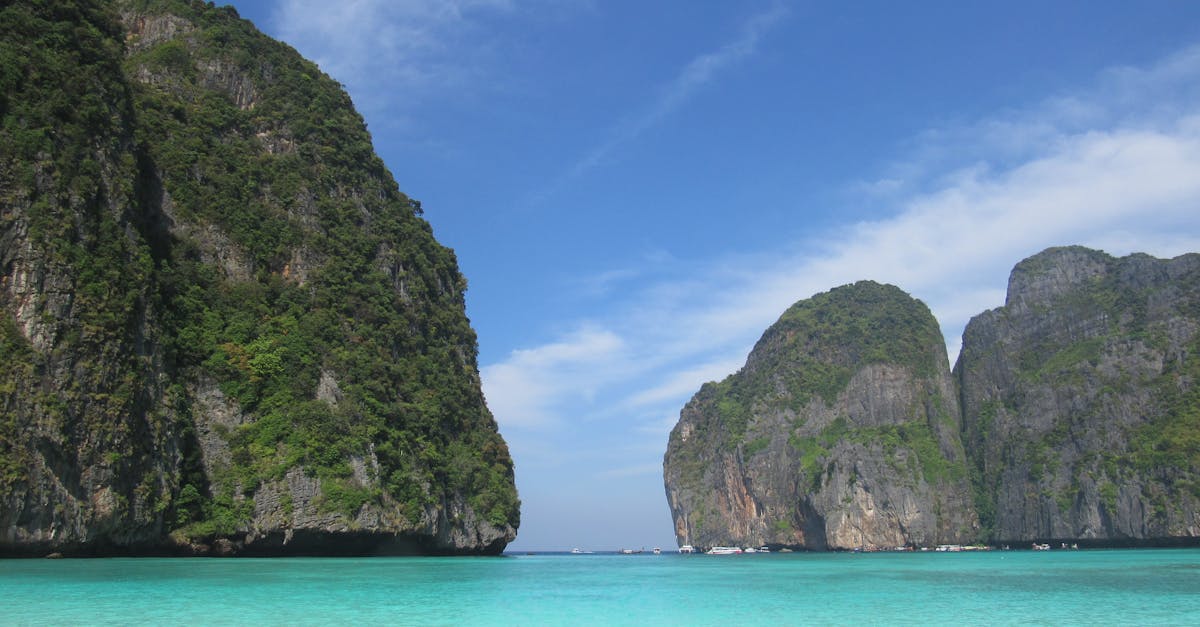
Morning: Long-tail boat tour to Maya Bay (฿400-600 per person for a half-day tour). The bay made famous by Leonardo DiCaprio's film The Beach has reopened with a strict daily visitor cap to protect recovering coral ecosystems. The crystal-clear turquoise lagoon enclosed by sheer 100-meter limestone cliffs is genuinely as stunning as the movie portrays. Arrive by 7-8am on the first boats before the crowds build. Swimming is restricted to a designated area.
Afternoon: Continue to Pileh Lagoon — a hidden turquoise pool completely enclosed by towering vertical cliffs where you can swim and float in impossibly clear water that glows electric blue-green in the sunlight. Monkey Beach has resident macaques on the shore (keep all food and bags secured and zipped). Snorkeling at Shark Point in the channel between the islands reveals blacktip reef sharks resting in the sandy shallows below the boats.
Evening: Sunset from the western beach bars of Loh Dalum. Relax Bar perched on the rocks at the far western end has the best unobstructed sunset viewing position on the island. Fresh seafood barbecue stalls along the Tonsai pier area sell charcoal-grilled king prawns (฿200), whole red snapper (฿150), and squid (฿100) at fair market prices without the resort-level markup charged at some beachfront restaurants.
Diving & Bamboo Island
Morning: Scuba dive trip to Bida Nok and Bida Nai pinnacles (฿2,500-3,500 for 2 boat dives with all equipment). These submerged limestone pinnacles host resting leopard sharks on sandy ledges, tiny pygmy seahorses clinging to sea fans, and walls covered in vibrant soft corals in every color. Visibility regularly reaches 20+ meters during peak season. PADI Open Water certification courses run ฿12,000-15,000 over 3-4 days with guaranteed small groups.
Afternoon: Visit uninhabited Bamboo Island (Koh Phai, ฿400 by long-tail boat, 45 minutes north). This flat coral island has a complete ring of pristine white sand and warm, clear shallow water perfect for easy snorkeling over healthy reef directly from the beach. It is the polar opposite of Phi Phi's frenetic energy — pure undeveloped tropical serenity with no permanent structures. Pack lunch, water, and sun protection as there are absolutely no facilities.
Quick Tips
- Book accommodation and Maya Bay boat tour tickets well in advance during the December-February peak season — the small island gets extremely crowded and guesthouses fill completely.
- There are no cars, no roads, and very few ATMs on Phi Phi — bring enough Thai baht cash for your entire stay. Some businesses accept card payments but often with 3-5% surcharges.
- Ferries from Phuket (฿300-400, approximately 2 hours) and Krabi (฿300-400, 1.5 hours) run multiple times daily during high season. Book return ferry tickets immediately on arrival to secure your preferred departure time.
Practical Information
Koh Phi Phi is reached exclusively by ferry from Phuket (2 hours), Krabi (1.5 hours), and Koh Lanta (1 hour). There is no airport, no bridge, and no vehicle ferry. The island is entirely pedestrian — long-tail boats serve as water taxis to beaches (฿100-300 per trip). Medical facilities are basic — serious injuries require evacuation by speedboat to Phuket or Krabi hospitals. Bring prescription medications and basic first aid supplies.
Best Times to Visit & Budgeting
Peak season (November-April) brings calm seas, clear diving visibility, and full party energy. The southwest monsoon (May-October) brings rain, rougher seas, and reduced ferry schedules, but also dramatically lower prices and a quieter atmosphere that some visitors strongly prefer. Accommodation ranges from ฿400/night basic fan rooms in Tonsai to ฿5,000+ beachfront resorts on Long Beach. Book at least 2 weeks ahead for December-February visits.
| Travel Style | Daily Cost (฿) |
|---|---|
| Budget | ฿800-1,200 |
| Mid-Range | ฿2,000-4,000 |
| Luxury | ฿5,000-10,000 |
Getting Around
Koh Phi Phi Don is one of the few places in Southeast Asia where the complete absence of motor vehicles is not a quirky limitation but an absolute joy. The entire inhabited isthmus — roughly 500 metres wide and 1.5 kilometres long — is navigated entirely on foot through a labyrinthine grid of narrow concrete lanes. From the moment the ferry drops you at Tonsai Pier, every destination in the village core is reachable within 15 minutes of walking.
For beaches and attractions beyond the main isthmus, long-tail boats are the island's taxis, buses, and tour operators rolled into one. Private long-tail charters depart from Tonsai Pier and the beach throughout the day — typical fares are ฿100–200 per person to Long Beach, ฿200–300 to Monkey Beach, and ฿400–600 for a half-day island tour including snorkeling stops at Pileh Lagoon and Viking Cave. Always confirm whether the quoted price is per person or for the whole boat before boarding.
Speedboat transfers offer a faster alternative for island-hopping: Koh Lanta is reachable in about 45 minutes (฿600–900), and direct speedboats to Railay Beach in Krabi run approximately 90 minutes (฿700–1,000). These are more expensive than the regular ferry but significantly more flexible on departure times. During high season (December to February), book these in advance through your guesthouse or one of the many tour agencies on the main walking street.
Navigating Tonsai village itself requires accepting that it was never designed for efficiency. The lanes behind the main drag twist unpredictably, change names without notice, and frequently dead-end at someone's kitchen. This is not a problem — it is the entire point. Getting pleasantly lost in search of a recommended restaurant is a Phi Phi rite of passage. Offline maps (Maps.me or Google Maps offline download) are genuinely useful for orienting yourself, especially arriving after dark on the evening ferry when the lanes feel even more labyrinthine.
Departing the island requires planning. Ferry tickets back to Phuket, Krabi, or Koh Lanta should be purchased on the day you arrive — high-season boats sell out completely, sometimes days in advance. The travel agencies clustered near Tonsai Pier sell tickets for all operators. Morning ferries (7am–9am) tend to have the best availability; the popular afternoon departures (2pm–4pm) book out fastest.
Seasonal Highlights
Koh Phi Phi's calendar divides cleanly into three distinct periods, and when you visit shapes the trip more dramatically than on most other Thai islands. Getting this decision right is the single most important piece of planning you'll do before booking.
High season runs from November through April. The northeast monsoon keeps the Andaman Sea calm, diving visibility reaches 20-25 metres, and Maya Bay glows in the sharp tropical light that makes every photo look like a travel magazine cover. Loh Dalum's beach parties are at full energy — the fire shows run nightly, the bars stay open past 3 AM, and the island operates at its loudest and most photogenic. The trade-off is relentless crowds: longtails queue outside Maya Bay from 8 AM, guesthouses fill weeks in advance in December and January, and popular dive sites have 15-20 divers per session. Book accommodation at least 3 weeks ahead for Christmas and New Year, when prices double and availability evaporates.
Shoulder season — October and late April to early May — is frequently the best combination of conditions and value. Seas are calm enough for boat trips, dive visibility holds at 15-20 metres, guesthouses drop prices by 30-40%, and the tour group density drops noticeably. October specifically offers a sweet spot: the worst of the southwest monsoon has passed, waters are warm and clear, and the island has a relaxed pace that feels earned rather than enforced by weather.
Low season from May through September brings the southwest monsoon with significant rainfall and sea swells that can cancel Maya Bay boat tours for days at a time. Several guesthouses and dive operations close entirely in July and August. Ferries from Phuket and Krabi run reduced schedules and are occasionally suspended during strong swells. For determined budget travellers, accommodation can be found from ฿250-300 per night at this time — roughly half the dry-season rate — and days between storms are genuinely beautiful: the water turns a deeper green, the island empties to a fraction of its usual population, and the jungle comes alive.
The Loi Krathong festival (typically November, timing follows the lunar calendar) adds a genuinely special dimension to a Phi Phi visit. Locals and tourists float krathong (small lotus-shaped boats with candles) from Tonsai Beach after dark, and the sight of hundreds of flickering lights drifting across the dark bay toward the limestone cliffs is one of those unscripted travel moments that stays with you long after the Instagram version fades.
Explore more Koh Phi Phi travel guides →