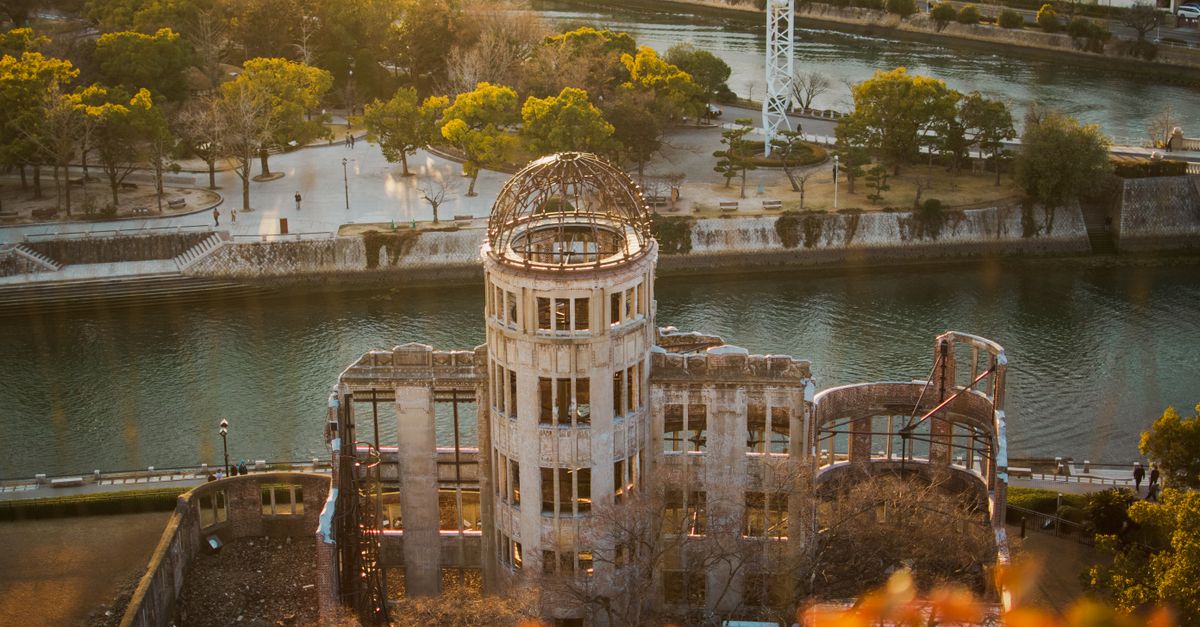
Hiroshima is defined by August 6, 1945, and the weight of that definition is appropriate and necessary — the Peace Memorial Park and Museum are among the most important historical sites in the world, and visiting Hiroshima without engaging with its atomic bombing history would be a form of evasion. But Hiroshima is also a river city of 1.2 million people with seven river deltas, an island prefecture extending across the Seto Inland Sea, a cuisine built on oysters and Hiroshima-style okonomiyaki, and a rebuilt cityscape that contains extraordinary postwar modernist architecture that tells the story of a city's reconstruction with its own architectural language.
The Hiroshima that most visitors miss is Hiroshima Prefecture — the Seto Inland Sea island network that includes Ōkunoshima (the rabbit island, a former chemical weapons production site now overrun with feral rabbits), the art island of Inujima, and the Shimanami Kaidō cycling route through six islands to Ehime Prefecture on Shikoku. It's also the city's own neighborhoods: the Shukkei-en garden, the Hiroshima Castle reconstruction, and the specific shotengai shopping streets of Nagarekawa that have continued operating through atomic bomb, reconstruction, and the 21st century without reinventing themselves for tourists.
These ten hidden corners of Hiroshima acknowledge the city's peace heritage while exploring everything beyond it that makes Hiroshima genuinely worth a longer stay than the single day that most guided tours allocate.

1. Ōkunoshima (Rabbit Island)
Ōkunoshima is a 0.7-sq-km island in the Seto Inland Sea, 3 km off the coast of the Takehara area of Hiroshima Prefecture. From 1929 to 1945, it was Japan's primary chemical weapons production facility — producing mustard gas, phosgene, and other agents used against Chinese forces in World War II. The facility was classified so secret that the island was deleted from official maps. After the war, the chemical weapons were destroyed and the rabbits kept as test subjects were released on the island. Their descendants now number approximately 900, having expanded into every available habitat on the island's gentle slopes. The combination of a former chemical weapons factory and an island teeming with approachable wild rabbits constitutes one of the most unexpectedly charming travel experiences in Japan.
The rabbits at Ōkunoshima are not domesticated — they're wild rabbits that have lost their fear of humans due to decades of hand-feeding by visitors. They will climb on your lap if you sit on the ground with pellets, follow you along the trail, and congregate in swarms around anyone carrying a convenience store salad bag. The coexistence of this rabbit idyll with the concrete ruins of the chemical weapons factories — the gas storage tanks, the generator buildings, the research facility shells — creates a landscape of deliberate historical irony that Japan hasn't entirely resolved but hasn't obscured either.
Access from Hiroshima Station: JR Kure Line to Tadanoumi Station (1 hour, ¥950), then ferry to Ōkunoshima (12 minutes, ¥310 return). Ferries run approximately every hour. Bring rabbit food from the mainland (hay pellets from a pet shop or the vegetables sold at the ferry terminal shop) — the island's one hotel sells pellets but at higher prices. Day visitors without hotel reservations are welcome; the island's single walking trail circuit takes 1 hour. The Poison Gas Museum (¥100 entry, open 9 AM to 4 PM) documents the chemical weapons production with unusual directness for a Japanese historical museum.
Staying overnight at the休暇村 (Kyuukamura) government resort on the island allows the early morning experience when the rabbits emerge from their burrows at dawn and the island is illuminated in horizontal Seto Inland Sea light. The resort charges ¥8,000-15,000 per night per person including meals — not cheap, but the quality of an Ōkunoshima sunrise from the island's western beach, with the rabbit population active around you and the Seto Inland Sea islands visible as silhouettes in the morning haze, is genuinely difficult to find elsewhere in Japan.
2. Shukkei-en Garden's Weekly Tea
Shukkei-en (縮景園) is one of Hiroshima's finest surviving traditional structures — a 1620 daimyo strolling garden that survived the atomic bomb at 1.4 km from the hypocenter because a waterway and the garden's own topography deflected the blast wave. The garden was heavily damaged but not destroyed; restoration was completed in 1951. What makes Shukkei-en extraordinary is not the fact of its survival but the quality of its design: the garden's name means "compressed scenery" and the design creates the illusion of lakes, mountains, and valleys at miniature scale, using borrowed views of the surrounding hills to extend the composition beyond the garden's actual boundaries.
The garden's tea house (ちゃかしつ) offers a formal matcha tea ceremony experience every weekend from 11 AM to 3 PM at ¥500 per person. The ceremony is conducted in a traditional sukiya-style tea house overlooking the garden's central lake — a 30-minute experience that includes the preparation of one bowl of usucha (thin matcha) and a wagashi sweet from a local confectioner. This is not a tourist performance; it's conducted by certified tea ceremony practitioners from the Urasenke school, the principal Japanese tea tradition. The quality of the tatami room, the garden view through the shoji screen, and the ceremony itself is comparable to tea ceremony experiences costing three times the price in Kyoto.
Shukkei-en is a 15-minute walk from Peace Memorial Park, or accessible by streetcar (Hiroshima Electric Railway, Line 9, Shukkei-en-mae stop). Entry ¥260. Open Tuesday to Sunday, 9 AM to 5 PM (6 PM in summer). The garden is best in early April (cherry blossoms over the lake), November (autumn maple reflections), and June (iris at the wetland section). The combination of the garden's peaceful atmosphere with the knowledge of the atomic bombing 79 years ago and the garden's survival at 1.4 km from the hypocenter gives Shukkei-en a specific emotional charge that the Peace Park's more direct memorial approach does not provide but that is equally valid.
The Hiroshima Prefectural Art Museum is immediately adjacent to Shukkei-en and shares its garden atmosphere. Entry ¥510. Open Tuesday to Sunday. The permanent collection emphasizes Hiroshima regional art and a surprisingly strong Western European collection (acquired through postwar cultural diplomacy). The Dali painting in the European collection — an unexpected masterwork in a provincial Japanese museum — is the kind of art surprise that Hiroshima's under-touristed museum circuit produces regularly.
3. Hiroshima Castle's Inner Moat
Hiroshima Castle's reconstruction (completed 1958, concrete, but faithful to the original 1589 design in external form) is a standard historical site with a good museum in the lower floors. The element almost no visitor spends time with is the inner moat and the traditional garden that surrounds the castle's main keep on three sides. This moat garden — maintained by the city as a public park but enclosed within the castle walls and accessible only through the castle museum entry or through the adjacent Gokoku Shrine grounds — provides the best possible view of the castle reconstruction in its relationship to the water and the mountains behind it.
The Gokoku Shrine (護国神社) within the castle grounds is a Shinto war memorial shrine of the type that are politically complicated in Japan. This one is particularly interesting historically: it was established in the castle grounds specifically to be close to Hiroshima's military garrison in the early 20th century when Hiroshima was one of Japan's principal military headquarters cities. The shrine survived the atomic bomb (at approximately 900 metres from the hypocenter) because the thick castle walls provided protection. The combination of a Shinto shrine that survived the atomic bomb with a reconstructed castle that did not (the original was destroyed; this is a postwar reconstruction) provides a specific meditation on what survival and reconstruction mean in Hiroshima's context.
Hiroshima Castle is accessible from the Peace Memorial Park by streetcar (Line 2 or 6 to Kamiyacho, then 10-minute walk) or a 25-minute walk along the Motoyasu River. Entry to the castle museum ¥370. Open daily 9 AM to 6 PM. The Gokoku Shrine is free, open from dawn. The moat garden walk takes 30 minutes. The castle reconstruction's roof view (accessible from the 5th floor observation deck) provides the best elevated view of Hiroshima's seven-river delta geography that explains the city's physical form as a series of narrow islands between river channels.
The castle's surrounding area in the Moto-machi and Nakamachi neighborhoods contains the densest concentration of Hiroshima's postwar modernist architecture: the 1950s-60s reconstruction buildings that form the rebuilt urban fabric of the city center. This architecture is not individually spectacular but as an ensemble — a complete postwar urban grid built from nothing in fifteen years — it's historically and architecturally significant in a way that Japan's preservation culture has not yet recognized. Walking the blocks around the castle and looking at the reconstruction-era buildings before they're demolished for contemporary development is a time-limited activity in any city, and Hiroshima's postwar buildings are increasingly reaching the demolition age.
4. Nagarekawa's Traditional Shotengai
Nagarekawa is Hiroshima's traditional entertainment district, east of the Hondori shotengai and south of the Aioi Bridge. The district's history includes the prewar entertainment quarter, the atomic bomb destruction, and the postwar reconstruction of its hostess bars, izakaya, and late-night food establishments in a pattern that has changed relatively little since the 1970s. The shotengai (covered shopping street) at the district's core is not the tourist-facing Hondori but the smaller lanes between Nagarekawa-dori and the Kyobashi River — these lanes have independent coffee shops, traditional sake bars, and the specific Hiroshima seafood-focused izakaya that serve oysters in multiple preparations alongside the city's Saijo sake (from Hiroshima's sake-producing town of Saijo, 25 km east).
The Saijo sake connection to Nagarekawa is the food culture thread worth following. Saijo is one of Japan's three great sake-producing towns (alongside Fushimi in Kyoto and Nada in Kobe), and Hiroshima's izakaya culture is built around the specific style of Hiroshima sake: a softer, slightly sweeter style developed in the early 20th century using the specific soft water of the Hiroshima watershed. The bars in Nagarekawa that stock the Saijo brewery lineup (including the producers Kamotsuru, Hakubotan, and the small-batch Imada Shuzo) are making a specific regional pairing argument — Saijo sake with Hiroshima oysters — that is as valid as any wine-with-food pairing and less well-known internationally.
Nagarekawa is accessible from Hatchobori Station (streetcar) or a 10-minute walk east from Peace Memorial Park. The shotengai lanes are most active from 6 PM to midnight. No entry fees anywhere. The best single experience in Nagarekawa is the standing oyster bar near the Kyobashi River (several operate, look for the propane grill smoke and the shell piles) that grills fresh Hiroshima oysters to order: three oysters for ¥700, eaten standing at the counter with a glass of Saijo sake. The oysters are from the Hiroshima Prefecture oyster farms (which produce 60% of Japan's oyster supply); the combination is straightforwardly wonderful.
The Nagarekawa district's buildings include several 1950s-era bar and restaurant buildings that retain their original postwar facade design — wooden lattice fronts, neon characters in period fonts, the specific proportions of Japanese entertainment district architecture from the reconstruction decade. These buildings are being replaced rapidly; a walk through Nagarekawa today documents a vanishing visual culture of postwar Hiroshima that in twenty years will be primarily photographic evidence.
5. Miyajima Island at Low Tide
Miyajima Island's Itsukushima Shrine and its floating torii gate are on every Japan travel shortlist. The floating effect depends entirely on tide — at high tide, the torii appears to float on the sea surface; at low tide, it stands on exposed sandflats that visitors can walk on. The tourist guidance emphasizes the high-tide floating image. The low-tide experience — approaching the torii on foot across the wet sand, placing your hands on the barnacled cedar posts of an 800-year-old gate that the sea covers daily — is the more unusual and in many ways more interesting encounter. You're touching the specific thing itself, not its photographic reflection in water.
The low-tide period on Miyajima is also when the island's deer population moves to the shore to graze on the exposed seaweed and shellfish. Miyajima's deer are technically wild sika deer but have been so long habituated to human presence that the boundary between wild behavior and scavenging has blurred considerably. At low tide near the torii, you can have deer standing in the ankle-deep water beside you eating shellfish while you photograph the gate — a combination of wildlife, sacred architecture, and tidal ecology that high-tide island photography cannot provide.
Miyajima is accessible from Hiroshima Station by JR train to Miyajima-guchi (26 minutes, ¥410), then ferry (10 minutes, ¥200 one way, or free with JR Pass). The island has multiple hiking trails beyond the standard tourist zone: Mt. Misen summit (535 metres, ropeway from ¥1,800 return or 1.5-hour hiking trail) provides views of the Seto Inland Sea from the highest point on the island. The Daisho-in Temple complex at the mountain's base is the most extensive Buddhist temple compound on Miyajima and is substantially less crowded than the Itsukushima Shrine area at the pier.
The Miyajima morning without the ferry crowds (first and second ferry arrival waves, approximately 8-10 AM) is accessible only by staying on the island overnight. The island's ryokan and minshuku accommodations (¥15,000-25,000 per night including dinner and breakfast in the kaiseki style) provide access to the island before and after the day-visitor ferries. The dawn at Miyajima, with deer on the beach and the torii in the first light, is the image that professional Hiroshima photographers use as their reference for the island. It is available to any overnight guest regardless of camera quality.

6. Shimanami Kaidō Cycling (Day Section)
The Shimanami Kaidō is a 70-km cycling route crossing six islands between Onomichi in Hiroshima Prefecture and Imabari in Ehime Prefecture on Shikoku, via bridges that cross the Seto Inland Sea channels. It's described in most sources as a full-day or multi-day cycling experience. The section from Innoshima to Ōshima (approximately 40 km, 4-5 hours at tourist cycling pace) is accessible as a day trip from Hiroshima by beginning on the ferry from Onomichi to Mukaishima and cycling the first four islands before returning by bus to Onomichi. This section has the best concentration of cycling infrastructure, the finest island farm-and-sea landscape, and the highest proportion of citrus orchards (Seto Inland Sea islands specialize in mikan tangerine and yuzu) relative to riding time.
The Seto Inland Sea landscape from the Shimanami Kaidō cycling path is the definitive visual argument for Japan's inland sea geography: the water between the islands is calm enough to be blue-green rather than grey, the islands are steeply domed with forest, and the scale of the bridge engineering (the Tatara Bridge over the Omishima channel is the longest cable-stayed bridge in the world by single-span length) is comprehensible from a bicycle level in a way that no road vehicle provides. Cycling the bridges at bicycle pace makes the structural scale physical rather than abstract.
Bicycle rental from Onomichi Cycle Station at the Onomichi ferry terminal (¥1,500 per day, electric assist ¥1,800). The ferry from Onomichi to Mukaishima is ¥110. The cycling route is marked with blue road paint and the characteristic 青い自転車 (blue bicycle) signage throughout. No off-road sections. The recommended day circuit returns by highway bus from Hakata or Setoda on Ikuchijima Island (¥860, 1 hour) to Onomichi.
The islands of the Shimanami Kaidō have their own hidden gems within them: Ikuchijima's Kosanji Temple (a private temple complex built by a factory owner as tribute to his mother, featuring reproduction of famous Japanese temple architecture from across Japan in a single compound — eccentric, elaborate, and oddly charming), the Omishima Shrine (which holds the largest collection of ancient armor in Japan, dedicated to the Oyamazumi war deity), and the Ōshima island's agricultural landscape of mikan orchards that produce the sweetest January-harvest tangerines in western Japan. A cycling day on the Shimanami Kaidō is rich enough to provide a month's worth of content at any riding speed.
7. Hondori's Underground Level
The Hondori shotengai (covered shopping street) is Hiroshima's main commercial pedestrian street — well-known, well-maintained, retail-focused. The underground shopping arcade running below and parallel to it (Shareo Underground Shopping Center) is the working commercial level of Hiroshima's street retail: the restaurants and food shops that serve the lunch crowd from the surrounding office buildings, the convenience stores that the neighborhood operates by, and the specific atmosphere of an underground Japanese shopping center that has been operating since 1974 without significant redesign. The time capsule quality of the Shareo's interior design — the 1970s tile patterns, the orange-toned lighting, the specific proportions of a Japanese bubble-economy retail space — is the kind of thing that will be renovated out of existence within a decade.
The Shareo's food floor (basement two) serves a lunch circuit that the surrounding Hiroshima office community relies on: teishoku (set lunch with small rice, miso soup, main dish) restaurants serving Hiroshima specialties — the local small whitefish (gobie) fried set, the oyster rice set, the hiroshima noodles (Onomichi ramen, a soy-and-fish-oil broth style specific to the Onomichi port city 80 km east). ¥700-950 per lunch set. Open 11 AM to 2:30 PM only. The restaurants are filled with office workers; finding a seat before noon is easier than after.
Access Shareo from the multiple street-level entrances along Hondori or from Hatchobori subway station. No entry fee. The shopping arcade connects multiple stations and extends significantly beyond the Hondori section in directions that reward exploration: east toward Kamiyacho and the prefecture government buildings, west toward the river crossings, and the underground passages to the JR Hiroshima Station that exist but are less obvious than the surface route. Navigating Hiroshima's underground pedestrian system for a morning is itself a spatial challenge and education in how the city routes its daily traffic below the surface during rain.
The specific shop that makes the Shareo worth a deliberate visit is the Hiroshima specialty confectionery shop in the central section that sells momiji manju — the maple-leaf-shaped wagashi that is Hiroshima's most famous souvenir. The in-store baking demonstration (visible through the glass wall) shows the production of these individually hand-baked items; the shop version is slightly more expensive than the Miyajima tourist version but is baked on the premises, which makes the anko (red bean paste) filling properly warm. ¥150 per piece, or ¥800 for a box of six.
8. Peace Memorial Museum's Architecture
The Hiroshima Peace Memorial Museum is visited by everyone. The architecture of the museum complex — designed by Kenzo Tange in 1955 as part of the first comprehensive Peace Memorial Park plan — is noticed by almost nobody specifically, even though it's one of the defining works of postwar Japanese modernism. Tange's design placed the museum building on pilotis (stilts) to create an open view through the ground floor toward the Atomic Bomb Dome across the park. This axis — from the museum, through the Memorial Cenotaph, across the river, to the dome — is a designed sightline that makes the peace memorial experience a spatial and architectural experience as well as a historical one.
The pilotis form is significant: raising the building off the ground level creates a symbolic lifting of the museum above the everyday, while keeping it connected to the earth through the columns. Tange was simultaneously developing his theory of Japanese modernism during this period — the park and museum design are the first major public statement of his architectural philosophy, which argues that traditional Japanese wooden column construction can be translated into reinforced concrete modernity. The pilotis are concrete pillars in the position of traditional wooden column placements.
Walk the peace park's central axis deliberately: from the museum south entrance, through the Cenotaph arch (which frames the dome across the river), across the Motoyasu Bridge (reconstructed in the original 1945 position), and up to the Atomic Bomb Dome. This 400-metre sequence is an architectural promenade designed to produce a specific emotional and spatial experience of loss, commemoration, and the relationship between history and landscape. Most visitors walk it in the opposite direction (dome to museum) and at varying speeds that obscure the designed sequence.
The Children's Peace Monument at the park's northeastern corner is the Sadako memorial — the origami crane girl who has become the global symbol of the atomic bomb's human cost. The monument receives millions of paper crane contributions annually from around the world, stored in glass cases around the base. The volume of the contributions — entire cubic metres of folded paper cranes from school groups, peace organizations, and individual visitors — is itself a quantitative expression of the monument's global reach. The Sadako story, familiar from children's literature in many languages, needs no recitation here. The monument's function as a global convergence point for peace expression is observable in the contributions and in the visitors who bring them.
9. Tomonoura Fishing Village
Tomonoura is a preserved Edo-period fishing town on the Tomo Peninsula, 90 km east of Hiroshima in Fukuyama City. It was the setting for Hayao Miyazaki's Ponyo and has attracted pilgrims from the Studio Ghibli community, but the town's own identity is the more important story: Tomonoura maintained its role as the principal port for tidal current waiting in the Seto Inland Sea through the entire Japanese maritime history from the Nara period onward. Ships would anchor in Tomonoura's protected bay and wait for the correct tidal current to transit the Seto Inland Sea westward — a wait that could last several days and that made the town prosperous as a provisioning port.
The Tomonoura townscape preserves the physical result of this maritime prosperity: merchant house facades from the Edo period (1603-1868) in excellent condition along the main port street (Omotemachi-dori), a harbor front with original stone sea walls and warehouse buildings, and multiple sake breweries that supplied the waiting ship crews with the specific mild sake that Tomonoura is credited with inventing (Homeishu, a medicinal herb sake from the 17th century). The breweries are still operating; the Morishita Brewery at the northern end of town is the most important historically and welcomes visitors for tasting from 10 AM.
Tomonoura is accessible from Hiroshima by JR San'yo Line to Fukuyama (45 minutes, ¥1,490 with Shinkansen), then bus to Tomomachi (30 minutes, ¥290). Alternatively, a 90-minute express bus from Hiroshima Bus Center. The town has day-trip level tourist infrastructure but overnight accommodation at the traditional minshuku (¥8,000-12,000 per night including meals) allows the early morning experience: the port at dawn when the small fishing fleet departs, the sea fog on the Seto Inland Sea, and the 17th-century sake warehouses visible from the quayside before any other visitors arrive.
The Sensuijima Island visible from Tomonoura's port (10-minute ferry, ¥240 return) was used as a quarantine island for returning travelers through the Edo period and contains ruins of the quarantine facility alongside a small island ecology of unusual botanical richness — sub-tropical plants in a temperate Japanese sea environment. The island can be walked in 2 hours on a path that passes the quarantine ruins, a small lighthouse, and the western cliff with views toward Shikoku. The combination of Tomonoura and Sensuijima makes a complete day from Hiroshima that covers maritime history, preserved Edo townscape, and Seto Inland Sea island ecology.
10. Hiroshima Prefectural Museum of History (Onomichi)
Onomichi is 80 km east of Hiroshima — the starting point of the Shimanami Kaidō and a city of considerable independent interest as one of the best-preserved Meiji and Taisho-era port town landscapes in western Japan. The hillside of Onomichi is covered with the specific architectural vernacular of a prosperous late 19th-century trading port: two-story merchant houses with kura (fireproof storehouses) behind them, wooden warehouses at the port level, and a temple circuit (25 temples in 2.5 km along the hillside — the Onomichi Temple Walk) that provides both religious landscape and the finest elevated view of the Seto Inland Sea available from any accessible hilltop in western Honshu.
The Onomichi Temple Walk, starting from Jōdo Temple (浄土寺, established 616 CE — one of the oldest Buddhist temple sites in Hiroshima Prefecture) and running east along the hillside, passes through all 25 temple precincts in a 2-hour walk that feels simultaneously meditative and aesthetically overwhelming. The variety of temple architecture — Zen, Pure Land, Tendai, Rinzai — across fifteen centuries of construction produces an architectural vocabulary unique to this specific hillside. The cats of Onomichi (the city is famous for its free-roaming cat population) are concentrated on this hillside, lounging on temple stone walls and following visitors with proprietary confidence.
From Hiroshima Station, the JR San'yo Line to Onomichi takes 1 hour 20 minutes (¥1,490). The temple walk begins from the ropeway (Chosanji Ropeway, ¥280 one way) or from the Jōdo Temple at the walk's eastern end. Walking downhill from ropeway to Jōdo is the most comfortable direction. The Cat Museum in Onomichi's central commercial area is exactly what it sounds like and is beloved by the cat-loving visitor demographic. The Onomichi City Museum of Art (contemporary exhibition program, entry ¥600) is in a hillside building with the finest framed views of the Seto Inland Sea from any museum in Hiroshima Prefecture.
The Onomichi port food culture is the last element worth mentioning: the specific ramen style of Onomichi (called onomichi ramen — a shoyu-based broth with chicken and pork stock, topped with a slab of pork back fat that melts into the broth and a specific small clam variety called asari) is found only in Onomichi and differs from Hiroshima city ramen in every dimension. The restaurants Shukaen and Oomishima Ramen on the port-level commercial street serve the definitive versions at ¥750-850 per bowl. This is the correct breakfast or lunch for a Shimanami Kaidō cycling day that begins in Onomichi.