
Hamburg is Germany's second-largest city and one of the least understood by visitors who pass through it on the way to somewhere else. The port city has a specific character — mercantile, pragmatic, proud, and architecturally extraordinary — that the tourist circuit barely touches. The Reeperbahn gets the column inches; the Alsterlake, the Speicherstadt warehouse district, and the Elbphilharmonie concert hall constitute a city worth three days of serious attention. The neighbourhood of Ottensen has more good restaurants per square kilometre than any comparable space in northern Germany.
This guide is for the traveller who wants to understand why Hamburg has more millionaires per capita than any other German city and why that wealth has produced extraordinary public infrastructure rather than merely expensive private consumption. It's for someone who wants to eat properly in a city that takes fish seriously (the North Sea is an hour away), walk the lake promenade at dawn, and understand that the Speicherstadt brick warehouse district is one of the finest pieces of industrial architecture in Europe and is now a UNESCO World Heritage Site.
Hamburg has a northern directness that some visitors find cold. Persist: the city opens up with familiarity, and the Hamburger take on warmth — precise, genuine, understated — is one of the most reliable forms of hospitality in Germany.
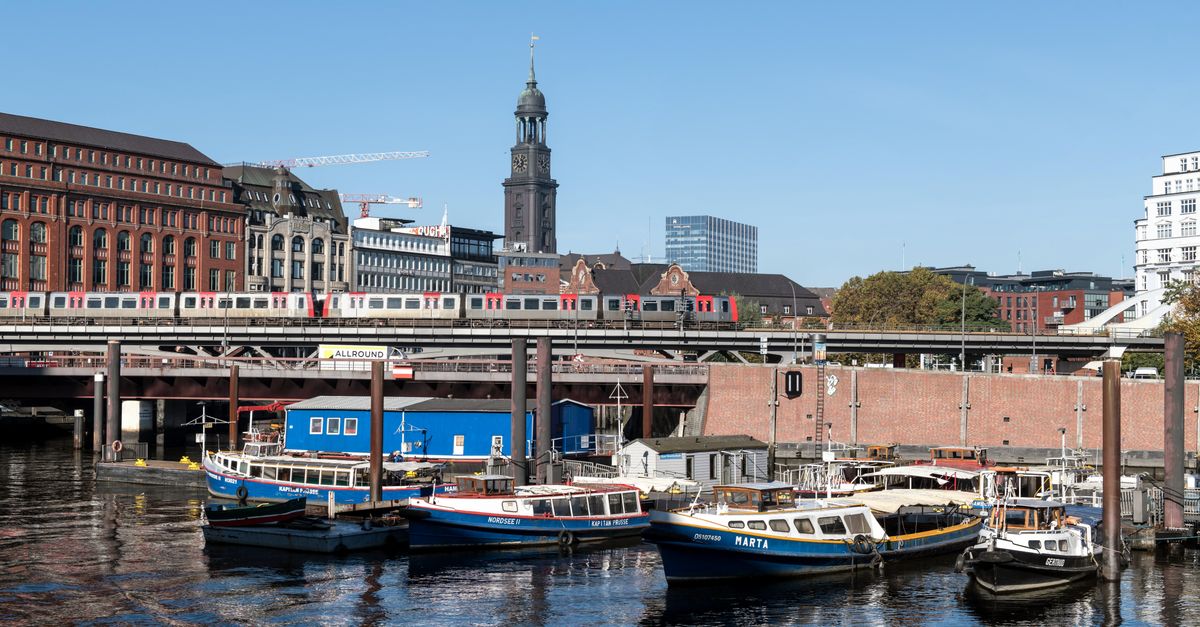
1. Speicherstadt and Hafencity Morning Walk
The Speicherstadt — the great 19th-century warehouse complex built on oak piles between the Elbe branches when Hamburg became a free port in 1888 — is one of the finest examples of industrial architecture in the world. Seven floors of red brick warehouses, their facades decorated with Gothic tracery and their hoisting beams still protruding from the upper floors, extend over seven parallel channels for 1.5 kilometres. At 7am, before the museum visitors arrive, the brick facades are reflected in still water and the light on the Gothic ornamental details is extraordinary.
The Speicherstadt was built to store the commodities of Hamburg's colonial trade: coffee, tea, spices, tobacco, raw rubber, and oriental carpets. The warehouses were designed so that goods could be transferred directly between barges and storage without touching the taxable surface of the city — a customs-free zone within the port. Today the complex houses museums (the Miniaturwunderland — the world's largest model railway, €20 admission, book well ahead; the Hamburg Dungeon; and several small specialist museums), design studios, and media companies.
Walk from the central station east along Am Sandtorkai and Poggenmühlen — the main Speicherstadt channel walk. The best early-morning access is from the Deichtorplatz end (southern entry), where the first canal channel begins. The UNESCO heritage designation covers both Speicherstadt and the adjacent Kontorhausviertel — the 1920s–30s expressionist office building complex (including the extraordinary Chilehaus, 1924, shaped like the bow of a ship) that is immediately north of the warehouse district.
The HafenCity development immediately east of Speicherstadt is Hamburg's most ambitious urban project — a 157-hectare development on former port land that is still being completed and will eventually be Europe's largest inner-city development project. The Elbphilharmonie concert hall (Herzog & de Meuron, 2017) is its centrepiece: a glass wave sitting atop a 1960s warehouse, visible from throughout Hamburg. The public plaza at the top of the old warehouse (free elevator access, open daily 9am–midnight) gives one of the finest views of the Elbe, the harbour, and the city from any publicly accessible point in Hamburg.
2. Elbphilharmonie and the Elbe Promenade
The Elbphilharmonie is the finest new concert hall in Europe — its main auditorium (the Grand Hall, 2,100 seats) uses a "vineyard" seating design surrounding the stage on all sides, with no seat more than 30 metres from the conductor. The acoustic quality is extraordinary; so is the building. The exterior (Herzog & de Meuron, with 1,100 bespoke glass panels that each have a slightly different wave profile) catches the Hamburg light differently at every hour. The public Plaza between the old warehouse and the glass upper section is free and gives the finest harbour view in the city.
The building opened in January 2017, €789 million over budget and years late, and immediately became Hamburg's most significant cultural institution. The opening season concert (Dirigent: Thomas Hengelbrock, Beethoven's 9th) was broadcast live to 100,000 people on the Elbe promenade below. Tickets for regular concerts range from €15 (second gallery) to €180 (premium stalls). The Hamburg NDR Symphony Orchestra and Hamburg Philharmoniker are the resident ensembles; international soloists and orchestras perform regularly. Check the Elbphilharmonie website for the programme and book tickets weeks in advance for major concerts.
The free Plaza visit: take the Elbphilharmonie entrance on Am Kaiserkai, where a free time-slot ticket can be collected at the entrance (book online, always free). The curved escalator ("The Tube") ascends 82 metres to the Plaza level in an extraordinary visual experience. The Plaza itself offers 360-degree views: north over the Speicherstadt and the city, south over the Elbe and the port, east and west along the river where the container ships pass at extraordinary proximity. Allow 30 minutes. The restaurant in the building (the Störtebeker) is expensive; the café is reasonable.
The Elbe promenade from the Elbphilharmonie westward to the Fischereihafen and beyond is one of the finest riverside walks in Germany — the scale of the port infrastructure, the enormous container ships passing metres from the pedestrian path, the smell of the North Sea, and the view of the HafenCity development rising behind. The walk to Övelgönne (3 kilometres west) passes the old wooden steamship collection (volunteer-maintained historic vessels, free to observe, occasional open days) and leads to the finest riverside beach in Hamburg.
3. Ottensen Neighbourhood
Ottensen, in the Altona district west of the city centre, is Hamburg's most interesting food neighbourhood — a former industrial and working-class district that has developed over the past two decades into a concentration of independent restaurants, coffee shops, organic markets, and the kind of neighbourhood culture that makes a city genuinely liveable. The Saturday morning market on the Ottenser Marktplatz is the finest neighbourhood market in Hamburg; the independent restaurants on Bahrenfelder Straße and Fischers Allee are consistently among the finest per-price-bracket in the city.
The neighbourhood's character is shaped by its history: Ottensen was incorporated into Hamburg only in 1938 and retains its own identity within the larger city. The architectural mix is extraordinary — 19th-century workers' housing alongside Art Nouveau apartment buildings alongside the occasional remaining industrial structure. The Fabrik cultural centre (a 19th-century metal factory converted to a concert hall, theatre, and café in 1971) is the neighbourhood's cultural anchor, booking a programme of jazz, world music, and theatre that is consistently excellent.
Take S-Bahn to Altona station and walk west along Max-Brauer-Allee to Ottensen — about 10 minutes. The Saturday market (7am–2pm) covers the Ottenser Marktplatz and the surrounding streets with fresh produce stalls, excellent Turkish and Kurdish grocers, and the fine bakers and cheese sellers that characterise a mature neighbourhood market. The coffee shop Elbgold has its flagship here — single-origin coffees from the Hamburg roaster that supplies most of the city's serious coffee shops. The natural wine bar Hola Tata on Bahrenfelder Straße is the finest in Altona.
The Altonaer Museum, 10 minutes from the Ottensen market on Museumstraße, covers the history and folk culture of northern Germany and Schleswig-Holstein — fine ship models, historical fishing equipment, and an extraordinary folk art collection. Admission €9.50; open Tuesday to Sunday 10am–5pm. The museum café is excellent and serves a Sunday brunch that is popular with the neighbourhood. The Altona Fish Auction Hall (Fischauktionshalle, 1895), on the Elbe shore 20 minutes south of Ottensen, is Hamburg's finest remaining example of late 19th-century industrial architecture — now an event venue, open to visitors Sunday mornings (8am–noon) when an informal music and coffee gathering takes place.
4. Alster Lakes at Dawn
Hamburg is built around two lakes — the Binnenalster (inner Alster) and Aussenalster (outer Alster) — that were formed by damming the Alster river in the 13th century. The outer Alster is 1.6 kilometres wide and 2.3 kilometres long, surrounded by the finest villa architecture in Hamburg, and at dawn — with mist on the water and the villa facades catching the first light and the swans moving between the sailing club pontoons — it is one of the most beautiful urban lake scenes in Europe. The 7.5-kilometre promenade circuit of the outer Alster is one of the finest free walks in Hamburg.
The Alster sailing culture is central to Hamburg identity — the Outer Alster has 14 sailing clubs and year-round regattas. In summer the lake is covered in white sails; in winter the Sunday morning runners share the promenade with dog walkers and occasional cross-country skiers (in exceptional winters the lake freezes, and the ice skating tradition is one of the city's most beloved seasonal spectacles). The promenade is at its finest in October when the beech trees on the eastern shore are in full autumn colour.
Access the Alster from the city centre at the Jungfernstieg (the promenade at the edge of the inner Alster) — walk north along the lakeside. The circuit of the outer Alster takes 1.5–2 hours at a comfortable pace. The eastern shore passes through the villa quarter of Winterhude and Uhlenhorst — Hamburg's most expensive residential neighbourhoods, with extraordinary examples of Historicist, Jugendstil, and 1920s brick architecture. The canoe and paddleboat hire at the southern end of the outer Alster (April–October) costs €12–20 per hour depending on the craft.
The Alster boat services (Alsterdampfer) run circular tours of the inner and outer Alster from the Jungfernstieg pier (€20 return, approximately 1 hour). These are not hidden but the experience of seeing Hamburg's villa architecture from the water — the neoclassical villas, the garden party atmosphere of the sailing clubs, the view back toward the city centre with the five great church spires (Hamburg's famous "silhouette of Hamburg") in the background — is genuinely revelatory. The sunset cruise in October is one of the finest ways to spend an evening in Hamburg.

5. Schanzenviertel Neighbourhood
The Schanzenviertel ("Schanze") is Hamburg's left-wing, alternative neighbourhood — the quarter around the Schulterblatt street and the Rote Flora (a squatted opera house that has been occupied since 1989 and remains contested political territory in the city). The neighbourhood has the finest street art in Hamburg, the best independent bookshops and record stores, the most interesting food market (the Isemarkt, Tuesday and Friday mornings, extends 1.3 kilometres under the elevated U-Bahn line), and a bar and restaurant culture that is younger and more affordable than Ottensen or the Neustadt.
The Isemarkt (open Tuesday and Friday 8:30am–2pm) is Hamburg's finest regular outdoor food market — 300 stalls of organic produce, flower sellers, cheese makers, fish mongers, and the stalls of individual small farmers from the Hamburg metropolitan area extending beneath the elevated railway arches. The market has been here since 1900 and the continuity of some vendor families (now third and fourth generation) gives it a social depth that newer markets lack. The covered sections under the railway arches sell spices and dried goods from a dozen countries.
Take U-Bahn (U3) to Feldstraße or Sternschanze. The Schanzenviertel is immediately south of the station. Schulterblatt is the main commercial street; Schanzenstraße is the café and bar street. The Alma Hoppes Lustspielhaus theatre on Ludolfstraße is the finest small theatre in Hamburg — a 200-seat space booking excellent contemporary drama, comedy, and cabaret in German. The bar Astra Stube on the same street is the Schanze institution for cold Astra beer (Hamburg's working-class beer brand) and cheap bar food.
The Rote Flora, a partially ruined opera house on Schulterblatt that was occupied by activists in 1989 to prevent its demolition and redevelopment, is Hamburg's longest-running political squat and cultural centre. The building hosts concerts, political meetings, and cultural events and is occasionally open for visits during public events (check the Rote Flora website). The building's exterior — covered in political murals and protest banners — is itself one of the finest pieces of political public art in Germany, and the surrounding plaza is the gathering point for Hamburg's left-wing political demonstrations.
6. Kunsthalle Hamburg
The Hamburger Kunsthalle is one of the finest art museums in Germany — a complex of three connected buildings spanning a century of museum architecture, holding an extraordinary collection from medieval panel paintings through the Dutch Golden Age, Caspar David Friedrich (the finest collection in Germany), the Hamburg Impressionists, and German Expressionism to the present. The museum complex includes the original 1869 Gründerzeit building, the 1920s gallery wing, and the 1996 Galerie der Gegenwart (contemporary gallery) by O.M. Ungers. Combined, it constitutes one of the most complete art history surveys in northern Germany.
The Caspar David Friedrich collection is the reason to make the trip if you know only one reason — the museum holds seven of Friedrich's finest works, including The Wanderer Above the Sea of Fog (1818), widely considered the defining image of German Romanticism. The work is smaller than photographs suggest (94 × 74 cm), the details more extraordinary — the precise rendering of the granite rocks, the atmospheric haze of the valley below, the figure with his back turned. Standing in front of it in a quiet gallery on a weekday morning is one of the finest single art experiences available in Hamburg.
Find it on Glockengiesserwall 5, adjacent to the central station. Open Tuesday to Sunday 10am–6pm (Thursday until 9pm). Closed Monday. Admission €16; free first Thursday of each month 5–9pm. The first-Thursday free evening attracts Hamburg's arts community — a genuinely local crowd using the museum as a social space. The museum restaurant (Café Liebermann, named for the German Impressionist Max Liebermann) is one of the finest museum cafés in Hamburg.
The Galerie der Gegenwart (1996 annex by Ungers) holds the contemporary collection — the German Expressionism section is the finest in any single German museum outside Berlin: Beckmann, Kirchner, Nolde, Heckel. The connection from the main building through the underground passage to the Galerie creates an extraordinary experience of art history continuity — walking from the 19th-century Historicism of the main building through increasingly recent work. Allow four hours for the full complex. The collection is too important to rush.
7. Portuguese Quarter and the Neustadt
The Neustadt (New Town) south of the inner Alster has a hidden quarter that most visitors miss entirely — the "Portuguese Quarter" around the Steinstraße, a small area of North African and Portuguese spice traders and their accompanying restaurants, cafés, and provisions shops that has been here since the 18th century when the Hamburg port trade with Lisbon and Morocco was at its peak. The quarter has a single street character that is unlike anything else in northern Germany: the smell of coffee and cumin and the sound of Portuguese in the cafés.
The area around Steinstraße and Rödingsmarkt has several excellent Portuguese restaurants and a remarkable spice merchant (Gewürzhaus Hamburg, Neuer Wall 14) that stocks hundreds of spices at professional quality. The Ratsweinkeller, in the basement of the 1886 City Hall (Rathaus), is Hamburg's finest traditional wine restaurant — an extraordinary barrel-vaulted space serving German and international wines with traditional Hamburg cuisine. The city wine list includes wines from the Ratskeller's own vineyard on the Moselle river, purchased in the 17th century. A glass of their own Riesling: €6–8.
The Hamburg Rathaus (City Hall, 1897) itself is one of the finest examples of Wilhelmine historicist architecture in Germany — a massive neo-Renaissance palazzo with 647 rooms, a 112-metre tower, and an interior of extraordinary decorative ambition. Free tours of the public rooms run Monday to Friday at 10:15am, 11:15am, and 3:15pm; Saturday and Sunday at 10:15am and 1:15pm. The Kaisersaal (Emperor's Hall) is the most impressive space — a 46-metre long reception room with massive painted allegorical murals and carved oak panelling. Tours are €4 per person.
The Nikolaifleet, a narrow medieval canal running east from the Rathausmarkt to the Speicherstadt, is the finest surviving piece of Hamburg's medieval canal network — the old Hamburger merchant houses on the north bank date from the 17th and 18th centuries and give the best sense of what the city looked like before the great fire of 1842. The Trostbrücke (Consolation Bridge) at the western end is the oldest bridge in Hamburg still carrying traffic. The evening light on the canal, seen from the Trostbrücke with the cathedral tower behind, is one of Hamburg's finest views.
8. St Pauli and Landungsbrücken
St Pauli is Hamburg's most famous neighbourhood — the Reeperbahn, the port quarter, the football club. But the neighbourhood is also the location of the Landungsbrücken (the pier complex on the Elbe), the tunnel under the Elbe (the Alter Elbtunnel, built 1911, still operational and accessible free to pedestrians), and the extraordinary fish market on Sunday mornings. These represent a St Pauli completely apart from the Reeperbahn tourist economy — a working port quarter where the North Sea trade has shaped everything.
The Alter Elbtunnel descends 24 metres beneath the Elbe in an extraordinary Jugendstil shaft — tiles, ornamental ironwork, the original 1911 lifts that lower pedestrians and cyclists to the tunnel level. The tunnel is 426 metres long and crosses from St Pauli to the industrial south bank. It is free for pedestrians and cyclists and offers the most extraordinary way to cross the Elbe — the curved roof of the tunnel, the smell of the river above, the extraordinary engineering of walking under a major shipping channel. Open Monday to Friday 5am–8pm; weekends 7am–8pm.
The Sunday morning Fischmarkt (Fish Market) at Grosse Elbstraße 9 (5am–9:30am, April–October; 7am–9:30am in winter) is Hamburg at its most characteristic: fish, fruit, vegetables, flowers, and the extraordinary theatrical auctioneers who sell eels and mackerel at amplified volume while playing to the crowd. The market has been running since 1703. The surrounding bars and music venues are open from 4am for the market workers and the last people from the Saturday night scene who haven't yet gone home. The atmosphere at 7am — the harbour smells, the beer, the North Sea fish, the morning light — is unlike anything else in Germany.
The Hamburg Museum (Museum für Hamburgische Geschichte, Holstenwall 24) covers the full history of the city from its founding in the 9th century to the present — the model of Hamburg's medieval city before the 1842 fire is extraordinary; the reconstruction of the harbour at the turn of the 20th century at 1:25 scale is the finest model in any German city history museum. Admission €9.50; Tuesday to Sunday 10am–5pm. The collection includes the largest model train layout in northern Germany (the city's S-Bahn network at 1:87 scale, covering an entire room) and an extraordinary collection of historical ships' models.
9. Altonale and the Park Fiction
Park Fiction, on the Elbe bank above the St Pauli Hafenstraße, is one of Germany's most interesting examples of participatory public space design — a rooftop park created by residents and artists over fifteen years of campaigning, with bizarre and beautiful installations including a Floating Carpet, a Palm Beach, an Astroturf living room, and a flying carpet. The park overlooks the Elbe and the extraordinary port crane landscape on the south bank. It's a small, strange, genuinely wonderful public space that belongs to the neighbourhood rather than the city planners.
The project began in the 1990s when the city proposed selling the Hafenstraße waterfront for luxury development. The neighbourhood responded by designing their own park through a participatory process and occupying the space. After ten years of negotiation, the city eventually built the park to the residents' design. The result is one of the finest examples of community-led public space design in Germany — not a conventional park but a series of individual fantasy installations connected by paths above the Elbe. The view of the port from the Floating Carpet is extraordinary.
Walk south from the Reeperbahn along Simon-von-Utrecht-Straße to the Hafenstraße, then follow the staircase up to the park. Free, open at all hours. The park is most beautiful at sunset when the port cranes on the south bank are silhouetted against the orange sky and the Elbphilharmonie is visible downstream. The Hafenstraße houses below the park (squatted since 1981, Hamburg's most famous radical housing project) are still occupied and the facade murals are the finest political art in the neighbourhood.
The Altonale Festival (late June–mid July) transforms the Altona and Ottensen neighbourhoods into the largest city festival in northern Germany — street performances, open-air concerts, film screenings, and the remarkable Parade of Cultures (Altonale Kulturmarkt) that closes the festival. The festival is free and genuinely diverse — an excellent window into Hamburg's cultural self-understanding. Check the Altonale website for the annual programme, which is released in early spring.
10. Bergedorf and the River Bille
Bergedorf, 20 kilometres southeast of central Hamburg (reachable by S-Bahn in 30 minutes), is Hamburg's most historically intact district — a medieval town centre with a 14th-century castle (the Bergedorfer Schloss, the only medieval castle remaining within Hamburg municipal limits), a traditional market town character, and the most beautiful historic market square in the Hamburg metropolitan area. The river Bille flows through the district, passing the Rieck House (an open-air museum of historic Hamburg farmhouses) and continuing into the Vierlande agricultural region south of the city.
The Bergedorfer Schloss (14th century, admission €5, open Tuesday to Sunday 10am–5pm) is Hamburg's most overlooked museum — the small collection focuses on local and regional history but the building itself is extraordinary: a well-preserved medieval water castle with round towers and a moat. The surrounding Bergedorf old town has a weekly market (Tuesday and Friday, 8am–1pm) and a character that is entirely different from the urban Hamburg of the central districts.
The Vierlande countryside immediately south of Bergedorf is a landscape of extraordinary character — polder farmland reclaimed from the Elbe marshes in the medieval period, now producing the market garden vegetables and strawberries that supply Hamburg's markets. Cycling through the Vierlande on summer mornings, past asparagus fields and cherry orchards, with the church spires of the old Vierlande villages visible above the flat landscape, is one of the finest cycling experiences in the Hamburg metropolitan area. Bicycles can be hired at Bergedorf station.
The Rieck House at Curslack, 5 kilometres south of Bergedorf by bicycle, is the finest example of a traditional Vierlande farmhouse — a 16th-century half-timbered building preserved as a museum with original furnishings and working farm outbuildings. Admission €4; open May–October Tuesday to Sunday 10am–5pm. The surrounding Curslack village has several excellent farm shops selling direct produce — strawberries in June, asparagus in April and May, and the extraordinary apple varieties of the Altes Land (the apple orchard region west of Hamburg) from September. A day cycling through Bergedorf and the Vierlande, ending with a farm shop strawberry feast, is one of Hamburg's finest seasonal experiences.


