
The Galápagos Islands' tourism model is one of the most controlled in the world: 97% of the archipelago is national park, visitors must be accompanied by certified naturalist guides in all park zones, and the famous sites (Tortoise Center on Santa Cruz, South Plaza, Española) are experienced in organized groups that move through the landscape on time-limited itineraries. This control is ecologically necessary and generally successful — the wildlife densities remain extraordinary. But within the controlled system, there are genuinely hidden experiences: the inhabited island communities that most cruise passengers never visit, the snorkeling spots outside the main park trails, the local-life side of the islands that exists around and behind the tourism infrastructure.
This guide is for travelers who are staying on the islands (rather than on a cruise ship) and who want to engage with the Galápagos beyond the standard naturalist tour circuit. The inhabited islands — Santa Cruz, San Cristóbal, Isabela, and Floreana — each have communities with distinct characters, local restaurants, dive operators who can access different sites, and social lives that tourists typically bypass in their haste to get to the next wildlife encounter. The wildlife is everywhere and always worth seeing; the local culture adds a dimension that pure wildlife tours cannot provide.
Getting around: inter-island speedboats (lanchas) connect the inhabited islands for USD 30–35 per person each way. The park entry fee is USD 100 per person, paid at the airport on arrival. Most snorkeling and diving is organized through local operators on each island — prices are regulated and comparable. Budget USD 150–250 per day for accommodation, food, and activities on Santa Cruz; slightly less on the less-developed islands.
1. Isabela Island's Flamingo Lagoon and Wall of Tears
Isabela — the largest island in the archipelago by area and home to five active volcanoes — receives a fraction of the visitors of Santa Cruz and is the most geologically dramatic island in the Galápagos. The flamingo lagoon at the edge of Puerto Villamil is a shallow brackish lake ringed by mangroves where dozens of flamingos feed year-round, accessible by a 20-minute walk from town on a well-marked trail. The Wall of Tears (Muro de las Lágrimas), 6 kilometers west of Puerto Villamil, is a wall built by prisoners of the penal colony that operated here until 1959 — thousands of cubic meters of lava rock stacked by forced labor in a genuinely grim piece of history. The surrounding landscape, with marine iguanas, crabs, and finches everywhere, provides a strange accompaniment to the historical site.
Isabela's five volcanoes (Sierra Negra is one of the largest calderas in the world, and Wolf Volcano last erupted in 2015) make it the most geologically active island and the best place to understand the ongoing formation of the Galápagos from below. The island's isolation from the main tourist circuit means that the wildlife encounters here — marine iguanas along the roadside, penguins at the harbor (Galápagos penguins, the only penguins north of the equator), giant tortoises in the wild — have a quality of surprise that the more managed Santa Cruz sites cannot provide.
Take a lancha from Puerto Ayora (Santa Cruz) to Puerto Villamil (Isabela) — USD 30–35 each way, 2–2.5 hours. The flamingo lagoon trail is free to walk from the edge of the town. The Wall of Tears access (by bicycle rented in town, USD 5/day) requires a permit to enter the park zone (included in the USD 100 entry fee).
Lancha: USD 30–35. Bicycle rental: USD 5/day. Budget USD 60–80 for an Isabela day trip including transport and meals in Puerto Villamil (the town's restaurants serve fresh fish at USD 8–15 per plate — significantly less expensive than Santa Cruz). Overnight accommodation in Isabela: USD 40–80/night for good guesthouses.
2. Snorkeling at La Lobería on San Cristóbal
San Cristóbal, the easternmost island and the Galápagos's administrative capital, has a snorkeling site that most cruise itineraries miss entirely: La Lobería, 3 kilometers west of Puerto Baquerizo Moreno (San Cristóbal's town), is a beach covered in sleeping sea lions with an offshore snorkel site where sea lions, marine turtles, and reef fish interact in clear water with excellent light. The access is free (public beach), the snorkel gear rental in town costs USD 5–8, and the walk along the coastal path from town is itself excellent for bird observation. This is the most accessible high-quality snorkeling in the inhabited island zone without a guided tour or boat.
San Cristóbal has a different character from Santa Cruz: it's less focused on tourism as a primary economic driver (it's the administrative capital, with government services, a university, and a military base as its other economic anchors) and feels more like a functioning Ecuadorian community with tourism attached rather than a tourism infrastructure with community attached. The local restaurants and evening social life reflect this character.
Walk or take a taxi from Puerto Baquerizo Moreno to La Lobería (taxi USD 2–3, or 40-minute coastal walk). Snorkel gear rental in town: USD 5–8. Bring your own gear if possible — rental quality is variable. The beach is public and free; the park zone access requires the park entry fee (already paid on arrival).
Snorkel rental: USD 5–8. Taxi: USD 2–3. Budget USD 20–30 for a La Lobería morning including transport, snorkeling, and a post-snorkel lunch in Puerto Baquerizo Moreno (USD 8–15 for fresh fish and rice). The town's main waterfront promenade has sea lions sleeping on the park benches — literally — which is the most unscripted wildlife encounter available in the islands.
3. Puerto Ayora's Fish Market and Friday Night Local Life
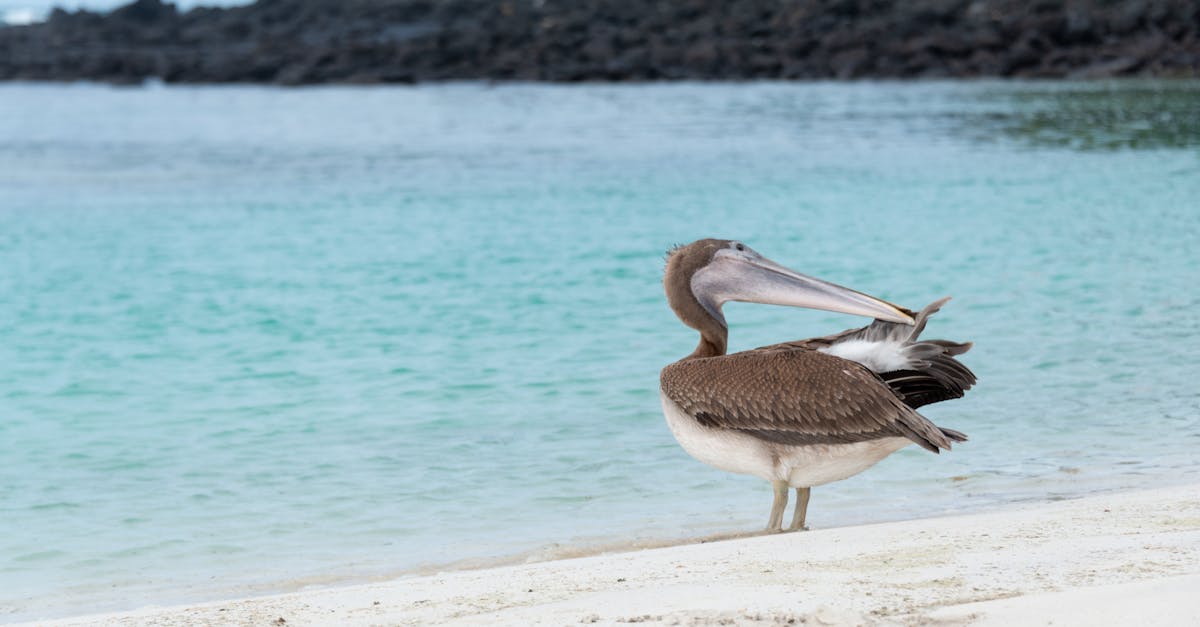
The fish market at the Puerto Ayora waterfront (Santa Cruz) operates each morning when the fishing boats arrive, and the process of offloading the catch is attended by brown pelicans, frigate birds, sea lions, and marine iguanas competing for scraps with zero inhibition. This is the daily reality of coexistence between the island's human community and its wildlife — not staged for tourism but simply what happens when you unload fish in the Galápagos. Friday evenings on the Puerto Ayora waterfront are when the island's community gathers in the Plaza Charles Darwin and the surrounding restaurants for the week's social culmination — an ordinary small-town evening that happens to occur surrounded by one of the world's great wildlife reserves.
The tension between the 30,000 residents of the inhabited Galápagos islands and the conservation requirements of the national park is one of the most complex issues in the archipelago's management. The residents are Ecuadorian citizens with rights to their communities; the park is a world heritage site with global significance. The fish market and Friday evening social life represent the community's claim on its own territory — the human dimension of the islands that ecological tourism tends to subordinate or ignore.
The fish market is on the Puerto Ayora waterfront near the Charles Darwin Station entrance — simply arrive between 7–9am when boats are unloading. No ticket required; maintain distance from the wildlife. Friday evening social life is centered on the Plaza Charles Darwin and the Calle Binford restaurant strip — from about 7pm.
Fish market: free to observe. Friday evening: budget USD 15–25 for dinner and drinks at one of the Puerto Ayora restaurants. Local restaurants (as opposed to those on the main tourist strip) serve fresh fish for USD 8–12; ceviches at the market stalls for USD 4–6. The local-community end of Avenida Baltra has better prices and more authentic food than the tourist waterfront restaurants.
4. Floreana Island's Post Office Bay and Pink Beach
Floreana — a small island 40 kilometers south of Santa Cruz, accessible by a 2-hour lancha — is the archipelago's most historically layered island and one of its least visited by casual tourists. The Post Office Bay has a barrel that has served as an informal mail drop for sailors since the 18th century — people leave postcards and letters addressed to various destinations; passing ships and subsequent visitors deliver them by hand if they're heading the right way. The tradition is still practiced. The island's pink sand beach (Punta Cormorant, accessed by a guided visit) is pink from the accumulation of red olivine crystals in the coral sand. The flamingo lake behind the beach holds the largest flamingo population in the Galápagos. Floreana's human history is also remarkable: a 1929 German colonization attempt involving several eccentric settlers ended in mysterious deaths and disappearances.
Floreana's mystery history — the "Galápagos Affair" involving a baroness, three German families, and several suspicious deaths in the 1930s — has been documented in books and a documentary. The island's current community of about 100 residents are descendants of some of the original settlers; a family-run guesthouse and the Post Office Bay tradition create an unusual tourism experience that combines wildlife, history, and living community in ways no other island offers.
Book a day trip or overnight to Floreana through agencies in Puerto Ayora, Santa Cruz (day trip USD 80–100 per person including lancha and guide, with Post Office Bay and Punta Cormorant flamingo lake visits included). Overnight stays at the small family-run guesthouse: USD 50–80/night with meals.
Day trip: USD 80–100 per person all-inclusive. Overnight: USD 50–80/night. Budget USD 100–120 for a comprehensive Floreana day trip. The post office barrel visit and the act of leaving and taking postcards is one of the most atmospheric maritime tradition experiences available in the Pacific.
5. Las Grietas: Santa Cruz's Hidden Snorkel Canyon
Las Grietas — a fracture in the basalt east of Puerto Ayora, accessible by water taxi (USD 1 each way) and a 15-minute walk through cactus scrub — is a narrow slot canyon of brackish volcanic water, 20 meters long and several meters deep, with walls of striated lava and populations of fish that congregate at the transition between fresh spring water and salt tidal water. Swimming and snorkeling Las Grietas is one of the Galápagos's finest and least-marketed experiences: the canyon's geometry produces extraordinary light at midday, the fish life includes parrotfish, damselfish, and the occasional small shark, and the entire experience costs USD 2 round-trip for the water taxi. Arrive at 7am before the main visitor boats bring day-trip groups from Santa Cruz hotels.
Las Grietas is a geologically created slot canyon — the fracture in the volcanic basalt that forms the canyon walls was produced by cooling and contraction of the lava as it solidified. The combination of fresh groundwater seeping through the rock and tidal salt water creates the brackish environment that supports an unusual fish community adapted to the mixed salinity.
Take the water taxi from Puerto Ayora's municipal pier to the Angermeyer Point landing (USD 1 each way, runs every 30 minutes from 7am). Walk 15 minutes northeast to Las Grietas — the path is marked. Bring snorkel gear (available for rent in Puerto Ayora, USD 5–8) and water shoes. Open daily 6am–6pm.
Water taxi: USD 1 each way. Snorkel rental: USD 5–8. Entry to the area: included in park fee. Budget USD 15–20 for the morning including transport and gear. The Angermeyer Waterfront Inn adjacent to the water taxi landing serves good breakfast ($8–15) — combine for a pleasant morning ritual on consecutive days.
6. Kayaking Around Santa Cruz's Mangroves
The mangrove channels on the northern and western shores of Santa Cruz island — accessible by kayak from Puerto Ayora's harbor or from El Garrapatero beach — provide access to wildlife in the tidal zone that boat-based tours cannot navigate. Paddling quietly through the mangroves in a kayak allows close approach to sleeping sea turtles, the brown pelicans nesting in the mangrove canopy, and the marine iguanas that swim between the roots in unexpectedly graceful strokes. Kayak rental from several operators in Puerto Ayora: USD 15–25 for a half-day. This is the most physiologically active Galápagos experience and the most animal-encounter-dense for the money.
The Galápagos mangrove ecosystem is one of the most biodiverse in the eastern Pacific — the mangrove forests on Santa Cruz, Isabela, and San Cristóbal provide nursery habitat for marine species including sea turtles, sharks, and dozens of fish species. Paddling through rather than motoring through provides the minimal disturbance that allows genuine behavioral observation rather than the flight response that engine noise triggers.
Kayak rental from agencies on the waterfront near the municipal pier in Puerto Ayora: USD 15–25 for a half-day rental with paddle and life jacket. The mangrove channels on the eastern harbor entrance are accessible directly from the pier; the more extensive western channels require a 20-minute paddle out of the harbor. Go with a buddy — solo kayaking in tidal channels has obvious safety considerations.
Kayak rental: USD 15–25 half-day. Budget USD 25–35 for a half-day kayak experience including any snack. Early morning (7–10am) kayaking provides the calmest water and the most active wildlife. The sea turtle encounters in the shallow mangrove bays are among the most memorable experiences available in the islands.
7. Giant Tortoise Habitat in the Wild (El Chato Reserve)
The most famous Galápagos giant tortoise experience is the Charles Darwin Research Station in Puerto Ayora — legitimate but essentially a zoo. The El Chato Tortoise Reserve in the highlands of Santa Cruz island (20 kilometers from Puerto Ayora by taxi) provides encounters with wild giant tortoises in their natural habitat: wallowing in muddy pools, moving through highland pasture, and occasionally blocking the trail. In the wet season (December–April), tortoises concentrate at lower elevations; in the dry season they move uphill. Either way, stumbling upon a 200-kilogram tortoise moving through the morning mist of the highland farm country is a more authentic and more emotionally affecting experience than any captive facility can provide.
Galápagos giant tortoises are among the world's longest-lived vertebrates — individuals in captivity have reached 170 years, and wild animals may live longer. The species nearly went extinct in the 19th and early 20th centuries through a combination of hunting (sailors took tortoises as live food supply) and introduced predators (rats, pigs, and goats decimated eggs and hatchlings). The current population recovery is one of the conservation success stories of the 20th century.
Take a taxi from Puerto Ayora to the El Chato entrance (USD 15–20 round-trip with waiting time; negotiate a 2-hour wait for the full highland visit). Entry to El Chato: USD 3 community fee. The highland is also home to the Galápagos rain forest and the lava tubes — large lava tubes accessible on foot from El Chato (additional USD 3 entry to the tubes).
Taxi: USD 15–20 round-trip. El Chato: USD 3. Lava tubes: USD 3. Budget USD 25–35 for the complete highland morning. Morning visits (8–11am) provide the best tortoise activity and the most atmospheric mist-cloud conditions in the highland farm country. Bring rain gear — the highlands can receive sudden rain.
8. Deep Sea Snorkeling at Gordon's Rock (San Cristóbal)
Gordon's Rock — actually León Dormido (Sleeping Lion) on the standard map — is a two-spire volcanic rock rising 148 meters from the sea off the northeastern coast of San Cristóbal. The site is one of the best dive sites in the Galápagos and is also accessible for advanced snorkelers willing to manage current: hammerhead sharks congregate in schools of hundreds in the deeper water channels, Galápagos sharks patrol the walls, sea lions come to investigate snorkelers at close range, and manta rays occasionally pass through. Certified dive operators in Puerto Baquerizo Moreno organize trips to the rock for USD 80–100 per person including equipment. Snorkeling the surface is USD 40–60 through the same operators.
Gordon's Rock is considered one of the top 10 dive sites in the world by multiple ranking systems, primarily for the hammerhead shark concentrations that are most reliable in the cooler water months (June–November). The site requires a guided tour and is not accessible independently, but the guide requirement is appropriate here — the currents are genuinely challenging and the site is 2 kilometers offshore.
Book through dive operators in Puerto Baquerizo Moreno — Dive and Surf Club and Wreck Bay Dive Center are both established operators. Full-day trips include 2 dives (or snorkel alternatives) and leave at 8am. Cost: USD 80–100 for diving, USD 40–60 for snorkeling. Book at least one day in advance; spots fill in high season.
Diving: USD 80–100 per person. Snorkeling: USD 40–60. Budget USD 100–120 for the full Gordon's Rock experience including equipment rental and guide. Seasickness medication recommended — the crossing can be rough in the afternoon. Bring dry bag for electronics and valuables on the boat.

9. Isabela's Sierra Negra Volcano Hike
Sierra Negra volcano on Isabela island has one of the world's largest volcanic calderas — 10 kilometers across, 100 meters deep, and still hydrothermally active, with fumaroles visible from the caldera rim. The hike to the rim (8 kilometers round-trip from the Puerto Villamil trailhead, 4–5 hours) is entirely within the national park and requires a certified guide (hired through operators in Puerto Villamil, USD 30–40 per person including guide). The caldera view and the walk along the rim to the Volcán Chico secondary cone — where recent (2005) lava flows have created a lunar landscape of black basalt — is one of the most geologically dramatic experiences available in the Galápagos without specialized equipment.
Sierra Negra last erupted significantly in 2005, when lava flows reached the sea and temporarily threatened the Galápagos penguin colony at the island's northern coast. The recent flows are visible from the caldera rim as darker, more oxidized surfaces within the older lava sea. Walking on this active volcanic landscape connects the abstract geological knowledge of how the Galápagos formed to a visceral physical experience of the same process.
Organize through operators in Puerto Villamil (where tour agencies and guides are available on the main street). The trailhead is accessible by a 30-minute taxi ride from town (USD 10–15 round-trip with waiting time for the guide to organize). Bring 3 liters of water, rain gear, and warm layers — the rim sits at 1,490 meters and cloud cover is frequent.
Guide fee: USD 30–40 per person. Taxi: USD 10–15 round-trip. Budget USD 50–60 for the full Sierra Negra hike. This is moderately strenuous but within the capacity of any reasonably fit hiker — the altitude is manageable coming from Quito acclimatized, though more challenging for visitors arriving directly from sea level.
10. Eating Local: Puerto Ayora's Fishermen's District
Puerto Ayora's tourist waterfront restaurants charge USD 15–25 for fish dishes that are served for USD 8–12 in the fishermen's district restaurants on the western side of the harbor — the end of town nearest the fish market. These restaurants — without names on signs, identified by plastic chairs and ice-cold drinks — serve the daily catch of the local fishing fleet: fresh tuna, grouper, and the Galápagos specialty, the pesca del día (catch of the day) grilled with garlic and served with rice and patacones (fried plantain). The quality of fish in the Galápagos is exceptional by definition — it came out of the ocean this morning and is served the same afternoon.
The Galápagos fishing community has a complicated relationship with the conservation system that protects the archipelago — fishing is permitted in designated zones, but the restriction on commercial fishing within the park boundaries has significantly reduced the historical fishing grounds. The current fishing community is smaller than its historical predecessor, and the tension between livelihoods and conservation is a constant presence in island politics.
Walk west from Puerto Ayora's main tourist dock area along the waterfront, toward the fish market. The working-class restaurants are identifiable by their plastic chair and chalkboard menu style — the absence of a glossy menu in English is the reliable marker. Best at lunch (noon–2pm) when the day's fresh catch is available.
Fish plate lunch: USD 8–12 per person. Cold beer or freshwater juice: USD 1–3. Budget USD 15–20 for a complete fishermen's district lunch for two. The contrast between eating here and at the tourist waterfront restaurants opposite delivers the exact same fish for 40–50% less and in a setting that reflects the island's actual community life.


