
There is a moment that happens to nearly every first-time visitor to Salzburg — usually somewhere on the Staatsbrücke bridge at dusk, looking south toward the Hohensalzburg Fortress rising above the amber rooftops of the Altstadt with the Untersberg mountain behind it. The city looks, quite genuinely, like a stage set for something important. That instinct isn't wrong. This is one of Europe's most architecturally coherent cities, shaped by prince-archbishops who spent lavishly on baroque grandeur, and it rewards unhurried first-time visitors who resist the temptation to rush through the greatest hits and instead let the city's pace and atmosphere settle into them properly.
Before You Arrive
Austria is a member of the European Union and the Schengen Area. Citizens of EU and EEA countries travel freely with a national ID card or passport. Visitors from the UK, USA, Canada, Australia, and New Zealand do not require a visa for stays up to 90 days within the Schengen zone. Citizens of other countries should check Austria's Federal Ministry of the Interior website for visa requirements at least eight weeks before departure and apply accordingly — Schengen visa applications require supporting documents and processing time.

Austria's currency is the Euro (EUR). Credit and debit cards are accepted in most restaurants, hotels, and shops, though some smaller markets, traditional Gasthäuser, and street food vendors operate cash-only. Withdrawing EUR from an Austrian ATM (Bankomat) on arrival is the simplest approach — look for Sparkasse, Raiffeisenbank, or Bank Austria machines. Inform your bank before travelling to prevent fraud blocks on foreign transactions.
Salzburg is compact enough to be thoroughly explored in three to four days, but the density of high-quality experiences rewards a five-to-seven-day visit. First-timers typically divide their attention between the baroque Altstadt (Old Town), Mozart's biographical landmarks, The Sound of Music filming locations, and at least one of the palace gardens. Consider your priorities honestly before arrival — the Sound of Music landscape tour (approximately EUR 45-55) is genuinely excellent for those who love the film, but takes half a day that could otherwise be spent in the Altstadt. Decide in advance rather than attempting everything and enjoying none of it fully.
Salzburg hosts the Salzburg Festival from late July through August — one of the world's most prestigious classical music and opera events. If your visit coincides with Festival season, book accommodation months in advance and expect premium prices throughout the city. If classical music is a priority, purchasing tickets for even a single Mozarteum concert (tickets from EUR 25) represents an extraordinary cultural experience in its native setting. If the Festival season is not your focus, late spring and early autumn offer the same city at a fraction of the cost.
Getting from the Airport/Station
Salzburg Airport W.A. Mozart (SZG) handles this transition with characteristic Austrian efficiency. The terminal is small and arrivals are typically straightforward — from plane to baggage claim in under 15 minutes, and to the outside arrivals area in 20. This makes it one of Europe's more painless arrivals for international travellers accustomed to the vast hub airports of Frankfurt, Amsterdam, or London.
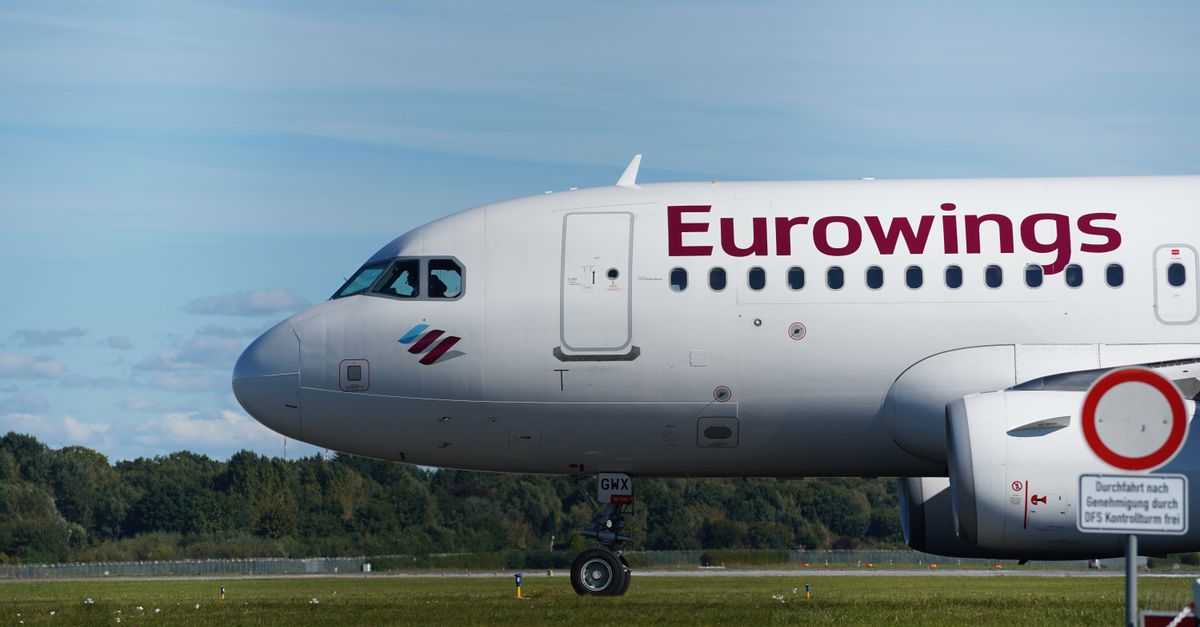
From the airport to the city centre, the most economical option is Bus 2, which departs from directly outside the arrivals terminal every 10-20 minutes during daytime hours. The 20-minute journey costs EUR 2 with a ticket purchased from the machine at the bus stop or contactlessly on the bus itself. The bus route passes through residential neighbourhoods before arriving at the Hauptbahnhof, from which the Altstadt is a further 20-minute walk or short bus connection.
Bus 10 offers an alternative airport connection operating on a slightly different route to the city centre — both buses are equally efficient and the EUR 2 fare applies to both. A taxi from the airport costs EUR 15-20 for the journey (standard metered fare) and takes a similar amount of time during normal traffic. The bus saving is real enough to matter on a budget trip, but the taxi's convenience makes sense with heavy luggage late at night.
Arriving by train at Salzburg Hauptbahnhof, the city's main station sits about 1.5km north of the Altstadt. The walk into the historic centre takes approximately 20 minutes through pleasant residential streets and across the Mirabellplatz — perfectly manageable with a standard-sized bag. Bus connections (lines 1, 2, 3, 5, 6, and 8) run from outside the Hauptbahnhof directly to the Altstadt for EUR 2. The station has luggage lockers (EUR 3-5 per day) if you want to drop bags before checking in.
Getting Around
Salzburg's greatest practical advantage for first-time visitors is its walkability. The Altstadt (Old Town) below the Mönchsberg cliff and the Neustadt (New Town) across the Salzach River are both pedestrian-priority environments, and the historic core that most visitors want to explore fits within a roughly 1.5km diameter circle. On a good day, it is entirely possible to cover all of Salzburg's headline attractions on foot without any public transport whatsoever.

The public transport network of buses and electric trolleybuses (O-Bus) extends this range comfortably to the Hauptbahnhof, the airport, and outer neighbourhoods. Single tickets cost EUR 2 and are valid for 30 minutes including transfers. A 24-hour day ticket costs EUR 5.70 and makes financial sense if you anticipate three or more journeys. Weekly tickets (EUR 17.60) are worthwhile for stays of five or more days. Tickets are available from Tabak (tobacco/newsagent) shops, machines at major bus stops, and — at a slight premium — directly from the driver.
The Salzburg Card (24 hours EUR 33, 48 hours EUR 42, 72 hours EUR 48) bundles unlimited public transport with free entry to 27 of the city's attractions including the Hohensalzburg Fortress cable car, the Mozart Geburtshaus and Wohnhaus, Schloss Hellbrunn and its trick fountains, the Mönchsberg lift, and several museums. For first-time visitors planning a comprehensive sightseeing programme, the three-day card provides both convenience and genuine value — calculate your planned admissions against the card price to confirm.
Walking between the Altstadt's principal sights involves natural navigation — the Salzach River on one side and the Mönchsberg cliff on the other create clear east-west boundaries, and the dramatic Hohensalzburg Fortress visible from almost everywhere in the old town provides constant orientation. Getting meaningfully lost in Salzburg requires genuine effort.
Where to Base Yourself
Salzburg is small enough that there is no genuinely bad location for a first-time visitor's accommodation, but the character and convenience of different neighbourhoods vary enough to be worth considering carefully against your specific travel style and budget.

The Altstadt (Old Town) is the most coveted address and commands premium prices accordingly. Staying within the UNESCO-protected historic centre means Salzburg's baroque streets, cathedral squares, and river bridges are your immediate surroundings from the moment you step outside. Hotels here range from atmospheric mid-range guesthouses to genuinely luxurious grand hotels. The trade-off is cost — even a modest Altstadt hotel room starts from EUR 95-130 per night in shoulder season, rising significantly in summer and Festival season. For first-timers who want maximum immersion in Salzburg's historic character and have the budget, this is the natural choice.
Elisabeth-Vorstadt and the Hauptbahnhof area house most of Salzburg's budget accommodation including the city's best hostels. The neighbourhood is approximately 1.5-2km from the Altstadt centre and well connected by bus. It's functional rather than beautiful — a working residential and commercial district — but the proximity to the train station simplifies arrivals and early-morning departures, and the accommodation quality at the price point is significantly better than anything available in the Altstadt for the same spend.
Riedenburg and Maxglan, the residential neighbourhoods west of the Altstadt near the Mirabellplatz, offer an excellent middle ground — closer to the historic centre than the station-area hostels, with a quieter and more local atmosphere. Several family-run guesthouses and pension-style accommodations in this area offer double rooms from EUR 65-90 including breakfast, representing some of the city's best genuine value.
Across the Salzach in the Neustadt (new town) on the right bank, you're a bridge-crossing from the Altstadt but in a noticeably quieter and slightly more local environment. The Linzergasse, the main street of the Neustadt, is pleasant and lined with independent shops and cafés — a genuine local high street rather than a tourist corridor.
Local Culture & Etiquette
Salzburg is Austrian, and Austrian culture carries its own distinct character that differs meaningfully from the German, Italian, and broader "Central European" contexts that visitors sometimes conflate with it. Understanding a few fundamentals makes interactions more enjoyable and avoids the kind of inadvertent cultural friction that occasionally surprises visitors who arrive with incorrect assumptions.

The standard Austrian greeting is "Grüß Gott" (pronounced "Groos Gott") — literally "God greet you," the formal and regional equivalent of hello throughout Austria and Bavaria. In Salzburg specifically you'll hear this in every shop, restaurant, and guesthouse. Responding in kind — even with an imperfect pronunciation — is warmly received. A simple "Danke" (thank you) and "Bitte" (please/you're welcome) used consistently will distinguish you as a visitor who made the effort.
Austrian table culture values unhurried eating. In traditional Gasthäuser and restaurants, the bill is not brought automatically — you request it by catching the waiter's eye and saying "Zahlen bitte" (bill please). Leaving immediately after eating without waiting for the bill to be presented is considered abrupt. Equally, Austrians rarely rush out after paying; lingering over coffee is culturally normal and expected rather than a sign of table-hogging. Adjust your pacing accordingly.
Tipping is customary but not as automatic as in North America. In restaurants, rounding up to the nearest convenient amount or adding approximately 10% for good service is the norm. The tip is typically given directly to the server when paying rather than left on the table — say the total you're paying aloud and the server returns change to that amount. At cafés and bakeries, small coins in the tip dish are the convention.
Salzburg's churches — the Cathedral, St. Peter's, the Franciscan Church — are active places of worship, not solely tourist attractions. Dress modestly when entering (shoulders covered, no shorts for the main cathedral services), maintain quiet inside, and be aware of mass times when tourist access may be restricted. The cathedral holds Mass daily; attending even briefly is an atmospheric and entirely free experience in one of Europe's most beautiful baroque interiors.
Common Mistakes to Avoid
First-time visitors to Salzburg arrive well-prepared in terms of packing lists and transportation, but several consistent planning errors undermine otherwise well-conceived trips. Avoiding these specifically identified mistakes will make a measurable difference to the quality of your experience.
Buying the wrong Mozart Kugeln. The Mozart Kugel chocolate ball is Salzburg's most famous souvenir and the market is full of mass-produced impostors. The original recipe — marzipan and pistachio nougat in a dark chocolate shell — was created in 1890 by confectioner Paul Fürst and is sold only at his family's original shop near Alter Markt (look for the gold foil wrapping). The red and silver foil versions from tourist shops and supermarkets are confectionery industry knockoffs. If you're buying Kugeln as gifts, buy the real thing from Konditorei Fürst.
Visiting Hohensalzburg Fortress only from the outside. Many first-timers ascend the fortress, admire the panoramic views from the outer terrace, and descend without entering the interior. The fortress museum, the princely state rooms with their extraordinary medieval tilework, and the marionette museum inside are collectively among the best museum visits in Salzburg and are worth the full admission. Buy the Salzburg Card if you're visiting multiple attractions and the fortress admission is effectively included.
Ignoring Hellbrunn Palace. Schloss Hellbrunn (EUR 14, or free with Salzburg Card) sits 4km south of the Altstadt and is rarely crowded compared to the centre. Its famous trick fountains — water jets concealed in stone seats and pathways that the Archbishop used to drench unsuspecting guests in the 17th century — are genuinely extraordinary and unlike anything else in Austria. The palace gardens are also beautiful and the trip by bus takes 15 minutes.
Planning too tightly around Sound of Music locations. The filming locations (the Mirabell Garden, the Nonnberg Convent steps, the Leopoldskroner Schloss seen from outside) are genuinely evocative for fans of the film, and the organised tour provides good contextual commentary. But several key filming locations are in Mondsee and the Salzkammergut region, not within Salzburg itself — first-timers who expect to tick off the entire film geography on foot in the Altstadt will be surprised. Either take the organised tour or research locations in advance.
Underestimating the time required to reach Werfen and the Eisriesenwelt. The world's largest accessible ice cave at Werfen (45km south of Salzburg) and the Hohenwerfen Castle are genuinely spectacular day trips that many visitors plan to "fit in easily" and consistently underestimate. The cave tour is 1.5 hours minimum, access requires a cable car and a 15-minute walk, and combined with the return train journey from Salzburg (50 minutes each way), it constitutes a full day rather than a half-day excursion.
Missing the Mozarteum concert experience. Ticket pricing at the Mozarteum — Salzburg's world-class concert hall and music university — starts from approximately EUR 25 for many evening performances and chamber recitals. First-timers who decide against attending a concert because it feels expensive miss what many music-interested travellers describe as the single most memorable experience in Salzburg. Check the programme at mozarteum.at on arrival; even a single evening concert at the venue where Mozart's legacy is treated with absolute seriousness is worth the cost.
Not walking the Mönchsberg in the early morning. The forested cliff running along the western edge of the Altstadt has free walking paths along its ridge with continuous views over the city rooftops. Most visitors take the lift (EUR 3.70) up to the Museum der Moderne and return the same way. Walking up via the Augustinergasse steps from the Altstadt (free, 15 minutes) and descending along the far side toward the Mülln neighbourhood in the early morning — when the city below is quiet and the Salzach catches the first light — is one of the genuinely great urban walks in Central Europe and it costs nothing.


