The first time you see Cartagena de Indias from inside the walls — the bougainvillea cascading from wrought-iron balconies, the ochre and cobalt buildings pressing close on streets wide enough for one donkey cart, the Caribbean heat making everything slightly hallucinatory — it feels less like a city and more like a film set built to an impossible standard of beauty. Colombia's most photogenic city is also one of South America's most manageable destinations for first-time visitors: the historic centre is compact, the locals are warm and accustomed to international visitors, and the country's transformation over the past two decades means that the Colombia of most travellers' fears has very little to do with the Colombia they actually encounter. This guide covers everything you need before your first morning in the walled city.
Before You Arrive
Colombia's visa policy is among the most generous in South America for major passport holders. Citizens of the United States, the European Union, the United Kingdom, Canada, Australia, and most other Western nations enter Colombia visa-free for up to 90 days as tourists. The 90-day allowance resets after a 90-day absence from the country; there is also an option to extend to 180 days in a calendar year through a paid extension process at Migración Colombia offices. You must have a return or onward ticket to confirm your departure — immigration officers sometimes check this at the border, and airlines may ask at check-in.

Colombia's currency is the Colombian Peso (COP). At the time of writing, 1 USD is approximately COP 4,000, making mental arithmetic straightforward: divide any price by 4,000 for the USD equivalent. The COP 50,000 entry fee to Castillo San Felipe is roughly USD 12.50. Banknotes come in denominations of COP 1,000, 2,000, 5,000, 10,000, 20,000, 50,000, and 100,000. Be aware that COP 50,000 notes (deep purple) and COP 20,000 notes (golden) look somewhat similar in poor lighting — check notes carefully when receiving change.
ATMs are widely available in Cartagena. Bancolombia and Davivienda ATMs have the most reliable rates and lowest additional fees for foreign cards. Avoid the independent ATM operators in convenience stores and tourist areas — their fees are higher and their reliability is lower. Withdraw larger amounts less frequently (COP 400,000–600,000 per withdrawal) to minimise per-transaction fees.
Cartagena's heat requires preparation. The city sits at sea level on the Caribbean coast and temperatures stay between 28°C and 37°C year-round, with high humidity making it feel warmer still. Pack lightweight, loose-fitting clothing in breathable fabrics, high-SPF sunscreen, and a hat. The rainy season runs roughly September through November — brief, intense afternoon downpours rather than all-day grey. The driest and therefore busiest period is December through April.
Getting from the Airport
Rafael Núñez International Airport (CTG) has one of the most conveniently located terminals in South America. The airport sits just 3 kilometres northeast of the Old City walls — a 10-minute journey by any mode of transport, which means that even the most expensive option (taxi) is fast and relatively cheap.

The standard taxi from the arrivals area to the Old City or Getsemaní costs COP 15,000–25,000. This is a negotiated fare — taxis in Cartagena do not use meters. Agree on the price before you get in. The driver will often quote COP 30,000–35,000 to arriving foreigners; a polite counter-offer of COP 20,000 is almost always accepted for the ride to the centre. To Bocagrande (the hotel-strip peninsula), taxis cost COP 18,000–28,000.
Uber and InDriver are the better option for most first-time arrivals: the price is shown in the app before you confirm the booking, there is no negotiation, and the quality of the vehicles is typically higher than street taxis. Both apps work reliably at the airport — request your car inside the terminal and walk to the pickup zone when it arrives. The app-based fare runs COP 12,000–18,000 to the city centre, consistently cheaper than negotiated taxi prices.
The Trans-Caribe BRT bus is the cheapest option at COP 2,950 per journey. The nearest stop to the terminal requires a short walk and the journey to the Old City area takes 20–30 minutes. This is a perfectly viable option if you have a manageable amount of luggage and already have a rechargeable transport card — it is not the easiest first arrival experience with large bags in unfamiliar heat, but it works and the savings are real.
Getting Around
Cartagena has three main zones that first-time visitors use: the Old City (within the walls), Getsemaní (immediately outside the walls, west of the clock tower), and Bocagrande (the hotel-and-beach peninsula, 2 kilometres south). All three are close enough together that the question of how to get between them is mostly a question of how hot you are willing to be on foot.

Walking is the primary mode of transport within the Old City and Getsemaní. The Old City's interior is compact — the longest internal walk is under 20 minutes — and the narrow colonial streets are best appreciated on foot. Walking the walls themselves (13 kilometres of accessible rampart) is one of Cartagena's unmissable experiences and can only be done on foot. However, midday heat from roughly noon to 4pm makes outdoor walking genuinely uncomfortable; plan walking exploration for morning and evening.
The Trans-Caribe BRT (COP 2,950 per trip, rechargeable card required) covers the main north-south corridor connecting the Old City area to Bocagrande and the outer neighbourhoods. For getting to and from the airport or the bus terminal, the BRT is the cheapest option. Confusingly, the BRT stations in the city centre are a short walk from the Old City gates — the system runs along the outer perimeter roads rather than into the pedestrian zones.
Taxis and ride-hailing apps (Uber, InDriver) handle the gaps — short hops within Getsemaní when the heat is overwhelming, the trip out to Castillo San Felipe, or the run to the pier for the Rosario Islands boat. Short local fares run COP 5,000–8,000; medium trips (Old City to Bocagrande) cost COP 10,000–15,000. Always confirm the price before entering a taxi without the app.
Where to Base Yourself
Choosing where to sleep in Cartagena is one of the most consequential decisions of your trip because it affects your daily budget, your experience of the city's authentic atmosphere, and how much of the "real" Cartagena versus the tourist Cartagena you encounter. There are three principal options.

Getsemaní is the neighbourhood for most first-time budget and mid-range visitors. Located immediately outside the Old City walls to the west, it has undergone a remarkable transformation from a neighbourhood most guidebooks warned against into the most vibrant, creative, and interesting part of Cartagena. The streets are covered in world-class street art, the independent restaurants and bars are excellent, and the mix of long-term residents and travelling visitors creates an atmosphere that the sanitised Old City interior cannot replicate. Accommodation here is 40–60% cheaper than comparable quality inside the walls. The main square, Plaza de la Trinidad, fills every evening with vendors, families, musicians, and travellers — one of the best free evenings in Colombia. Walk to the Old City gates in 5 minutes.
Old City (Centro Histórico) is the dream option for those who want to wake up inside the colonial walls. Boutique hotels and guesthouses in beautifully restored colonial houses occupy the best addresses; the most intimate and atmospheric are on Calle del Sargento Mayor and around Plaza de San Diego. The trade-off is purely financial — expect to pay COP 150,000–300,000+ per night for a private room. Hostels within the walls exist (COP 50,000–80,000 dorm) but the value proposition is weaker than Getsemaní. The neighbourhood quietens significantly after 10pm when day-trippers and tour groups leave.
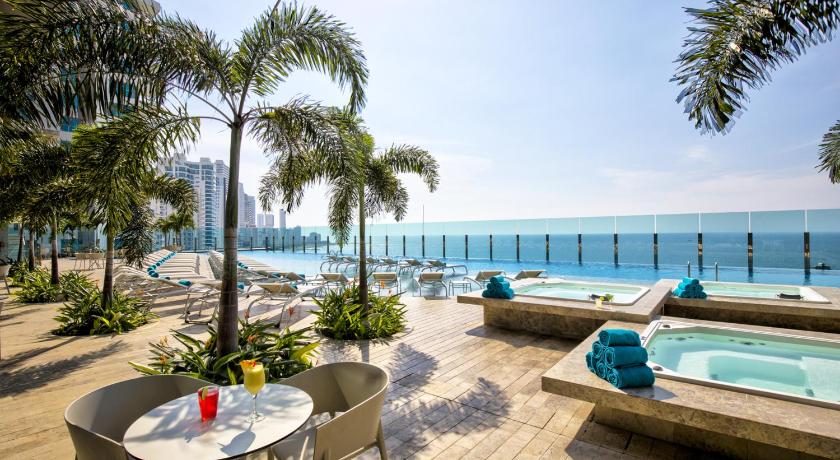
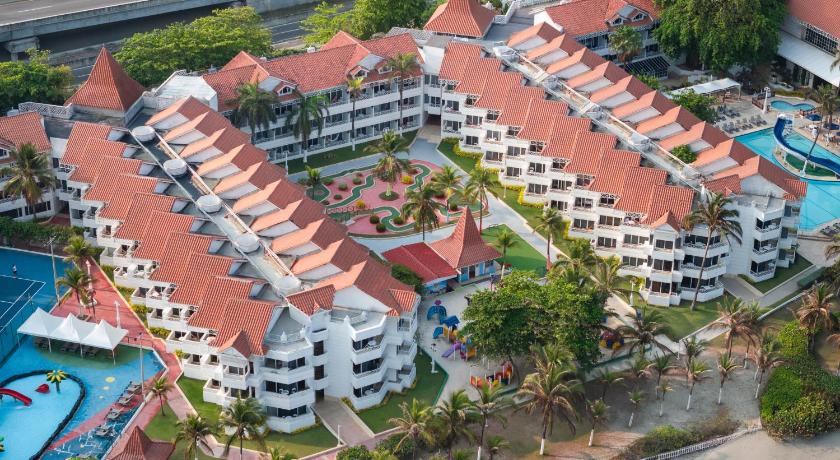
Bocagrande is Cartagena's beach hotel district — a peninsula of mid-range and upscale hotels facing the Caribbean, purpose-built for sun-and-beach visitors. It is further from the Old City than Getsemaní (2 kilometres, COP 10,000–15,000 taxi) and has less character and fewer interesting eating options. The beach is accessible and the hotel pool scene is lively. For first-time visitors primarily interested in Cartagena's history and culture, Bocagrande is the least logical base. For beach-centric itineraries, it makes more sense.
Local Culture & Etiquette
Cartagena is a costeño city — its culture, temperament, and social codes derive from Colombia's Caribbean coast rather than the highland Andean interior. This distinction matters more than most visitors realise. Costeños are generally warmer, more expressive, more musically inclined, and considerably more relaxed about timekeeping and formality than their counterparts in Bogotá and Medellín. A meeting in Cartagena that is scheduled for 3pm may begin at 3:30pm without anyone considering this a problem. Patience and adaptability are assets.

The music you will hear everywhere is champeta (the local Caribbean electronic genre with African roots), vallenato (accordion-driven folk music, technically from the interior but beloved throughout the coast), and cumbia (the foundational rhythm of Colombian music, originally from the coast). Dancing is not just entertainment here — it is social currency. An invitation to dance at a Getsemaní cumbia night or a neighbourhood party is a genuine gesture of inclusion; accept it even if your footwork is uncertain.
Basic Spanish courtesy goes an enormous distance in Cartagena. Buenos días / buenas tardes / buenas noches (good morning/afternoon/evening) before any interaction is expected; launching into a transaction without a greeting reads as rude regardless of language barriers. ¿Cuánto cuesta? (how much does it cost?) and gracias are essential. Cartageneros will often greet strangers with ¿Qué más? (literally "what more?" — meaning something like "how's it going?"); the correct response is simply ¡Bien, bien! or ¡Todo bien!
Bargaining is appropriate at the craft markets in the Old City (Mercado de las Artesanías near Baluarte de Santa Catalina) and with street vendors but not in restaurants, supermarkets, or established shops. Vendors at the artisan market typically open 30–40% above their acceptable price; a calm, polite counter-offer of 60–70% of the asking price will usually land somewhere reasonable. Aggressive bargaining or insulting offers are counterproductive and culturally inappropriate.
Common Mistakes to Avoid
Underestimating the heat. Most first-time visitors arrive prepared for a warm Caribbean city and find a genuinely extreme heat environment. Cartagena's combination of 35°C temperatures, 80%+ humidity, and intense equatorial sun makes outdoor activity in the middle of the day significantly more exhausting than it sounds. Plan morning and evening activities, use the midday hours for indoor attractions or rest, and drink more water than you think you need. Sunstroke and dehydration are real risks in the first 24–48 hours before acclimatisation.
Booking a hotel inside the Old City walls on a tight budget. The colonial magic of the walled city is fully accessible from Getsemaní. A guesthouse inside the walls costs COP 150,000–300,000 per night for a private room; a quality hostel in Getsemaní costs COP 38,000–60,000 for a dorm bed or COP 90,000–140,000 for a private room. The walk between them is five minutes. Pay for the experience when you can genuinely afford it.
Taking tours from street touts near the Clock Tower. The Torre del Reloj (Clock Tower) at the main entrance to the Old City is surrounded by tour and day-trip vendors who will offer everything from Rosario Islands trips to cocaine — all at substantially inflated prices. Book day trips through your hostel or a verified operator (check Google Reviews) and ignore the persistent approach from vendors on the street. The Rosario Islands trip booked through a hostel costs COP 80,000–95,000; the same trip quoted on the street starts at COP 120,000–150,000.
Dismissing Getsemaní as a neighbourhood to walk through rather than stay in. Getsemaní was genuinely rough a decade ago, but it has transformed completely. It is now safer, more interesting, and more vibrant than the sanitised Old City at night. Plaza de la Trinidad in the evening is one of the best free experiences in Colombia — local families, travellers, street food, musicians, and an atmosphere of relaxed Caribbean sociability that money cannot replicate elsewhere in the city.
Exchanging money at the airport. Airport currency exchange in Colombia (as in most countries) offers rates 10–15% worse than city ATMs. Withdraw COP from a Bancolombia or Davivienda ATM in the arrivals hall at the standard bank rate rather than exchanging foreign currency at the exchange desk. The difference on a COP 400,000 withdrawal is roughly COP 40,000–60,000 — significant on a budget itinerary.
Ignoring the Castillo San Felipe entry fee in your budget planning. COP 50,000 is the standard foreigners' entry fee to Castillo San Felipe de Barajas — Cartagena's most important historical attraction. Many first-time visitors who arrive with a very tight daily budget are surprised by this fee and either skip the castle (a significant loss) or strain their budget on the day. Plan for it in advance, budget it as a fixed cost, and treat it as the COP 50,000 best spent in the city.