Easter Island — 3-Day Itinerary
Easter Island is the most remote inhabited island on earth, 3,700 km from Chile. Nearly 1,000 moai statues carved between 1100-1600 AD stand across volcanic landscapes in the vast Pacific. Three days covers the major archaeological sites, volcanic craters, and living Rapa Nui Polynesian culture.

Rano Raraku Quarry & Ahu Tongariki
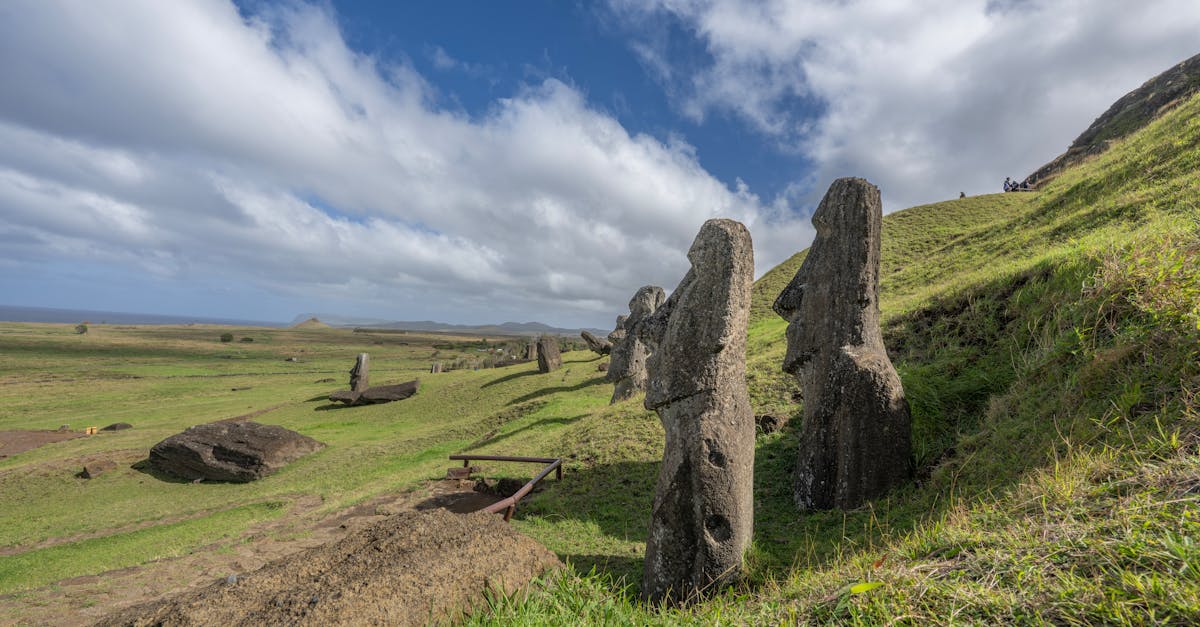
Morning: Visit Rano Raraku (included in CLP $80,000 park pass valid 10 days), the volcanic quarry where 95 percent of moai were carved. Nearly 400 moai remain on the slopes in various stages of completion, from barely outlined faces to nearly finished giants half-buried by centuries of soil movement. The largest unfinished moai would have stood 21 meters tall. Walking among these abandoned statues on the grassy volcanic slopes with the Pacific beyond is one of the most atmospheric archaeological experiences on earth.
Afternoon: Continue to Ahu Tongariki, the largest restored platform with 15 moai standing in a row facing inland. Arrive at sunrise when the morning light illuminates the statues from behind, creating dramatic silhouettes against the ocean. The 1960 tsunami swept these moai inland and their restoration in the 1990s by a Japanese team was a major archaeological achievement. The scale of the statues (up to 9 meters tall, weighing 80 tons) is best appreciated at close range. No climbing or touching is permitted.
Evening: Afternoon at Anakena Beach, the island finest white sand beach backed by coconut palms and the restored Ahu Nau Nau with seven moai including some with red scoria topknots still in place. Swimming in the warm Pacific water with moai watching from the beach is an experience unique to Easter Island. Lunch at the beach kiosk (CLP $5,000-8,000) for empanadas and fresh juice. Evening at Hanga Roa town, the island only settlement, for dinner at Kanahau (CLP $10,000-18,000) serving Rapa Nui-influenced seafood.
Orongo Ceremonial Village & Volcano Craters
Morning: Hike to Orongo (CLP $80,000 park pass) on the rim of Rano Kau volcano, a massive crater with a freshwater lake 1.6 km across. The ceremonial village of Orongo perches on the cliff edge between the crater and a 300-meter drop to the Pacific. This was the site of the Birdman cult ceremony where competitors raced down the cliffs, swam to offshore islets, and returned with the first sooty tern egg. The petroglyphs of the Birdman and Make-Make deity are carved into rocks throughout the village.
Afternoon: Drive to the northeast coast to see the fallen moai of Ahu Akahanga and Ahu Vaihu, left face-down where they were toppled during the island civil conflicts of the 18th century. These sites are more atmospheric than the restored platforms, showing the moai as they were found. The scattered red topknots (pukao) lie nearby. Continue to Ana Te Pahu caves, lava tubes used as living quarters and gardens by early Rapa Nui settlers. The cave interiors are cool and extensive, with fig trees growing from the collapsed sections.
Evening: Visit the Rapa Nui cultural museum (free, donations welcome) in Hanga Roa for context on the island history, ecology, and the moai carving and transport theories. Evening traditional feast at Te Ra ai (CLP $30,000-40,000 including food and dance performance), an earth oven ceremony where food is cooked underground in the Polynesian tradition. The Rapa Nui dance performance features traditional costumes, drums, and the energetic movements that connect this isolated island to the broader Polynesian cultural world.
Ahu Akivi, Caves & Rapa Nui Culture
Morning: Visit Ahu Akivi, the only inland platform with moai facing the ocean rather than inland like all others. The seven moai are believed to represent the seven explorers sent by King Hotu Matu a to find the island. At equinox, the moai face directly toward the setting sun, demonstrating the astronomical knowledge of the Rapa Nui builders. The surrounding landscape of rolling grassland and volcanic rock gives the most expansive sense of the island remote interior. Rent horses (CLP $25,000 for half day) for a traditional way to explore the terrain.
Afternoon: Explore Ana Kakenga cave, a lava tube with two windows opening directly onto the Pacific cliff face. The cave is dark and narrow (bring a flashlight) but the twin ocean windows at the end are spectacular. Continue to Puna Pau quarry where the red scoria topknots were carved from a small volcanic cone. The abandoned cylindrical pukao scattered around the quarry show the production process. The contrast between the dark basalt moai and the red topknots was intentional and significant in Rapa Nui spiritual symbolism.
Evening: Farewell afternoon at Hanga Roa watching the sunset from Ahu Tahai, a restored platform near town with three moai including one with restored coral and obsidian eyes, the only moai with replicated eyes on the island. The sunset behind the moai silhouettes is the most photographed moment on Easter Island. Final dinner at Tataku Vave (CLP $10,000-16,000) for fresh tuna ceviche with Polynesian flavors. The island isolation, the mystery of the moai, and the warmth of Rapa Nui culture create a lasting impression that defines Easter Island as truly unlike anywhere else.
Budget Breakdown (Per Person, 3 Days)
| Category | Budget | Mid-Range | Luxury |
|---|---|---|---|
| Accommodation (3 nights) | CLP $30,000 | CLP $80,000 | CLP $300,000 |
| Food & Drinks | CLP $20,000 | CLP $50,000 | CLP $150,000 |
| Transport | CLP $15,000 | CLP $40,000 | CLP $100,000 |
| Activities & Entry Fees | CLP $80,000 | CLP $80,000 | CLP $80,000 |
| Total 3 Days | CLP $145,000 | CLP $250,000 | CLP $630,000 |
Local Culture & Etiquette on Easter Island
Easter Island is not Chile in any meaningful cultural sense — it is a Polynesian island that happens to be administered from Santiago. The Rapa Nui people are the island's indigenous inhabitants and the living heirs of the civilisation that built the moai, and any visit that treats the island purely as an open-air archaeological museum misses the most important dimension entirely. Engaging with Rapa Nui culture, history, and people with genuine respect rather than extraction transforms the experience from ticking boxes to something genuinely profound.
The most important cultural rule is absolute: do not touch or climb the moai. This is both legally prohibited (fines up to CLP $1,000,000) and genuinely disrespectful to Rapa Nui people who regard the statues as representations of ancestral spirits, not tourist props. In 2022, a tourist knocked a section from an Ahu Tongariki moai causing irreparable damage — the resulting international incident hardened islander attitudes toward visitors considerably. Stay on marked paths within the archaeological sites and heed rope barriers without exception.
The Rapa Nui language, a Polynesian tongue related to Hawaiian and Maori, is still spoken by the community alongside Spanish. A few words are received with disproportionate warmth: iorana (hello), maururu (thank you), and pehe koe (how are you) cost nothing and communicate genuine interest. Spanish works for practical transactions everywhere, but English fluency outside tourist-facing businesses is limited. Learn at least iorana before you land.
The island economy depends almost entirely on tourism, and buying directly from Rapa Nui artisans at the Mercado Artesanal in Hanga Roa puts money directly into local hands. Carved moai replicas in volcanic basalt (CLP $5,000-20,000 depending on size), woven pandanus-leaf hats, and re-creations of traditional bone jewellery are the signature crafts. Avoid purchasing items that appear mass-produced in mainland China — they undercut local artisans who put significant skill into their work.
Photography of people requires the same consideration it does anywhere — ask before photographing individuals, especially elders or those in traditional dress. During the Tapati Rapa Nui festival in February, photography is generally welcomed at public events but not inside the more sacred ceremonial moments. Food and restaurant culture is simple and warm; the island specialty is fresh fish caught daily by local fishermen. Tuna, marlin, and mahi-mahi appear on most menus (CLP $8,000-15,000), prepared simply with Polynesian-influenced seasonings. Vegetarian options are available but limited in variety.
Continue exploring Chile with our Torres del Paine 3-Day Itinerary.