Delhi is not one city — it is at least seven, layered on top of each other like archaeological strata, each one built by a different dynasty that looked at the ruins of its predecessor and said, "We can do better." The Mughals built over the Tughlaqs, who built over the Khiljis, who built over the Rajputs, and the British built over all of them before the Republic of India draped its own identity across the lot. The result is a city where a 12th-century minaret stands in a suburban park, where the emperor's personal mosque overlooks a chaotic electronics market, and where you can eat breakfast in a 400-year-old neighbourhood and lunch in a glass-and-steel mall that opened last month.
Delhi has more UNESCO World Heritage Sites than most countries. It has more street food per square metre than any city in India. It has a metro system that is genuinely world-class, monsoon humidity that is genuinely oppressive, and a population of twenty million people who are simultaneously the most hospitable and most assertive humans you will ever meet.
Delhi does not do subtle. Delhi does not do half-measures. Delhi grabs you by the arm and drags you into the chaos, and by the end of three days you will either love it ferociously or need a week to recover.
Most likely both.
This 3-day itinerary divides the city into its natural zones: Old Delhi's Mughal magnificence and sensory overload on Day 1, New Delhi's imperial grandeur and green spaces on Day 2, and a mix of spiritual, cultural, and shopping experiences on Day 3. The routes are designed to minimise travel time — Delhi is a sprawling city and traffic can reduce grown adults to tears — by clustering nearby attractions together and using the metro wherever possible.
Every price is current, every restaurant has been visited, and the timings account for Delhi's reality: monuments close earlier than you expect, queues form without warning, and the best experiences often involve abandoning the plan when a rickshaw wallah says, "Sir, I know a better place."

Old Delhi — Mughal Glory & Sensory Overload
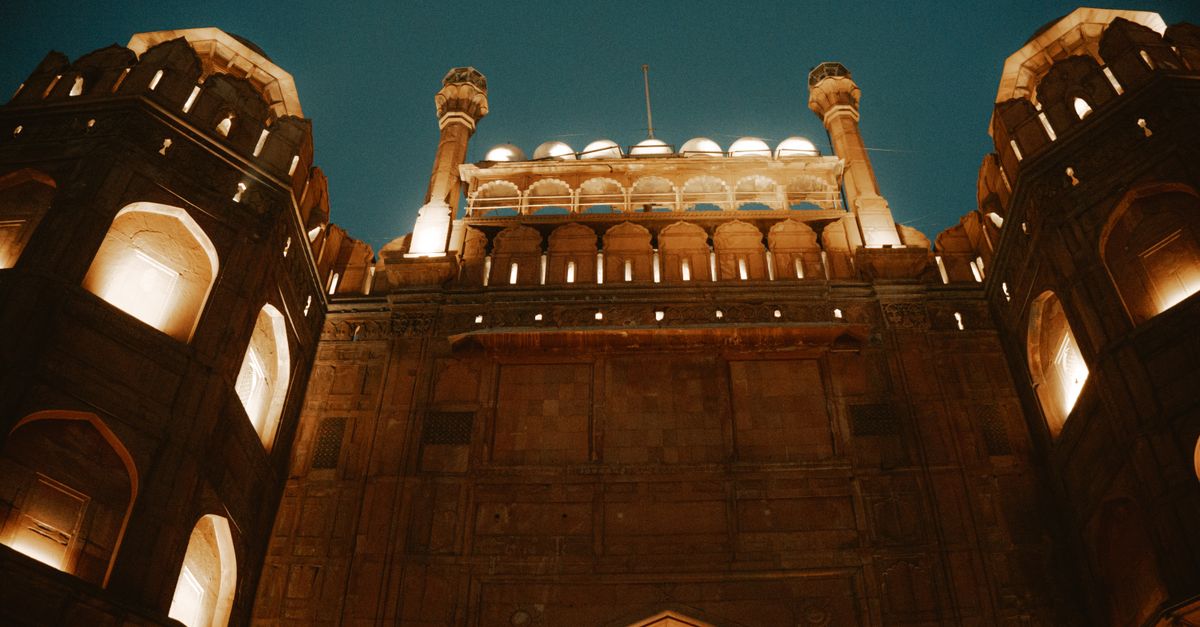
Morning (8:00 AM): Start at the Red Fort (Lal Qila), the colossal red sandstone fortress built by Mughal Emperor Shah Jahan in 1639 as the centrepiece of his new capital, Shahjahanabad. The fort took nine years to build and served as the residence of Mughal emperors for nearly 200 years until the British deposed the last emperor in 1857.
Entry costs ₹35 for Indian nationals and ₹500 for foreign visitors. Arrive when the gates open at 9:30 AM to beat the school groups and tourist coaches that descend by mid-morning. Pass through the Lahori Gate — the same gate from which India's Prime Minister addresses the nation every Independence Day — and into the Chhatta Chowk, a vaulted arcade that once housed the imperial bazaar selling silks, jewels, and brocades to the Mughal court.
Today it sells souvenirs, but the architecture remains magnificent. Beyond the bazaar, the fort opens up into a sequence of audience halls, gardens, and palace buildings. The Diwan-i-Am (Hall of Public Audience) is where the emperor heard petitions from common citizens, seated on a marble throne set into the back wall beneath a canopy inlaid with precious stones — most of which were looted by the British and never returned.
The Diwan-i-Khas (Hall of Private Audience) is more intimate and once contained the legendary Peacock Throne, estimated to be worth over $1 billion in today's terms, before it was carried off by the Persian invader Nadir Shah in 1739. The inscription on the walls reads: "If there is a paradise on earth, it is this, it is this, it is this." The Sound and Light show in the evenings (₹80 for the Hindi version at 7:30 PM, English at 8:30 PM) narrates the fort's history against the illuminated walls — it is somewhat dated but atmospheric.
Mid-Morning (10:30 AM): Exit the fort and walk directly across the road to Jama Masjid, India's largest mosque, also built by Shah Jahan and completed in 1656. The mosque can accommodate 25,000 worshippers in its vast courtyard, and the scale is breathtaking — two 40-metre minarets flank a prayer hall topped by three massive white marble domes striped in black.
Entry to the mosque is free, though there is a ₹300 charge to climb the southern minaret. The climb is steep and narrow — a tight spiral staircase with uneven steps — but the view from the top is the best panorama of Old Delhi you will find: the Red Fort, the tangled rooftops of Chandni Chowk, the Yamuna River, and on clear days (admittedly rare in Delhi's haze), a sweep all the way to the modern skyline of New Delhi.
The mosque is an active place of worship, so dress modestly — long trousers and covered shoulders for everyone, and women should carry a headscarf. Remove shoes before entering. If you are not appropriately dressed, wraps are available at the entrance for a small fee.
Photography is permitted in the courtyard but not inside the prayer hall.
Late Morning-Lunch (11:30 AM): Now dive into Chandni Chowk, Old Delhi's legendary main street and one of the oldest and most chaotic markets in Asia. The name means "Moonlight Square" — a reference to the canal that once ran down its centre, reflecting the moonlight — though today any trace of that romance has been replaced by a density of commerce, humanity, and noise that defies description.
The lane has recently been pedestrianised, which makes navigating the chaos somewhat more manageable, but the sensory intensity remains at maximum. This is where your food walk begins. Head first to Paranthe Wali Gali (the Lane of Paranthas), a narrow side street where shops have been frying stuffed flatbreads since the 1870s.
The classic orders are aloo (potato, ₹60), paneer (₹80), and rabri (sweet milk, ₹100) paranthas — deep-fried in ghee until crispy and served with a battery of pickles and chutneys. Purists argue about which shop is the original; the truth is they are all related and all decent.
Next, find Old Famous Jalebi Wala at the corner of Chandni Chowk and Dariba Kalan — this stall has been frying jalebis since 1884. Watch the batter being squeezed through a cloth into hot oil in concentric spirals, then soaked in sugar syrup until golden and crystallised.
A plate of fresh jalebis (₹60 per 250g) eaten warm off the stove is pure, unapologetic sweetness.
Afternoon (2:00 PM): Continue exploring Chandni Chowk's specialist markets. The Spice Market (Khari Baoli) at the western end of Chandni Chowk is Asia's largest wholesale spice market and has been operating since the 17th century.
The air itself is weaponised — the concentration of chili powder, turmeric, and dried spice in the atmosphere will make your eyes water and trigger sneezing fits. The sight is extraordinary: sacks of whole spices stacked to the ceiling, traders shouting prices, porters carrying impossible loads on their heads, and a colour palette that spans every shade of red, yellow, orange, and brown.
Buy small packets of whole spices (₹50-200 per 100g for cumin, coriander, cardamom, cinnamon, and star anise) as lightweight, fragrant souvenirs. From the Spice Market, navigate to Kinari Bazaar, a lane dedicated to wedding accessories: gold and silver braids, embroidered trimmings, sequined borders, decorative tassels, and elaborate costume jewellery.
Even if you have no wedding to attend, the craftsmanship and visual density make it worth a wander. During wedding season (October-March), the bazaar is packed with families and the energy is festive.
Evening (5:30 PM): Return to the Red Fort for the Sound and Light Show if you are interested (timings above), or spend the evening exploring Old Delhi's back lanes on foot. The neighbourhood is best experienced at dusk, when the lights come on, the food stalls fire up, and the crowds thin slightly.
The lanes around Nai Sarak (a book market) and Ballimaran (the lane of perfume sellers) are atmospheric and less touristed than the main drag. End the day with dinner at Karim's near Jama Masjid — see the Delhi Food Guide for details — or at Al Jawahar directly opposite, which serves similar Mughlai fare with slightly less queue and equally excellent food.

New Delhi — Imperial Grandeur & Garden Escapes
Morning (8:30 AM): Begin at India Gate, the 42-metre triumphal arch standing at the eastern end of the Rajpath (now officially renamed Kartavya Path), the ceremonial boulevard that forms the spine of Lutyens' Delhi. India Gate was completed in 1931 as a memorial to the 70,000 Indian soldiers who died in World War I — their names are inscribed on the arch's walls.
The Amar Jawan Jyoti (Eternal Flame of the Immortal Soldier) burns beneath the arch, now merged with the National War Memorial flame nearby. The surrounding lawns are Delhi's great democratic space — families picnic, children fly kites, ice cream vendors work the crowd (₹30-50 for a cone), and the atmosphere in the evenings and on weekends is festive.
Early morning, however, is the best time for photographs and quiet contemplation. From India Gate, look westward down the long, tree-lined sweep of Kartavya Path. At the far end, rising on Raisina Hill, stands Rashtrapati Bhavan — the Presidential residence, a massive domed building designed by Edwin Lutyens that combines classical European architecture with Indian motifs (the chattris, bell capitals, and jali screens).
The building has 340 rooms and sits in 130 hectares of gardens. The exterior is visible from Kartavya Path; the Mughal Gardens (now renamed Amrit Udyan) are open to the public during a limited period in February-March and are spectacular — acres of roses, tulips, and bougainvillea in geometric Mughal patterns.
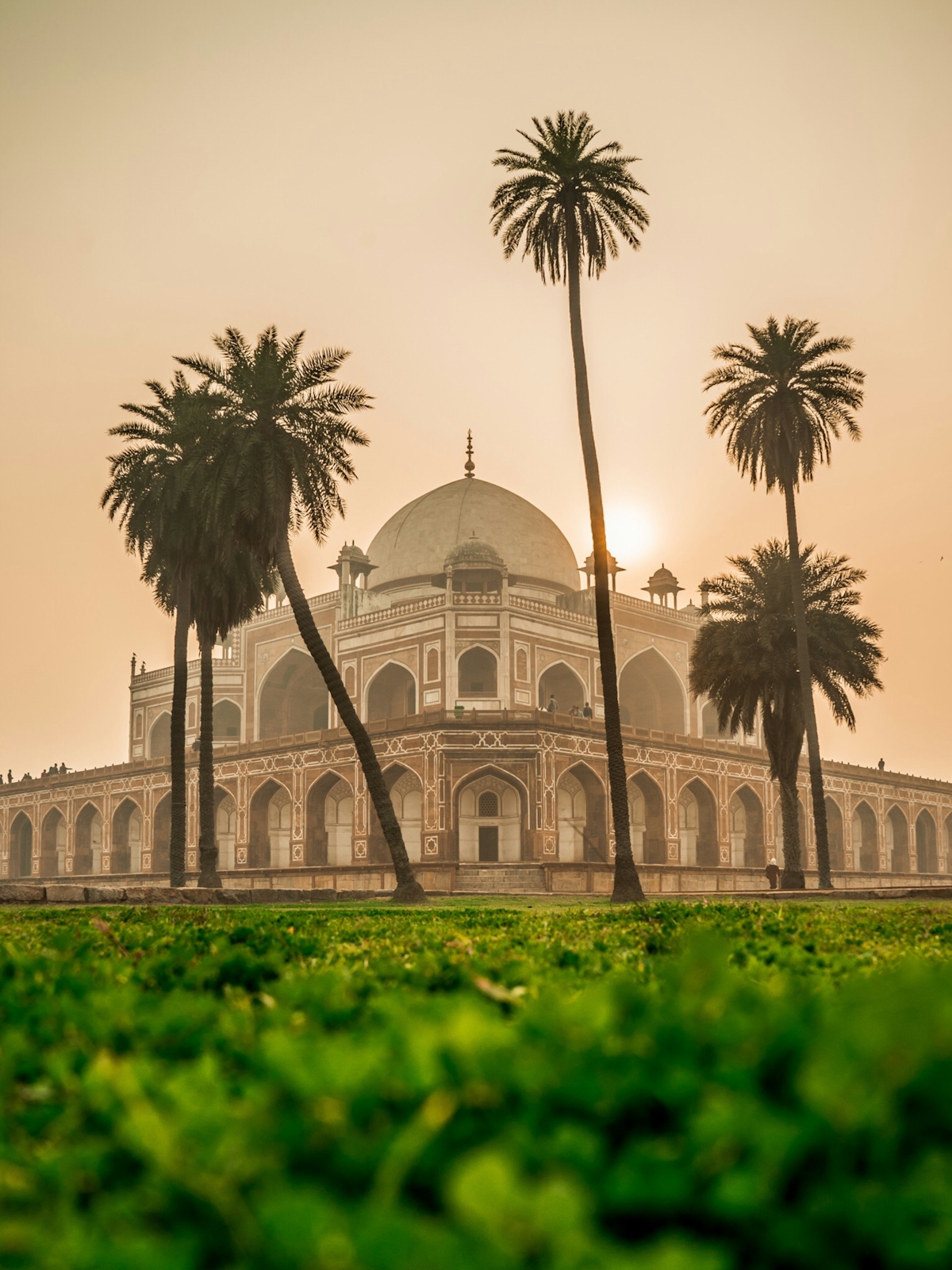
Mid-Morning (10:30 AM): Take the metro to Humayun's Tomb (entry ₹35 for Indians, ₹500 for foreigners), widely considered the architectural prototype for the Taj Mahal. Built in 1570 by Empress Bega Begum for her husband, the Mughal Emperor Humayun, this was the first garden-tomb on the Indian subcontinent and established the template that Shah Jahan would perfect 70 years later in Agra.
The tomb sits in a vast Mughal char bagh (four-part garden) divided by water channels into symmetrical quadrants. The building itself is a masterpiece: a double dome of red sandstone and white marble, surrounded by smaller cenotaphs, latticed screens, and arched alcoves.
The proportions are extraordinary — the dome appears to float above the plinth, and the garden's geometry draws your eye inevitably to the central structure from every angle. Restoration work led by the Aga Khan Trust has returned the gardens to their original splendour, including the water channels that now flow once more.
Allow 60-90 minutes to explore the tomb, the surrounding structures (including the barber's tomb and Isa Khan's tomb, a beautiful octagonal design), and the gardens. This is one of Delhi's most peaceful spaces — far less crowded than the Taj Mahal and, some argue, equally beautiful.
Lunch (1:00 PM): Take a taxi or auto to Hauz Khas Village, a medieval urban village wrapped around a 13th-century reservoir (hauz) built by Sultan Alauddin Khilji. The village has been reinvented as one of Delhi's trendiest neighbourhoods — the narrow lanes are packed with boutiques, art galleries, cafes, and restaurants, all built into or around the medieval ruins.
For lunch, Naivedyam serves excellent South Indian thalis (₹250-350) in a clean, temple-like setting. Coast Cafe does Goan and coastal Indian food (seafood curry rice ₹400, prawn balchao ₹450) in a cheerful, colourful space.
After lunch, explore the Hauz Khas ruins — the madrasa (Islamic seminary) built by Firoz Shah Tughlaq in the 14th century overlooks the reservoir, and the crumbling stone buildings set against the green water and modern skyline make for extraordinary photographs. The deer park adjacent to the reservoir is a green oasis in the middle of Delhi, home to actual deer, rabbits, and peacocks.
Afternoon (3:00 PM): Walk or take a short ride to Lodhi Garden, a 90-acre park that contains the 15th and 16th-century tombs of the Sayyid and Lodhi dynasties. This is Delhi's most beautiful park — a manicured landscape of lawns, flowering trees, and birdlife surrounding a series of exquisite medieval tombs.
The Tomb of Mohammed Shah and the Tomb of Sikandar Lodi are the two most impressive structures, both featuring the octagonal plan and dome that characterised pre-Mughal Delhi architecture. The park is free to enter, open from sunrise to sunset, and used by joggers, yoga practitioners, dog walkers, and couples throughout the day.
The Bonsai Park within the grounds contains over 50 species of bonsai trees. Lodhi Garden is the perfect antidote to Delhi's intensity — sit under a neem tree, watch the parakeets, and let the city recede for an hour.
Late Afternoon (5:00 PM): Take the metro to Qutub Minar (entry ₹35 for Indians, ₹500 for foreigners), a UNESCO World Heritage Site in Mehrauli. The Qutub Minar itself is a 72.5-metre victory tower built between 1193 and 1220 — the tallest brick minaret in the world, with five distinct storeys each decorated with intricate calligraphy and geometric patterns.
The surrounding Qutub Complex contains the ruins of India's first mosque (Quwwat-ul-Islam, built using pillars salvaged from 27 demolished Hindu and Jain temples — look closely and you will see the original carvings), the mysterious Iron Pillar (a 7-metre, 6-tonne pillar made of 98% wrought iron in the 4th century that has not rusted in 1,600 years — metallurgists still study it), and the unfinished Alai Minar, an abandoned attempt to build a tower twice the height of the Qutub Minar. The complex is atmospheric at any time but especially beautiful in the golden light of late afternoon.
Allow 60-90 minutes for a thorough visit.
The strategy: ask for the meter first. If they refuse (most will), counter-offer at roughly 60-70% of their quoted price. For reference, a ride from Connaught Place to Humayun's Tomb should cost approximately ₹80-100 by meter. Alternatively, use Ola or Uber auto services through the app for transparent, fixed pricing. For longer distances, metro + auto combination is almost always faster and cheaper than a straight auto-rickshaw ride through Delhi's traffic.
Akshardham, Connaught Place & Spiritual Delhi
Morning (9:30 AM): Begin at Akshardham Temple, a breathtaking Hindu temple complex that opened in 2005 and has rapidly become one of Delhi's most visited attractions. The main temple, built entirely of pink sandstone and white marble with no steel framework, is carved with an astonishing level of detail — 20,000 figures of deities, musicians, dancers, and animals adorn the exterior.
The complex includes a boat ride through 10,000 years of Indian cultural history, a musical fountain show (evenings only), and exhibition halls. Entry is free, though the exhibitions and boat ride cost ₹170-220.
No cameras, phones, or electronic devices are permitted inside — free storage lockers are provided at the entrance. The temple is closed on Mondays. Allow 2-3 hours for a thorough visit.
The craftsmanship is extraordinary regardless of your religious background — this is a modern monument built with ancient techniques, and the dedication to detail is staggering. The musical fountain show at 7:15 PM (if you return in the evening) is worth the trip back — a 15-minute display of water, light, and fire choreographed to the story of a child's journey through life.
Late Morning (12:30 PM): Take the metro to Connaught Place (Rajiv Chowk station), the commercial heart of New Delhi. This circular, colonnaded market designed in 1933 by Robert Tor Russell consists of two concentric rings — the inner circle and the outer circle — connected by radial roads.
The white Georgian-style buildings house a mix of showrooms, restaurants, bookshops, and offices, and the covered arcades provide welcome shade. Start at the inner circle and walk the full circumference — it takes about 20 minutes and passes some of Delhi's most established shops: Oxford Bookstore for literature, Khadi Gramodyog Bhawan for handloom fabrics and natural cosmetics at fixed government prices (excellent cotton kurtas for ₹500-800), and The Shop for curated Indian design and souvenirs.
The central park in the middle of the circle has been recently renovated and features a large Indian flag. From Connaught Place, walk south to Janpath Market, a row of pavement stalls and small shops selling embroidered textiles, Tibetan jewellery, brass figurines, and pashmina shawls at prices significantly lower than the shops inside the circle.
Bargaining is essential here — start at 40% of the asking price.
Lunch (1:30 PM): Connaught Place has some of Delhi's most iconic restaurants. Saravana Bhavan in P Block serves reliably excellent South Indian vegetarian food (thali ₹250, dosa ₹120-180) and is always packed — a testament to consistent quality.
Wenger's is a beloved bakery and deli that has been operating since 1926 — their patties (₹60-80), pastries, and cold coffee (₹120) are Delhi institutions. For a more substantial meal, United Coffee House has been serving a mix of Indian and Continental food in a grand, chandeliered dining room since 1942 — the butter chicken (₹450) and the chicken a la Kiev (₹500) are time-tested favourites, and the old-world atmosphere alone justifies the visit.
Afternoon (3:00 PM): Visit the National Museum on Janpath (entry ₹20 for Indians, ₹650 for foreigners), which houses one of the finest collections of Indian art and artefacts in the world. The highlights include a 5,000-year-old dancing girl figurine from the Indus Valley civilisation, an extraordinary collection of miniature paintings from the Mughal and Rajput courts, a gallery of Buddhist art featuring relics believed to contain the Buddha's ashes, and a stunning textile gallery.
The museum is large — focus on the ground floor galleries of sculpture and the first-floor miniature painting collection if you have limited time. Allow 90 minutes minimum. The museum is closed on Mondays and public holidays.
Late Afternoon (5:00 PM): Take a taxi or auto to Gurudwara Bangla Sahib, a Sikh temple that is one of Delhi's most serene and welcoming spaces. The golden dome gleams above a large sarovar (holy pool), and the interior is decorated with marble, gold leaf, and devotional art.
Visitors of all faiths are welcome — remove your shoes, cover your head (scarves provided free at the entrance), and wash your feet in the shallow trough before entering. The most remarkable aspect of the gurudwara is the langar — a community kitchen that serves free meals to anyone, regardless of religion, caste, or wealth, every single day.
The volunteers cook and serve dal, roti, rice, and vegetables to thousands of people daily. You are welcome to eat — sit cross-legged on the floor alongside everyone else and experience one of the most profound expressions of egalitarian generosity you will encounter anywhere.
A small donation to the community kitchen is appropriate but not required.
Day Trip Option — Taj Mahal: If you have the energy and an early start, a day trip to Agra for the Taj Mahal is feasible from Delhi. The fastest option is the Gatimaan Express (departing Hazrat Nizamuddin Station at 8:10 AM, arriving Agra Cantt at 9:50 AM; return departing 5:50 PM).
Tickets cost ₹750-1,500 for chair car/executive class. Alternatively, hire a car with driver for the day (₹3,000-4,000 round trip) — the journey takes 3-4 hours each way via the Yamuna Expressway.
Taj Mahal entry is ₹50 for Indians and ₹1,100 for foreigners, and the monument is closed on Fridays. If you can only see one thing in India, this is it — but given the travel time, it effectively replaces Day 3 in Delhi.
The common scams: taxi drivers taking you to a "tourist office" (it is not official — insist on your destination), shopkeepers claiming "government emporium" status (only the actual Cottage Industries Emporium on Janpath is government-run), and touts near monuments offering "guide" services at inflated prices (hire guides through the ticket office instead). Keep valuables in a front pocket or money belt in crowded areas, use registered taxis or ride-hailing apps, and be wary of unsolicited friendliness from strangers near tourist sites. Beyond these precautions, Delhi is a fascinating and largely welcoming city.

Budget Breakdown (Per Person, 3 Days)
| Category | Budget | Mid-Range | Luxury |
|---|---|---|---|
| Accommodation (3 nights) | ₹2,500 | ₹9,000 | ₹36,000 |
| Food & Drinks | ₹1,500 | ₹5,000 | ₹15,000 |
| Transport (metro, autos, taxis) | ₹500 | ₹1,500 | ₹4,000 |
| Activities & Entry Fees | ₹500 | ₹2,500 | ₹6,000 |
| Shopping | ₹1,000 | ₹4,000 | ₹12,000 |
| Total 3 Days | ₹6,000 | ₹22,000 | ₹73,000 |
Getting Around Delhi
Delhi Metro
The Delhi Metro is the single best thing to happen to this city's infrastructure. With over 250 stations across multiple lines, it connects virtually every tourist attraction, market, and neighbourhood. The Yellow Line (Samaypur Badli to HUDA City Centre) is the most useful for tourists, stopping at Chandni Chowk, New Delhi Railway Station, Rajiv Chowk (Connaught Place), Hauz Khas, and Qutub Minar.
The Blue Line connects Dwarka to Noida, stopping at Rajiv Chowk, Barakhamba Road, and Akshardham. The Violet Line passes through Mandi House (for the National Museum) and Khan Market. Trains run every 3-5 minutes during peak hours and the system is air-conditioned, clean, and safe.
The last train departs around 11 PM. A trip from one end to the other costs a maximum of ₹60.
Auto-Rickshaws and E-Rickshaws
Auto-rickshaws are ubiquitous and useful for short to medium distances. In theory they run on meters (₹25 minimum fare); in practice, be prepared to negotiate. E-rickshaws (battery-powered three-wheelers) are excellent for short hops in Old Delhi and around market areas — typically ₹10-30 for a shared ride, ₹50-80 for a private one.
Cycle rickshaws still operate in Old Delhi and are the best way to navigate Chandni Chowk's narrow lanes (₹30-50 for a short ride, negotiate before boarding).
Taxi and Ride-Hailing
Ola and Uber operate extensively in Delhi and are generally the most convenient option for longer distances. The airport to Connaught Place costs approximately ₹400-600 by app cab. For airport transfers, the Airport Express Metro Line (₹60 from New Delhi Station, 20 minutes) is faster and cheaper than any road option.
Prepaid taxi counters at the airport and major railway stations offer fixed-price rides that eliminate negotiation — use them if you arrive without a working phone.
Essential Tips for Delhi
Weather Planning
Delhi has extreme weather. Summers (April-June) regularly hit 45°C — sightseeing between 11 AM and 4 PM is genuinely dangerous without shade, water, and sun protection. Monsoon (July-September) brings heavy rain and humidity but also dramatic skies and green landscapes.
Winter (November-February) is the best time to visit — pleasant daytime temperatures (15-25°C) but cold mornings and evenings (5-10°C) that require a jacket. January is the coldest month, with dense fog that can delay flights and reduce visibility at monuments.
October and March are the shoulder months with the most reliable combination of good weather and manageable crowds.
Air Quality
Delhi's air pollution is a serious concern, particularly from October to February when crop burning in neighbouring states combines with winter atmospheric conditions to create hazardous smog levels. Check the AQI (Air Quality Index) on the IQAir app before planning outdoor activities.
On bad days (AQI above 300), limit outdoor time and consider wearing an N95 mask. The pollution is worst in the early morning and improves somewhat by midday as the sun burns off the haze.
Monuments and parks are best visited in the afternoon during pollution season.
Water and Health
Do not drink Delhi's tap water. Stick to sealed bottled water (₹20 for 1 litre — check the seal is intact) or use a portable purifier. Street food in Delhi is generally safe at busy stalls, but the transition from clean hotel food to Old Delhi street food can challenge sensitive stomachs.
Carry basic medication: antacids, anti-diarrheal tablets, and electrolyte sachets. Start with cooked items and work your way up to the more adventurous offerings over a day or two.
Eat your way through the capital with our Delhi Food Guide →