
The Amalfi Coast is not, by any honest measure, a budget destination. The most dramatic stretch of coastline in Europe — 50 kilometres of vertical limestone cliffs, pastel-painted villages, and cobalt sea strung along a road that defies both engineering logic and the nerves of everyone who drives it — commands premium prices for accommodation, food, and the boats that connect town to town. But travelling the coast on a restricted budget is not impossible. It requires timing, base-camp choices, self-catering instincts, and the willingness to hike free trails instead of paying for private beach clubs. This guide lays out every lever you can pull to experience one of the world's most beautiful coastlines without the debt that usually follows.
Getting There on a Budget
The cheapest route to the Amalfi Coast from Naples uses a combination of the Circumvesuviana commuter train and the SITA bus, a journey that costs around EUR 8 total and takes approximately 2 hours door-to-door but involves a transfer in Sorrento and a spectacular, terrifying bus ride along the cliffside SS163 coastal road.

From Naples Centrale, take the Circumvesuviana train to Sorrento (EUR 4.50, 65 minutes, trains every 30-40 minutes from the lower level). In Sorrento, walk down to the SITA bus stop on Piazza Tasso and board the SITA bus toward Amalfi (EUR 2.50-3.50 depending on distance, 1.5-2 hours to Amalfi, buses roughly hourly). The bus stops at Positano (ask the driver), Praiano, Conca dei Marini, and Amalfi town. Combined cost: approximately EUR 7-8 from Naples to any Amalfi Coast town.
Direct SITA buses from Naples (Piazza Garibaldi) to Salerno run regularly (EUR 3.50-5), from which you can connect east along the coast toward Vietri sul Mare, Cetara, and eventually Amalfi. This eastern approach is less crowded with tourists and works well for those basing themselves at the Salerno end.
The seasonal ferry from Naples (Molo Beverello) to Positano and Amalfi operates roughly April through October. Tickets cost EUR 22-28 single (NLG and TravelMar are the main operators) and the journey takes 1.5-2.5 hours depending on the route and operator. More expensive than the bus but dramatically more enjoyable, arriving by sea rather than by road, which is the correct way to understand the coast's geography.
From Salerno (reached from Naples by fast train in 35 minutes for EUR 7-12), SITA buses depart for Amalfi regularly (EUR 2.70, 75 minutes) — this is the least-known budget approach and avoids the Sorrento-side crowds entirely.
Budget Accommodation
Budget accommodation on the Amalfi Coast is a relative concept — "budget" here means EUR 25-50 per dorm bed or EUR 70-120 for a private double in a position where nearly identical rooms in Positano's luxury end cost EUR 400+. The key is knowing which towns offer genuine value.

Hostel Brikette (Via Marconi 358, Positano, EUR 28-45 dorm, EUR 95-130 private double) is the single best budget option in the most expensive town on the coast. Perched on the hillside with views that could reasonably make you weep, the hostel has a terrace, communal kitchen, and a social atmosphere that makes solo travel easy. The location is a 15-minute walk from the beach via 200 steps — standard Positano architecture. Book weeks in advance for July-August; demand far exceeds supply.
Le Terrazze Hostel (Via del Convento, Amalfi, EUR 28-40 dorm, EUR 80-110 private) sits above Amalfi town with good views and a communal kitchen that becomes the social hub most evenings. Amalfi is the best base for budget travellers — centrally located for ferry connections, close to hiking trailheads, and home to the coast's most concentrated selection of affordable restaurants. The hostel fills quickly from May through September.
Casa Gemma (Praiano, EUR 65-100 double) is a family-run guesthouse in Praiano, the deliberately overlooked village between Positano and Amalfi that locals and returning visitors know is the coast's best value. Smaller crowds, lower prices, direct access to the SITA bus, and a genuinely local atmosphere. Praiano is the budget traveller's Amalfi Coast secret that isn't quite as secret as it used to be but still costs 40% less than Positano.
Maiori and Minori (budget hotels EUR 60-90 double) are larger coastal towns east of Amalfi with actual beaches (not just rocky coves), lower prices across all categories, and easy SITA bus access to the rest of the coast. Less spectacular than Positano but significantly more affordable and more authentically local in atmosphere.
Eating Cheaply Like a Local
The Amalfi Coast has a split food economy: tourist-facing restaurants with sea-view terraces charging EUR 18-25 for pasta and EUR 28-40 for grilled fish, and the local bars, bakeries, and alimentari where the same food costs a fraction of that. The key is finding the latter and resisting the gravitational pull of every beautifully positioned terrace.

Pizza by the slice — pizza al taglio — is the budget staple throughout the coast. A standard slice of margherita or marinara from a bakery or pizzeria al taglio costs EUR 2.50-4 depending on size and location. In Amalfi town, several bakeries on Via Lorenzo d'Amalfi sell fresh slices from mid-morning; in Positano, look for the small alimentari shops on the hillside streets away from the beach rather than the seafront establishments.
Sfogliatella — the flaky, ricotta-filled pastry that is the signature street food of the entire Campania region — costs EUR 1.80-2.50 at any decent bar or bakery on the coast. Eating one for breakfast with an espresso (EUR 1-1.50 at the bar) is both the authentic local breakfast and the most affordable morning meal available. The sfogliatelle at Bar La Zagara in Positano (Via dei Mulini) are reliably good; in Amalfi, the bakeries on the main pedestrian street produce excellent versions throughout the morning.
The aperitivo hour (roughly 6pm-8pm) is genuinely useful for budget travellers. Many bars along the coast serve small plates of olives, bruschetta, and light snacks with a drink (Spritz EUR 4-6, local Falanghina wine EUR 3-5). This isn't a free dinner buffet in the northern Italian style, but a drink and snacks at aperitivo hour can substitute for a light dinner at EUR 5-8 total.
The Amalfi market (Piazza Flavio Gioia, Wednesday mornings) sells local produce, anchovies, limoncello ingredients, and prepared foods at prices well below the restaurant level. Stock up on local cheeses, fresh bread, tomatoes, and cured meats for self-catering lunches.
For a proper sit-down meal, the best value restaurants on the coast are in Atrani — a tiny village 10 minutes' walk east of Amalfi that is technically a separate town and has a handful of local restaurants serving the Amalfitan classics (pasta con le vongole, pezzogna al forno, scialatielli ai frutti di mare) at EUR 12-16 for a main course rather than the EUR 22-30 charged in Positano and Ravello.
Free & Low-Cost Attractions
The Amalfi Coast's greatest attraction is free: the landscape itself. The best experiences on the coast require nothing more than a SITA bus ticket and a willingness to walk.
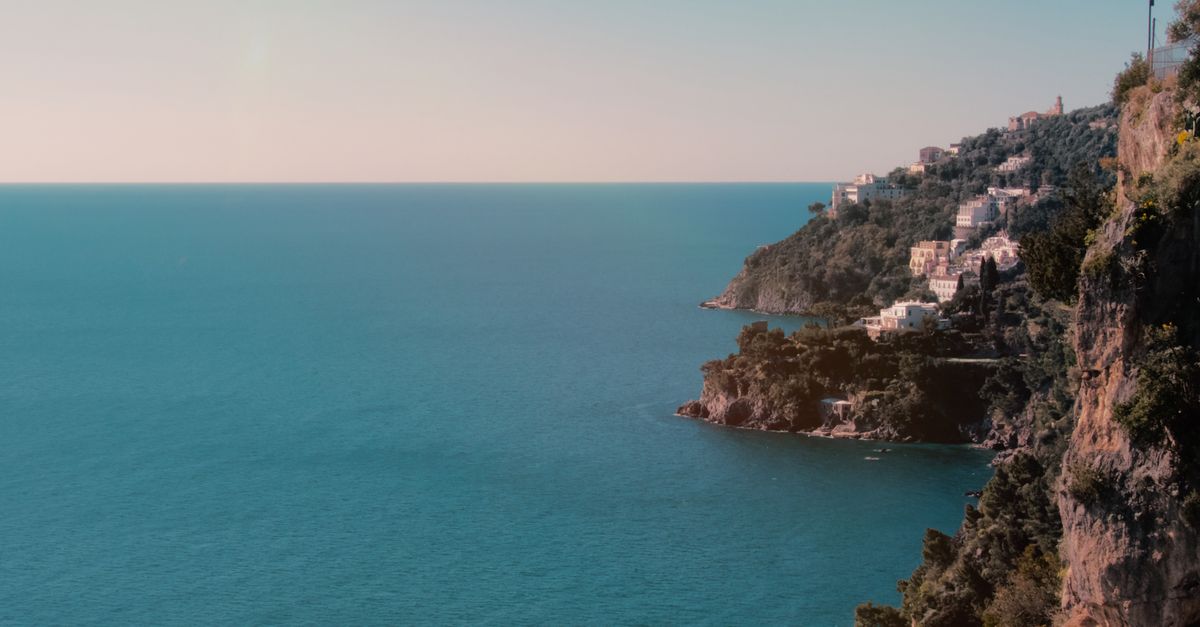
The Path of the Gods (Sentiero degli Dei, free) is arguably the most beautiful hiking trail in Italy — a 7.8-kilometre route from Agerola (reached by bus from Amalfi or Positano) down to Nocelle above Positano, traversing the ridge of the Lattari Mountains with continuous views of the entire coast below. The trail takes 3-4 hours at a comfortable pace and is well-marked. Take the SITA bus to Bomerano/Agerola (EUR 2-3) and hike down to Nocelle, from which steps lead down to Positano or you can take a local bus (EUR 1.20).
The Valle delle Ferriere nature reserve (free) above Amalfi town is a 90-minute round-trip hike through an ancient paper mill valley — the Amalfi region was Europe's first centre of paper production, and the ruins of the medieval mills are scattered throughout the valley. Trail access from Amalfi's western edge, no guide or entry fee required.
Atrani village (free to explore) is the smallest municipality in southern Italy and one of the coast's most overlooked destinations — the adjacent but entirely separate village from Amalfi has a small beach, medieval piazza, and church of San Salvatore de' Birecto where the Doges of Amalfi were crowned. Zero tourist infrastructure, entirely local, 10 minutes' walk from Amalfi town.
Villa Rufolo in Ravello (EUR 7) has what is widely considered the most spectacular garden view in Europe — the terrace overlooks the entire coast from 350 metres above the sea and inspired Wagner to write the Flower Garden scene in Parsifal. The SITA bus to Ravello from Amalfi costs EUR 1.30 (20 minutes). Villa Cimbrone (Ravello, EUR 8) has similar views from the Terrace of Infinity. Both are exceptional value.
Grotta dello Smeraldo (EUR 5 entry + EUR 8-10 boat transfer from the coast road) is a sea cave whose submerged light creates an emerald luminescence in the water. Access by boat from the coast road or, cheapest, by taking the stairs from the SS163 road (the EUR 5 is just for the cave, saving the boat transfer cost if you can access the road-level entrance).
Getting Around on a Budget
Transport is one area where the Amalfi Coast genuinely differs from other Italian destinations — the geography forces choices between buses, ferries, and taxis, and the options vary significantly in price.

The SITA bus is the budget traveller's primary transport tool. The single-fare ticket covers any journey between any two stops on the SS163 coastal road for EUR 1.30-3 depending on distance. A day pass (EUR 7.20) covers unlimited SITA journeys across the coast and is worthwhile if you plan three or more bus trips in a day. Buses run roughly hourly in each direction between Sorrento and Salerno, with more frequent service between the main towns in peak season. Carry cash — ticket machines at bus stops are rare and drivers sometimes have exact-change issues.
Ferries between the coast towns are faster than buses and far more pleasant, but cost significantly more. The main routes: Positano to Amalfi (EUR 8-10), Amalfi to Ravello (no direct ferry — bus only), Amalfi to Salerno (EUR 8-12), Positano to Capri (EUR 18-22). Operators include Travelmar, Alicost, and NLG — tickets are available at the port kiosks in each town. Ferry schedules reduce dramatically outside summer season and many routes stop entirely in November.
Local taxis on the Amalfi Coast are notoriously expensive. The standard meter rate for a 20-minute journey between Positano and Praiano runs EUR 40-60. For groups of four splitting the cost, this becomes viable; for solo travellers or couples, the SITA bus is always the correct choice. Water taxis are even more expensive — private boat hire between towns starts at EUR 80-120 per journey.
Car rental is not recommended for first-time visitors to the coast regardless of budget. The SS163 is a single-lane road with passing buses, blind corners, and parking that costs EUR 10-25 per day in the rare spots that exist. For experienced drivers who want flexibility, the cost is approximately EUR 60-90 per day for the vehicle plus parking.
Money-Saving Tips
Base yourself in Praiano or Maiori, not Positano. Praiano sits between Positano and Amalfi with SITA bus access in both directions every hour. Accommodation costs 30-50% less than Positano, restaurants charge local rather than tourist prices, and the small beach at Marina di Praia is less crowded than either Positano beach. Maiori, further east, has the largest free beach on the coast and accommodation starting at EUR 60 per night for a double.
Hike rather than take taxis. The coast has an extensive network of ancient footpaths — the sentieri — that predate the road by centuries. The Path of the Gods, the Valle delle Ferriere, the route from Praiano to Positano via the mountain path, and the stairs from Positano's main road down to Fornillo beach are all free and often faster than waiting for buses.
Eat your main meal at lunch. Most restaurants on the coast offer a pranzo (lunch) fixed menu of two courses plus water and bread for EUR 12-18 — significantly cheaper than the same food ordered à la carte at dinner. A substantial lunch followed by a light aperitivo-and-snacks evening costs substantially less than two restaurant meals.
Buy a SITA day pass if making three or more bus trips. At EUR 7.20, the daily pass covers unlimited SITA journeys and pays for itself on trip number three. The pass is available from most tobacco shops (tabacchi) in the coast towns and from the SITA office in Amalfi.
Visit in late September or October for best value. The coast's most beautiful light, warmest sea, and smallest crowds arrive in September — after the August peak, hotels drop prices 30-40%, restaurants stop turning tables every 45 minutes, and the Path of the Gods is hiking distance rather than exercise ordeal. October is quiet enough that some businesses begin to close, so check ferry schedules carefully if travelling after mid-October.
Avoid the ceramic shops on the main streets unless you plan to check luggage. The distinctive hand-painted Amalfi and Vietri ceramics are beautiful and overpriced in the tourist-area shops. The same items cost 20-30% less in Vietri sul Mare at the eastern end of the coast, where the ceramics are actually produced and there are factory outlets and local workshops alongside the tourist shops.


