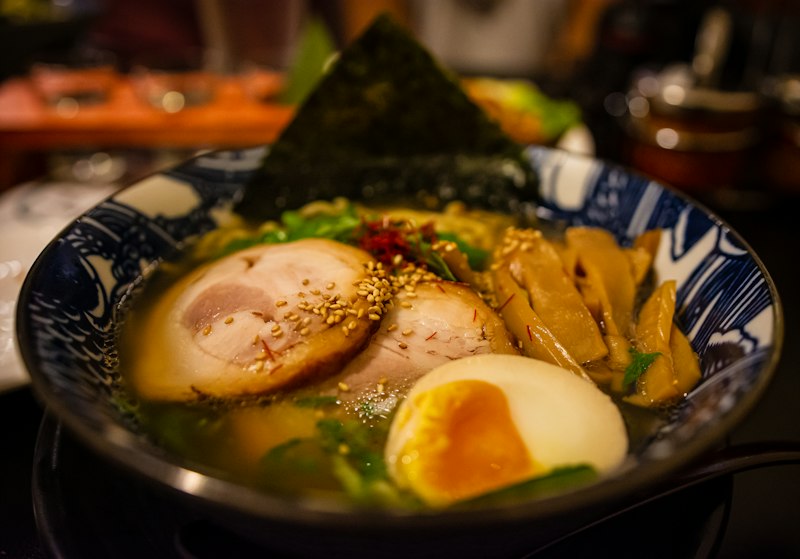
Tokyo takes ramen seriously in a way that defies easy explanation. There are over 10,000 ramen restaurants in the city. Ramen critics exist as a full-time profession. Diners queue for two hours in winter rain for a single bowl. Understanding why requires tasting it — but knowing where to start helps.
Ramen Styles: A Quick Reference
Before the neighbourhood guide, the styles:
- Shoyu (soy sauce): The Tokyo classic — clear brown broth, curly noodles, chicken or pork base. Delicate and complex.
- Miso: Rich, thick, earthy broth from fermented soybean paste. Best in cold weather. Hokkaido origin.
- Tonkotsu: Pork bone broth simmered 18+ hours until milky white. Intense, fatty, polarising. Fukuoka origin.
- Shio (salt): The lightest style — clear broth, subtle flavour, often seafood-based. Easiest for first-timers.
- Tsukemen: Dipping ramen — cold noodles dipped into concentrated hot broth. Different technique, different pleasure.
Shinjuku: Fuunji for Tsukemen
Fuunji near Shinjuku Station is the benchmark for tsukemen. The concentrated dipping broth — made from chicken, pork, and fish — is among the most complex flavours in Tokyo ramen. Queue starts forming before the 11 am opening. Order the regular tsukemen with a soft-boiled egg and wait approximately 30 minutes on a weekday.
Shibuya: Ichiran for Solo Dining
Ichiran pioneered the solo dining booth — individual wooden cubicles where a bamboo curtain separates you from the kitchen. You order by checklist (broth richness, garlic level, noodle firmness). The tonkotsu is consistent rather than transcendent, but the ritual is uniquely Tokyo.
A bowl of ramen at 2 am in a six-seat counter shop, watching the chef pull noodles and ladle broth in the silence after the trains have stopped — this is the Tokyo experience that guidebooks can't quite capture.
Shimokitazawa: Menya Musashi
Shimokitazawa's vintage-shop neighbourhood hides some of Tokyo's most creative ramen. Menya Musashi's shoyu broth uses a chicken and fish dashi that rewards slow eating — the flavour evolves as the temperature drops. Small room, long menu, worth the detour.
Asakusa: Asakusa Kagari for Chicken Shio
Near the ancient temples of Asakusa, Kagari serves a chicken shio broth of uncommon elegance. Homemade flat noodles, house-made chicken oil drizzled on top, and a slow-poached chashu pork that collapses at the touch of chopsticks. Tiny space, 45-minute queue standard. Worth every minute.
Ikebukuro: Taishoken for Old-School Tsukemen
Taishoken is where tsukemen was invented. The original shop opened in Higashi-Ikebukuro in 1961. The current generation of the founding family still runs it. The broth recipe is unchanged. Order the moritsoba (extra noodles) and understand why Tokyo ramen has a history worth knowing.
Ramen Practical Notes
- Most shops use ticket machines — buy your ticket before sitting
- Queue culture is serious — no reservations, no complaints
- Slurping is correct and polite — it aerates the broth and cools the noodles
- Lunch (11:30 am – 1:30 pm) has the longest queues at top shops
- Budget: ¥900–1,500 for most bowls; premium shops up to ¥2,000
Tokyo ramen is not a meal — it's a philosophy. Each bowl represents a chef's years of broth development, noodle testing, and obsessive refinement. Eat accordingly. Explore more of Tokyo on JustCheckin.

Comments (0)
No comments yet. Be the first to share your thoughts!
Sign In